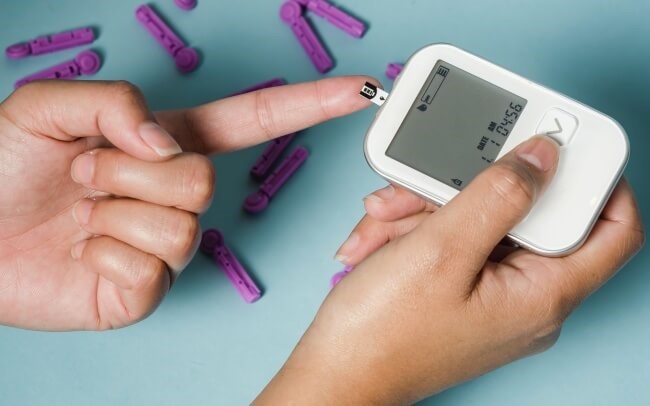
Glucose tolerance test
Peer reviewed by Dr Doug McKechnie, MRCGPLast updated by Dr Colin Tidy, MRCGPLast updated 2 Jun 2025
Meets Patient’s editorial guidelines
- DownloadDownload
- Share
- Language
- Discussion
- Audio Version
- Add to preferred sources on Google
In this series:Non-diabetic hyperglycaemia (pre-diabetes)
The glucose tolerance test measures the body's response to sugar (glucose). A glucose tolerance test can show if you have diabetes, but can also show when the body can't manage blood sugar (glucose) levels well but not yet to the stage of diabetes.
At a glance
A glucose tolerance test (GTT) checks how your body processes blood sugar.
It can help diagnose type 2 diabetes, pre-diabetes, and gestational diabetes in pregnancy.
The test involves fasting, drinking a sugary drink, then having blood samples taken over time.
You must not eat or drink (except water) for 8–12 hours before the test.
The test usually takes 1-2 hours after you drink the sugary solution.
Side-effects are usually limited to a small bruise where blood was taken.
Sign up for our free 10-week Diabetes course!
Each week, we'll explore a different topic to help you better understand and manage your diabetes, including everyday living and medicines, to mental wellbeing, the latest in diabetes tech, and nutrition.
By subscribing you accept our Privacy Policy. You can unsubscribe at any time. We never sell your data.
What is a glucose tolerance test?
A glucose tolerance test (GTT) checks how well the body processes blood sugar (glucose). It involves comparing the levels of glucose in the blood before and after drinking a sugary drink. The results of this test can help doctors to detect type 2 diabetes or pre-diabetes (impaired glucose tolerance). It is also used in diagnosing diabetes in pregnancy.
Gestational diabetes and glucose tolerance tests in pregnancy
Gestational diabetes is a term for diabetes which starts for the first time during pregnancy. It usually starts in the second half of pregnancy but resolves soon after birth. However the risks of having gestational diabetes for you and your baby are similar to those for mothers who have known diabetes, such as difficulties with giving birth and a higher chance of needing a caesarean section.
There is an increased risk of gestational diabetes for:
Women who are overweight and have a body mass index (BMI) above 30.
Women who have had gestational diabetes in a previous pregnancy.
Women who have had a previous baby with very high birth weight (4.5 kg or more).
Women with an immediate family member (brother, sister or parent) with diabetes.
Some ethnic groups (South Asian, black Caribbean and Middle Eastern).
The glucose tolerance test can be used to test for gestational diabetes. The National Institute for Health and Care Excellence (NICE) recommends that:
Woman who have had gestational diabetes in a previous pregnancy should be offered early self-monitoring of blood sugar (glucose) or a two-hour 75 g GTT as soon as possible after the first antenatal appointment. This is followed by a repeat glucose tolerance test at 24-28 weeks of pregnancy if the first test is normal.
Women with other risk factors (as listed above) should have a glucose tolerance test at 24-28 weeks of pregnancy.
How does a glucose tolerance test work?
In most people a simple blood test is enough to detect diabetes. However, some people have 'borderline' results on routine blood tests and then a glucose tolerance test may help. Also, a glucose tolerance test can show when the body can't manage blood sugar (glucose) levels well but not yet to the stage of diabetes. This is known as pre-diabetes (impaired glucose tolerance) and is a condition that can lead to diabetes.
In healthy people, glucose levels in the blood always rise after a meal but they soon return to normal as the glucose is used up or stored. A glucose tolerance test helps to distinguish between this normal pattern and the patterns seen in diabetes and pre-diabetes.
Prior to a glucose tolerance test you are asked not to eat or drink for a certain length of time before the test. Then you drink a glucose drink. Normally, the body should quickly move glucose from the blood into the body's cells. This would reduce the amount of glucose found in the blood samples taken. If there is a problem moving glucose into the cells, glucose remains in the bloodstream. This shows as a higher level of glucose in the blood samples.
When the results of the blood samples come back, doctors compare the level of glucose found in your blood samples taken after the test with specific values. These values can determine if you have diabetes or pre-diabetes.
What happens during a glucose tolerance test?
For the days leading up to the test you should eat a normal diet without restricting what you eat. The night before the test your doctor may ask you to stop eating 8-12 hours before you are due to have the glucose tolerance test. You will usually be allowed to drink water but may be asked to avoid sugary drinks.
On the morning of the glucose tolerance test your doctor or nurse will take a sample of blood before the test begins. This is known as the fasting sample; it provides a comparison for the other test results. To do this you may have a small needle placed into a vein in the back of your hand.
You will then be given a drink which contains a particular amount of sugar (in the form of glucose) and water.
How long does a glucose tolerance test take?
Timings may vary but another blood sample will be taken 1-2 hours after you have had the drink. In some cases more samples may be taken. After the blood samples are taken, the needle in the back of your hand is removed and you can leave.
What should I do to prepare for a glucose tolerance test?
Your doctor should give you advice about what to do to prepare for a glucose tolerance test. This may include information about how long to fast for before having the test.
Are there any side-effects or complications from a glucose tolerance test?
There are usually no side-effects from a glucose tolerance test apart from a small bruise which may appear at the place where the needle was inserted. Rarely, the vein used to take the blood may become swollen; this usually settles within a few days.
Patient picks for Diabetes
Diabetes
Diabetes in children
Diabetes is a lifelong condition that sometimes starts in childhood. As a result of ongoing research, our understanding of diabetes has greatly improved and there are now extensive support and treatments available for diabetes. About 9 in 10 children and young people in the UK who have diabetes will have type 1 diabetes, and 1 in 10 will have type 2 diabetes (or other rarer types of diabetes).
by Dr Colin Tidy, MRCGP

Diabetes
Type 1 diabetes
Type 1 diabetes is the type of diabetes that typically develops in children and in young adults. In type 1 diabetes the body stops making insulin and the blood sugar (glucose) level goes very high. Treatment to control the blood glucose level is with insulin injections and a healthy diet. Other treatments aim to reduce the risk of complications. They include reducing blood pressure if it is high and advice to lead a healthy lifestyle.
by Dr Colin Tidy, MRCGP
Frequently asked questions
Why would my doctor recommend a glucose tolerance test over a simple blood test?
A simple blood test is often sufficient to detect diabetes. However, a glucose tolerance test (GTT) is used if routine blood tests show 'borderline' results. It can also identify pre-diabetes (impaired glucose tolerance), a condition where the body isn't managing blood sugar levels well but hasn't yet developed into full diabetes.
What is pre-diabetes and why is it important to detect?
Pre-diabetes, also known as impaired glucose tolerance, is a condition where your body isn't effectively managing blood sugar levels, but it hasn't progressed to diabetes yet. It's important to detect because it can lead to full diabetes if not addressed.
Can I eat or drink anything before my glucose tolerance test?
You will be asked to fast, meaning you should not eat or drink, for a certain period, typically 8-12 hours, before your test. You are usually allowed to drink water, but sugary drinks should be avoided.
How long will I be at the clinic or hospital for the glucose tolerance test?
The total time for a glucose tolerance test can vary. After an initial blood sample and drinking the glucose solution, further blood samples are usually taken 1-2 hours later. In some cases, more samples might be needed. Once the final blood samples are taken, you are free to leave.
Are there any risks associated with taking a glucose tolerance test?
Generally, there are no serious side-effects. You might experience a small bruise where the needle was inserted to take blood. Rarely, the vein used for drawing blood might become swollen, but this usually resolves within a few days.
Further reading and references
- Type 2 diabetes in adults: management; NICE Guidance (December 2015 - last updated February 2026)
- Diabetes in pregnancy - management from preconception to the postnatal period; NICE Clinical Guideline (February 2015 - last updated December 2020)
- Type 2 diabetes: prevention in people at high risk; NICE Public Health Guidance (last updated: September 2017)
- Type 2 Diabetes Know Your Risk; Diabetes UK
- Jackson SL, Safo SE, Staimez LR, et al; Glucose challenge test screening for prediabetes and early diabetes. Diabet Med. 2017 May;34(5):716-724. doi: 10.1111/dme.13270. Epub 2016 Nov 2.
- Fritsche L, Peter A, Hummel J, et al; HbA1c Measurement Cannot Replace an Oral Glucose Tolerance Test for the Diagnosis of Gestational Diabetes. Dtsch Arztebl Int. 2021 Jun 25;118(25):432-433. doi: 10.3238/arztebl.m2021.0159.
About the authorView full bio
Updated by

Dr Colin Tidy, MRCGP
General Practitioner, Medical Author
MBBS, MRCGP, MRCP (Paediatrics), DCH
Dr Colin Tidy is an NHS Doctor, based in Oxfordshire.
About the reviewerView full bio

Dr Doug McKechnie, MRCGP
Medical Writer
MA, MBBS, MSc, DRCOG, MRCP(UK), MRCGP(2021), FHEA
Dr Doug McKechnie is an NHS GP working in London. He works full-time clinically and is also the Deputy Lead for the Clinical and Professional Practice module at University College London Medical School.
Join the conversation
Share your thoughts or experiences with others in our patient communities.

Ask, share, connect.
Browse discussions, ask questions, and share experiences across hundreds of health topics.

Feeling unwell?
Assess your symptoms online for free
Sign up to the Patient newsletter
Your weekly dose of clear, trustworthy health advice - written to help you feel informed, confident and in control.
By subscribing you accept our Privacy Policy. You can unsubscribe at any time. We never sell your data.