How to check for breast cancer and what a lump feels like
Peer reviewed by Dr Colin Tidy, MRCGPLast updated by Victoria RawLast updated 13 Aug 2026
Meets Patient’s editorial guidelines
- DownloadDownload
- Share
- Language
- Discussion
- Audio Version
- Add to preferred sources on Google
Actress Lucy Davis has announced that she has stage four, incurable cancer. Breast cancer is the most common cancer in the UK, with around 56,000 new cases diagnosed each year - more than 150 every day, according to Cancer Research UK.
Knowing how your breasts normally look and feel can help you spot changes, including a new or unusual lump. If you notice a change, it’s important to get it checked by your GP, even if you think it’s nothing serious.
Breast cancer is the abnormal growth of breast cells, which results in the development of cancerous breast tissue, known as a tumour. These tumours can appear and feel like small lumps on your breast - and there are other symptoms to look out for too.
What does a breast cancer lump feel like?
According to GP Dr Sarah Cooke, a breast lump can feel different for each person. She explains that they are sometimes pea-like in size and texture, other times they may be bigger and feel hard and irregular.
"They can occur anywhere in the breast or in the armpit," she says. "It is important to check your breasts as well as armpits when self-examining."
How do you check for a lump?
How to check your breasts
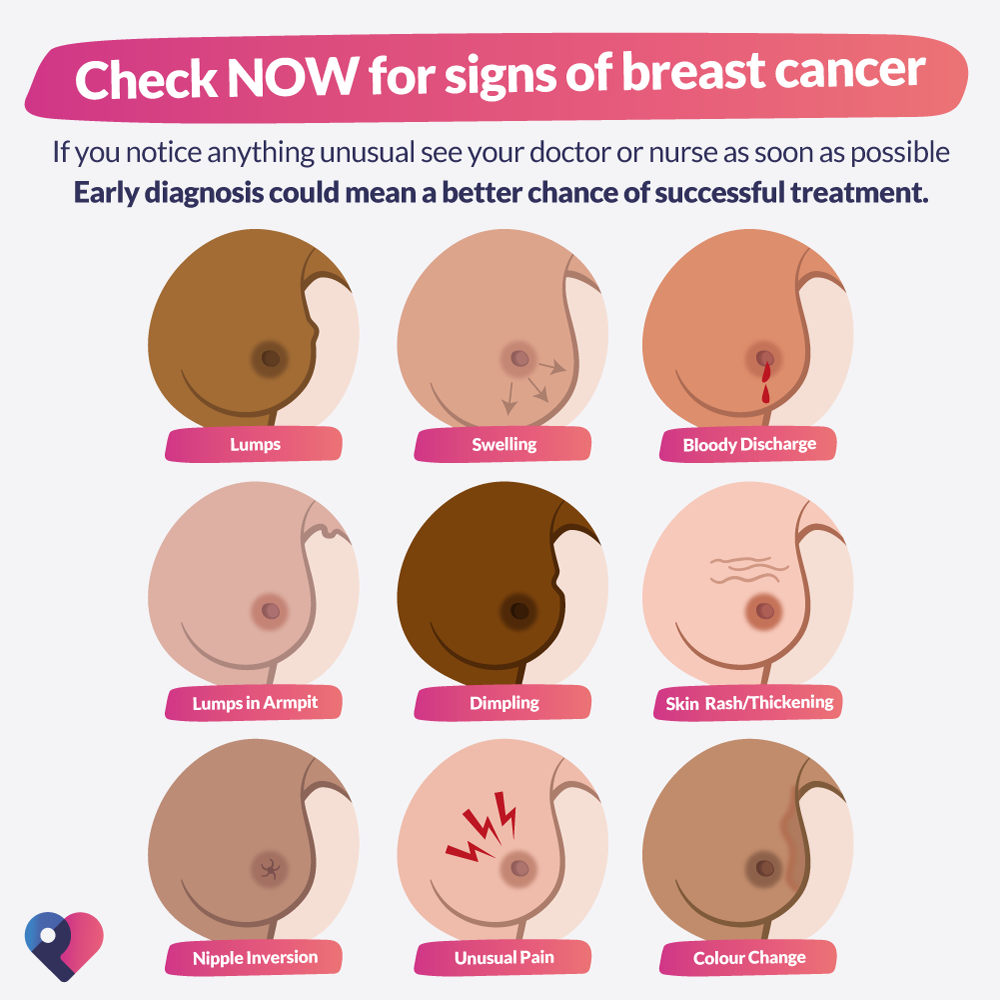
Cooke’s guide to checking your breasts
1. Know your breasts
It's harder to look for changes if you're not familiar with your breasts. For example, it's common to have one bigger than the other. Familiarise yourself with their differences and similarities.
2. Look with a mirror
Look for changes in shape and size - this includes any swelling, dimpling - when skin appears to be pulled inward or puckered - and looking to see if the shape/size difference between both breasts seems greater than usual.
Look for other skin changes - including unexplained dryness, redness, and rashes.
Look for nipple changes - including nipple discharge, nipple rash, and newly inward-turned nipples.
Look for changes under your arms/armpits - lift your arms above your head and look for the same warning signs as above.
3. Feel with your hands
Lying down, place your right hand flat on your left breast and apply a slight pressure.
Move your palm around the breast in a circular motion - start at the collarbone, create a spiral shape around your entire breast until you reach your nipple in the centre. Don't forget the underneath of the breast.
Note any lumps or swellings that feel unfamiliar to you.
Repeat on the other side.
Follow steps 1-4 above on your armpits.
Sitting up, examine both breasts and armpits in the same way. We do this because you may feel different areas better in both positions.
Is a breast lump always noticeable?
A lump might feel different, depending on several factors, such as breast size and age. For example, in larger breasts it's easier to miss lumps. To the eye, the breast may look different, the contours may change, or you may notice an obvious lump or swelling. You might notice visible changes, such as fluid leaking from the nipple, rashes, or redness, but could also experience breast pain, which might not have an obvious cause.
Some people don't notice they have a lump, but their cancer can be detected by a screening test (mammogram) later during normal breast screening in the UK. Genetic testing for breast cancer is also available.
However, your doctor can talk you through how to self-examine your breasts - plus, there are online tutorials and graphics - such as the one above - to guide you through.
How often should you check your breasts?
You should check your breasts regularly, even if you have not felt a lump in the past. Checking your breasts every two weeks - or up to once a month - helps you identify what feels normal to you and makes it easier to notice when something is out of the ordinary.
It's advised to check them on the same day each month - around a week after your period. The process shouldn't take long but be sure that you are thorough.
You can self-examine by standing in front of a mirror, but a good tip is to do it in the shower or bath, as lumps and bumps can be easier to identify when the skin is moist.
What you are looking for is a difference from last month's examination. Therefore, you should know the layout and normal feeling of your own breasts. If it helps, you could draw a diagram, so you know where any lumps or grooves already sit.
When to get a lump checked out
Cooke outlines the things that might be abnormal that you should get checked out by a doctor, just to be on the safe side. It might be nothing, but it's always better to get it looked at to save yourself the worry. Plus, early intervention and treatment can be key to cancer survival.
Seek a review by a doctor if you have:
A new breast lump.
A new armpit lump.
Nipple changes - change in nipple location, nipple inversion, nipple discharge, or skin changes around your nipple, such as eczema.
Skin changes on the breasts - rashes or eczema.
Changes in skin colour.
Skin puckering or dimpling - where the skin appears pulled in.
Cooke says that when you see a doctor regarding a breast lump or changes of concern, they will ask about your medical history and whether there is a family history of breast cancer. They will look at your medicines and whether you smoke or drink alcohol - which is often on your medical record.
"They'll also ask how you noticed the lump and will likely offer an examination and a referral if there is anything of concern," she says.
How does breast cancer develop?
The most common place for cell changes is in the lining of the milk ducts of the breast. A smaller number of breast cancers affect the breast lobules - the gland that makes milk.
Ductal carcinoma in situ (DCIS) is considered the earliest form of breast cancer. This is when abnormal cells are in the milk ducts. It is non-invasive, meaning it hasn't spread out of the milk duct to surrounding tissue. It also has a low chance of becoming invasive.
According to Cooke, there are many reasons why breast cancer develops and lots of these are things you can control yourself - modifiable risk factors.
Cooke advises that taking the combined contraceptive pill increases your chance of breast cancer very slightly - but it also reduces your change of developing ovarian and womb cancer, so the benefits often outweigh the risks.
"Using hormone replacement therapy (HRT), particularly if it is a combined HRT preparation and used for longer than five years, can also increase the likelihood of breast cancer," she says. "HRT taken for five years or fewer does not significantly increase breast cancer risk."
Other risk factors of breast cancer that are not under your control include:
Family history of breast cancer.
Family genetic mutations (BRCA1 and BRCA2).
Increasing age.
Starting your periods before the age of 12, and going through menopause at a later age.
History of previous breast cancer.
Cooke explains that those who have not given birth to children have a slightly increased chance of breast cancer.
Women who are older than 30 when they give birth to their first child have a higher chance of breast cancer than women who have never given birth. But, those who have never given birth can also have an increased chance of developing breast cancer compared with those who have children during their twenties.
Cooke explains that you can potentially reduce your chance of breast cancer by living an active lifestyle, maintaining a body mass index (BMI) between 18.5 to 25, and breastfeeding if you have children. The longer you breastfeed your baby, the lower your risk of breast cancer becomes. It is not fully known why this is, but it's thought that the ovaries don't produce eggs as often while someone is breastfeeding, and the development of breast cancer is related to exposure to hormones produced by the ovaries.
Can men get breast cancer?
While there's often a focus on how women are affected by breast cancer, men can and do get it too. In rare cases, cancer can develop in the small amount of breast tissue behind male nipples.
Breast cancer in men usually only affects those between the ages of 60 to 70, but there's a chance of it developing in younger men too.
The main symptom of breast cancer in male breast tissue is a lump, but the nipple might be affected too, such as a change in shape, colour, position, or discharge.
Men should also be encouraged to check for lumps and seek medical advice if anything feels out of the ordinary.
Patient picks for Breast cancer

Women's health
What's causing your breast pain?
Breast pain - or mastalgia - is common in women of all ages and can often be a source of anxiety. We look at causes and management options, and the symptoms you should never ignore.
by Victoria Raw
Cancer
Cancer symptoms you should never ignore
When it comes to unexplained medical symptoms, it's easy to bury your head in the sand and ignore them, especially if they're a bit embarrassing to discuss. But getting them checked out by a doctor could end up saving your life. Here are the cancer symptoms you should never ignore.
by Lynn Stephen
About the authorView full bio

Emily Jane Bashforth
Feature Writer
NCTJ
Emily is a Feature Writer with Patient, writing articles on a variety of topics relating to health and well-being.
About the reviewerView full bio

Dr Colin Tidy, MRCGP
General Practitioner, Medical Author
MBBS, MRCGP, MRCP (Paediatrics), DCH
Dr Colin Tidy is an NHS Doctor, based in Oxfordshire.
Article history
Article also available in English, German, Spanish, French, Italian, Portuguese, Hindi, Hebrew, Arabic, and Swedish.
Next review due: 12 Aug 2029
13 Aug 2026 | Latest version
30 Sept 2022 | Originally published
Authored by:
Emily Jane Bashforth
Join the conversation
Share your thoughts or experiences with others in our patient communities.

Ask, share, connect.
Browse discussions, ask questions, and share experiences across hundreds of health topics.

Feeling unwell?
Assess your symptoms online for free
Sign up to the Patient newsletter
Your weekly dose of clear, trustworthy health advice - written to help you feel informed, confident and in control.
By subscribing you accept our Privacy Policy. You can unsubscribe at any time. We never sell your data.
More in cancer
- Being a 'morning person' lowers risk of breast cancer
- Blood test may detect ovarian cancer two years earlier
- Can your diet reduce the risk of cancer?
- Clinical Pilates: a support to breast cancer recovery
- How cancer can affect your mental health
- How to cope with anxiety after cancer
- How to talk about your end of life care wishes
- HPV vaccine could one day eliminate cervical cancer
- Less survivable cancers are more likely to have late diagnoses
- LGBTQI+: what are the barriers and challenges in end of life care?
- New insight into breast cancer risk after stopping HRT
- Should you wear sunscreen even when it's cloudy?
- Smear test myths you need to stop believing
- What are the common myths and facts about cervical screening?
- What not to say to someone who is dying
- What not to say to someone with cancer
- What to expect during a breast screening
- Why are Black men more likely to die from prostate cancer?
- Women with physical disabilities denied access to smear tests
- Your essential skin cancer checklist