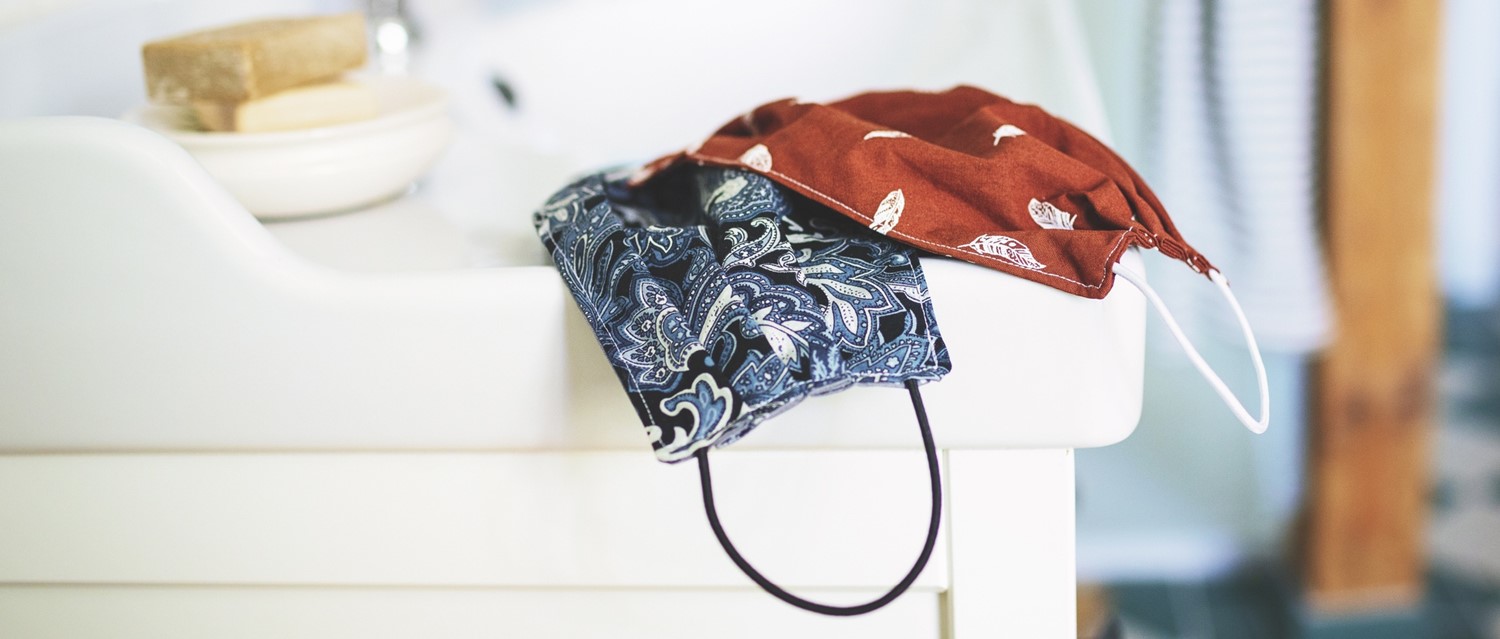
What are the latest rules on face masks in the UK?
Peer reviewed by Dr Sarah JarvisAuthored by Milly EvansOriginally published 18 Jun 2020
Meets Patient’s editorial guidelines
- DownloadDownload
- Share
- Language
- Discussion
- Audio Version
- Add to preferred sources on Google
This page has been archived.
It has not been reviewed recently and is not up to date. External links and references may no longer work.
As rules ease slightly in some parts of the UK, new measures are introduced to keep us safe as our exposure to the outside world increases. One of these measures is wearing a face mask or covering which, in England, has become mandatory in some situations.
Use Patient's coronavirus checker tool if you have any symptoms of fever, a new cough or loss of smell or taste. Until you have used the tool and been advised what action to take, please stay at home and avoid contact with other people.
The rules and guidelines are rapidly changing as the COVID-19 pandemic evolves. We take a look at the latest rules on face masks and coverings in each of the four nations of the UK.
England
In England it is now compulsory to wear face coverings on public transport and as hospital staff, an outpatient or a visitor to a hospital.
Public transport
If you are travelling by bus, train, ferry or plane in England you must now wear a face covering, as of 15th June. For the first few days, face coverings will be handed out to those who have forgotten theirs but you should try to bring your own.
You don't need to wear a face covering whilst waiting for public transport but train stations are asking people to wear them as they enter the station.
You may be refused travel if you do not wear a face covering on board public transport. As a last resort, you may be fined up to £100 for not wearing a covering.
Some people are exempt from the new rules on face coverings including:
Children under 11 years old.
People unable to put on, wear or take off a mask due to a disability.
People with breathing difficulties.
Those travelling with someone who relies on lip reading.
In circumstances where it is really necessary to eat or drink on public transport, you will be able to lower your mask to do so.
The rules don't apply to some types of public transport including cruise ships, school transport, taxis and private hire vehicles. However, you should check the rules with whichever company you are travelling with as some, such as Uber, are enforcing their own rules on face coverings.
The government expects that the number of people travelling on public transport will increase in the coming days and months as more workplaces and shops start to reopen. However, they still encourage people to avoid public transport as much as possible and only use it for essential journeys, to make it easier to socially distance and stay safe on board. Those who can continue to work from home should do so.
Hospitals
As well as public transport, it is now compulsory to wear a face covering when visiting a hospital or attending as an outpatient. Hospitals already have extensive measures in place to reduce the risk to both patients and staff - wearing a face covering is an additional measure to reduce the risk from coronavirus.
Again, the same groups are exempt, including children and people with disabilities.
Scotland
Several weeks ago, Scotland started advising members of the public to start wearing face coverings in indoor places where social distancing would not be possible. This includes small shops and public transport, for example. Children under two years old have been exempt from this guidance.
Whilst the Scottish Government strongly encouraged people to start covering their faces in enclosed public spaces, they did not make it compulsory. The advice has not yet changed but Scotland is considering making it mandatory in certain situations.
Wales
The guidance in Wales is in line with the latest advice from the World Health Organization. As in Scotland, wearing a face covering is not compulsory but people in Wales are strongly encouraged to wear one on public transport and in other settings where social distancing is difficult such as crowded shops.
As with all face mask advice, the Welsh Government clearly states that wearing a face mask should not be seen as a replacement or alternative to social distancing and hand washing.
Northern Ireland
Northern Ireland has similar rules which have not changed since the beginning of May. Wearing face coverings has not yet been made mandatory but it is recommended for short periods in places where social distancing is impossible, including public transport and retail environments.
What kind of mask should I wear?
In all of the above scenarios, authorities are keen to stress that they are recommending the use of face coverings and not necessarily masks. This includes homemade 3-layer fabric masks, T-shirts and other homemade face coverings. Surgical masks are to be reserved for key workers, including those working on the frontline in the NHS. Public Health England has created a guide to making and wearing your face covering.
It's important to remember that face masks are being recommended as a measure to prevent the spread of coronavirus from you to other people - wearing a mask does not protect you against coronavirus. This is why it's important to continue with social distancing and maintaining a two-metre distance between you and people you don't live with.
How to wear a face mask safely
If you choose to or are required to wear a face covering, you need to learn how to put it on, wear it and remove or dispose of it safely.
The face mask should cover the face from the bridge of the nose to the chin.
Wash your hands for twenty seconds with soap and water or use hand sanitiser before putting on or taking off a face mask.
Remove it from behind and avoid touching the front of the mask.
Dispose of the face mask safely and wash your hands or apply hand sanitiser if it is disposable.
If the mask is reusable, wash the mask as soon as possible after use, using normal detergent (Scotland specifies a 60°C wash). Wash your hands or apply sanitiser as soon as possible after touching the mask.
If you need to use a mask more than once in one day - for example, for an outbound and return journey on public transport - bring two masks and keep the used one in a separate plastic bag to dispose of, or put it in the washing machine and let it dry before using again.
Patient picks for Pandemic articles

COVID-19
COVID-19 coronavirus: when will we have a vaccine?
Medical experts around the world are working around the clock to develop a vaccine for COVID-19 as it continues to spread around the globe. But how are vaccines made and when are we likely to have one for coronavirus?
by Andrea Downey

COVID-19
What to do if you have problems with your eyes during lockdown
Having problems with your vision is a worrying experience - even more so when the country is following social distancing guidelines and some services are closed. But there are options available if you have eye trouble during lockdown.
by Andrea Downey
About the authorView full bio

Milly Evans
Editor
Milly writes on a range of health topics, with a particular interest in health inequality and sexual health.
About the reviewerView full bio

Dr Sarah Jarvis
Clinical Consultant
MA (Cantab), BM, BCh (Oxon), DRCOG, FRCGP, MBE
After training in medicine at Cambridge and Oxford, Dr Sarah Jarvis MBE became a GP.
Article history
Article also available in English, German, Spanish, French, Italian, Portuguese, Hindi, Hebrew, Arabic, and Swedish.
18 Jun 2020 | Originally published
Authored by:
Milly EvansPeer reviewed by
Dr Sarah Jarvis
Join the conversation
Share your thoughts or experiences with others in our patient communities.

Ask, share, connect.
Browse discussions, ask questions, and share experiences across hundreds of health topics.

Feeling unwell?
Assess your symptoms online for free
Sign up to the Patient newsletter
Your weekly dose of clear, trustworthy health advice - written to help you feel informed, confident and in control.
By subscribing you accept our Privacy Policy. You can unsubscribe at any time. We never sell your data.
More in cOVID-19
- A year on: what we now know about COVID-19
- Can I have routine vaccinations under lockdown?
- COVID-19: how do Omicron symptoms compare to other variants?
- COVID-19: What is herd immunity and will we ever reach it?
- How have Brits neglected their oral health during the pandemic?
- How to book your COVID-19 booster vaccine
- How to reduce your risk of DIY injuries during coronavirus lockdown
- What are the symptoms of the COVID-19 variant Pirola?
- When will I get my COVID-19 vaccine?
- Why are women so vulnerable to COVID-19 in pregnancy?
- Why it's a good thing if you feel unwell after your COVID-19 booster jab