How your periods change during perimenopause
Peer reviewed by Dr Colin Tidy, MRCGPLast updated by Lynn StephenLast updated 20 Feb 2026
Meets Patient’s editorial guidelines
- DownloadDownload
- Share
- Language
- Discussion
- Audio Version
- Add to preferred sources on Google
Perimenopause means ‘around menopause’. It is the time when your body starts to move towards menopause, which is when your periods stop. During perimenopause, your hormone levels go up and down, which can make your periods more erratic. We look at why this happens - and what you can expect your menstrual cycle to be like during perimenopause.
Sign up for our free 10-week Menopause course!
Each week, we'll explore different topics to help you better understand and navigate your menopausal journey, including HRT, diet, exercise, and mental health.
By subscribing you accept our Privacy Policy. You can unsubscribe at any time. We never sell your data.
The average length of time for perimenopause is around 4 years, but it is different for each person. Once you've gone through 12 consecutive months without a period, you've officially reached menopause and the perimenopause period is over.
During perimenopause, your levels of the hormones oestrogen - one of the main female hormones - and progesterone rise and fall. This affects your menstrual cycle.
What to expect during perimenopause
Premenstrual symptoms
Dr Jayne Forrester-Paton, a GP and British Menopause Society accredited menopause specialist at Your Menopause Doctor, says it’s very common for your periods to gradually change as you enter perimenopause.
“One of the earliest signs of perimenopause can be a gradual worsening of premenstrual symptoms (PMS), these can be physical, as well as psychological,” she says. “For example, you may experience worsening headaches, bloating, breast tenderness, and mood changes in the days leading up to a period. For some women, the duration of PMS lengthens and they have less 'good' days each month.”
Forrester-Paton says some women may notice night sweats or hot flushes just in the days leading up to their period.
“Periods may still be regular at this stage,” she adds.
Irregular periods
As you progress through perimenopause, your periods may become more irregular than usual.
“A classic pattern is for your periods to get closer together before gradually becoming spaced further and further apart, until they eventually stop altogether,” explains Forrester-Paton.
Heavier or lighter periods
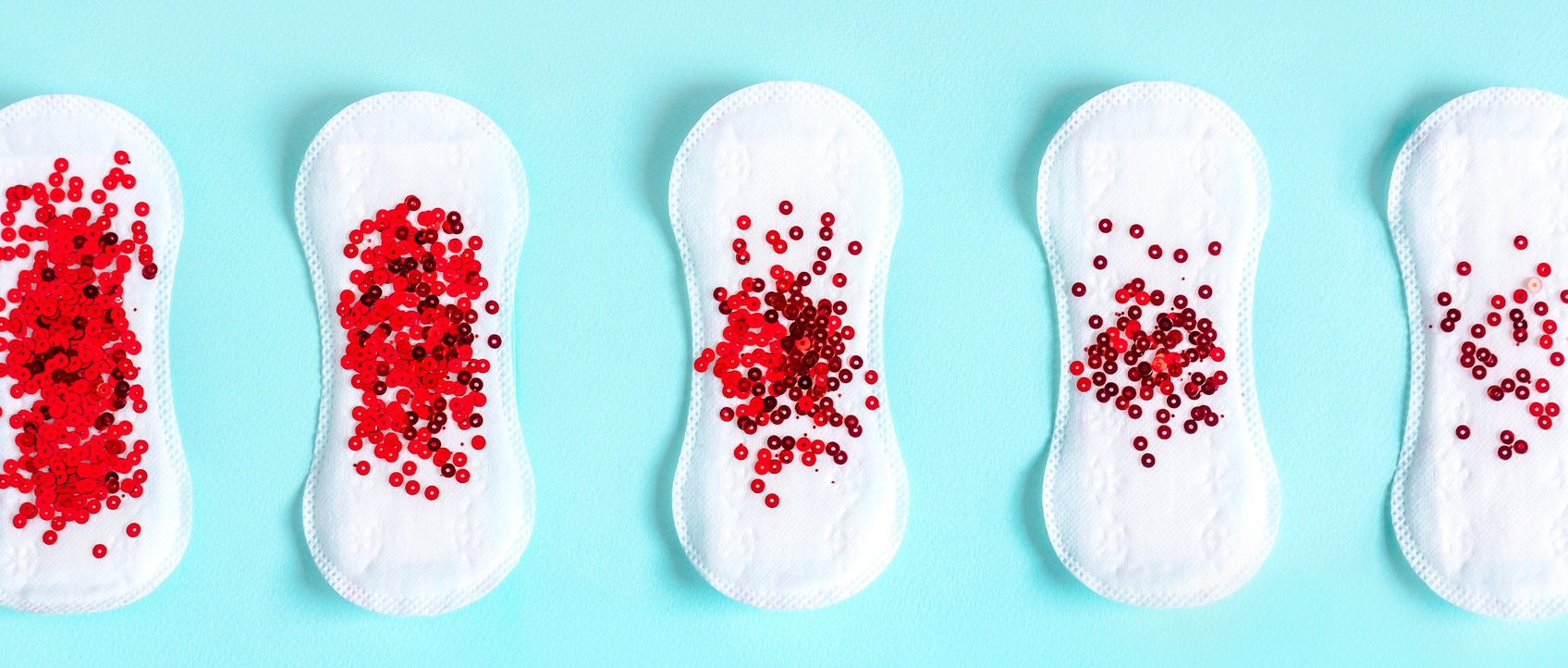
It is also common for periods to become heavier as the gaps between them widen. You may also experience spotting between periods.
“Some people may experience flooding or clots for the first time,” says the menopause specialist. “However, as with everything related to the menopause and perimenopause, the experience varies widely from person to person. Some will experience periods abruptly stopping with little warning, or others lighter and easier to manage periods.”
Anovulatory cycles
An anovulatory cycle is a menstrual cycle in which ovulation - the release of an egg from the ovaries - doesn’t happen. Anovulation is often due to hormonal imbalances and can occur during perimenopause.
Signs of an anovulatory cycle vary, but can include:
Irregular periods.
Missing periods.
Unusually heavy or light bleeding
Sometimes, though, there are no obvious signs.
Blood colour changes
Your menstrual blood may also look different and sometimes, it can appear darker or brown. Menstrual blood appears red when it’s fresh and has left the body quickly, but it can look darker if it is old, oxidised blood that has been in the uterus for longer. This can happen during perimenopause because hormonal imbalances mean the uterine lining breaks down differently.
Discharge changes
You may notice changes in the consistency of your discharge, which may become thinner or thicker.
How to manage changes to your period
It can help to track your period on a calendar, so you can see how your menstrual cycle is changing. Note down any other symptoms, such as unusual bleeding or pain - so you can show your doctor if you need to.
Keeping tampons, sanitary towels, and a change of underwear in your bag can be a good idea if you’re not sure when your period will arrive, or how heavy it will be. It’s also helpful to have over-the-counter painkillers such as paracetamol or ibuprofen on hand too. You can also buy period-proof underwear, which will absorb unexpected leaks or spotting.
When to see a doctor about changes in your period
Speak to your doctor
"It’s important not to ignore changes to your bleeding pattern or flow and to discuss this with your doctor to ensure any concerning causes can be ruled out," says Forrester-Paton.
Irregular bleeding can be a sign of other underlying conditions.
You should speak to your doctor if you have:
Heavy bleeding.
Bleeding that lasts longer than a week.
Bleeding that happens more frequently than every 3 weeks.
If you are worried about your menstrual cycle or any other symptoms, it's best to speak to your doctor to be safe.
If you’ve missed a period, and it’s possible you could be pregnant, you should take a pregnancy test. Even if you’re in perimenopause, you can still ovulate and become pregnant. If you are under 50, you can still get pregnant up to 2 years after your last period and if you are over 50, you can still get pregnant up to 1 year after your last period.
Patient picks for Menopause and HRT

Hormones
Are you going through the perimenopause?
You may not have reached menopause if you're experiencing headaches, night sweats, weight gain, anxiety, and depression - but you may be perimenopausal. While this means your body is transitioning towards menopause, it could be years before you reach it.
by Lawrence Higgins

Hormones
How to manage skin issues at menopause
Falling oestrogen levels at menopause can cause skin changes such as dryness, loss of elasticity, dark spots, breakouts, and slow wound healing. However, with the right care it is possible to reduce these effects. Here we show what you can do help your skin through this time of change.
by Lawrence Higgins
About the authorView full bio

Lydia Smith
Feature writer
BA, MA, MSc
Lydia Smith is an award-winning journalist and feature writer who has written extensively on women's health and mental health. She is currently studying for an MSc in psychology.
About the reviewerView full bio

Dr Colin Tidy, MRCGP
General Practitioner, Medical Author
MBBS, MRCGP, MRCP (Paediatrics), DCH
Dr Colin Tidy is an NHS Doctor, based in Oxfordshire.
Article history
The information on this page is peer reviewed by qualified clinicians.
Article also available in English, German, Spanish, French, Italian, Portuguese, Hindi, Hebrew, Arabic, and Swedish.
Next review due: 20 Feb 2029
20 Feb 2026 | Latest version
19 Sept 2023 | Originally published
Authored by:
Lydia Smith
Join the conversation
Share your thoughts or experiences with others in our patient communities.

Ask, share, connect.
Browse discussions, ask questions, and share experiences across hundreds of health topics.

Feeling unwell?
Assess your symptoms online for free
Sign up to the Patient newsletter
Your weekly dose of clear, trustworthy health advice - written to help you feel informed, confident and in control.
By subscribing you accept our Privacy Policy. You can unsubscribe at any time. We never sell your data.
More in hormones
- 7 ways to ease 'morning dread' during perimenopause
- Are you going through the perimenopause?
- Common signs of a hormonal imbalance
- Do herbal remedies for menopause really work?
- How an underactive thyroid affects fertility
- How PCOS affects your mental health
- How to manage skin issues at menopause
- How to support someone during the menopause
- How to tell if you have an underactive thyroid
- Living with HRT
- Looking after your health during the menopause
- The 'second puberty': why you might be breaking out in your thirties
- The importance of a healthy thyroid
- The truth about HRT
- What HRT did for me
- What is postmenopausal depression?
- What it's like to go through early menopause
- What you need to know about testosterone and menopause
- What's the link between menopause and cholesterol?