Cardiovascular disease
Atheroma
Peer reviewed by Dr Krishna Vakharia, MRCGPLast updated by Dr Colin Tidy, MRCGPLast updated 13 Jun 2023
Meets Patient’s editorial guidelines
- DownloadDownload
- Share
- Language
- Discussion
- Audio Version
- Add to preferred sources on Google
In this series:Cardiovascular health risk assessmentMediterranean diet
Cardiovascular diseases (CVD) is a general term to describe diseases of the heart or blood vessels. The cause of most cardiovascular disease is a build-up of atheroma - a fatty deposit within the inside lining of arteries.
The blood flow to the heart muscle may also be restricted by a blood clot in an artery taking blood to the heart muscle (coronary artery disease). Atheroma or a blood clot may also restrict or prevent blood going to the brain (cerebrovascular disease) or to the legs and feet (peripheral arterial disease).
There are lifestyle factors that can be taken to reduce the risk of forming atheroma. These include not smoking; choosing healthy foods; a low salt intake; regular physical activity; keeping your weight and waist size down; drinking alcohol in moderation.
Your blood pressure and cholesterol level are also important. All people aged over 40 years should have a cardiovascular health risk assessment - usually available at your GP surgery. If you have a high risk of developing a cardiovascular disease, treatment to reduce high blood pressure (hypertension) and/or cholesterol may be advised.
At a glance
Cardiovascular disease affects the heart or blood vessels, often due to narrowing from fatty deposits called atheroma.
Symptoms depend on the affected area, including chest pain for the heart, or stroke symptoms for the brain.
Risk factors include smoking, inactivity, obesity, unhealthy diet, high blood pressure, and high cholesterol.
Lifestyle changes like quitting smoking, exercising, losing weight, and a healthy diet can help prevent it.
Treatment involves lifestyle changes and sometimes medicines for risk factors or the specific disease.
What is a cardiovascular disease?
A cardiovascular disease is a disease of the heart or blood vessels. Narrowing of the blood vessels can lead to cardiovascular diseases. CVD includes coronary heart disease (for example, angina, heart attack and heart failure), cerebrovascular disease (transient ischaemic attacks and stroke), and peripheral arterial disease.
See also the leaflet on Anatomy of the heart and blood vessels for more information.
How does an atheroma form?
An atheroma is a fatty material that builds up inside your arteries. Atheromas form wherever the inner lining (endothelium) of the artery walls becomes damaged. An atheroma then grows over time.
An atheroma is made of many substances that circulate in your blood, such as blood cells, calcium, cholesterol and other fats, inflammatory cells and proteins.
Foam cells are a type of cell (macrophage) that localise to fatty deposits on artery walls, where they take in cholesterol, giving them a foamy appearance. These cells make various substances that are involved in the growth of the atheroma. When a foam cell dies, it promotes inflammation of the artery wall and further contributes to cardiovascular disease.
As they grow, atheromas gradually take up more space inside your artery, leaving less room for blood to flow. Depending on where the atheroma is, this may lead to coronary artery disease (eg, angina or heart attack), peripheral artery disease, or a stroke. An atheroma may also rupture and cause a blood clot to form. The clot may block blood flow at that spot, or travel in the blood stream to another site, and block the blood flow there.
An atheroma is more commonly known as atherosclerotic plaque (or just called a plaque).
Cardiovascular disease symptoms
Minor blockage of an artery may not cause any symptoms. Any symptoms will depend on which part of the body is affected by cardiovascular disease, such as:
Blockage of an artery in the heart (coronary artery) may cause angina chest pain, a heart attack or heart failure.
Blockage of an artery leading to the brain may cause a stroke or transient ischaemic attack.
Blockage of an artery leading to the leg may cause leg pain with walking (intermittent claudication) or, if more severe, may cause loss of blood supply to the leg and gangrene.
Cardiovascular disease risk factors
Everybody has some risk of developing small fatty lumps called atheroma. However, certain risk factors increase the risk. Risk factors include:
Lifestyle risk factors that can be prevented or changed:
Treatable or partly treatable risk factors:
Chronic kidney disease causing diminished kidney function.
Fixed risk factors - ones that you cannot alter:
A strong family history. This means if you have a father or brother who developed heart disease or a stroke before they were 55; or, if you have a mother or sister who developed heart disease or a stroke before they were 65.
Being male.
Age. The older you become, the more likely you are to develop atheroma.
Ethnic group. For example, people who live in the UK with ancestry from India, Pakistan, Bangladesh, or Sri Lanka have an increased risk.
However, if you have a fixed risk factor, you may want to make extra effort to tackle any lifestyle risk factors that can be changed.
Note: some risk factors are more risky than others. For example, smoking probably causes a greater risk to health than obesity does. Also, risk factors interact. So, if you have two or more risk factors, your health risk is much more increased than if you just have one.
How to prevent cardiovascular disease
The following lifestyle risk factors should be changed to help prevent cardiovascular disease.
Quitting smoking
Lifetime smoking roughly doubles your risk of developing heart disease. The chemicals in tobacco get into the bloodstream from the lungs. They damage the blood vessels (arteries) and other parts of the body. Your risk of having a stroke and of developing other diseases such as lung cancer is also increased.
Stopping smoking is often the single most effective thing that a person can do to reduce their health risk. The increased risk falls rapidly after stopping smoking (although it takes a few years before the excess risk reduces completely). If you smoke and are having difficulty in stopping then see your practice nurse for help and advice.
Being physically active
People who are physically active have a lower risk of developing cardiovascular diseases compared with inactive people. To gain health benefits you should do at least 30 minutes of moderate physical activity, on most days (at least five days per week).
30 minutes in a day is probably the minimum to gain health benefits. However, you do not have to do this all at once. For example, cycling to work and back 15 minutes each way adds up to the total of 30 minutes.
Moderate physical activity means that you get warm, mildly out of breath, and mildly sweaty. For example, brisk walking, jogging, swimming, cycling, etc. However, research studies do suggest that the more vigorous the exercise, the better for health - particularly for preventing heart disease.
On most days. You cannot store up the benefits of physical activity. You need to do it regularly.
Losing weight
If you are overweight, you are more likely to develop cardiovascular diseases, diabetes, or certain cancers. People with type 2 diabetes have a higher risk of cardiovascular disease. The increased health risk of obesity is most marked when the excess fat is mainly in the tummy (abdomen) rather than on the hips and thighs. As a rule, a waist measurement of 102 cm or above for men (92 cm for Asian men) and 88 cm or above for women (78 cm for Asian women) is a significant health risk.
Improving diet
Eating healthily helps to control obesity and lower your cholesterol level. Both of these help to reduce your health risk. Also, there is some evidence that eating oily fish (herring, sardines, mackerel, salmon, kippers, pilchards, fresh tuna, etc) helps to protect against heart disease.
It is probably the omega-3 fatty acids in the fish oil that help to reduce the build-up of small fatty lumps called atheroma. Also, fruit and vegetables, as well as being low in fat, also contain antioxidants and vitamins which may help to prevent atheroma from building up. Briefly, a healthy diet means:
AT LEAST five portions, or ideally 7-9 portions, of a variety of fruit and vegetables per day.
A THIRD OF MOST MEALS should be starch-based foods (such as cereals, wholegrain bread, potatoes, rice, pasta), plus fruit and vegetables.
NOT MUCH fatty food such as fatty meats, cheeses, full-cream milk, fried food, butter, etc. Use low-fat, mono-unsaturated or polyunsaturated spreads. One study conducted at Harvard University found that replacing saturated fats with polyunsaturated fats is an effective way of lowering your risk of heart attacks and other serious problems from heart disease.
INCLUDE 2-3 portions of fish per week, at least one of which should be oily (such as herring, mackerel, sardines, kippers, salmon, or fresh tuna).
LIMIT SALT to no more than 5 g a day (and less for children). See below for details.
If you eat meat, it is best to eat lean meat, or poultry such as chicken.
If you do fry, choose a vegetable oil such as sunflower, rapeseed or olive.
Following a Mediterranean diet can reduce the chance of developing cardiovascular disease. See the separate leaflet called Mediterranean Diet.
Reducing salt intake
Adults should eat no more than 5 g of salt a day. This is about a teaspoon of salt. Even a modest reduction in intake can make quite a big difference. The current average daily intake of salt in the UK is 9 g per day.
About three quarters of the salt we eat is already in the foods we buy. Simply checking food labels and choosing foods with lower salt options can make a big difference. A tip: sodium is usually listed on the food label. Multiplying the sodium content by 2.5 will give the salt content. Also, try not to add salt to food at the table.
Cutting down alcohol
Drinking a small or moderate amount of alcohol probably reduces the risk of developing cardiovascular diseases (38% compared with teetotallers in one study). That is, 1-2 units per day - which is up to 14 units per week. Drinking more than the recommended upper limits can be harmful. Men and women should drink no more than 14 units per week.
Cardiovascular disease treatment
The treatment of cardiovascular disease includes:
Lifestyle measures, including:
Some medicines may be used to treat risk factors of cardiovascular disease, such as high blood pressure, high cholesterol or diabetes.
Additional treatment may be needed depending on the type and severity of cardiovascular disease. See also the leaflets on coronary heart disease (angina, heart attack and heart failure), cerebrovascular disease (transient ischaemic attacks and stroke), and peripheral arterial disease.
Calculating your cardiovascular health risk
A 'risk factor calculator' is often used by healthcare professionals. This can assess your cardiovascular health risk. A score is calculated which takes into account all your risk factors such as age, sex, smoking status, blood pressure, cholesterol level, etc.
The calculator has been devised after a lot of research that monitored thousands of people over a number of years. The score gives a fairly accurate indication of your risk of developing a cardiovascular disease over the next 10 years. See the separate leaflet called Cardiovascular Health Risk Assessment.
Patient picks for Heart disease
Heart health and blood vessels
Hypertrophic cardiomyopathy
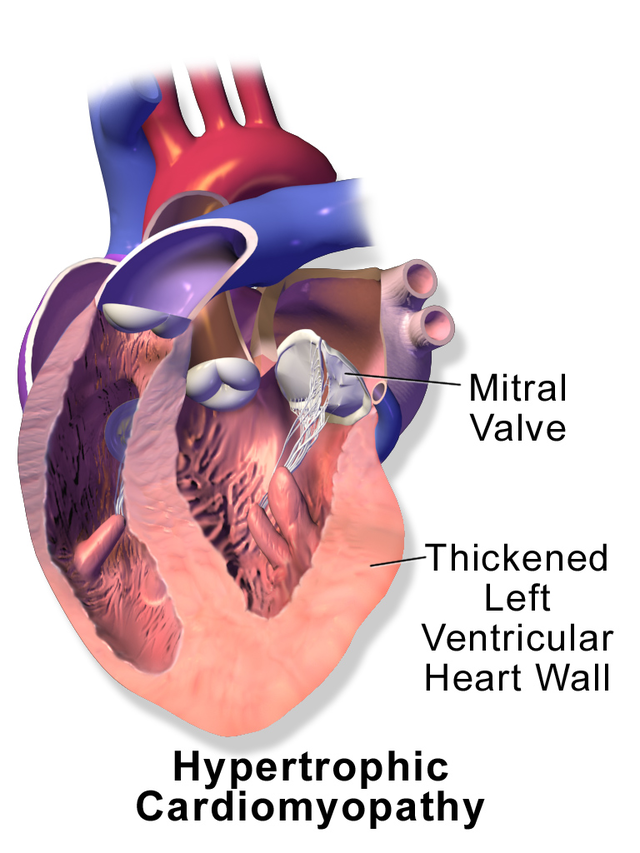
In hypertrophic cardiomyopathy the heart muscle becomes thickened (hypertrophies) in parts of the heart. In the normal heart, the muscle cells are regular and patterned. In hypertrophic cardiomyopathy the cells of the heart muscle become irregular and disordered.
by Dr Colin Tidy, MRCGP

Heart health and blood vessels
Mitral stenosis
Mitral stenosis means that when the mitral valve opens, it does not open fully. The opening is therefore narrower than normal (stenosed).
by Dr Colin Tidy, MRCGP
Frequently asked questions
Can I completely eliminate the risk of atheroma formation?
Everyone has some risk of developing small fatty lumps called atheroma. While you cannot alter fixed risk factors like age, sex, or family history, you can significantly reduce your risk by addressing lifestyle factors such as smoking, lack of physical activity, obesity, unhealthy diet, and excess alcohol. Making extra efforts to change these modifiable risk factors is important even if you have fixed risk factors.
How quickly does the risk of cardiovascular disease decrease after stopping smoking?
The increased risk of cardiovascular disease falls rapidly after stopping smoking. However, it takes a few years before the excess risk reduces completely.
What specifically makes a Mediterranean diet beneficial for preventing cardiovascular disease?
The article mentions that following a Mediterranean diet can reduce the chance of developing cardiovascular disease. It generally promotes a healthy eating pattern consistent with the dietary advice provided, which includes plenty of fruit and vegetables, starch-based foods, healthy fats, and limiting unhealthy fatty foods and salt.
How much physical activity is considered enough to reduce my risk?
To gain health benefits and reduce your risk, you should do at least 30 minutes of moderate physical activity, on most days (at least five days per week). This can be broken up into shorter periods, like two 15-minute sessions. Moderate activity means you get warm, mildly out of breath, and mildly sweaty. More vigorous exercise may offer even greater benefits particularly for heart disease prevention.
Why is it important to know my waist measurement regarding cardiovascular disease risk?
The increased health risk from obesity is most pronounced when excess fat is stored mainly in the abdomen. For men, a waist measurement of 102 cm or above (92 cm for Asian men), and for women, 88 cm or above (78 cm for Asian women), indicates a significant health risk for cardiovascular disease.
Further reading and references
- Cardiovascular disease prevention; NICE Public Health Guideline (June 2010)
- Risk estimation and the prevention of cardiovascular disease; Scottish Intercollegiate Guidelines Network - SIGN (2017)
- CVD risk assessment and management; NICE CKS, May 2023 (UK access only)
- Cardiovascular risk assessment and lipid modification; NICE Quality standard, May 2023
- Cardiovascular disease: risk assessment and reduction, including lipid modification; NICE Clinical Guideline (July 2014 -last updated May 2023) Replaced by NG238
About the authorView full bio

Dr Colin Tidy, MRCGP
General Practitioner, Medical Author
MBBS, MRCGP, MRCP (Paediatrics), DCH
Dr Colin Tidy is an NHS Doctor, based in Oxfordshire.
About the reviewerView full bio

Dr Krishna Vakharia, MRCGP
Chief Medical Officer for Health, Optum UK
MBChB, MRCGP(2013), BMedSci (hons), DFSRH, DRCOG, PGDipDerm (Distn)
Dr Krishna Vakharia is an NHS GP. She is also a regular examiner for the postgraduate Diploma in Practical Dermatology at Cardiff University as well as being the Chief Medical Officer for health at Optum UK.
Article history
The information on this page is written and peer reviewed by qualified clinicians.
Article also available in English, German, Spanish, French, Italian, Portuguese, Hindi, Hebrew, Arabic, and Swedish.
Next review due: 11 Jun 2028
13 Jun 2023 | Latest version
Join the conversation
Share your thoughts or experiences with others in our patient communities.

Ask, share, connect.
Browse discussions, ask questions, and share experiences across hundreds of health topics.

Feeling unwell?
Assess your symptoms online for free
Sign up to the Patient newsletter
Your weekly dose of clear, trustworthy health advice - written to help you feel informed, confident and in control.
By subscribing you accept our Privacy Policy. You can unsubscribe at any time. We never sell your data.