Warfarin resistance
آخر تحديث 19 Sept 2024
يتوافق مع الإرشادات التحريرية
- تنزيلتنزيل
- مشاركة
- Language
- نقاش
- Ask Patient
- نسخة صوتية
- أضف إلى المصادر المفضلة على جوجل
Warfarin resistance is a condition in which individuals have a high tolerance for the drug warfarin. Warfarin is an anticoagulant, which means that it thins the blood, preventing blood clots from forming. Warfarin is often prescribed to prevent blood clots in people with heart valve disease who have replacement heart valves, people with an irregular heart beat (atrial fibrillation), or those with a history of heart attack, stroke, or a prior blood clot in the deep veins of the arms or legs (deep vein thrombosis).
اختيارات الفيديو لـ الحالات الوراثيةمكتبة الفيديو
الوصف
Warfarin resistance is a condition in which individuals have a high tolerance for the drug warfarin. Warfarin is an anticoagulant, which means that it thins the blood, preventing blood clots from forming. Warfarin is often prescribed to prevent blood clots in people with heart valve disease who have replacement heart valves, people with an irregular heart beat (atrial fibrillation), or those with a history of heart attack, stroke, or a prior blood clot in the deep veins of the arms or legs (deep vein thrombosis).
There are two types of warfarin resistance: incomplete and complete. Those with incomplete warfarin resistance can achieve the benefits of warfarin treatment with a high dose of warfarin. Individuals with complete warfarin resistance do not respond to warfarin treatment, no matter how high the dose. If people with warfarin resistance require anticoagulant therapy and take the average warfarin dose, they will remain at risk of developing a potentially harmful blood clot.
Both types of warfarin resistance are related to how the body processes warfarin. In some people with warfarin resistance, their blood-clotting process does not react effectively to the drug. Others rapidly break down (metabolize) warfarin, so the medication is quickly processed by their bodies; these individuals are classified as "fast metabolizers" or "rapid metabolizers" of warfarin. The severity of these abnormal processes determines whether the warfarin resistance is complete or incomplete.
Warfarin resistance does not appear to cause any health problems other than those associated with warfarin drug treatment.
Inheritance patterns
The source lists the following possible inheritance patterns: Autosomal dominant. More than one pattern can apply in different cases.
Related genes
Other names
Coumarin resistance
Poor metabolism of coumarin
Related patient information and medicines
Patient information leaflet
المضادات الحيوية
The pill should be continued as normal. The exceptions are rifampicin and rifabutin which are antibiotics used for tuberculosis or leprosy. They are known to affect the effectiveness of the pill. Anticoagulants (such كـ warfarin) Certain antibiotics can increase bleeding risk. Doctors often monitor blood levels closely. Pain relievers and.

Patient information leaflet
هل يمكنني تناول عرف الأسد والريشي معًا؟
However, if you are scheduled for surgery, stop taking both at least two weeks beforehand. If you have diabetes or take blood-thinning medication (such as warfarin Warfarin - an anticoagulant or aspirin Aspirin and other antiplatelet medicines ), monitor your blood sugar and watch for unusual bruising or bleeding. Consult your GP before starting.

Patient information leaflet
هل يمكنني تناول الجلوكوزامين ونبتة سانت جون معًا؟
Diabe... You should monitor your blood sugar more closely when starting or changing your dose. Taking Warfarin (blood thinner) Glucosamine can significantly increase the blood-thinning effect of warfarin, which increases your risk of serious bleeding. Do not take glucosamine with warfarin unless specifically monitored by your doctor. Depression.

Patient information leaflet
متلازمة الأجسام المضادة للفوسفوليبيد
Therefore, one or more of the following treatments may be advised: warfarin; heparin; dabigatran; apixaban; rivaroxaban; aspirin; clopidogrel; dipyridamole; compression stockings. The injectable form is heparin; the tablets or syrup are warfarin Warfarin - an anticoagulant , dabigatran Dabigatran , apixaban Apixaban tablets or rivaroxaban.
Patient information leaflet
هل يمكنني تناول الجلوكوزامين وحزمة مضخة أوستروجيل معًا؟
You should monitor your blood sugar more closely when starting or changing your dose. Taking Warfarin (blood thinner) Glucosamine can significantly increase the blood-thinning effect of warfarin, which increases your risk of serious bleeding. Do not take glucosamine with warfarin unless specifically monitored by your doctor. History of blood clots.
Patient information leaflet
مضادات التخثر
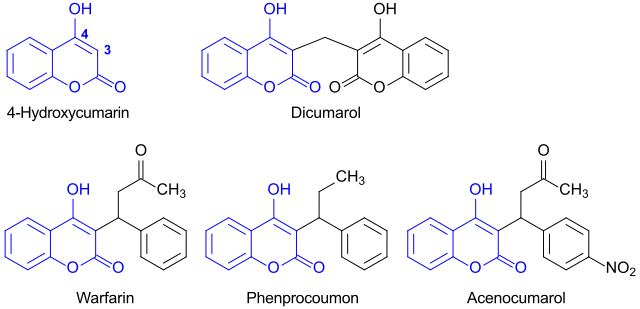
Warfarin Warfarin - an مضاد للتخثر , acenocoumarol Acenocoumarol - an anticoagulant and phenindione Phenindione - an anticoagulant block the effects of vitamin K. In 2021, the UK's National Institute for Health and Care Excellence (NICE) recommended that DOACs should be the preferred option لـ AF, instead of warfarin. الوارفارين is still.
قراءة إضافية ومراجع
- Warfarin resistance; MedlinePlus, National Library of Medicine.
- Azzam H, Elwakeel H, Awad I, El-Farahaty R, El-Gilany AH, El-Sharawy S. VKORC1 and CYP2C9 genotypes in Egyptian patients with warfarin resistance. Blood Coagul Fibrinolysis. 2016 Mar;27(2):121-6. doi: 10.1097/MBC.0000000000000168.
- de Oliveira Almeida VC, Ribeiro DD, Gomes KB, Godard AL. Polymorphisms of CYP2C9, VKORC1, MDR1, APOE and UGT1A1 genes and the therapeutic warfarin dose in Brazilian patients with thrombosis: a prospective cohort study. Mol Diagn Ther. 2014 Dec;18(6):675-83. doi: 10.1007/s40291-014-0121-4.
- Issac MS, El-Nahid MS, Wissa MY. Is there a role for MDR1, EPHX1 and protein Z gene variants in modulation of warfarin dosage? a study on a cohort of the Egyptian population. Mol Diagn Ther. 2014 Feb;18(1):73-83. doi: 10.1007/s40291-013-0055-2.
- Kurnik D, Qasim H, Sominsky S, Lubetsky A, Markovits N, Li C, Stein CM, Halkin H, Gak E, Loebstein R. Effect of the VKORC1 D36Y variant on warfarin dose requirement and pharmacogenetic dose prediction. Thromb Haemost. 2012 Oct;108(4):781-8. doi: 10.1160/TH12-03-0151. Epub 2012 Aug 7.
- Oldenburg J, Muller CR, Rost S, Watzka M, Bevans CG. Comparative genetics of warfarin resistance. Hamostaseologie. 2014;34(2):143-59. doi: 10.5482/HAMO-13-09-0047. Epub 2013 Nov 29.
- Rost S, Fregin A, Ivaskevicius V, Conzelmann E, Hortnagel K, Pelz HJ, Lappegard K, Seifried E, Scharrer I, Tuddenham EG, Muller CR, Strom TM, Oldenburg J. Mutations in VKORC1 cause warfarin resistance and multiple coagulation factor deficiency type 2. Nature. 2004 Feb 5;427(6974):537-41. doi: 10.1038/nature02214.
- Sinxadi P, Blockman M. Warfarin resistance. Cardiovasc J Afr. 2008 Jul-Aug;19(4):215-7.
- Watzka M, Geisen C, Bevans CG, Sittinger K, Spohn G, Rost S, Seifried E, Muller CR, Oldenburg J. Thirteen novel VKORC1 mutations associated with oral anticoagulant resistance: insights into improved patient diagnosis and treatment. J Thromb Haemost. 2011 Jan;9(1):109-18. doi: 10.1111/j.1538-7836.2010.04095.x.
تاريخ المقال
المقال متاح أيضًا باللغة الإنجليزية, الألمانية, إسبانية, الفرنسية, إيطالي, البرتغالية, الهندية, العبرية, العربية ,، و السويدية.
19 Sept 2024 | أحدث إصدار
1 Jul 2015 | نُشر في الأصل
شارك أفكارك أو تجاربك مع الآخرين في مجتمعات المرضى.
وصول بسيط إلى العلاجات والخدمات الصحية الموثوقة عبر الإنترنت.
Common conditions
Get help with common conditions through the NHS, without a GP appointment.
 التهاب الجيوب الأنفية الحاد
 التهاب اللوزتين البكتيري
 القوباء
 لدغات الحشرات
 الحزام الناريعدوى المسالك البولية
اشترك في النشرة الإخبارية للمرضى
جرعتك الأسبوعية من النصائح الصحية الواضحة والموثوقة - مكتوبة لمساعدتك على الشعور بالاطلاع والثقة والتحكم.
من خلال الاشتراك، فإنك تقبل سياسة الخصوصية. يمكنك إلغاء الاشتراك في أي وقت. نحن لا نبيع بياناتك أبدًا.