
What living with HIV is like today
Peer reviewed by Dr Sarah JarvisLast updated by Léa SurugueLast updated 30 Nov 2018
Meets Patient’s editorial guidelines
- DownloadDownload
- Share
- Language
- Discussion
- Audio Version
- Add to preferred sources on Google
HIV used to be seen as a terminal illness, but important medical improvements in recent decades have changed this. It's now possible for HIV-positive people to live a normal, healthy life with the right treatment.
It's been 40 years since Matt Gregory, 49, from Derby, was infected with HIV, but he still remembers vividly the months of confusion that he and his family went through when they heard the news.
Born with haemophilia, a genetic blood disorder, he was infected as an adolescent while receiving contaminated concentrated factor VIII (a haemophilia treatment made up with plasma from different blood donors).
At the time, being told you were HIV-positive was seen as a death sentence. For years, no effective HIV treatment was available.
"At first, my doctors didn't want to tell us. When they did, I decided not to worry, as there wasn't much I could do. But the diagnosis weighted me, and on my family. Although, I didn't personally have really bad experiences, back in the 80s and 90s, patients had to face levels of stigma that are hard to imagine today. HIV overtook cancer as the most frightening disease in the world," Gregory recalls.
Medical advances in the last decades and campaigning led by a diverse community of activists have improved the situation, but important challenges remain.
Medical advances
The first turning point in the fight against HIV occurred in 1987, when AZT, the first antiretroviral drug, was used to combat the virus. But AZT had serious side-effects, created many health problems for the patients who were taking it, and did not work on its own.
"There weren't really effective treatments until the late 90s when we started to use three drugs together. But things have moved fast since then, and we now have an array of effective drugs that are much less toxic and easier to take. We are at a point where people can now live a healthy life, free of complications, just by taking one tablet a day," says Dr Rageshri Dhairyawan, consultant in Sexual Health and HIV and vice-chair of the External Relations Committee for the British HIV Association.
Patients who take the drugs now have similar life expectancies to other people. Although the long-term effects of these treatments remain unclear, these patients can expect to live normally, for many years.
These positive advances have made a difference in the daily life of Alex Sparrowhawk, 33, from Manchester. Diagnosed in 2009, he now works for HIV charity Terrence Higgins Trust.
"In the first few years, I had to take four pills every day. A decade on, I'm now on one pill every 24 hours," he explains.
Undetectable = untransmittable (U=U)
Taking the drugs every day as prescribed is crucial. It prevents the virus from making copies of itself. When this happens, the amount of HIV in a person's bloodstream goes down to a level so low that it cannot be detected. People are then said to have an 'undetectable viral load'.
For all HIV patients, reaching this stage is the main objective of treatment. In recent years, large studies have shown that having an undetectable viral load means there is zero chance of people transmitting the virus, even via unprotected sexual contact.
"Explaining that U=U, in other words, that undetectable means untransmittable, is a great experience. I had a female patient recently tell me she felt like she got her life back. Unfortunately, this fact still is not well known in the general public, and even in the medical community," Dhairyawan explains.
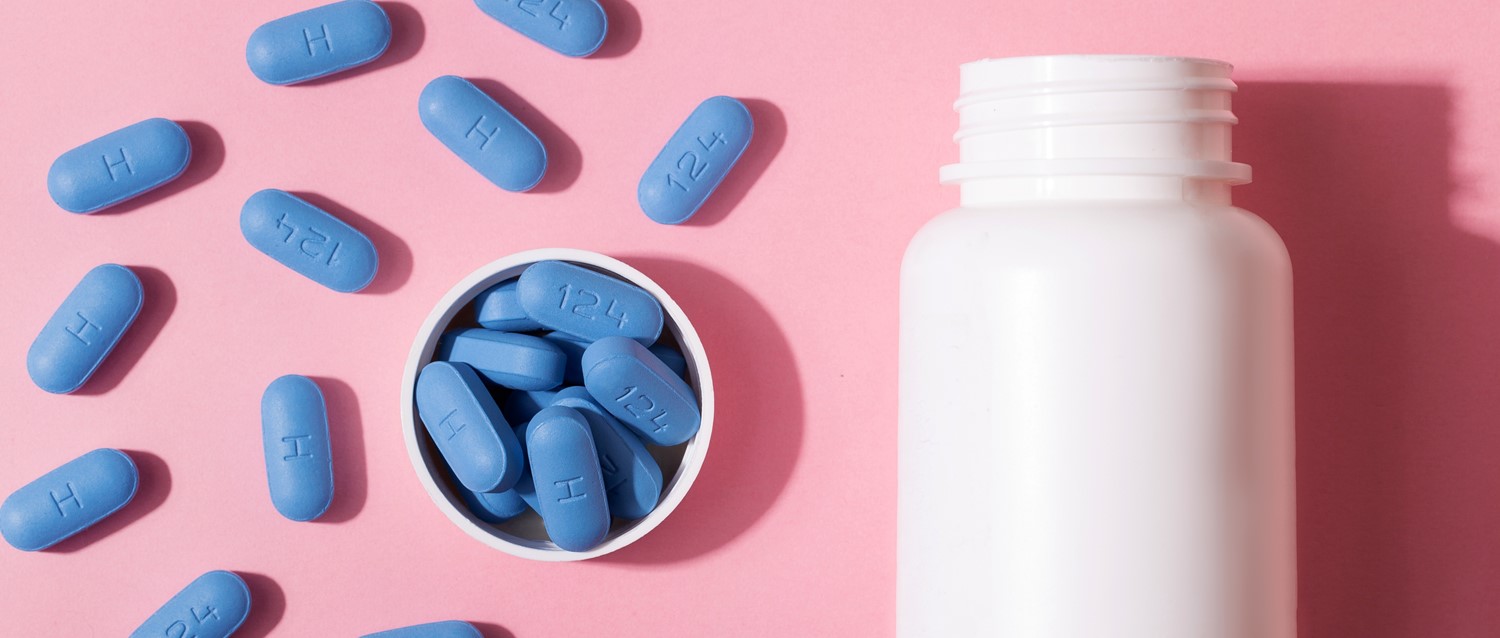
Another important advance has been in the field of HIV prevention. With the emergence of pre-exposure prophylaxis (or PrEP), people who are at high risk of getting infected can take HIV medicines daily in prevention, significantly reducing their chances of getting the virus. But it is not yet available on the NHS in England, only in Scotland and in Wales.
The problem with stigma
Beyond the medical gains, these advances have also helped reduce the stigma experienced by HIV-positive individuals.
"Things are a lot better now when it comes to stigma. People used to see HIV as the leprosy of the modern world, but now many people have learnt about recent improvements in the field. Nobody will write 'AIDS scum' on your house anymore, and doctors will not attend to you with masks and three pairs of gloves like they used to in the early days of the epidemic. But there is still a lot of work to do," Gregory says.
Despite the available data, some people still refuse to believe the available facts about HIV drugs and undetectable viral load, which makes it impossible to eradicate stigma completely.
Stigma is a huge barrier to getting tested - perhaps the most important action to eradicate HIV once and for all.
"Stigma kills; it prevents people from going to get tested because they fear the results. It means that some people are diagnosed late. Some also don't want to engage with the health system for fear of being stigmatised," Dhairyawan says.
Getting support
If you are concerned about a potential HIV exposure, the most important thing to do is to go to your nearest sexual health clinic, to get advice and to get tested. In some areas of the country, you can even access a free HIV test kit to use at home and send off for testing and follow-up on the NHS. The sooner you know your status, the sooner you'll be able to start treatment and avoid complications.
"With medications, your health will improve, and you will not pass HIV on to your sexual partners," says Sparrowhawk.
For people who have been infected, many charities and support groups exist to inform them, offer them peer support, and help them navigate the reality of living with the virus. They also organise a number of events and conferences to raise awareness. The best established, which you can turn to for support, include Terrence Higgins Trust, the British HIV Association, or the Children's HIV Association for young people growing up with HIV.
Patient picks for HIV and AIDS

Sexual health
Living with HIV from birth
Being born with a long-term condition is bad enough, but being born with a disease which you have to keep quiet about because of society's taboos is unimaginable to most of us. Such is the lot of the 1,200 or so children in the UK and Ireland who acquired HIV from their mothers, either in the womb or when breastfed.
by Dr Laurence Knott
Sexual health
Who should take the HIV prevention drug PrEP?
Pre-exposure prophylaxis (PrEP) is a medication to prevent the development of HIV. It's meant for people who don't have HIV, but have a high chance of developing the condition. But what is it, how does it work and who should have access to it?
by Lydia Smith
About the authorView full bio

Léa Surugue
Science Journalist
MA International Journalism
About the reviewerView full bio

Dr Sarah Jarvis
Clinical Consultant
MA (Cantab), BM, BCh (Oxon), DRCOG, FRCGP, MBE
After training in medicine at Cambridge and Oxford, Dr Sarah Jarvis MBE became a GP.
Article history
The information on this page is peer reviewed by qualified clinicians.
Article also available in English, German, Spanish, French, Italian, Portuguese, Hindi, Hebrew, Arabic, and Swedish.
30 Nov 2018 | Latest version
Join the conversation
Share your thoughts or experiences with others in our patient communities.

Ask, share, connect.
Browse discussions, ask questions, and share experiences across hundreds of health topics.

Feeling unwell?
Assess your symptoms online for free
Sign up to the Patient newsletter
Your weekly dose of clear, trustworthy health advice - written to help you feel informed, confident and in control.
By subscribing you accept our Privacy Policy. You can unsubscribe at any time. We never sell your data.
More in sexual health
- Do condoms really cause erection problems?
- Does hormonal contraception affect fertility after you stop taking it?
- HIV in women: what you should know
- How cancer can affect your sex life
- How common is male infertility, and what causes it?
- How does alcohol affect your sex life?
- How quickly do different STIs spread?
- How to prevent genital irritation from affecting your sex life
- How your lifestyle may be a cause of low sperm count
- Junk food diet linked to low sperm count
- Living with HIV from birth
- Scientists identify a mechanism to 'neutralise' HIV
- Simple ways to help prevent vaginal thrush
- The best way to treat a herpes outbreak
- What are universities doing to support student sexual health?
- What can cause a smelly vagina after sex?
- What is post-birth control syndrome?
- What not to say to someone experiencing infertility
- What not to say to someone with HIV
- Who should take the HIV prevention drug PrEP?