Paroxysmal nocturnal hemoglobinuria
آخر تحديث 5 Apr 2022
يتوافق مع الإرشادات التحريرية
- تنزيلتنزيل
- مشاركة
- Language
- نقاش
- نسخة صوتية
- أضف إلى المصادر المفضلة على جوجل
Paroxysmal nocturnal hemoglobinuria (PNH) is an acquired (not inherited) disorder that leads to the premature death and impaired production of blood cells. The disorder affects red blood cells (erythrocytes), which carry oxygen; white blood cells (leukocytes), which protect the body from infections; and platelets (thrombocytes), which are involved in blood clotting. PNH can occur at any age, although it is most often diagnosed in young adulthood.
الوصف
Paroxysmal nocturnal hemoglobinuria (PNH) is an acquired (not inherited) disorder that leads to the premature death and impaired production of blood cells. The disorder affects red blood cells (erythrocytes), which carry oxygen; white blood cells (leukocytes), which protect the body from infections; and platelets (thrombocytes), which are involved in blood clotting. PNH can occur at any age, although it is most often diagnosed in young adulthood.
People with PNH have sudden, recurring episodes of symptoms (paroxysmal symptoms), which may be triggered by stresses on the body, such as infections or physical exertion. During these episodes, red blood cells are broken down earlier than they should be (hemolysis). Affected individuals may pass dark-colored urine because of the presence of hemoglobin, the oxygen-carrying protein in blood. The abnormal presence of hemoglobin in the urine is called hemoglobinuria. In many, but not all cases, hemoglobinuria is most noticeable early in the morning, upon passing urine that has accumulated in the bladder during the night (nocturnal).
The premature breakdown of red blood cells results in a shortage of these cells in the blood (hemolytic anaemia), which can cause signs and symptoms such as fatigue, weakness, abnormally pale skin (pallor), shortness of breath, and an increased heart rate (tachycardia). People with PNH may also be prone to infections because of a shortage of white blood cells (leukopenia).
Abnormal platelets associated with PNH can cause problems in the blood clotting process. As a result, people with this disorder may experience abnormal blood clotting (thrombosis), especially in large abdominal veins; or, less often, episodes of severe bleeding (hemorrhage).
Individuals with PNH are at increased risk of developing cancer in blood-forming cells (leukemia). In some cases, people who have or have been treated for another blood disease called aplastic anaemia may develop PNH. In a small number of affected individuals, the signs and symptoms of PNH disappear on their own.
A very rare form of PNH involves abnormal inflammation in addition to the typical features described above. Inflammation is a normal immune system response to injury and foreign invaders (such as bacteria). In people with this rare form of PNH, the immune response is turned on (activated) abnormally and can cause recurrent aseptic meningitis (which is inflammation of the membranes surrounding the brain and spinal cord that is not related to infection); a red, itchy rash (known as hives or urticaria); joint pain (arthralgia); or inflammatory bowel disease. The inflammatory disorders usually begin earlier than the blood cell problems.
Inheritance patterns
The source lists the following possible inheritance patterns: X-linked dominant; Autosomal dominant+New variant. More than one pattern can apply in different cases.
Related genes
Other names
Hemoglobinuria, paroxysmal
Marchiafava-Micheli syndrome
PNH
Related patient information and medicines

Patient information leaflet
تخثر الدم
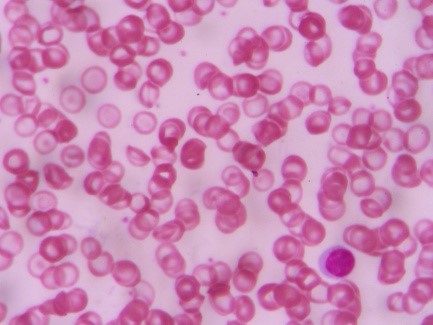
This gene affects the factor V part of the clotting cascade, making the clotting process go on longerIt increases the risk of a blood clot in a vein by about eight times. Some people inherit two factor V Leiden genes - one gene from each parent (known as 'homozygous factor V Leiden'). It increases your risk of having a blood clot in a vein to.
Patient information leaflet
مرض الخلايا المنجلية
Sickle cell disease (SCD) هو a serious, inherited condition affecting the blood و various organs in the body. It affects the red blood cells, causing episodes of 'sickling', which produce episodes of pain and other symptoms. SCD is therefore a group of co... The rest of this leaflet will discuss SCD, which includes فقر الدم المنجلي and the.

Patient information leaflet
الصداع العنقودي
الصداع العنقودي occur as attacks of severe, one-sided headaches. Typically, a number of attacks occur over several weeks - a bout (cluster) of attacks. The headaches then usuall... It is sometimes difficult for doctors to rule out another type of headache called paroxysmal hemicrania. This is a rare condition of unknown cause which causes.

Patient information leaflet
مشاكل العين
This leaflet contains a list of conditions which affect the eye, grouped together by the part of the eye which is affected or involved. Eye surface conditions: conjunctiva, cornea and sclera The conjunctiva is the clear, front part of the eye overlying the white of your eye and the underside of the eyelids. This forms the first part of the process.
Patient information leaflet
سلس البول
سلس البول الإجهادي and urge سلس البول are the most common types of incontinence. Many people are embarrassed by the problem but, importantly, incontinence is often treatable so you should see your GP for help. This leaflet provides a general overview of urinary incontinence. It may help you to understand the bladder and why incontinence.

Patient information leaflet
مشاكل محرجة
For most of the problems listed, there is more information available when you follow the links provided. Anogenital (anal or genital) warts Anogenital warts are small lumps that develop on the genitals and/or around the back passage (anus). They are caused by a virus called the human papillomavirus (HPV). The virus is passed on by sexual contact..
قراءة إضافية ومراجع
- Paroxysmal nocturnal hemoglobinuria; MedlinePlus, National Library of Medicine.
- Brodsky RA, Hu R. PIG-A mutations in paroxysmal nocturnal hemoglobinuria and in normal hematopoiesis. Leuk Lymphoma. 2006 Jul;47(7):1215-21. doi: 10.1080/10428190600555520.
- Brodsky RA. Paroxysmal nocturnal hemoglobinuria without GPI-anchor deficiency. J Clin Invest. 2019 Dec 2;129(12):5074-5076. doi: 10.1172/JCI131647.
- Grunewald M, Grunewald A, Schmid A, Schopflin C, Schauer S, Griesshammer M, Koksch M. The platelet function defect of paroxysmal nocturnal haemoglobinuria. Platelets. 2004 May;15(3):145-54. doi: 10.1080/09537105310001657110.
- Gurnari C, Colak C, Zawit M, Maciejewski JP. Chronic Budd-Chiari syndrome in paroxysmal nocturnal haemoglobinuria. Lancet. 2021 Sep 11;398(10304):e14. doi: 10.1016/S0140-6736(21)01542-7. No abstract available.
- Gurnari C, Pagliuca S, Kewan T, Bahaj W, Mori M, Patel BJ, Visconte V, Maciejewski JP. Is nature truly healing itself? Spontaneous remissions in Paroxysmal Nocturnal Hemoglobinuria. Blood Cancer J. 2021 Nov 27;11(11):187. doi: 10.1038/s41408-021-00582-5. No abstract available.
- Hochsmann B, Murakami Y, Osato M, Knaus A, Kawamoto M, Inoue N, Hirata T, Murata S, Anliker M, Eggermann T, Jager M, Floettmann R, Hollein A, Murase S, Ueda Y, Nishimura JI, Kanakura Y, Kohara N, Schrezenmeier H, Krawitz PM, Kinoshita T. Complement and inflammasome overactivation mediates paroxysmal nocturnal hemoglobinuria with autoinflammation. J Clin Invest. 2019 Dec 2;129(12):5123-5136. doi: 10.1172/JCI123501.
- Inoue N, Izui-Sarumaru T, Murakami Y, Endo Y, Nishimura J, Kurokawa K, Kuwayama M, Shime H, Machii T, Kanakura Y, Meyers G, Wittwer C, Chen Z, Babcock W, Frei-Lahr D, Parker CJ, Kinoshita T. Molecular basis of clonal expansion of hematopoiesis in 2 patients with paroxysmal nocturnal hemoglobinuria (PNH). Blood. 2006 Dec 15;108(13):4232-6. doi: 10.1182/blood-2006-05-025148. Epub 2006 Aug 29.
- Luzzatto L, Gianfaldoni G. Recent advances in biological and clinical aspects of paroxysmal nocturnal hemoglobinuria. Int J Hematol. 2006 Aug;84(2):104-12. doi: 10.1532/IJH97.06117.
- Luzzatto L. Paroxysmal nocturnal hemoglobinuria: an acquired X-linked genetic disease with somatic-cell mosaicism. Curr Opin Genet Dev. 2006 Jun;16(3):317-22. doi: 10.1016/j.gde.2006.04.015. Epub 2006 May 2.
- Mortazavi Y, Merk B, McIntosh J, Marsh JC, Schrezenmeier H, Rutherford TR; BIOMED II Pathophysiology and Treatment of Aplastic Anaemia Study Group. The spectrum of PIG-A gene mutations in aplastic anemia/paroxysmal nocturnal hemoglobinuria (AA/PNH): a high incidence of multiple mutations and evidence of a mutational hot spot. Blood. 2003 Apr 1;101(7):2833-41. doi: 10.1182/blood-2002-07-2095. Epub 2002 Nov 7.
- Rosti V. The molecular basis of paroxysmal nocturnal hemoglobinuria. Haematologica. 2000 Jan;85(1):82-7.
- Shichishima T, Noji H. Heterogeneity in the molecular pathogenesis of paroxysmal nocturnal hemoglobinuria (PNH) syndromes and expansion mechanism of a PNH clone. Int J Hematol. 2006 Aug;84(2):97-103. doi: 10.1532/IJH97.06083.
- Tiu R, Maciejewski J. Immune pathogenesis of paroxysmal nocturnal hemoglobinuria. Int J Hematol. 2006 Aug;84(2):113-7. doi: 10.1532/IJH97.06144.
تاريخ المقال
المقال متاح أيضًا باللغة الإنجليزية, الألمانية, إسبانية, الفرنسية, إيطالي, البرتغالية, الهندية, العبرية, العربية ,، و السويدية.
5 Apr 2022 | أحدث إصدار
1 Feb 2022 | نُشر في الأصل
انضم إلى المحادثة
شارك أفكارك أو تجاربك مع الآخرين في مجتمعات المرضى.

اسأل، شارك، تواصل.
تصفح المناقشات، اطرح الأسئلة، وشارك التجارب عبر مئات المواضيع الصحية.
اشترك في النشرة الإخبارية للمرضى
جرعتك الأسبوعية من النصائح الصحية الواضحة والموثوقة - مكتوبة لمساعدتك على الشعور بالاطلاع والثقة والتحكم.
من خلال الاشتراك، فإنك تقبل سياسة الخصوصية. يمكنك إلغاء الاشتراك في أي وقت. نحن لا نبيع بياناتك أبدًا.