PDGFRA-associated chronic eosinophilic leukemia
آخر تحديث ١٤ ديسمبر ٢٠٢٢
يتوافق مع الإرشادات التحريرية
- تنزيلتنزيل
- مشاركة
- Language
- نقاش
- نسخة صوتية
- أضف إلى المصادر المفضلة على جوجل
PDGFRA-associated chronic eosinophilic leukemia is a form of blood cell cancer characterised by an elevated number of cells called eosinophils in the blood. These cells help fight infections by certain parasites and are involved in the inflammation associated with allergic reactions. However, these circumstances do not account for the increased number of eosinophils in PDGFRA-associated chronic eosinophilic leukemia.
الوصف
PDGFRA-associated chronic eosinophilic leukemia is a form of blood cell cancer characterised by an elevated number of cells called eosinophils in the blood. These cells help fight infections by certain parasites and are involved in the inflammation associated with allergic reactions. However, these circumstances do not account for the increased number of eosinophils in PDGFRA-associated chronic eosinophilic leukemia.
Another characteristic feature of PDGFRA-associated chronic eosinophilic leukemia is organ damage caused by the excess eosinophils. Eosinophils release substances to aid in the immune response, but the release of excessive amounts of these substances causes damage to one or more organs, most commonly the heart, skin, lungs, or nervous system. Eosinophil-associated organ damage can lead to a heart condition known as eosinophilic endomyocardial disease, skin rashes, coughing, difficulty breathing, swelling (edema) in the lower limbs, confusion, changes in behaviour, or impaired movement or sensations. People with PDGFRA-associated chronic eosinophilic leukemia can also have an enlarged spleen (splenomegaly) and elevated levels of certain chemicals called vitamin B12 and tryptase in the blood.
Some people with PDGFRA-associated chronic eosinophilic leukemia have an increased number of other types of white blood cells, such as neutrophils or mast cells. Occasionally, people with PDGFRA-associated chronic eosinophilic leukemia develop other blood cell cancers, such as acute myeloid leukemia or B-cell or T-cell acute lymphoblastic leukemia or lymphoblastic lymphoma.
PDGFRA-associated chronic eosinophilic leukemia is often grouped with a related condition called hypereosinophilic syndrome. These two conditions have very similar signs and symptoms; however, the cause of hypereosinophilic syndrome is unknown.
Inheritance patterns
The source lists the following possible inheritance patterns: Not inherited. More than one pattern can apply in different cases.
Related genes
Other names
Chronic eosinophilic leukemia with FIP1L1-PDGFRA
Myeloid and lymphoid neoplasms associated with PDGFRA rearrangement
Myeloid and lymphoid neoplasms with PDGFRA rearrangement
Myeloid/lymphoid neoplasms with PDGFRA rearrangement
PDGFRA-associated myeloproliferative neoplasm
Related patient information and medicines

Patient information leaflet
ابيضاض الدم النقوي المزمن
ابيضاض الدم النقوي المزمن (CML) is sometimes called chronic myelogenous leukaemia, chronic granulocytic leukaemia, or chronic myelocytic leukaemia. What is chronic myeloid leukaemia. CML develo... The abnormal stem cell multiplies and the cells that are made from the abnormal stem cells mature and develop into near-normal white cells - mainly.

Patient information leaflet
سرطانات الدم لدى الأطفال
Whi... There are different types of white cells, which are called neutrophils (polymorphs), lymphocytes, eosinophils, monocytes and basophils. They are part of the immune system. Chronic myeloid leukaemia (CML) can occur in children but is much less common and chronic lymphocytic leukaemia (CLL) is very rare in childhood. The cells that are made.

Patient information leaflet
Polycythaemia rubra vera
You may also have an abnormally high number من platelets and white blood cells. What is normal blood made up of. White cells (leukocytes). There are different types of white cells, which are called neutrophils (polymorphs), lymphocytes, eosinophils, monocytes and basophils. They are part of the immune system. This causes your blood to flow more.

Patient information leaflet
تثبيط المناعة
Millions of bacteria, viruses and other germs (microbes) surround all of us all of the time. Some are actively helpful - for instance, it would be impossible to digest food without ' friendly' gut bacteria which live in everyone's gastrointestinal tract. Certain cancers can cause immune ... Lymphomas, leukaemias and myeloma are the cancers which.
Patient information leaflet
اللوكيميا
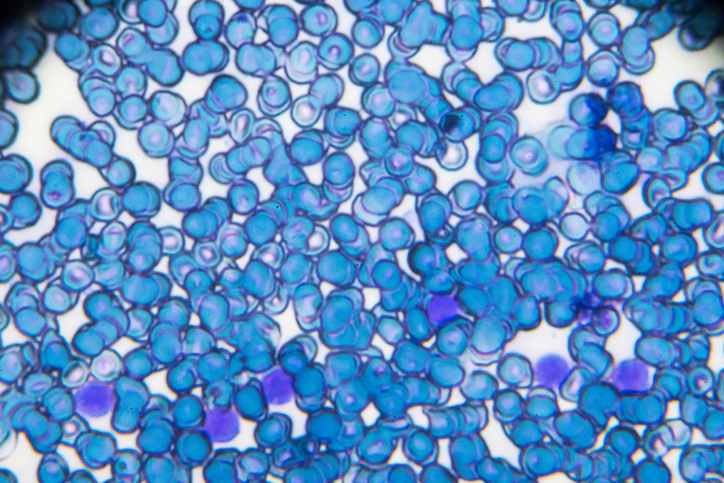
اللوكيميا هو a cancer of blood-forming cells. There are different types of leukaemia. If you develop leukaemia it is important to know what type it is. This is because the outlook (prognosis) and treatments vary for the different types. What is leukaemia. Leukaemia is a cancer of cells in the bone marrow (the cells which develop into white blood.
Patient information leaflet
زرع الخلايا الجذعية
ت زرع الخلايا الجذعية is where blood stem cells (the cells produced by the bone marrow to turn into different types of blood cells) are put back into your body when your bone marrow has been destroyed and cannot make stem cells itself. The bone marrow can be destroyed by diseases such as cancer, chemotherapy or radiotherapy. When is a stem cell.
قراءة إضافية ومراجع
- PDGFRA-associated chronic eosinophilic leukemia; MedlinePlus, National Library of Medicine.
- Buitenhuis M, Verhagen LP, Cools J, Coffer PJ. Molecular mechanisms underlying FIP1L1-PDGFRA-mediated myeloproliferation. Cancer Res. 2007 Apr 15;67(8):3759-66. doi: 10.1158/0008-5472.CAN-06-4183.
- Cools J, DeAngelo DJ, Gotlib J, Stover EH, Legare RD, Cortes J, Kutok J, Clark J, Galinsky I, Griffin JD, Cross NC, Tefferi A, Malone J, Alam R, Schrier SL, Schmid J, Rose M, Vandenberghe P, Verhoef G, Boogaerts M, Wlodarska I, Kantarjian H, Marynen P, Coutre SE, Stone R, Gilliland DG. A tyrosine kinase created by fusion of the PDGFRA and FIP1L1 genes as a therapeutic target of imatinib in idiopathic hypereosinophilic syndrome. N Engl J Med. 2003 Mar 27;348(13):1201-14. doi: 10.1056/NEJMoa025217.
- Elling C, Erben P, Walz C, Frickenhaus M, Schemionek M, Stehling M, Serve H, Cross NC, Hochhaus A, Hofmann WK, Berdel WE, Muller-Tidow C, Reiter A, Koschmieder S. Novel imatinib-sensitive PDGFRA-activating point mutations in hypereosinophilic syndrome induce growth factor independence and leukemia-like disease. Blood. 2011 Mar 10;117(10):2935-43. doi: 10.1182/blood-2010-05-286757. Epub 2011 Jan 11.
- Fukushima K, Matsumura I, Ezoe S, Tokunaga M, Yasumi M, Satoh Y, Shibayama H, Tanaka H, Iwama A, Kanakura Y. FIP1L1-PDGFRalpha imposes eosinophil lineage commitment on hematopoietic stem/progenitor cells. J Biol Chem. 2009 Mar 20;284(12):7719-32. doi: 10.1074/jbc.M807489200. Epub 2009 Jan 14.
- Metzgeroth G, Walz C, Score J, Siebert R, Schnittger S, Haferlach C, Popp H, Haferlach T, Erben P, Mix J, Muller MC, Beneke H, Muller L, Del Valle F, Aulitzky WE, Wittkowsky G, Schmitz N, Schulte C, Muller-Hermelink K, Hodges E, Whittaker SJ, Diecker F, Dohner H, Schuld P, Hehlmann R, Hochhaus A, Cross NC, Reiter A. Recurrent finding of the FIP1L1-PDGFRA fusion gene in eosinophilia-associated acute myeloid leukemia and lymphoblastic T-cell lymphoma. Leukemia. 2007 Jun;21(6):1183-8. doi: 10.1038/sj.leu.2404662. Epub 2007 Mar 22.
- Roufosse FE, Goldman M, Cogan E. Hypereosinophilic syndromes. Orphanet J Rare Dis. 2007 Sep 11;2:37. doi: 10.1186/1750-1172-2-37.
- Vandenberghe P, Wlodarska I, Michaux L, Zachee P, Boogaerts M, Vanstraelen D, Herregods MC, Van Hoof A, Selleslag D, Roufosse F, Maerevoet M, Verhoef G, Cools J, Gilliland DG, Hagemeijer A, Marynen P. Clinical and molecular features of FIP1L1-PDFGRA (+) chronic eosinophilic leukemias. Leukemia. 2004 Apr;18(4):734-42. doi: 10.1038/sj.leu.2403313.
تاريخ المقال
المقال متاح أيضًا باللغة الإنجليزية, الألمانية, إسبانية, الفرنسية, إيطالي, البرتغالية, الهندية, العبرية, العربية ,، و السويدية.
١٤ ديسمبر ٢٠٢٢ | أحدث إصدار
1 Mar 2012 | نُشر في الأصل
انضم إلى المحادثة
شارك أفكارك أو تجاربك مع الآخرين في مجتمعات المرضى.

اسأل، شارك، تواصل.
تصفح المناقشات، اطرح الأسئلة، وشارك التجارب عبر مئات المواضيع الصحية.
اشترك في النشرة الإخبارية للمرضى
جرعتك الأسبوعية من النصائح الصحية الواضحة والموثوقة - مكتوبة لمساعدتك على الشعور بالاطلاع والثقة والتحكم.
من خلال الاشتراك، فإنك تقبل سياسة الخصوصية. يمكنك إلغاء الاشتراك في أي وقت. نحن لا نبيع بياناتك أبدًا.