اعتلال الشبكية الخداجي
مراجعة من قبل Dr Anjum Gandhi, FRCPCHآخر تحديث بواسطة الدكتورة ماري هاردينغ، MRCGPآخر تحديث 30 مايو 2018
يتوافق مع الإرشادات التحريرية
- تنزيلتنزيل
- مشاركة
- Language
- نقاش
- Ask Patient
- نسخة صوتية
- أضف إلى المصادر المفضلة على جوجل
في هذه السلسلة:الأطفال الخُدّجإطعام الأطفال الخدجالنزيف داخل البطيني عند الأطفالالتهاب الأمعاء الناخر
تنويه بشأن المحتوى
لم تتم مراجعة هذه الصفحة مؤخرًا، لذا ربما تكون بعض المعلومات أو الروابط الخارجية قد تغيّرت.
اعتلال الشبكية عند الخدج هو حالة تصيب العين يمكن أن تتطور لدى الأطفال الخدج. يمكن أن تسبب فقدان البصر أو ضعف الرؤية إذا لم تُعالج. ومع ذلك، يمكن عادةً الوقاية من ذلك من خلال الفحص المنتظم للأطفال الخدج والعلاج المبكر.
نظرة سريعة
Retinopathy of prematurity (ROP) is an eye condition affecting premature babies.
It mainly affects babies born before 32 weeks or weighing less than 1500g at birth.
Abnormal blood vessels can form in the eye, which may cause scarring or retinal detachment.
All premature babies have regular eye screening tests as there are no early signs.
Treatment options include laser therapy, injections into the eye, or surgery in severe cases.
Mild ROP often resolves without treatment and usually has no long-term vision problems.
More severe ROP can lead to poor vision or total sight loss if not treated.
اختيارات الفيديو لـ الرضع والأطفال الصغارمكتبة الفيديو
What is retinopathy of prematurity?
Retinopathy of prematurity (ROP) is an eye problem which can occur in babies who were born too early (premature babies). It particularly affects babies who were born before the 32nd week of pregnancy, or who weighed less than 1500 g at birth. The earlier the baby is born, the higher the risk. ROP is found in most babies (four out of five) who weighed less than 1000 g at birth.
In many babies it is a mild condition and treatment is not always needed. In others, it can be very severe.
Why does it happen?
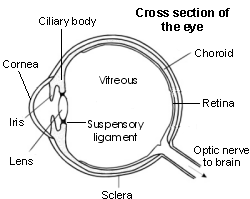
All organs of the body develop as the baby grows in the womb. The eye normally develops relatively late on in pregnancy. In particular the blood vessels of the back of the eye (the retina) are formed quite late in the baby's development. So if the baby is born early, these blood vessels may not have yet fully formed. Outside the womb, the differing oxygen levels may cause abnormal blood vessels to form. These can bleed, causing scarring and in some cases causing the retina to become separated from the back of the eye (detached). The retina is essential for eyesight, so damage to it can cause loss of vision.
Eye cross-section
How is retinopathy of prematurity picked up?
There are no signs early on, so all premature babies are regularly checked for this condition. All babies born before 32 weeks will have regular eye screening tests. These are carried out every 1-2 weeks by an eye specialist doctor (ophthalmologist). The specialist has to look right into the back of the baby's eye so this is a procedure which is a bit of a challenge. It may be uncomfortable for the baby, so a little sugar water may be used to help relieve discomfort.
Some drops will be put into the baby's eyes to open up the middle black part (pupil) so that the doctor can look through it to the retina behind. The eyelids will be held open with an eye speculum. An instrument called an ophthalmoscope, usually positioned on the doctor's head, is used to see the back of the eye. Another instrument (indentor) may be used to press slightly on the eyeball in order to see the retina better.
The doctor can then assess how severe the problem is. Stage 0 means there is no ROP found. There are five stages of ROP if it is present, based on this examination. Stage 1 is the mildest and Stage 5 is the most severe, where the retina has completely separated (detached) from the back of the eyeball. It will also be noted which sections (zones) of the retina are affected. The terms 'plus' and 'pre-plus' may also be used, which describe further irregularities of the blood vessels. All this information helps the doctors to know what treatment is needed.
What is the treatment for retinopathy of prematurity?
Mild ROP does not need treatment, as it will usually resolve by itself.
Treatment with laser (photocoagulation) is most often used. This destroys any abnormal parts of the retina. If this is not available a freezing treatment (cryotherapy) is sometimes used instead.
Another treatment option is injections into the eye. The injection used is an anti-vascular endothelial growth factor (anti-VEGF). This is a treatment that helps to halt the abnormal growth of blood vessels. There are several anti-VEGF medicines, including bevacizumab, ranibizumab and pegaptanib. Although used for other conditions, these treatments are not specifically licensed for ROP. Studies are still going on to establish how effective this treatment is.
Occasionally an operation is needed - for example, if the retina has become detached. This is a risky option as the structures of the eye are so fragile at this stage of life.
If treatment for ROP is needed, regular eye checks are then necessary for at least five years.
ما هي التوقعات؟
This depends on how severe the ROP is. Babies with Stage 1 and Stage 2 ROP should not have any long-term problems with their eyesight as a result of this condition. Without treatment, babies with more severe ROP are more likely to have poor vision or total loss of vision. Treatment improves this outlook (prognosis) and fewer babies will have total loss of vision as a result. However, treatment does involve destroying some of the retina, so treated babies may not have such good vision in the long term as those who did not have ROP. Babies with ROP may have a higher chance of other eyesight problems in later life, such as squints, إعتام عدسة العين أو الجلوكوما. Also in some cases there may be complications of treatment, such as bleeding into the eye, which can in themselves cause problems with vision.
Your specialist will be able to explain the outlook in your baby's individual case.
اختيارات المرضى لـ الرضع والأطفال الصغار

صحة الأطفال
علاج مشاكل صحة حديثي الولادة
يعتمد العلاج على المشكلة، ولكن الحالات التي يتم فحصها هي جميعها حالات يوجد لها علاج إذا تم اكتشافها.
بقلم الدكتورة ماري هاردينغ، MRCGP
صحة الأطفال
ارتجاع المريء لدى الأطفال
الارتجاع المعدي المريئي شائع جدًا بين الرضع والأطفال الصغار. ارتجاع كمية صغيرة من الحليب بعد الرضاعة دون أي أعراض أخرى (التجشؤ) غير ضار في الرضع الصغار ولا يحتاج إلى أي تحقيقات أو علاج. قد يكون الارتجاع أكثر شدة ويرتبط بأعراض أخرى. عادة ما يتم تشخيص هذه الحالة دون الحاجة إلى أي اختبارات، ولكن قد يتم إحالة بعض الرضع الذين يعانون من أعراض أكثر إزعاجًا لإجراء تحقيقات إضافية. هناك علاجات مختلفة متاحة بما في ذلك مكثفات التغذية، الحليب المضاد للارتجاع، Gaviscon® ومختلف الأدوية. ومع ذلك، في الغالبية العظمى من الحالات، يعتبر الارتجاع المعدي المريئي حالة محدودة ذاتيًا ومع مرور الوقت يتحسن دون أي مضاعفات.
بقلم الدكتور دوغ مكيتشني، MRCGP
الأسئلة الشائعة
What is the typical timeframe for a baby to be monitored for ROP?
All babies born before 32 weeks gestational age regularly undergo eye screening tests every 1-2 weeks. If treatment for ROP becomes necessary, regular eye checks are then required for at least five years.
Are there any side effects or risks associated with the ROP eye examinations?
The eye examination can be uncomfortable for the baby. To help relieve this, a little sugar water may be used. The procedure involves placing drops in the baby's eyes to dilate the pupil, holding the eyelids open with an eye speculum, and possibly using an indentor to gently press on the eyeball. While these steps are necessary to view the retina, they are generally well-managed to minimise distress.
Can ROP affect a baby's vision even if they don't lose their sight?
Yes, even if a baby doesn't experience total vision loss, treatment for ROP involves destroying some parts of the retina. This can result in vision that is not as good in the long term compared to children who did not develop ROP. Additionally, babies with ROP may have an increased risk of developing other eye problems later in life, such as squints, cataracts, or glaucoma.
Are there any new treatments being researched for ROP?
Injections into the eye using anti-vascular endothelial growth factor (anti-VEGF) medications are a treatment option that helps to stop the abnormal growth of blood vessels. While these treatments are used for other conditions, they are not specifically licensed for ROP, and studies are ongoing to determine their effectiveness for this condition.
What does it mean if my baby's ROP is described as 'plus' or 'pre-plus'?
The terms 'plus' and 'pre-plus' are used to describe additional irregularities found in the blood vessels of the retina. This information, along with the stage and affected zones of ROP, helps doctors determine the most appropriate treatment plan for your baby.
قراءة إضافية ومراجع
- Guideline for the screening and treatment of retinopathy of prematurity; Royal College of Ophthalmologists (2008)
- Hellstrom A, Smith LE, Dammann O; Retinopathy of prematurity. Lancet. 2013 Oct 26;382(9902):1445-57. doi: 10.1016/S0140-6736(13)60178-6. Epub 2013 Jun 17.
- Liegl R, Hellstrom A, Smith LE; Retinopathy of prematurity: the need for prevention. Eye Brain. 2016 May 20;8:91-102. doi: 10.2147/EB.S99038. eCollection 2016.
- Malamas A, Chranioti A, Tsakalidis C, et al; The omega-3 and retinopathy of prematurity relationship. Int J Ophthalmol. 2017 Feb 18;10(2):300-305. doi: 10.18240/ijo.2017.02.19. eCollection 2017.
- Sankar MJ, Sankar J, Chandra P; Anti-vascular endothelial growth factor (VEGF) drugs for treatment of retinopathy of prematurity. Cochrane Database Syst Rev. 2018 Jan 8;1:CD009734. doi: 10.1002/14651858.CD009734.pub3.
عن المؤلفعرض السيرة الذاتية الكاملة
تم التحديث بواسطة

الدكتورة ماري هاردينغ، MRCGP
طبيب عام، مؤلف طبي
BA, MA, MB, BChir, MRCGP, DFFP
Dr Mary Harding qualified from Cambridge University medical school in 1989.
حول المراجععرض السيرة الذاتية الكاملة
Dr Anjum Gandhi, FRCPCH
Consultant Paediatrician
MBBS, MD, MRCP, FRCPCH
Dr. Anjum Gandhi has over 25 years of clinical, teaching and research experience in paediatrics and is a Consultant Paediatrician.
تاريخ المقال
المقال متاح أيضًا باللغة الإنجليزية, الألمانية, إسبانية, الفرنسية, إيطالي, البرتغالية, الهندية, العبرية, العربية ,، و السويدية.
30 مايو 2018 | أحدث إصدار
المهنيين الطبيين
Looking for more in-depth clinical detail? Our Professional Reference articles are written for doctors, nurses and other healthcare professionals. They include comprehensive clinical guidance, diagnostic information and UK/European evidence summaries. If you need the clinical version, you can read the Professional Reference article on this topic.
شارك أفكارك أو تجاربك مع الآخرين في مجتمعات المرضى.
وصول بسيط إلى العلاجات والخدمات الصحية الموثوقة عبر الإنترنت.
Common conditions
Get help with common conditions through the NHS, without a GP appointment.
 التهاب الجيوب الأنفية الحاد
 التهاب اللوزتين البكتيري
 القوباء
 لدغات الحشرات
 الحزام الناريعدوى المسالك البولية
اشترك في النشرة الإخبارية للمرضى
جرعتك الأسبوعية من النصائح الصحية الواضحة والموثوقة - مكتوبة لمساعدتك على الشعور بالاطلاع والثقة والتحكم.
من خلال الاشتراك، فإنك تقبل سياسة الخصوصية. يمكنك إلغاء الاشتراك في أي وقت. نحن لا نبيع بياناتك أبدًا.