الكزاز ولقاح الكزاز
مراجعة من قبل الدكتورة توني هازيل، زميلة الكلية الملكية للأطباء العامينآخر تحديث بواسطة الدكتور دوغ مكيتشني، MRCGPآخر تحديث 31 يوليو 2025
يتوافق مع الإرشادات التحريرية
- تنزيلتنزيل
- مشاركة
- Language
- نقاش
- نسخة صوتية
- أضف إلى المصادر المفضلة على جوجل
في هذه السلسلة:التطعيملقاح 6 في 1التطعيم ضد المكورات الرئويةتطعيم الحصبة والنكاف والحصبة الألمانية (MMR)لقاح فيروس الورم الحليمي البشريشلل الأطفال ولقاح شلل الأطفال
يجب أن يحصل جميع الأطفال والبالغين على لقاح التيتانوس. راجع ممرضة العيادة إذا كنت تعتقد أنك لم تحصل على التطعيم الكامل.
نظرة سريعة
Tetanus is a serious infection caused by bacteria, often found in soil, dust, or faeces.
The bacteria can enter your body through cuts or wounds, releasing a toxin.
Symptoms include painful muscle spasms, jaw stiffness, and neck stiffness.
The tetanus vaccine is part of the routine childhood immunisation programme in the UK.
Adults without full immunisation can still get vaccinated.
If you have a wound, a healthcare professional can advise if you need a tetanus jab.
What is tetanus?
Tetanus is an infection caused by a germ (bacterium) called Clostridium tetani which can attack the muscles and nervous system. It is a serious infection which can even be fatal. Tetanus germs (bacteria) are commonly found in soil, house dust, and animal and human faeces. The tetanus bacteria may get into your body through a cut or a wound in the skin. The bacteria release a poison (toxin) which causes the illness.
Even small wounds such as a prick from a thorn can allow enough bacteria to get into the body to cause tetanus. The illness usually takes around 10 days to develop but can vary from four days to three weeks. Therefore, you may have forgotten about a small cut before the illness starts.
What are the symptoms of tetanus?
Tetanus symptoms include:
Muscle spasms which are painful and make it difficult to breathe and swallow.
Jaw stiffness (lockjaw), which can make it hard to open your mouth.
تيبس الرقبة.
They may start with a high temperature and feeling generally unwell.
How common is tetanus?
Tetanus in the UK is extremely uncommon. Most cases occur in people over the age of 65 years who have not been immunised against tetanus, as the immunisation was only routinely introduced in 1961. In 2022 there were four cases of tetanus in the UK. Tetanus continues to be a problem in poorer countries, where there is inadequate vaccination and where newborns get tetanus due to unsafe birth practices.
The tetanus vaccine
Tetanus vaccine is actually given as a combination vaccine with other vaccines. There are three types of combination vaccine:
For young children the pre-school booster is normally part of the combined diphtheria/tetanus/acellular whooping cough (pertussis)/inactivated polio vaccine (DTaP/IPV or dTaP/IPV).
For children aged under 10 years the vaccine is usually part of the combined diphtheria/tetanus/acellular whooping cough (pertussis)/inactivated polio vaccine/plus Haemophilus influenzae type b/hepatitis B vaccine (DTaP/IPV/Hib/Hep B). This is called the 6-in-1 vaccine.
For adults and teenagers who receive tetanus immunisation, a combined tetanus, diphtheria/inactivated polio vaccine (Td/IPV) is normally used.
The tetanus vaccine stimulates your body to make antibodies against the tetanus toxin. These antibodies protect you from illness should you become infected with tetanus.
At what age do you have the tetanus injections?
All children in the UK are offered tetanus immunisation as part of the routine immunisation programme. A full course of tetanus immunisation consists of five doses of vaccine as follows:
Children aged under 10 years | Children aged over 10 years and adults (who have not been immunised as a child) | |
Primary course | Three doses of vaccine - as 6-in-1 vaccine at 2, 3 and 4 months of age. | Three doses of vaccine - as Td/IPV(polio), each at least one month apart. |
4th dose | Three years after the primary course - as part of the DTaP/IPV(polio) pre-school booster at 3 years and 4 months to 5 years. | Five years after the primary course - as Td/IPV(polio). |
5th dose | Aged 13-18 years - the teenage booster - as Td/IPV(polio). | 10 years after 4th dose - as Td/IPV(polio). |
For how long will the tetanus vaccine protect me?
The primary course of three injections gives good protection for a number of years. The fourth and fifth doses (boosters) maintain protection. In the UK, a five-dose course of tetanus vaccines is considered to provide good long-term protection.
Additional booster vaccines aren't given routinely, but may be recommended if you are travelling (see 'I am going abroad', below), or if you have had a wound which is 'tetanus-prone' - see 'When do I need a tetanus jab?', below.
In some countries, tetanus boosters are given every 10 years. This is because it was thought that tetanus boosters stop working after 10 years. However, more recent studies suggest that they probably work for a lot longer - up to 30 years or more.
Adults who haven't had the tetanus vaccine
Some adults have not been fully immunised against tetanus because routine immunisation for children was not introduced in the UK until 1961. Men serving in the armed forces from 1938 onwards were offered tetanus immunisation. So, some older people born in the UK may still be at risk, as are other people (for example, those born outside the UK) who did not have their complete vaccinations.
See your practice nurse if you think that you are not fully immunised against tetanus (that is - if you have not had at least five injections in total). The course does not need to be started again if an injection is delayed. A late injection is enough to catch up, even if you have it years after it was due.
When do I need a tetanus jab?
After you have a cut or bite, the decision about whether to get a tetanus jab or other protection against tetanus depends on a combination of your vaccination status and the type of wound you have (whether is it clean, tetanus-prone, or high-risk tetanus-prone). It's not always straightforward, so you should consult a healthcare professional. In general:
If your wound is clean, you are very unlikely to need any immediate tetanus jabs. You might, however, be offered a jab to complete your course if you haven't been fully immunised.
If your wound is tetanus-prone (for example, fractures where the broken bone has pierced the skin), you will usually only need a tetanus jab immediately afterwards if:
You did not receive an adequate course of the first three tetanus vaccine doses;
You are a child aged 5-10 years who received the first three vaccine doses but no preschool booster; Or
You received the last of your first three vaccine doses more than 10 years ago.
If your wound or injury is considered to be high risk for tetanus (for example, where there has been significant contact with soil or manure) then an injection of human tetanus immunoglobulin is usually given, regardless of whether or not you have been immunised against tetanus. This gives extra protection against tetanus.
Do I need the tetanus vaccine if I'm going abroad?
Usually not if you are up to date with your immunisations. However, if you are to travel to areas where medical attention may not be available and it has been more than 10 years since your last injection, then a dose of vaccine may be advised. This is even if you have had five previous injections. This is a precautionary measure in case you have a very dirty wound and are not able to receive antiserum. Your doctor or practice nurse will advise you further about this.
You can find out if immunisation against tetanus is recommended for any countries you are planning to visit from the Travel advice by country page.
Are there any side-effects from the tetanus vaccine?
It is common to get a little redness and swelling around the injection site, which should go after a few days. Some people feel slightly unwell for a day or so, with a mild headache, slight aching of the muscles and a mild high temperature (fever). Severe reactions are extremely rare.
Who should not receive the tetanus vaccine?
If you are unwell with an illness causing a high temperature (fever), it is wise to postpone having the vaccine until the illness has gone (except if the dose is needed after a cut or wound). Also, you should not have another injection of vaccine if a previous injection caused a severe (anaphylactic) reaction. The tetanus vaccine is safe if you are pregnant or breastfeeding.
اختيارات المرضى لـ التطعيمات
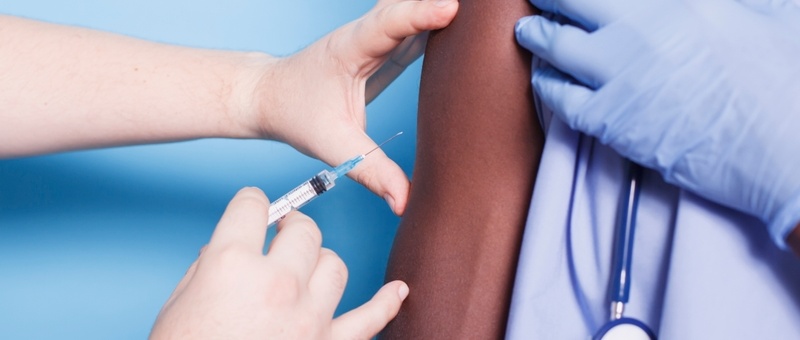
العدوى
التطعيم
This leaflet provides information about the normal immunisation schedule for people in the UK.
بقلم الدكتورة فيليبا فينسنت، MRCGP
العدوى
لقاح التهاب الكبد ب
Anyone at risk of being infected with the hepatitis B virus should consider being immunised, including workers likely to come into contact with blood.
بقلم الدكتورة هايلي ويلاسي، FRCGP
الأسئلة الشائعة
Can I still get tetanus if I'm fully vaccinated?
A full course of five tetanus vaccines is considered to provide good long-term protection. While very rare, no vaccine offers 100% protection. However, if you were to contract tetanus after being fully immunised, symptoms would likely be much less severe. If you have a high-risk wound, you may be given human tetanus immunoglobulin for extra protection, regardless of your immunisation status.
What should I do if I get a cut or wound and I'm not sure about my tetanus vaccination status?
If you have a cut or bite, it's best to consult a healthcare professional. They will assess your vaccination status and the type of wound you have to determine if you need a tetanus jab or other protection. They can also help you catch up on any missed doses, even if it's been a long time since your last injection.
If I was born before 1961 in the UK, how can I find out if I received the tetanus vaccine?
If you were born before routine childhood immunisation for tetanus was introduced in 1961, or if you were born outside the UK, you may not have been fully immunised. You should see your practice nurse who can assess your history and advise whether you need to start or complete a course of tetanus injections.
What is human tetanus immunoglobulin and when is it used?
Human tetanus immunoglobulin is an injection that provides extra, immediate protection against tetanus. It is typically given if you have a wound or injury considered to be at high risk for tetanus, such as one involving significant contact with soil or manure. This is given regardless of your previous immunisation status.
Can I still get the tetanus vaccine if I have a mild cold?
If you are unwell with an illness causing a high temperature (fever), it is generally wise to postpone receiving the vaccine until you have recovered. However, if the vaccine is needed immediately after a cut or wound, it should still be given.
قراءة إضافية ومراجع
- التطعيم ضد الأمراض المعدية - الكتاب الأخضر (الإصدار الأحدث); وكالة الأمن الصحي في المملكة المتحدة.
- NHS complete routine immunisation schedule; GOV.UK
- Immunizations - childhood; NICE CKS، يوليو 2024 (الوصول متاح فقط في المملكة المتحدة)
- Immunizations - travel; NICE CKS, July 2025 (UK access only)
عن المؤلفعرض السيرة الذاتية الكاملة

الدكتور دوغ مكيتشني، MRCGP
كاتب طبي
MA, MBBS, MSc, DRCOG, MRCP(UK), MRCGP(2021), FHEA
الدكتور دوغ مكيتشني هو طبيب عام في هيئة الخدمات الصحية الوطنية يعمل في لندن. يعمل بدوام كامل في المجال السريري وهو أيضًا نائب رئيس وحدة الممارسة السريرية والمهنية في كلية الطب بجامعة كوليدج لندن.
حول المراجععرض السيرة الذاتية الكاملة

Dr Toni Hazell, FRCGP
بكالوريوس الطب والجراحة، بكالوريوس العلوم، زميل الكلية الملكية للأطباء العامين، دبلوم في الصحة الجنسية والإنجابية، دبلوم في طب الجهاز البولي التناسلي، دبلوم الكلية الملكية لأطباء النساء والتوليد، دبلوم في صحة الطفل (لندن، المملكة المتحدة، 2000)
تخرجت الدكتورة توني هازيل من كلية الطب بمستشفى سانت ماري وأكملت تدريبها في مستشفى نورثويك بارك.
تاريخ المقال
تمت كتابة المعلومات على هذه الصفحة ومراجعتها من قبل أطباء مؤهلين.
المقال متاح أيضًا باللغة الإنجليزية, الألمانية, إسبانية, الفرنسية, إيطالي, البرتغالية, الهندية, العبرية, العربية ,، و السويدية.
Next review due: 31 Jul 2028
31 يوليو 2025 | أحدث إصدار

اسأل، شارك، تواصل.
تصفح المناقشات، اطرح الأسئلة، وشارك التجارب عبر مئات المواضيع الصحية.

هل تشعر بتوعك؟
قم بتقييم أعراضك عبر الإنترنت مجانًا
اشترك في النشرة الإخبارية للمرضى
جرعتك الأسبوعية من النصائح الصحية الواضحة والموثوقة - مكتوبة لمساعدتك على الشعور بالاطلاع والثقة والتحكم.
من خلال الاشتراك، فإنك تقبل سياسة الخصوصية. يمكنك إلغاء الاشتراك في أي وقت. نحن لا نبيع بياناتك أبدًا.
المزيد في العدوى
- خراج
- داء الأميبات
- قدم الرياضي
- عدوى الصدر
- حمى الشيكونغونيا
- Clostridioides difficile
- الحمى عند الأطفال
- الإنفلونزا
- التهاب المعدة والأمعاء
- التهاب الكبد B
- عدوى الكلى
- البزل القطني
- تطعيم الحصبة والنكاف والحصبة الألمانية (MMR)
- التطعيم ضد فيروس الجهاز التنفسي المخلوي (RSV)
- الفيروس العجلي
- الجنس الآمن
- أعراض الإنتان لدى الأطفال
- القلاع عند الرجال
- التهاب المسالك البولية لدى الرجال