
How accurate are prostate cancer tests?
Peer reviewed by Dr Sarah JarvisLast updated by Abi MillarLast updated 24 Sept 2019
Meets Patient’s editorial guidelines
- DownloadDownload
- Share
- Language
- Discussion
- Audio Version
- Add to preferred sources on Google
Prostate cancer testing is heavily reliant on measuring prostate specific antigen (PSA) levels, which can give notoriously high false-positive results. But why is this – and how can doctors diagnose the disease more accurately?
Prostate cancer is one of the most common cancers in the UK, affecting one in eight men at some point in their lives. While survival rates are good overall (84% of men diagnosed with prostate cancer in England and Wales will survive for more than ten years), it's really important for men to understand their risk.
The disease mostly affects men over 50, with the most common age at diagnosis being 65-69. It is twice as common in men of black ethnicity, and two and a half times as common in men with a family history of prostate cancer. Usually asymptomatic at the earliest, localised stage, it may eventually lead to urinary symptoms such as difficulty emptying your bladder, or needing to pee more than usual. If it has spread beyond the prostate, you may notice blood in the urine or semen, hip or pelvis pain, or unexplained weight loss.
It goes without saying that, if you do notice any changes of this kind, it's essential to visit the GP. No one symptom is really a giveaway for prostate cancer - they can all be caused by other health problems, most commonly non-cancerous prostate gland enlargement - so it may be necessary to run some diagnostic tests. Typically, the GP would start by offering you a PSA (prostate specific antigen) test.
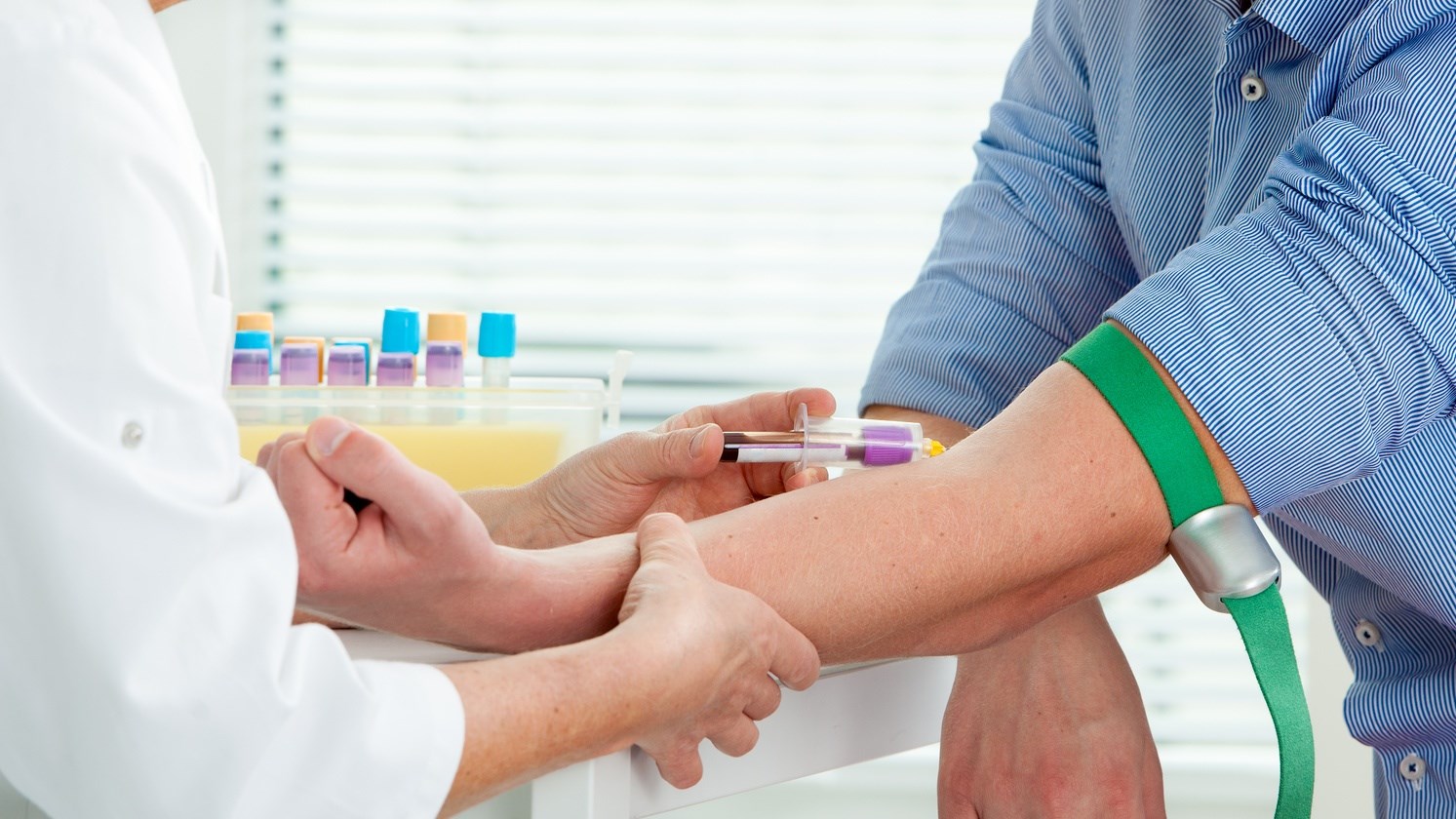
"The PSA test is a blood test that can help to diagnose prostate problems, such as prostate cancer," says a spokesperson for Prostate Cancer UK. "PSA is a protein produced by cells in the prostate and it's normal for men to have a small amount in their blood. The amount naturally rises a little as men get older and their prostate gets bigger. But a raised PSA level can be a sign of a prostate problem."
The pros and cons of the PSA test
You'll be entitled to this test if you’re aged over 50 (or over 45, if you have other risk factors). However, the GP will ask you to weigh up its pros and cons. While the PSA test has saved lives - it can help pick up cancer even before you have symptoms - its accuracy is far from perfect.
One in seven men with a normal PSA level may actually have prostate cancer, and in 2% of men that cancer is aggressive. The reverse is true too: three in four men with a raised PSA level don't have cancer, but will be put through significant worry and sometimes invasive testing as a result.
"PSA is produced by both normal and cancerous prostate cells, and your level can rise with other diseases," explains Dr Andrew Harbottle, chief science officer at MDNA Life Sciences. "You can have a high reading with things like benign prostatic enlargement, inflammation of the prostate, or even physical exercise, especially cycling. The PSA reading is an indication that there's something up with the prostate but it's not necessarily prostate cancer specific."
The Prostate Cancer UK spokesperson adds that this can cause a lot of anxiety and even unnecessary procedures. For one thing, if your PSA level is raised you may need a biopsy, which can have side effects. For another thing, you might be diagnosed with a slow-growing and low-risk prostate cancer, and end up having treatment you don't need.
"Most men in this situation now have their cancer carefully monitored instead, and only have treatment if the cancer starts to grow," adds the spokesperson.
Currently, if the GP thinks you need further tests, you'll be referred to a urologist. They'll arrange for you to have an MRI scan, followed by a biopsy if anything unusual is flagged up. In some hospitals, the first port of call would be the biopsy.
New approaches to diagnosis
This diagnostic process, with all its advantages and disadvantages, is the best we have for now. However, Prostate Cancer UK is investing in a number of research projects that are exploring other routes of diagnosis.
"Recently there have been a number of studies highlighting areas to explore further," says the spokesperson. "These include imaging using different MRI and ultrasound techniques, tests based on measuring various proteins and DNA changes through blood samples, and tests for measuring tumour cells circulating in the blood."
One exciting possibility is a blood test, developed by MDNA Life Sciences. Called the Mitomic Prostate Test, the test analyses mitochondrial DNA to determine the presence, or otherwise, of cancer. The company says the test could reduce the number of prostate biopsies by up to 30%.
"Our test won't be replacing biopsies any time soon - it's more about giving the doctor information about which patients should be going forward for that biopsy," explains Harbottle. "This test would be used on men who have slightly elevated, but not super-high, PSA scores - what we call the 'PSA grey zone'. Three out of four of those men won't have cancer, so do you want to send them for a biopsy or not? Our test would be used to triage those patients, to see whether they do need an MRI-guided biopsy."
In a clinical trial conducted with the University of Cambridge, the test demonstrated a more than 99% negative predictive value (meaning that if the test came out negative, you'd be highly unlikely to have a clinically significant disease). It also showed 92% sensitivity, meaning men with a positive result could be fast-tracked for medical intervention.
Currently, the test is only available privately, but the company's partner, Aspire Pharma, is working to make it available on the NHS.
"They're in discussions with three hospital trusts to do a parallel study with the assay, to get the evidence that it works as we say it works and that it has an economic benefit to the hospitals," explains Harbottle.
What this means for you
The Prostate Cancer UK spokesperson sounds a note of caution for now, pointing out that until these studies have been conducted, we don't have enough information about its benefits.
"This innovative testing method is an interesting new approach, but there simply hasn't been enough detailed research into its effectiveness for us to be able to recommend for its use at this stage," he says. "Until then, we would not recommend that anyone use this test as a substitute for current standard methods."
Of course, research in the field will be continuing apace.
"In order to save more lives from prostate cancer it is crucial that we create a diagnostic process that is robust enough to routinely diagnose men early and accurately," says the spokesperson.
Patient picks for Male cancer
Cancer
PSA testing options
The prostate specific antigen (PSA) test is a blood test used to see if you might have prostate cancer and to monitor treatment for prostate cancer. The PSA test does not tell you for certain whether you have prostate cancer.
by Dr Colin Tidy, MRCGP

Cancer
Urine test for prostate cancer could reveal who needs urgent treatment
Scientists have developed a urine test to identify men who are most likely to need treatment after being diagnosed with early prostate cancer.
by Ashwin Bhandari
About the authorView full bio

Abi Millar
Freelance Journalist
BA (Hons), MA
Abi is a freelance journalist with a special interest in health and medicine writing.
About the reviewerView full bio

Dr Sarah Jarvis
Clinical Consultant
MA (Cantab), BM, BCh (Oxon), DRCOG, FRCGP, MBE
After training in medicine at Cambridge and Oxford, Dr Sarah Jarvis MBE became a GP.
Article history
The information on this page is peer reviewed by qualified clinicians.
Article also available in English, German, Spanish, French, Italian, Portuguese, Hindi, Hebrew, Arabic, and Swedish.
24 Sept 2019 | Latest version
Join the conversation
Share your thoughts or experiences with others in our patient communities.

Ask, share, connect.
Browse discussions, ask questions, and share experiences across hundreds of health topics.

Feeling unwell?
Assess your symptoms online for free
Sign up to the Patient newsletter
Your weekly dose of clear, trustworthy health advice - written to help you feel informed, confident and in control.
By subscribing you accept our Privacy Policy. You can unsubscribe at any time. We never sell your data.
More in cancer
- 8 tips to help reduce your cancer risk at any age
- Can your diet reduce the risk of cancer?
- End of life care: medical, emotional and spiritual support
- How to cope with anxiety after cancer
- Less survivable cancers are more likely to have late diagnoses
- LGBTQI+: what are the barriers and challenges in end of life care?
- New blood test may detect aggressive prostate cancer
- NHS to roll out world-first blood test for cancer
- Personalised blood test detects return of breast cancer
- Stories of Cancer and Hope: giving voice to lives affected by cancer
- Vitamin D could cut risk of dying from cancer
- What affects your chances of surviving cervical cancer?
- What are the early warning signs of blood cancer?
- What are the options for end of life care?
- What are the signs of prostate cancer?
- What are ultra processed foods and do they cause cancer?
- What is bowel cancer screening - and why do you need it?
- What to expect when you have a colposcopy
- Why are Black men more likely to die from prostate cancer?
- Why are men less likely to wear sun cream?