
اختبار PSA
مستضد خاص بالبروستاتا
مراجعة من قبل الدكتورة توني هازيل، زميلة الكلية الملكية للأطباء العامينآخر تحديث بواسطة الدكتورة فيليبا فينسنت، MRCGPآخر تحديث 15 ديسمبر 2024
يتوافق مع الإرشادات التحريرية
- تنزيلتنزيل
- مشاركة
- Language
- نقاش
- نسخة صوتية
- أضف إلى المصادر المفضلة على جوجل
في هذه السلسلة:مشاكل البروستاتاتضخم البروستاتااحتباس البولتضيق الإحليلالتهاب البروستاتا المزمنأعراض الجهاز البولي السفلي لدى الرجال
The PSA test (prostate specific antigen) is a blood test which assesses for the likelihood of prostate cancer. It is also used to monitor the treatment for سرطان البروستاتا.
The PSA blood level can also be increased in other conditions. Having an increased PSA test result does not therefore mean that prostate cancer is the diagnosis. At the moment there is no national screening programme for prostate cancer in the UK but there are currently studies looking at whether screening would be appropriate for prostate cancer.
The TRANSFORM randomised controlled trial is being planned to start during 2024. This will include a PSA test amongst others in assessing whether a prostate cancer screening programme is possible or appropriate.
نظرة سريعة
يقيس اختبار PSA مستوى المستضد البروستاتي النوعي في عينة الدم.
PSA هو بروتين يتم إنتاجه بواسطة غدة البروستاتا.
يمكن أن ترفع الحالات الأخرى غير السرطان، مثل عدوى البول أو التقدم في العمر، مستويات PSA.
لا تقذف، أو تمارس التمارين الرياضية بشكل مكثف، أو تخضع لفحص المستقيم الرقمي لفترة محددة قبل الاختبار.
قد يعني ارتفاع مستوى PSA أنك بحاجة إلى مزيد من الفحوصات للكشف عن سرطان البروستاتا.
يمكن أن تحدث نتائج إيجابية كاذبة وسلبية كاذبة مع اختبار PSA.
في إنجلترا، يمكن للرجال الذين تبلغ أعمارهم 50 عامًا فأكثر طلب اختبار PSA بعد مناقشة الإيجابيات والسلبيات.
Explore testosterone treatment options
احصل على مشورة صحية متخصصة وأنت في راحة منزلك. أكمل استشارة سريعة عبر الإنترنت، متاحة على مدار الساعة طوال أيام الأسبوع، وسيراجع طلبك ممارس صحي مسجل في المملكة المتحدة. تتوفر خدمة التوصيل في اليوم التالي للعلاجات المؤهلة.

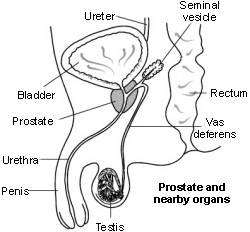
Cross-section diagram of the prostate and nearby organs
What is a PSA test?
The PSA test (prostate specific antigen) is a blood test that measures the level of prostate specific antigen in the blood. PSA is a protein which is made by the prostate gland. The PSA level in the bloodstream is measured in nanograms per millilitre (ng/mL). PSA is made by normal prostate cells but also by prostate cancer cells.
PSA test preparation
Before having a PSA test, it is important not to have:
An active urine infection.
Produced semen during sex or masturbation (ejaculated) in the previous 48 hours.
Exercised heavily in the previous 48 hours.
Had a prostate biopsy in the previous six weeks.
Had an examination of the back passage with a gloved finger (a digital rectal examination) in the previous week.
Had receptive anal intercourse for a period of 48 hours before a PSA test.
Each of these may produce an unnaturally high PSA result, resulting in unnecessary further investigations.
In England, the PSA test may be offered to any man aged 50 and over who requests it as long as they have considered the pros and cons of having the test. The test may be offered to younger men who have a higher risk of prostate cancer.
The normal range for a PSA test
The normal range changes as men age.
PSA Cut-off Values | |
|
|
40-49 | 2.5 ميكروغرام/لتر أو أكثر |
50-59 | 3.5 ميكروغرام/لتر أو أكثر |
60-69 | 4.5 ميكروغرام/لتر أو أكثر |
70-79 | 6.5 ميكروغرام/لتر أو أكثر |
There are no age-specific reference limits for men older than 80 years of age. Any referral will depend on local guidelines.
Generally, the higher the level of PSA, the more likely it is to be a sign of cancer.
Benefits and limitations of a PSA test
Benefits of PSA testing
PSA testing may lead to prostate cancer being detected earlier, before symptoms develop.
Detecting prostate cancer early before symptoms develop may improve the outcome (prognosis) and improve the chance of a complete cure.
Limitations and risks of PSA testing
False negative result: about 15 out of 100 men with a negative PSA test may have prostate cancer.
False positive result: about 75 out of 100 men with a positive PSA test have normal prostate investigations, ie no evidence of cancer.
A false positive PSA test may lead to unnecessary investigations, such as a prostate biopsy, and there may be side-effects from this investigation, such as bleeding or infection. This is less common nowadays as MRI scans are a more common initial investigation which carry lower risks.
A positive result may also lead to unnecessary treatment. Many prostate cancers are slow growing and may not become evident during a man's lifetime. Side-effects of treatment are common and can be serious, such as سلس البول and sexual problems.
Current statistics suggest that, in men between the ages of 50 and 66 who are screened for 13 years, annual PSA testing would result in the avoidance of death from prostate cancer of 1.3 per 1000 men.
Causes of a raised PSA level
A raised PSA level may be due to a diagnosis prostate cancer but about three out of four men with a raised PSA level will not be found to have prostate cancer.
Other conditions may also cause a raised PSA level, including:
Inability to pass urine, causing an enlarged bladder (acute retention of urine).
العمر الأكبر.
Transurethral resection of the prostate (TURP) operation. TURP is a prostate operation used if you have benign enlargement of the prostate.
Having a catheter in place to help pass urine.
PSA test results
If the PSA level is not raised
Prostate cancer is less likely. A digital rectal examination may also be needed to rule this out.
If the PSA level is slightly raised
Prostate cancer is less likely. A digital rectal examination may also be needed to rule this out. Annual PSA tests might be advised.
If the PSA level is definitely raised
The GP will do an urgent referral to a urologist (a specialist doctor) for further tests for prostate cancer. The specialist will discuss the options for further investigations, which may include a sample taken (خزعة) of the prostate gland and an فحص الرنين المغناطيسي.
If prostate cancer is found, what are my options?
Explore testosterone treatment options
احصل على مشورة صحية متخصصة وأنت في راحة منزلك. أكمل استشارة سريعة عبر الإنترنت، متاحة على مدار الساعة طوال أيام الأسبوع، وسيراجع طلبك ممارس صحي مسجل في المملكة المتحدة. تتوفر خدمة التوصيل في اليوم التالي للعلاجات المؤهلة.
اختيارات المرضى لـ اختبارات الدم
الفحوصات والتحقيقات
اختبارات الأجسام المضادة والمستضدات
Antibodies are part of the body's defence (immune) system. Antigens are the particles that cause the body to create an antibody. Tests to detect antibodies and antigens help to identify certain infections and some other medical conditions.
بقلم الدكتورة توني هازيل، FRCGP
الفحوصات والتحقيقات
اختبارات وظائف الغدة الدرقية
Thyroid function tests are blood tests which help to check the function of your thyroid gland. They are mainly used to detect an underactive thyroid gland (hypothyroidism) and an overactive thyroid gland (hyperthyroidism). Lots of basic information about the thyroid gland can be found in the separate leaflet called Thyroid Problems (also including Parathyroid Glands). This leaflet will only deal with the blood test that measures how your thyroid is working, not the specific diseases, such as Graves' disease, that affect the thyroid. Note: the information below is a general guide only. The arrangements, and the way tests are performed, may vary between different hospitals. Someone can have their thyroid function test in one hospital and it could give slightly different results to having it measured in another hospital. It is important to interpret the results of your thyroid function test with the doctor who requested them - so if the test was requested by your GP, they will give you the result. If it was requested by a hospital consultant, you need to get the result from them and your GP will not have it.
بقلم الدكتورة توني هازيل، FRCGP
الأسئلة الشائعة
ما هو PSA؟
PSA هو اختصار لمستضد البروستاتا النوعي. إنه بروتين يتم إنتاجه بواسطة غدة البروستاتا. كل من خلايا البروستاتا الطبيعية وخلايا سرطان البروستاتا تنتج PSA.
هل يعني ارتفاع مستوى PSA دائمًا أنني مصاب بسرطان البروستاتا؟
لا، مستوى PSA المرتفع لا يعني دائمًا أنك مصاب بسرطان البروستاتا. في حين أن سرطان البروستاتا يمكن أن يسبب ارتفاع PSA، فإن حوالي ثلاثة من كل أربعة رجال لديهم مستوى PSA مرتفع لن يتم العثور على إصابتهم بسرطان البروستاتا. يمكن أن تؤدي حالات أخرى، مثل تضخم البروستاتا، أو التقدم في العمر، أو عدوى في البول، أيضًا إلى ارتفاع مستوى PSA.
ماذا يحدث إذا كان مستوى PSA لدي مرتفعًا قليلاً؟
إذا كان مستوى PSA لديك مرتفعًا قليلاً، فمن غير المرجح أن يكون لديك سرطان البروستاتا. قد يوصي طبيبك بإجراء فحص رقمي للمستقيم للمساعدة في استبعاده. في بعض الحالات، قد يُنصح بإجراء اختبارات PSA سنوية لمراقبة المستوى بمرور الوقت.
ما هي الآثار الجانبية الشائعة لعلاج سرطان البروستاتا؟
تشمل الآثار الجانبية الشائعة والمحتملة الخطورة لعلاج سرطان البروستاتا سلس البول (فقدان السيطرة على المثانة) ومشاكل جنسية متنوعة.
هل هناك أي مخاطر مرتبطة بإجراء تحقيقات إضافية بعد اختبار PSA إيجابي؟
نعم، قد تكون هناك مخاطر. قد يؤدي اختبار PSA الإيجابي الكاذب إلى تحقيقات غير ضرورية، مثل خزعة البروستاتا. يمكن أن تشمل الآثار الجانبية المحتملة من الخزعة النزيف أو العدوى. ومع ذلك، أصبحت فحوصات الرنين المغناطيسي الآن تحقيقًا أوليًا أكثر شيوعًا، والتي تحمل عمومًا مخاطر أقل.
قراءة إضافية ومراجع
- Prostate cancer risk management programme: overview; الصحة العامة في إنجلترا
- الاشتباه في السرطان: التعرف والإحالة; إرشادات NICE (2015 - آخر تحديث أبريل 2026)
- Prostate cancer: diagnosis and management; NICE Guidance (2019 - last updated December 2021)
- سرطان البروستاتا; NICE CKS, June 2026 (UK access only)
عن المؤلفعرض السيرة الذاتية الكاملة
تم التحديث بواسطة

الدكتورة فيليبا فينسنت، MRCGP
طبيب عام، مؤلف طبي
MB BS, Bsc, MRCGP (2000), DCH, DFSRH, DRCOG
الدكتورة فيليبا فينسنت هو طبيب عام في هيئة الخدمات الصحية الوطنية يعمل في شمال لندن.
حول المراجععرض السيرة الذاتية الكاملة

Dr Toni Hazell, FRCGP
بكالوريوس الطب والجراحة، بكالوريوس العلوم، زميل الكلية الملكية للأطباء العامين، دبلوم في الصحة الجنسية والإنجابية، دبلوم في طب الجهاز البولي التناسلي، دبلوم الكلية الملكية لأطباء النساء والتوليد، دبلوم في صحة الطفل (لندن، المملكة المتحدة، 2000)
تخرجت الدكتورة توني هازيل من كلية الطب بمستشفى سانت ماري وأكملت تدريبها في مستشفى نورثويك بارك.
تاريخ المقال
المقال متاح أيضًا باللغة الإنجليزية, الألمانية, إسبانية, الفرنسية, إيطالي, البرتغالية, الهندية, العبرية, العربية ,، و السويدية.
المراجعة التالية مستحقة: 14 ديسمبر 2027
15 ديسمبر 2024 | أحدث إصدار
انضم إلى المحادثة
شارك أفكارك أو تجاربك مع الآخرين في مجتمعات المرضى.

اسأل، شارك، تواصل.
تصفح المناقشات، اطرح الأسئلة، وشارك التجارب عبر مئات المواضيع الصحية.

هل تشعر بتوعك؟
قم بتقييم أعراضك عبر الإنترنت مجانًا
اشترك في النشرة الإخبارية للمرضى
جرعتك الأسبوعية من النصائح الصحية الواضحة والموثوقة - مكتوبة لمساعدتك على الشعور بالاطلاع والثقة والتحكم.
من خلال الاشتراك، فإنك تقبل سياسة الخصوصية. يمكنك إلغاء الاشتراك في أي وقت. نحن لا نبيع بياناتك أبدًا.