Infantile-onset spinocerebellar ataxia
آخر تحديث 13 Nov 2023
يتوافق مع الإرشادات التحريرية
- تنزيلتنزيل
- مشاركة
- Language
- نقاش
- Ask Patient
- نسخة صوتية
- أضف إلى المصادر المفضلة على جوجل
Infantile-onset spinocerebellar ataxia (IOSCA) is a progressive disorder that affects the nervous system. Babies with IOSCA develop normally during the first year of life. During early childhood, however, they begin experiencing difficulty coordinating movements (ataxia); very weak muscle tone (hypotonia); involuntary writhing movements of the limbs (athetosis); and decreased reflexes. By their teenage years affected individuals require wheelchair assistance.
الوصف
Infantile-onset spinocerebellar ataxia (IOSCA) is a progressive disorder that affects the nervous system. Babies with IOSCA develop normally during the first year of life. During early childhood, however, they begin experiencing difficulty coordinating movements (ataxia); very weak muscle tone (hypotonia); involuntary writhing movements of the limbs (athetosis); and decreased reflexes. By their teenage years affected individuals require wheelchair assistance.
People with IOSCA often develop problems with the autonomic nervous system, which controls involuntary body functions. As a result, they may experience excessive sweating, difficulty controlling urination, and severe constipation.
IOSCA also leads to vision and hearing problems that begin by about age 7. Children with this disorder develop weakness in the muscles that control eye movement (ophthalmoplegia). In their teenage years they experience degeneration of the nerves that carry information from the eyes to the brain (optic atrophy), which can result in vision loss. Hearing loss caused by nerve damage (sensorineural hearing loss) typically occurs during childhood and progresses to profound deafness.
Individuals with IOSCA may have recurrent seizures (epilepsy). These seizures can lead to severe brain dysfunction (encephalopathy).
Most people with IOSCA survive into adulthood. However, a few individuals with IOSCA have an especially severe form of the disorder involving liver damage and encephalopathy that develops during early childhood. These children do not generally live past age 5.
Inheritance patterns
The source lists the following possible inheritance patterns: Autosomal recessive. More than one pattern can apply in different cases.
Related genes
Other names
IOSCA
Ohaha syndrome
Ophthalmoplegia, hypotonia, ataxia, hypacusis, and athetosis
Related patient information and medicines

Patient information leaflet
مرض السيلياك
مرض السيلياك هو caused by a reaction of the gut to gluten. الأعراض من coeliac disease in babies تشمل: عدم نمو الطفل أو اكتسابه للوزن. They may also be the cause of some of the problems that a person with coeliac disease can have in other parts o... Coeliac disease can develop in babies. Older children or adults who have not.

Patient information leaflet
الاعتلال العصبي المحيطي
The damage means that the messages that travel between your central and peripheral nervous system are disrupted. Types of peripheral neuropathy Peripheral neuropathy can be divided into: Acute peripheral neuropathy - this a neuropathy من sudden, أو rapid, onset. Two of the most common of these are Charcot-Marie-Tooth syndrome and Friedreich's.

Patient information leaflet
نقص صوديوم الدم
نقص صوديوم الدم can be classified in various ways, such as: Timing of the fall in blood sodium into acute (usually hours) or chronic (days to weeks). ...rom medical conditions associated with hyponatraemiaSymptoms include: Mild hyponatraemia - lack or loss of appetite (anorexia), headache, feeling sick (nausea), being sick (vomiting), and lack of.
Patient information leaflet
جدري الماء عند الأطفال
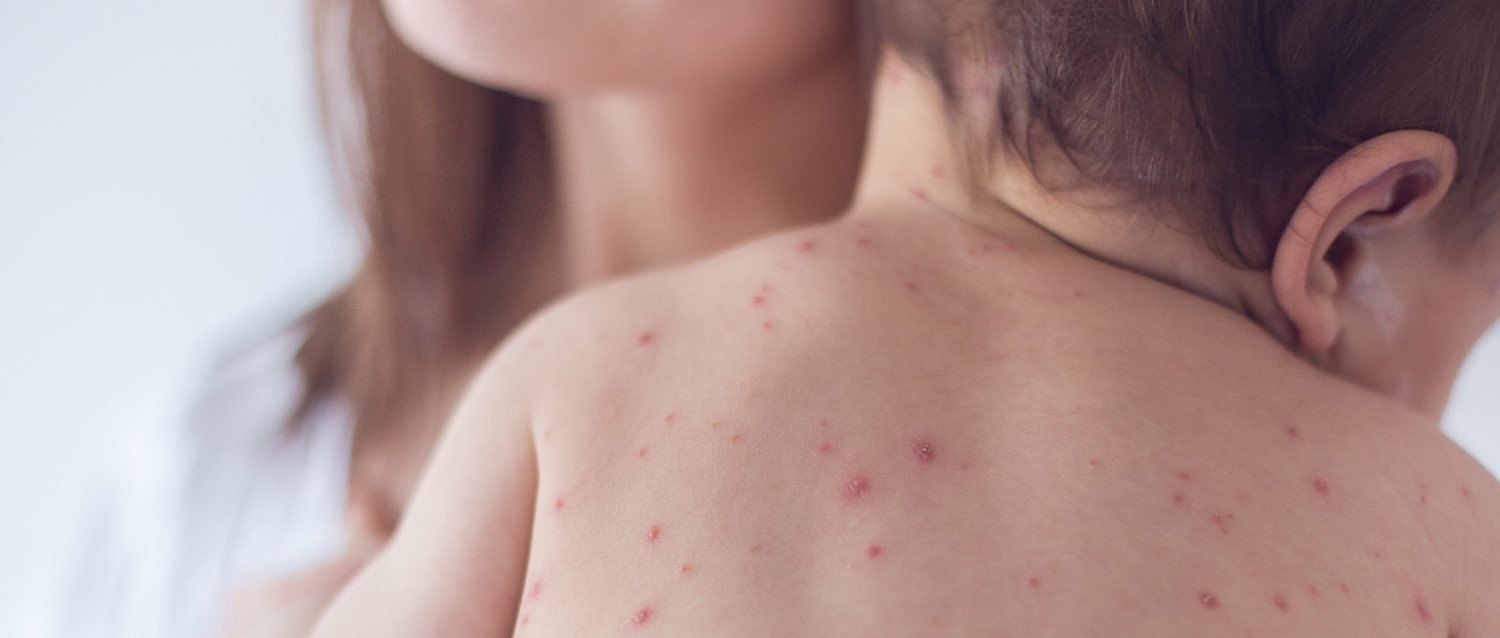
Full recovery is usual in children aged under 12 years. Full recovery is usual in children ... Serious complications are rare but are more likely to occur in الأطفال مع a poor immune system, such as those on chemotherapy..

Patient information leaflet
الجدري المائي لدى البالغين والمراهقين
Serious complications are rare, but are more common in adults than in children. Serious complications are rare but are more likely to occur in children with a poor immune system, such as those on chemotherapy. [/health/viral-rashes/chickenpox-in-children](https://patient.info/health/viral-rashes/chickenpox-in-children).

Patient information leaflet
التعرض للجدري المائي أثناء الحمل
... This leaflet is primarily intended لـ النساء الحوامل who may have come into contact with someone who has جدري الماء أو shingles. Chickenpox contact in pregnancy A person with chickenpox is very infectious. About 1 in 100 pregnant women who develop chickenpox-related pneumonia die of this serious infection. الدماغ inflammation (encephalitis).
قراءة إضافية ومراجع
- Infantile-onset spinocerebellar ataxia; MedlinePlus, National Library of Medicine.
- El-Hattab AW, Craigen WJ, Wong LJC, Scaglia F. Mitochondrial DNA Maintenance Defects Overview. 2018 Mar 8. In: Adam MP, Bick S, Mirzaa GM, Wallace SE, Amemiya A, editors. GeneReviews(R) [Internet]. Seattle (WA): University of Washington, Seattle; 1993-2026. Available from http://www.ncbi.nlm.nih.gov/books/NBK487393/
- Hakonen AH, Goffart S, Marjavaara S, Paetau A, Cooper H, Mattila K, Lampinen M, Sajantila A, Lonnqvist T, Spelbrink JN, Suomalainen A. Infantile-onset spinocerebellar ataxia and mitochondrial recessive ataxia syndrome are associated with neuronal complex I defect and mtDNA depletion. Hum Mol Genet. 2008 Dec 1;17(23):3822-35. doi: 10.1093/hmg/ddn280. Epub 2008 Sep 5.
- Lonnqvist T, Paetau A, Valanne L, Pihko H. Recessive twinkle mutations cause severe epileptic encephalopathy. Brain. 2009 Jun;132(Pt 6):1553-62. doi: 10.1093/brain/awp045. Epub 2009 Mar 20.
- Lopriore P, Unluturk Z, Klopstock T, Karaa A, Rouzier C, Dominguez-Gonzalez C, Lamperti C, Mancuso M; Twinkle-Related Disorders International Consortium for Trial Readiness (TReDIC); Cecchi G, Montano V, Siciliano G, Nicoletta V, Maioli M, Primiano G, Servidei S, La Morgia C, Carelli V, Valentino ML, Caporali L, Arena IG, Musumeci O, Lopergolo D, Malandrini A, Gallus GN, Filosto M, Bello L, Pegoraro E, Comi GP, Magri F, Ronchi D, Di Fonzo A, Percetti M, Azzimonti M, Buchner B, Prokisch H, Bermejo-Guerrero L, Procaccio V, Gaignard P, Echaniz-Laguna A, Schiff M, Rotig A, Toutain A, Paquis-Flucklinger V, Morel G, Robin S, Nadaj-Pakleza A, Chanson JB, Chaussenot A, Ait-El-Mkadem Saadi S, Trimouille A, Tranchant C, Salort-Campana E, Bieth E, Sacconi S, Duval F, Restrepo Vera JL, Molnar MJ, Vissing J, Haas R, Larson A, Enns GM, Parikh S, Goldstein A, Hirano M. Clinical and Genotypic Spectrum of Twinkle-Related Disorders: Insights From a Multinational Cohort Study. Neurology. 2026 Feb 10;106(3):e214401. doi: 10.1212/WNL.0000000000214401. Epub 2026 Jan 15.
- Nikali K, Suomalainen A, Saharinen J, Kuokkanen M, Spelbrink JN, Lonnqvist T, Peltonen L. Infantile onset spinocerebellar ataxia is caused by recessive mutations in mitochondrial proteins Twinkle and Twinky. Hum Mol Genet. 2005 Oct 15;14(20):2981-90. doi: 10.1093/hmg/ddi328. Epub 2005 Aug 31.
- Pierce SB, Gulsuner S, Stapleton GA, Walsh T, Lee MK, Mandell JB, Morales A, Klevit RE, King MC, Rogers RC. Infantile onset spinocerebellar ataxia caused by compound heterozygosity for Twinkle mutations and modeling of Twinkle mutations causing recessive disease. Cold Spring Harb Mol Case Stud. 2016 Jul;2(4):a001107. doi: 10.1101/mcs.a001107.
- Remtulla S, Emilie Nguyen CT, Prasad C, Campbell C. Twinkle-Associated Mitochondrial DNA Depletion. Pediatr Neurol. 2019 Jan;90:61-65. doi: 10.1016/j.pediatrneurol.2018.08.007. Epub 2018 Aug 9.
- Sukhudyan B, Gevorgyan A, Sarkissian A, Boltshauser E. Expanding phenotype of mitochondrial depletion syndrome in association with TWNK mutations. Eur J Paediatr Neurol. 2019 May;23(3):537-540. doi: 10.1016/j.ejpn.2019.02.002. Epub 2019 Feb 14.
تاريخ المقال
المقال متاح أيضًا باللغة الإنجليزية, الألمانية, إسبانية, الفرنسية, إيطالي, البرتغالية, الهندية, العبرية, العربية ,، و السويدية.
13 Nov 2023 | أحدث إصدار
1 Mar 2010 | نُشر في الأصل
شارك أفكارك أو تجاربك مع الآخرين في مجتمعات المرضى.
وصول بسيط إلى العلاجات والخدمات الصحية الموثوقة عبر الإنترنت.
Common conditions
Get help with common conditions through the NHS, without a GP appointment.
 التهاب الجيوب الأنفية الحاد
 التهاب اللوزتين البكتيري
 القوباء
 لدغات الحشرات
 الحزام الناريعدوى المسالك البولية
اشترك في النشرة الإخبارية للمرضى
جرعتك الأسبوعية من النصائح الصحية الواضحة والموثوقة - مكتوبة لمساعدتك على الشعور بالاطلاع والثقة والتحكم.
من خلال الاشتراك، فإنك تقبل سياسة الخصوصية. يمكنك إلغاء الاشتراك في أي وقت. نحن لا نبيع بياناتك أبدًا.