NGLY1-congenital disorder of deglycosylation
آخر تحديث 18 Aug 2020
يتوافق مع الإرشادات التحريرية
- تنزيلتنزيل
- مشاركة
- Language
- نقاش
- Ask Patient
- نسخة صوتية
- أضف إلى المصادر المفضلة على جوجل
NGLY1-congenital disorder of deglycosylation (NGLY1-CDDG) is an inherited condition that affects many parts of the body. The severity of the signs and symptoms varies widely among people with the condition.
اختيارات الفيديو لـ الحالات الوراثيةمكتبة الفيديو
الوصف
NGLY1-congenital disorder of deglycosylation (NGLY1-CDDG) is an inherited condition that affects many parts of the body. The severity of the signs and symptoms varies widely among people with the condition.
الأفراد الذين لديهم NGLY1-CDDG typically develop features of the condition during infancy. They often have delayed development of speech and motor skills, such as sitting and walking, and weak muscle tone (hypotonia). Many affected individuals have movement abnormalities, such as uncontrolled movements of the limbs (choreoathetosis), and some develop seizures that are difficult to treat. Individuals with NGLY1-CDDG may also have problems with liver function. Some affected individuals have eye abnormalities, including degeneration of the nerves that carry information from the eyes to the brain (optic atrophy) and changes in the light-sensing tissue at the back of the eye (the retina). A reduction or absence of tears (hypolacrima or alacrima) is a common feature of NGLY1-CDDG.
Inheritance patterns
The source lists the following possible inheritance patterns: Autosomal recessive. More than one pattern can apply in different cases.
Related genes
Other names
Congenital disorder of deglycosylation
Deficiency of N-glycanase 1
NGLY1-CDDG
Related patient information and medicines

Patient information leaflet
اضطرابات تخزين الجليكوجين
اضطرابات تخزين الجليكوجين are a group of موروث diseases. They result from a problem with one of the proteins (known as enzymes) involved in the conversion of glucose to glycogen, or the breakdown of glycogen back into glucose. اضطرابات تخزين الجليكوجين يكون a group of inherited diseases that result from a lack of, or abnormal functioning of,.
Patient information leaflet
اضطرابات الغدة النخامية
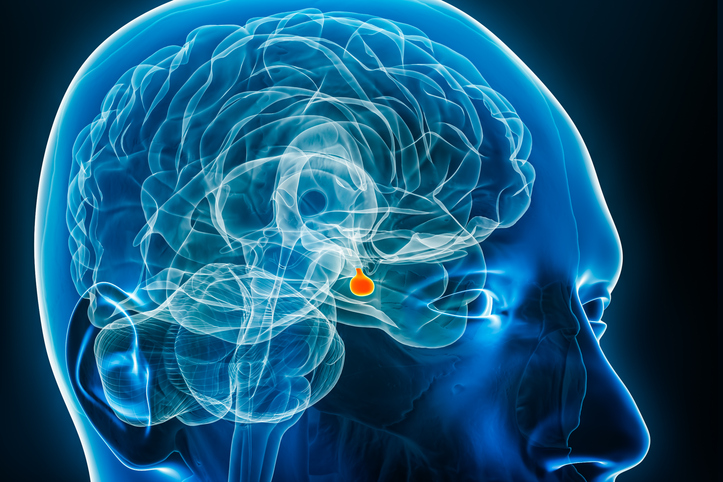
This leaflet gives a brief overview of the pituitary gland and the hormones it makes. The pituitary gland is found at the base of the brain and is 'pea-sized'. The pituitary gland is an overall controller of a number of other glands in the body, overseeing the function of these organs through hormones. Some of the pituitary gland disorders.

Patient information leaflet
متلازمة الكلوية
متلازمة الكلوية is a condition where the 'filters' in the kidney become 'leaky' and large amounts of protein leak from the blood into the urine. Treatment and outcome (prognosis) vary, depending on the cause. A syndrome is a set of symptoms and... FSGS accounts for up to 1 in 10 cases of nephrotic syndrome in children but a higher percentage of.

Patient information leaflet
أمراض القلب الخلقية
أمراض القلب الخلقية is a condition where an abnormality (defect) develops in the heart before birth. There are a number of types of congenital heart defect. What is congenital heart disease. Abnormalities or defects of the heart which develop before birth are together (collectively) called congenital heart disease. Some of these are listed in.

Patient information leaflet
الاضطرابات الجسدية والوظيفية
Somatisation is no longer a commonly used term. What used to be considered somatising symptoms or somatoform disorders are now more commonly termed "functional disorders" or "functional symptoms". Terminology can be confusing; lots of different terms are used and some terms have been changed in recent years. Illness is what we experience when we.

Patient information leaflet
تضخم الغدة الكظرية الخلقي
تضخم الغدة الكظرية الخلقي is an inherited (genetic) condition causing التورم of the adrenal glands. The condition is associated with a decrease in the blood level of a hormone called cortisol and an increase in the level of male sex hormones (androgens) in both sexes. Some people get a mild condition that produces no symptoms. Others.
قراءة إضافية ومراجع
- NGLY1-congenital disorder of deglycosylation; MedlinePlus, National Library of Medicine.
- Enns GM, Shashi V, Bainbridge M, Gambello MJ, Zahir FR, Bast T, Crimian R, Schoch K, Platt J, Cox R, Bernstein JA, Scavina M, Walter RS, Bibb A, Jones M, Hegde M, Graham BH, Need AC, Oviedo A, Schaaf CP, Boyle S, Butte AJ, Chen R, Chen R, Clark MJ, Haraksingh R; FORGE Canada Consortium; Cowan TM, He P, Langlois S, Zoghbi HY, Snyder M, Gibbs RA, Freeze HH, Goldstein DB. Mutations in NGLY1 cause an inherited disorder of the endoplasmic reticulum-associated degradation pathway. Genet Med. 2014 Oct;16(10):751-8. doi: 10.1038/gim.2014.22. Epub 2014 Mar 20.
- He P, Grotzke JE, Ng BG, Gunel M, Jafar-Nejad H, Cresswell P, Enns GM, Freeze HH. A congenital disorder of deglycosylation: Biochemical characterization of N-glycanase 1 deficiency in patient fibroblasts. Glycobiology. 2015 Aug;25(8):836-44. doi: 10.1093/glycob/cwv024. Epub 2015 Apr 21.
- Huang C, Harada Y, Hosomi A, Masahara-Negishi Y, Seino J, Fujihira H, Funakoshi Y, Suzuki T, Dohmae N, Suzuki T. Endo-beta-N-acetylglucosaminidase forms N-GlcNAc protein aggregates during ER-associated degradation in Ngly1-defective cells. Proc Natl Acad Sci U S A. 2015 Feb 3;112(5):1398-403. doi: 10.1073/pnas.1414593112. Epub 2015 Jan 20.
- Lam C, Ferreira C, Krasnewich D, Toro C, Latham L, Zein WM, Lehky T, Brewer C, Baker EH, Thurm A, Farmer CA, Rosenzweig SD, Lyons JJ, Schreiber JM, Gropman A, Lingala S, Ghany MG, Solomon B, Macnamara E, Davids M, Stratakis CA, Kimonis V, Gahl WA, Wolfe L. Prospective phenotyping of NGLY1-CDDG, the first congenital disorder of deglycosylation. Genet Med. 2017 Feb;19(2):160-168. doi: 10.1038/gim.2016.75. Epub 2016 Jul 7.
تاريخ المقال
المقال متاح أيضًا باللغة الإنجليزية, الألمانية, إسبانية, الفرنسية, إيطالي, البرتغالية, الهندية, العبرية, العربية ,، و السويدية.
18 Aug 2020 | أحدث إصدار
1 أغسطس 2017 | نُشر في الأصل
شارك أفكارك أو تجاربك مع الآخرين في مجتمعات المرضى.
وصول بسيط إلى العلاجات والخدمات الصحية الموثوقة عبر الإنترنت.
Common conditions
Get help with common conditions through the NHS, without a GP appointment.
 التهاب الجيوب الأنفية الحاد
 التهاب اللوزتين البكتيري
 القوباء
 لدغات الحشرات
 الحزام الناريعدوى المسالك البولية
اشترك في النشرة الإخبارية للمرضى
جرعتك الأسبوعية من النصائح الصحية الواضحة والموثوقة - مكتوبة لمساعدتك على الشعور بالاطلاع والثقة والتحكم.
من خلال الاشتراك، فإنك تقبل سياسة الخصوصية. يمكنك إلغاء الاشتراك في أي وقت. نحن لا نبيع بياناتك أبدًا.