dynein axonemal intermediate chain 1
آخر تحديث 10 Dec 2025
يتوافق مع الإرشادات التحريرية
- تنزيلتنزيل
- مشاركة
- Language
- نقاش
- Ask Patient
- نسخة صوتية
- أضف إلى المصادر المفضلة على جوجل
The DNAI1 gene provides instructions for making a protein that is part of a group (complex) of proteins called dynein. This complex functions within cell structures called cilia. Cilia are microscopic, finger-like projections that stick out from the surface of cells. Coordinated back and forth movement of cilia can move the cell or the fluid surrounding the cell. Dynein produces the force needed for cilia to move.
اختيارات الفيديو لـ Genesمكتبة الفيديو
Normal function
The DNAI1 gene provides instructions for making a protein that is part of a group (complex) of proteins called dynein. This complex functions within cell structures called cilia. Cilia are microscopic, finger-like projections that stick out from the surface of cells. Coordinated back and forth movement of cilia can move the cell or the fluid surrounding the cell. Dynein produces the force needed for cilia to move.
Within the core of cilia (the axoneme), dynein complexes are part of structures known as inner dynein arms (IDAs) and outer dynein arms (ODAs) depending on their location. Coordinated movement of the dynein arms causes the entire axoneme to bend back and forth. IDAs and ODAs have different combinations of protein components (subunits) that are classified by weight as heavy, intermediate, or light chains. The DNAI1 gene provides instructions for making intermediate chain 1, which is found in ODAs. Other subunits are produced from different genes.
Conditions referring to this gene or chromosome
Other names
dynein, axonemal, intermediate chain 1
dynein, axonemal, intermediate polypeptide 1
Related patient information and medicines

Patient information leaflet
تخثر الدم
The body has a natural clotting process in the blood, which is altered in thrombophilia. Thrombophilia refers to a group of conditions where the blood clots more easily than normal. The body has a natural clotting process in the blood, which is altered in thrombophilia. It helps to stop bleeding if you have an injury such as a cut. When a blood.

Patient information leaflet
التنكس البقعي
التنكس البقعي المرتبط بالعمر is the most common cause of sight impairment in those aged over 50. It causes a gradual loss of central vision, which is needed for detailed work and for things like reading and driving. Edge vision (peripheral vision) is not lost. Macular degeneration (also known as age-related macular degeneration) occurs when.
Patient information leaflet
اضطرابات الغدة النخامية
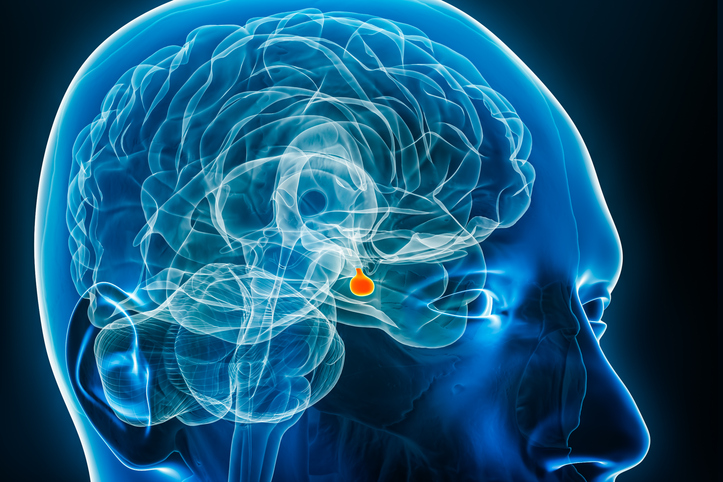
This leaflet gives a brief overview of the pituitary gland and the الهرمونات it makes. The pituitary gland is found at the base of the brain and is 'pea-sized'. The pituitary gland is an overall controller of a number of other glands in the body, overseeing the function of these organs through hormones. Some of the pituitary gland disorders.

Patient information leaflet
مرض كرون
مرض كرون is a condition that causes inflammation of the wall of the gut (gastrointestinal tract). Crohn's disease is a condition that causes inflammation of the wall of the gut (gastrointestinal tract). Crohn's disease is a lifelong condition with flare-ups from time to time. Crohn's disease is generally managed by a specialist.

Patient information leaflet
الورم النقوي
الورم النقوي is a السرطان that affects cells, called plasma cells, in the bone marrow. Bone marrow is the spongy tissue at the centre of some bones that produces the body's blood cells. Dr Krishna Vakharia , 10th April 2025 The National Institute for Health and Care Excellence (NICE) has updated its guidance on assessment for myeloma in all ages.

Patient information leaflet
ابيضاض الدم النقوي المزمن
Chronic myeloid leukaemia (CML) is sometimes called chronic myelogenous leukaemia, chronic granulocytic leukaemia, أو chronic myelocytic leukaemia. What is chronic myeloid leukaemia. Chronic myeloid leukaemia (CML) is sometimes called chronic myelogenous leukaemia, chronic granulocytic leukaemia, or chronic myelocytic leukaemia. CML develops due.
قراءة إضافية ومراجع
- dynein axonemal intermediate chain 1; MedlinePlus, National Library of Medicine.
- Escudier E, Duquesnoy P, Papon JF, Amselem S. Ciliary defects and genetics of primary ciliary dyskinesia. Paediatr Respir Rev. 2009 Jun;10(2):51-4. doi: 10.1016/j.prrv.2009.02.001. Epub 2009 Apr 18.
- Failly M, Saitta A, Munoz A, Falconnet E, Rossier C, Santamaria F, de Santi MM, Lazor R, DeLozier-Blanchet CD, Bartoloni L, Blouin JL. DNAI1 mutations explain only 2% of primary ciliary dykinesia. Respiration. 2008;76(2):198-204. doi: 10.1159/000128567. Epub 2008 Apr 23.
- Leigh MW, Pittman JE, Carson JL, Ferkol TW, Dell SD, Davis SD, Knowles MR, Zariwala MA. Clinical and genetic aspects of primary ciliary dyskinesia/Kartagener syndrome. Genet Med. 2009 Jul;11(7):473-87. doi: 10.1097/GIM.0b013e3181a53562.
- Pennarun G, Escudier E, Chapelin C, Bridoux AM, Cacheux V, Roger G, Clement A, Goossens M, Amselem S, Duriez B. Loss-of-function mutations in a human gene related to Chlamydomonas reinhardtii dynein IC78 result in primary ciliary dyskinesia. Am J Hum Genet. 1999 Dec;65(6):1508-19. doi: 10.1086/302683.
- Raidt J, Riepenhausen S, Pennekamp P, Olbrich H, Amirav I, Athanazio RA, Aviram M, Balinotti JE, Bar-On O, Bode SFN, Boon M, Borrelli M, Carr SB, Crowley S, Dehlink E, Diepenhorst S, Durdik P, Dworniczak B, Emiralioglu N, Erdem E, Fonnesu R, Gracci S, Grosse-Onnebrink J, Gwozdziewicz K, Haarman EG, Hansen CR, Hogg C, Holgersen MG, Kerem E, Korner RW, Kotz K, Kouis P, Loebinger MR, Lorent N, Lucas JS, Maj D, Mall MA, Marthin JK, Martinu V, Mazurek H, Mitchison HM, Nothe-Menchen T, Ozcelik U, Pifferi M, Pogorzelski A, Ringshausen FC, Roehmel JF, Rovira-Amigo S, Rumman N, Schlegtendal A, Shoemark A, Sperstad Kennelly S, Staar BO, Sutharsan S, Thomas S, Ullmann N, Varghese J, von Hardenberg S, Walker WT, Wetzke M, Witt M, Yiallouros P, Zschocke A, Zietkiewicz E, Nielsen KG, Omran H. Analyses of 1236 genotyped primary ciliary dyskinesia individuals identify regional clusters of distinct DNA variants and significant genotype-phenotype correlations. Eur Respir J. 2024 Aug 8;64(2):2301769. doi: 10.1183/13993003.01769-2023. Print 2024 Aug.
- Zariwala MA, Despotes KA, Davis SD. Primary Ciliary Dyskinesia. 2007 Jan 24 [updated 2025 May 22]. In: Adam MP, Bick S, Mirzaa GM, Wallace SE, Amemiya A, editors. GeneReviews(R) [Internet]. Seattle (WA): University of Washington, Seattle; 1993-2026. Available from http://www.ncbi.nlm.nih.gov/books/NBK1122/
- Zariwala MA, Leigh MW, Ceppa F, Kennedy MP, Noone PG, Carson JL, Hazucha MJ, Lori A, Horvath J, Olbrich H, Loges NT, Bridoux AM, Pennarun G, Duriez B, Escudier E, Mitchison HM, Chodhari R, Chung EM, Morgan LC, de Iongh RU, Rutland J, Pradal U, Omran H, Amselem S, Knowles MR. Mutations of DNAI1 in primary ciliary dyskinesia: evidence of founder effect in a common mutation. Am J Respir Crit Care Med. 2006 Oct 15;174(8):858-66. doi: 10.1164/rccm.200603-370OC. Epub 2006 Jul 20.
- Zietkiewicz E, Nitka B, Voelkel K, Skrzypczak U, Bukowy Z, Rutkiewicz E, Huminska K, Przystalowska H, Pogorzelski A, Witt M. Population specificity of the DNAI1 gene mutation spectrum in primary ciliary dyskinesia (PCD). Respir Res. 2010 Dec 8;11(1):174. doi: 10.1186/1465-9921-11-174.
تاريخ المقال
المقال متاح أيضًا باللغة الإنجليزية, الألمانية, إسبانية, الفرنسية, إيطالي, البرتغالية, الهندية, العبرية, العربية ,، و السويدية.
10 Dec 2025 | أحدث إصدار
1 Apr 2014 | نُشر في الأصل
شارك أفكارك أو تجاربك مع الآخرين في مجتمعات المرضى.
وصول بسيط إلى العلاجات والخدمات الصحية الموثوقة عبر الإنترنت.
Common conditions
Get help with common conditions through the NHS, without a GP appointment.
 التهاب الجيوب الأنفية الحاد
 التهاب اللوزتين البكتيري
 القوباء
 لدغات الحشرات
 الحزام الناريعدوى المسالك البولية
اشترك في النشرة الإخبارية للمرضى
جرعتك الأسبوعية من النصائح الصحية الواضحة والموثوقة - مكتوبة لمساعدتك على الشعور بالاطلاع والثقة والتحكم.
من خلال الاشتراك، فإنك تقبل سياسة الخصوصية. يمكنك إلغاء الاشتراك في أي وقت. نحن لا نبيع بياناتك أبدًا.