الوردية
مراجعة من قبل الدكتورة راشيل هدسون، MRCGPآخر تحديث بواسطة الدكتورة روزالين أدلمان، MRCGPآخر تحديث 23 Mar 2023
يتوافق مع الإرشادات التحريرية
- تنزيلتنزيل
- مشاركة
- Language
- نقاش
- نسخة صوتية
- أضف إلى المصادر المفضلة على جوجل
Roseola is a viral infection. It is common and mainly affects young children between the ages of 6 months and 3 years. It is usually a mild infection that causes no long-term problems. Full recovery is usual.
نظرة سريعة
Roseola is a common childhood illness, usually affecting children aged 6 months to 3 years.
It typically starts with a sudden high fever lasting 3-4 days, followed by a pink spotty rash.
The rash often begins on the body and spreads to the arms and legs, but not usually the face.
Roseola is contagious and spreads through saliva.
Treatment focuses on keeping the child comfortable, for example by giving paracetamol or ibuprofen for fever.
Ensure your child drinks plenty of fluids to avoid dehydration.
Seek medical help if you are worried about your child's dehydration.
What is roseola?
Roseola is also known as roseola infantum, exanthem subitum, sixth disease and three-day rash. The disease is most common in those aged 6 months to 3 years. It is rare in adults, probably because childhood infection gives lifelong immunity to most people. It is usually caused by a virus called human herpesvirus type 6 (HHV-6). It may also be caused by human herpesvirus type 7 (HHV-7).
Symptoms of roseola
Children infected with the roseola virus will typically develop the following symptoms:
A high temperature (الحمى) suddenly develops. The child can be flushed, irritable, and unwell with the fever. The temperature can be as high as 40°C. The fever typically lasts 3-4 days and then drops quickly back to normal.
A rash usually appears when the fever subsides, when the child is getting better. Small pink spots appear. They usually start on the body and then spread to the arms and legs. The rash does not usually develop on the face. The rash is not itchy or painful and does not blister. The rash usually lasts for about 1-2 days, but sometimes fades within hours.
Some children get similar spots in their mouth (on the soft palate and the uvula).
A sore throat, سعال and runny nose may develop and the child may go off their food.
Some glands in the neck may swell.
Roseola is often diagnosed when the child is getting better. At first the high fever may cause concern to parents and doctors if it is not clear what is causing it. Other more serious illnesses may need to be ruled out. The sudden drop in fever and the appearance of the typical rash are reassuring. This indicates that the fever has been caused by the roseola virus and nothing more serious.
الوردية
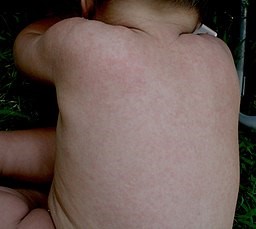
© Emiliano Burzagli, Public domain, via Wikimedia Commons
Is roseola contagious?
Roseola is contagious. The spread of the virus is from person to person via saliva. The time from infection to symptoms appearing (incubation period) is 9 to 15 days. The chid is probably infectious during the whole period of the disease and maybe even before the high temperature (fever) appears.
Treatment for roseola
There is no treatment that kills the virus. Treatment aims to keep the child as comfortable as possible until the illness goes.
Dealing with a high temperature (fever)
A fever can make a child feel uncomfortable and irritable. There are things that you can do that may bring the temperature down and make your child feel more comfortable.
You can give paracetamol or ibuprofen to lower a temperature and help ease headaches, and aches and pains. You can buy الباراسيتامول و الإيبوبروفين in liquid form, or as melt-in-the-mouth tablets, for children. Both these medicines come in various brand names. The dose for each age is shown on the medicine packet.
Do not use more than advised on the packet or bottle. Do not use ibuprofen in children in whom attacks of الربو have been triggered by ibuprofen in the past.
Keep your child cool. Take extra layers of clothes off your child if the room is normal room temperature. Use light cotton clothes or bedding. Open windows or use a fan in the room where appropriate. Do not cold-sponge a child who has a fever. This used to be popular but it is now not advised.
This is because the blood vessels under the skin become narrower (constrict) if the water is too cold. This reduces heat loss, and can trap heat in deeper parts of the body. The child may then get worse. Many children also find cold-sponging uncomfortable.
Give lots to drink. This helps to prevent a lack of fluid in the body (dehydration). You might find that a child is more willing to have a good drink if they are not so irritable. So, if they are not keen to drink, it may help to give some paracetamol first. Then, try to give the child a drink 30 minutes or so later when their temperature is likely to have come down.
Encourage your child to have plenty to drink if they have a fever. Signs of dehydration include:
ت جفاف الفم.
No tears
Sunken eyes.
نعاس.
بشكل عام، تزداد الحالة سوءًا.
Passing less urine or having fewer wet nappies.
Seek medical help if you suspect that your child is becoming dehydrated.
Complications from roseola
Sometimes the high temperature (fever) can cause a fit (also known as a febrile convulsion or febrile seizure). This can be alarming but is usually not serious. Other reported complications are very rare. Full recovery is normally expected. People who have a weakened immune system (immunocompromised) may suffer from more serious complications such as encephalitis, myocarditis و التهاب الكبد.
Once a person has had this condition then they will be immune from having it again.
اختيارات المرضى لـ العدوى في مرحلة الطفولة

صحة الأطفال
مرض اليد والقدم والفم
مرض اليد والقدم والفم هو عادة مرض خفيف وقصير يؤثر بشكل رئيسي على الأطفال. يتعافى معظم الأطفال تمامًا في غضون عشرة أيام، وعادة أقل. نادرًا ما تحدث مضاعفات خطيرة. هذا المرض لا يرتبط بالمرض الذي يحمل اسمًا مشابهًا والذي يؤثر على الحيوانات.
بقلم الدكتورة توني هازيل، FRCGP
صحة الأطفال
جدري الماء عند الأطفال
يسبب جدري الماء ظهور بقع (طفح جلدي) ويمكن أن يجعل الطفل يشعر بالتوعك بشكل عام. يهدف العلاج إلى تخفيف الأعراض حتى يزول المرض. الشفاء التام شائع عند الأطفال الذين تقل أعمارهم عن 12 عامًا. المضاعفات الخطيرة نادرة ولكنها أكثر احتمالًا في الأطفال الذين يعانون من ضعف في جهاز المناعة، مثل أولئك الذين يتلقون العلاج الكيميائي.
بقلم الدكتور كولين تايدي، MRCGP
الأسئلة الشائعة
During which period is a child most likely to spread the roseola virus to others?
The child is probably infectious throughout the entire duration of the illness and potentially even before the high temperature (fever) first appears.
Are there any specific places on the body where the roseola rash typically does not appear?
The rash from roseola does not usually develop on the face.
If my child has a high fever, is it safe to use cold sponges or baths to cool them down?
No, cold-sponging a child with a fever is not advised. This can cause blood vessels under the skin to constrict, reducing heat loss and trapping heat in the body. It can also make the child uncomfortable.
What are some of the less common symptoms a child might experience with roseola, besides the obvious fever and rash?
Besides the fever and rash, some children might experience a sore throat, cough, runny nose, go off their food, and have swollen glands in the neck. Some may also develop small spots in their mouth, specifically on the soft palate and uvula.
What is the typical time frame from when a child is infected with roseola until symptoms start to show?
The incubation period, or the time from infection to the appearance of symptoms, is usually between 9 to 15 days.
قراءة إضافية ومراجع
- Wolz MM, Sciallis GF, Pittelkow MR; Human herpesviruses 6, 7, and 8 from a dermatologic perspective. Mayo Clin Proc. 2012 Oct;87(10):1004-14. doi: 10.1016/j.mayocp.2012.04.010. Epub 2012 Jul 21.
- الوردية; ديرم نت نيوزيلندا
- Stone RC, Micali GA, Schwartz RA; Roseola infantum and its causal human herpesviruses. Int J Dermatol. 2014 Apr;53(4):397-403.
- Allmon A, Deane K, Martin KL; Common Skin Rashes in Children. Am Fam Physician. 2015 Aug 1;92(3):211-6.
- Mullins TB, Krishnamurthy K; Roseola Infantum (Exanthema Subitum, Sixth Disease)
عن المؤلفعرض السيرة الذاتية الكاملة

الدكتورة روزالين أدلمان، MRCGP
MRCGP
الدكتورة روزالين أدلمان، طبيبة عامة في هيئة الخدمات الصحية الوطنية تعمل في شمال لندن.
حول المراجععرض السيرة الذاتية الكاملة

الدكتورة راشيل هدسون، MRCGP
طبيب عام وكاتب طبي
بكالوريوس الطب والجراحة، زميل الكلية الملكية للممارسين العامين (2008)، بكالوريوس العلوم (العلوم الطبية)، دبلوم في الصحة الجنسية والإنجابية، دبلوم الكلية الملكية لأطباء النساء والتوليد، دبلوم صحة الطفل
الدكتورة راشيل هدسون، طبيبة عامة في هيئة الخدمات الصحية الوطنية تعمل في شمال غرب إنجلترا.
تاريخ المقال
تمت كتابة المعلومات على هذه الصفحة ومراجعتها من قبل أطباء مؤهلين.
المقال متاح أيضًا باللغة الإنجليزية, الألمانية, إسبانية, الفرنسية, إيطالي, البرتغالية, الهندية, العبرية, العربية ,، و السويدية.
Next review due: 21 Mar 2028
23 Mar 2023 | أحدث إصدار

اسأل، شارك، تواصل.
تصفح المناقشات، اطرح الأسئلة، وشارك التجارب عبر مئات المواضيع الصحية.

هل تشعر بتوعك؟
قم بتقييم أعراضك عبر الإنترنت مجانًا
اشترك في النشرة الإخبارية للمرضى
جرعتك الأسبوعية من النصائح الصحية الواضحة والموثوقة - مكتوبة لمساعدتك على الشعور بالاطلاع والثقة والتحكم.
من خلال الاشتراك، فإنك تقبل سياسة الخصوصية. يمكنك إلغاء الاشتراك في أي وقت. نحن لا نبيع بياناتك أبدًا.
المزيد في صحة الأطفال
- المهق
- إرضاع طفلك
- المغص عند الأطفال والرضع
- تشوه خلقي في مجرى الهواء الرئوي
- الاكتئاب عند الأطفال
- متلازمة داون
- عسر القراءة
- التسمم الغذائي عند الأطفال
- النزيف داخل البطيني عند الأطفال
- التهاب المفاصل اليفعي مجهول السبب
- التهاب السحايا
- عدوى المكورات السحائية
- الغثيان والقيء
- التهاب الأمعاء الناخر
- اليرقان الوليدي
- انسداد القناة الدمعية عند الأطفال
- الديدان الخيطية
- علاج مشاكل صحة حديثي الولادة
- متلازمة تيرنر
- الخصيتين غير النازلتين