البرازيل
مراجعة من قبل الشبكة والمركز الوطني لصحة السفر (NaTHNaC)آخر تحديث بواسطة الشبكة والمركز الوطني لصحة السفر (NaTHNaC)آخر تحديث ٣ يونيو ٢٠٢٦
يتوافق مع الإرشادات التحريرية
- تنزيلتنزيل
- مشاركة
- Language
- نقاش
- نسخة صوتية
- أضف إلى المصادر المفضلة على جوجل
Brazil offers Amazon rainforest, Atlantic beaches and music-filled cities. Give yourself time to experience local culture and landscapes as distances and climates can vary. Check up-to-date vaccination guidance and other health considerations ahead of your journey.
ملف حقائق عن البلد
البلد | البرازيل |
اللغة الرسمية | البرتغالية |
العاصمة | Brasília |
الوحدة النقدية | real (R$; plural reais) |
خط الطول | -51.92528 |
خط العرض | -14.235004 |
نصائح السفر من وزارة الخارجية |
Oropouche virus disease outbreak
An outbreak of Oropouche virus disease is ongoing. Monitor the news and outbreak sections on this page for updates.
معلومات عامة
يجب استخدام المعلومات الموجودة في هذه الصفحات للبحث عن المخاطر الصحية ولإبلاغ استشارة ما قبل السفر.
يجب على المسافرين التحقق من صفحة نصائح السفر الخاصة بالدول من مكتب الخارجية والكومنولث والتنمية (FCDO) (حيثما كان متاحًا) الذي يوفر معلومات حول متطلبات دخول السفر بالإضافة إلى نصائح السلامة والأمان.
يجب على المسافرين ترتيب موعد مع أخصائي الرعاية الصحية الخاص بهم قبل السفر بأربعة إلى ستة أسابيع على الأقل. ومع ذلك، حتى إذا كان الوقت قصيرًا، فإن تحديد موعد لا يزال يستحق العناء. يوفر هذا الموعد فرصة لتقييم المخاطر الصحية مع مراعاة عدد من العوامل بما في ذلك الوجهة، والتاريخ الطبي، والأنشطة المخطط لها. بالنسبة لأولئك الذين يعانون من مشاكل صحية موجودة مسبقًا، يُوصى بتحديد موعد مبكر.
يجب على جميع المسافرين التأكد من أن لديهم تأمين صحي مناسب للسفر.
قائمة بالموارد المفيدة بما في ذلك النصائح حول كيفية تقليل مخاطر بعض المشاكل الصحية متاحة أدناه
الموارد
What vaccinations do I need for Brazil?
يتم تقديم تفاصيل توصيات ومتطلبات التطعيم أدناه.
جميع المسافرين
يجب أن يكون المسافرون على اطلاع دائم بدورات التطعيم الروتينية والجرعات المعززة كما هو موصى به في المملكة المتحدة وفقًا لأعمارهم وتاريخهم الطبي والمخاطر الفردية.
جدول التطعيم الروتيني الحالي في المملكة المتحدة
تتيح استشارة الصحة المتعلقة بالسفر فرصة للتحقق مما إذا كانت التطعيمات الروتينية محدثة مثل لقاحات الحصبة والنكاف والحصبة الألمانية/الحصبة الألمانية والنكاف والحصبة والدفتيريا والتيتانوس وشلل الأطفال. يوفر الرابط التالي معلومات حول التوصيات الحالية جدول التطعيمات الموصى به في المملكة المتحدة.
لا يتم تقديم توصيات خاصة بالدفتيريا لكل دولة هنا. يتم دمج لقاحات الدفتيريا والتيتانوس وشلل الأطفال في لقاح واحد في المملكة المتحدة. لذلك، عندما يُوصى بجرعة تعزيزية للتيتانوس للمسافرين، يتم أيضًا إعطاء لقاح الدفتيريا. في حالة حدوث تفشي للدفتيريا في بلد ما، سيتم تقديم إرشادات خاصة بالتطعيم ضد الدفتيريا.
تطعيم الأفراد الذين لديهم شكوك أو تطعيم غير مكتمل
للأفراد الذين لديهم تاريخ تطعيم غير مؤكد أو غير مكتمل، يرجى العثور على إرشادات للمهنيين الصحيين هنا تطعيم الأفراد الذين لديهم شكوك أو تطعيم غير مكتمل.
توفر UKHSA أداة مقارنة التطعيم للأفراد الذين قد تم تطعيمهم في الخارج أداة مقارنة جداول التطعيم في المملكة المتحدة والدولية.
برامج التحصين الانتقائي
يجب على الأشخاص الذين قد يكونون معرضين لخطر متزايد للإصابة بمرض معدٍ بسبب عملهم أو نمط حياتهم أو بعض المشاكل الصحية الأساسية أن يكونوا على اطلاع دائم باللقاحات الإضافية الموصى بها. انظر توصيات اللقاحات لهذه المجموعات في أسفل 'جدول التطعيم الروتيني الكامل' الوثيقة. فصول الأمراض الفردية من "الكتاب الأخضر"' التطعيم ضد الأمراض المعدية يوفر تفاصيل إضافية.
متطلبات الشهادة
لا توجد متطلبات لشهادات بموجب اللوائح الصحية الدولية.
هناك risk of yellow fever transmission in parts of Brazil (see 'Some travellers' section below).
معظم المسافرين
اللقاحات في هذا القسم موصى بها لمعظم المسافرين الذين يزورون هذا البلد. يمكن العثور على معلومات حول هذه اللقاحات بالنقر على السهم الأزرق. يتم سرد اللقاحات أبجديًا.
التهاب الكبد A
التهاب الكبد A هو عدوى فيروسية تنتقل من خلال الطعام والماء الملوثين أو عن طريق الاتصال المباشر مع شخص مصاب. غالبًا ما تكون الأعراض خفيفة أو غائبة عند الأطفال الصغار، ولكن يمكن أن تكون المرض أكثر خطورة مع تقدم العمر. يمكن أن تتراوح فترة التعافي من أسابيع إلى شهور. بعد الإصابة بالتهاب الكبد A، تكون المناعة مدى الحياة.
الوقاية
يجب على جميع المسافرين الاهتمام بالنظافة الشخصية ونظافة الطعام والماء.
تطعيم التهاب الكبد A
نظرًا لأن لقاح التهاب الكبد A يتحمله الجسم بشكل جيد ويوفر حماية طويلة الأمد، يُوصى به لجميع المسافرين الذين لم يتم تطعيمهم سابقًا.
الكزاز
الكزاز ناتج عن سم يفرزه Clostridium tetani البكتيريا وتحدث في جميع أنحاء العالم. توجد بكتيريا الكزاز في التربة والسماد وقد تدخل الجسم من خلال الجروح المفتوحة مثل الجروح الناتجة عن الوخز أو الحروق أو الخدوش.
الوقاية
يجب على المسافرين تنظيف جميع الجروح بعناية وطلب الرعاية الطبية للإصابات مثل عضات/خدوش الحيوانات، الحروق أو الجروح الملوثة بالتربة.
التطعيم ضد التيتانوس
يجب أن يكون المسافرون قد أكملوا دورة تطعيم الكزاز وفقًا للجدول الزمني في المملكة المتحدة.
إذا كنت تسافر إلى بلد أو منطقة قد تكون فيها المرافق الطبية محدودة، يُوصى بأخذ جرعة تعزيزية من لقاح يحتوي على التيتانوس إذا كانت الجرعة الأخيرة قد أُخذت قبل أكثر من عشر سنوات، حتى لو تم إعطاء خمس جرعات من اللقاح سابقًا.
يمكن العثور على معلومات خاصة بكل دولة حول المرافق الطبية في قسم 'الصحة' من نصائح السفر للخارج من FCDO صفحات.
التيفوئيد
التيفوئيد هو عدوى بكتيرية تنتقل عبر الطعام والماء الملوثين. قد توفر الإصابة السابقة بالتيفوئيد حماية جزئية فقط ضد الإصابة مرة أخرى.
يوصى بالتطعيم لمعظم المسافرين، خاصة المسافرين الذين يزورون الأصدقاء والأقارب، والأشخاص الذين يتواصلون مع شخص مصاب، والأطفال الصغار، والمسافرين المتكررين أو الذين يقيمون لفترات طويلة في مناطق يحتمل أن تكون فيها النظافة والصحة الغذائية سيئة، وموظفي المختبرات الذين قد يتعاملون مع البكتيريا لأغراض عملهم.
الوقاية
يجب على جميع المسافرين الاهتمام بالنظافة الشخصية ونظافة الطعام والماء.
التطعيم ضد التيفوئيد
تتوفر لقاحات التيفوئيد الفموية والحقنية.
بعض المسافرين
اللقاحات في هذا القسم موصى بها لبعض المسافرين الذين يزورون هذا البلد. يتم سرد اللقاحات أبجديًا.
شيكونغونيا
شيكونغونيا هو عدوى فيروسية تنتقل عن طريق البعوض الذي يلدغ بشكل رئيسي خلال ساعات النهار. يسبب مرضًا شبيهًا بالإنفلونزا ويمكن أن يسبب آلامًا شديدة في المفاصل والعضلات والتي عادة ما تتحسن في غضون 1-2 أسبوع ولكن قد تستمر لأشهر أو سنوات. نادرًا ما يكون قاتلاً.
هناك خطر الإصابة بفيروس شيكونغونيا في هذا البلد.
سيتم الإبلاغ عن المعلومات حول الفاشيات الحالية، حيثما توفرت، على قاعدة بيانات مراقبة التفشي.
الوقاية
يجب على المسافرين تجنب لدغات البعوض، خاصة خلال ساعات النهار.
لقاح شيكونغونيا
يمكن النظر في التطعيم للأفراد الذين تبلغ أعمارهم 12 عامًا فما فوق والذين هم:
السفر إلى المناطق التي تشهد حاليًا تفشي فيروس شيكونغونيا
المسافرون لفترات طويلة أو المتكررون إلى المناطق ذات الخطر المتزايد لحمى الشيكونغونيا
يتعرضون لفيروس شيكونغونيا من خلال عملهم، مثل موظفي المختبر الذين يعملون مع الفيروس
ستكون النصائح التفصيلية حول استخدام وموانع استخدام اللقاحات المتاحة متوفرة في الفصل الخاص بفيروس شيكونغونيا في الكتاب الأخضر في الأشهر القادمة. في الوقت الحالي، يرجى الاطلاع على هذا صفحة شيكونغونيا للتفاصيل.
حمى الضنك
حمى الضنك هي عدوى فيروسية تنتقل عن طريق البعوض الذي يتغذى بشكل رئيسي خلال ساعات النهار. تسبب مرضًا يشبه الإنفلونزا، والذي يمكن أن يتطور أحيانًا إلى مرض أكثر خطورة يهدد الحياة. حمى الضنك الشديدة نادرة في المسافرين.
البعوض الذي ينقل حمى الضنك أكثر شيوعًا في البلدات والمدن والمناطق المحيطة بها.
هناك خطر الإصابة بحمى الضنك في هذا البلد.
سيتم الإبلاغ عن المعلومات حول الفاشيات الحالية، حيثما توفرت، على قاعدة بيانات مراقبة التفشي.
الوقاية
يجب على المسافرين تجنب لدغات البعوض، خاصة خلال ساعات النهار.
التطعيم ضد حمى الضنك
يمكن النظر في التطعيم للأفراد الذين تبلغ أعمارهم 4 سنوات فما فوق والذين أصيبوا بعدوى حمى الضنك في الماضي والذين هم:
السفر إلى المناطق التي يوجد فيها خطر الإصابة بحمى الضنك أو المناطق التي تشهد تفشيًا مستمرًا لحمى الضنك، أو
يتعرضون لفيروس حمى الضنك من خلال عملهم، مثل موظفي المختبر الذين يعملون مع الفيروس
استثنائياً، يمكن النظر في التطعيم لأولئك الذين لم يصابوا بحمى الضنك في الماضي. في هذه الحالات، ينبغي النظر في استشارة الخبراء بشكل أكبر. تتوفر إرشادات مفصلة حول كيفية التأكد من الإصابة السابقة في وكالة الأمن الصحي في المملكة المتحدة: التحصين ضد الأمراض المعدية - 'الكتاب الأخضر'. القرار النهائي بشأن التطعيم يعتمد على المهني الصحي والمسافر بعد إجراء تقييم دقيق للمخاطر وشرح المخاطر المحتملة للتطعيم.
التهاب الكبد B
التهاب الكبد B هو عدوى فيروسية تنتقل عبر الدم والسائل المنوي والسوائل المهبلية. يحدث ذلك غالبًا أثناء الاتصال الجنسي أو نتيجة الاتصال المباشر بالدم (على سبيل المثال من المعدات الملوثة أثناء الإجراءات الطبية وطب الأسنان، أو أثناء الوشم أو إجراءات ثقب الجسم، ومشاركة الإبر الوريدية). يمكن للأمهات المصابات بالفيروس أيضًا نقل العدوى إلى أطفالهن أثناء الولادة.
يُعتبر هذا البلد من البلدان التي لديها انتشار متوسط أو مرتفع لالتهاب الكبد الوبائي ب.
الوقاية
يجب على المسافرين تجنب الاتصال بالدم أو سوائل الجسم. يشمل ذلك:
تجنب ممارسة الجنس غير المحمي.
تجنب الوشم، الثقب، الحلاقة العامة، والوخز بالإبر (ما لم يتم استخدام معدات معقمة).
عدم مشاركة الإبر أو معدات الحقن الأخرى.
اتباع الاحتياطات العالمية عند العمل في مجال الرعاية الصحية أو في بيئة ذات مخاطر أعلى.
قد تكون مجموعة معدات طبية معقمة مفيدة عند السفر إلى مناطق فقيرة الموارد.
تطعيم التهاب الكبد ب
يمكن النظر في التطعيم لجميع المسافرين ويوصى به لأولئك الذين تعرضهم أنشطتهم أو تاريخهم الطبي لخطر متزايد. يشمل ذلك:
أولئك الذين قد يمارسون الجنس غير المحمي.
الأشخاص الذين قد يتعرضون للإبر الملوثة من خلال تعاطي المخدرات عن طريق الحقن.
الأشخاص الذين قد يتعرضون للدم أو سوائل الجسم من خلال عملهم (مثل العاملين في مجال الصحة والمساعدات).
الأشخاص المعرضون لخطر كبير من الحاجة إلى إجراءات طبية أو أسنان أو دخول المستشفى، مثل أولئك الذين يعانون من حالات طبية موجودة مسبقًا، أو الذين قد يحتاجون إلى السفر لتلقي الرعاية الطبية في الخارج، أو الذين يسافرون لزيارة العائلات أو الأقارب.
المسافرون لفترات طويلة.
أولئك الذين يشاركون في الرياضات التي تتطلب الاحتكاك الجسدي.
الأسر التي تتبنى أطفالًا من هذا البلد.
داء الكلب
داء الكلب هو عدوى فيروسية تنتقل عادة بعد الاتصال بلعاب حيوان مصاب، وغالبًا ما يكون ذلك عن طريق عضة أو خدش أو لعق جرح مفتوح أو غشاء مخاطي (مثل العين أو الأنف أو الفم). على الرغم من أن العديد من الحيوانات المختلفة يمكنها نقل الفيروس، إلا أن معظم الحالات تحدث بعد عضة أو خدش من كلب مصاب. في بعض أجزاء العالم، تعتبر الخفافيش مصدرًا مهمًا للعدوى.
قد تستغرق أعراض داء الكلب بعض الوقت لتظهر، ولكن عندما تظهر، تكون الحالة في الغالب قاتلة.
يزداد خطر التعرض بسبب بعض الأنشطة ومدة الإقامة (انظر أدناه). الأطفال معرضون لخطر أكبر لأنهم أقل احتمالاً لتجنب الاتصال بالحيوانات والإبلاغ عن عضة أو خدش أو لعق.
Rabies in Brazil
يُعتبر داء الكلب خطرًا وقد تم الإبلاغ عنه في الحيوانات الأليفة في هذا البلد. قد تحمل الخفافيش أيضًا فيروسات مشابهة لداء الكلب.
الوقاية
يجب على المسافرين تجنب الاتصال بجميع الحيوانات. يمكن الوقاية من داء الكلب بالعلاج الفوري بعد التعرض.
بعد التعرض المحتمل، يجب تنظيف الجروح بشكل جيد وطلب تقييم طبي محلي عاجل، حتى لو بدت الجروح طفيفة.
يجب أن يكون العلاج والنصائح بعد التعرض وفقًا لـ الإرشادات الوطنية.
تطعيم داء الكلب
A full course of pre-exposure vaccines simplifies and shortens the course of post-exposure treatment and removes the need for rabies immunoglobulin which is in short supply world-wide. Pre-exposure vaccinations are recommended for travellers whose activities put them at increased risk including:
الأشخاص المعرضون للخطر بسبب عملهم (مثل موظفي المختبرات الذين يعملون مع الفيروس، أو الذين يعملون مع الحيوانات أو العاملين في مجال الصحة الذين قد يعتنون بالمرضى المصابين).
أولئك الذين يسافرون إلى مناطق حيث الوصول إلى العلاج بعد التعرض والرعاية الطبية محدود.
أولئك الذين يخططون لأنشطة ذات مخاطر أعلى مثل الجري أو ركوب الدراجات.
المسافرون للإقامة الطويلة (أكثر من شهر).
السل
السل هو عدوى بكتيرية تؤثر بشكل شائع على الرئتين ولكن يمكن أن تؤثر على أي جزء من الجسم. عندما يسعل أو يعطس شخص مصاب بالسل في رئتيه أو حلقه، يمكن أن ينقل السل إلى أشخاص آخرين. السل قابل للعلاج ولكنه يمكن أن يكون خطيرًا إذا لم يُعالج.
يساعد لقاح BCG في حماية بعض الأشخاص، وخاصة الرضع والأطفال الصغار الذين يواجهون خطرًا متزايدًا من الإصابة بالسل.
هذا البلد أبلغ عن معدل حدوث سنوي لمرض السل أكبر من أو يساوي 40 حالة لكل 100,000 نسمة على الأقل مرة واحدة في السنوات الخمس الماضية (مزيد من التفاصيل).
الوقاية
يجب على المسافرين تجنب الاتصال الوثيق مع الأفراد المعروفين بإصابتهم بالسل الرئوي (الرئة) أو الحنجري (الحلق) المعدي.
يجب على الأشخاص المعرضين للخطر أثناء عملهم (مثل العاملين في مجال الرعاية الصحية) اتخاذ الاحتياطات المناسبة للسيطرة على العدوى والوقاية منها.
التطعيم ضد السل (BCG)
يوصى بلقاح BCG للأشخاص الذين يواجهون خطرًا متزايدًا للإصابة بمرض شديد و/أو التعرض لعدوى السل. انظر وكالة الأمن الصحي في المملكة المتحدة للتحصين ضد الأمراض المعدية،, الكتاب الأخضر'.
للمسافرين، يُوصى بلقاح BCG لـ:
الأطفال غير الملقحين الذين تقل أعمارهم عن 16 عامًا والذين سيعيشون لأكثر من 3 أشهر في هذا البلد. يُطلب إجراء اختبار الجلد التوبركولين قبل التطعيم لجميع الأطفال من سن 6 سنوات وقد يُوصى به لبعض الأطفال الأصغر سنًا.
الأفراد غير الملقحين والذين لديهم اختبار جلدي سلبي للسل والذين يتعرضون للخطر بسبب عملهم مثل العاملين في الرعاية الصحية أو المختبرات الذين لديهم اتصال مباشر مع مرضى السل أو المواد السريرية التي قد تكون معدية، والأطباء البيطريين وعمال المسالخ الذين يتعاملون مع المواد الحيوانية التي قد تكون مصابة بالسل.
هناك موانع محددة لاستخدام لقاح BCG. يجب تدريب المهنيين الصحيين وتقييم كفاءتهم لإعطاء هذا اللقاح داخل الأدمة.
بعد الإعطاء، لا ينبغي إعطاء أي لقاحات أخرى في نفس الطرف لمدة 3 أشهر.
يُعطى لقاح BCG مرة واحدة فقط، ولا يُوصى بالجرعات المعززة.
الحمى الصفراء
الحمى الصفراء هي عدوى فيروسية تنتقل عن طريق البعوض الذي يتغذى بشكل رئيسي بين الفجر والغسق، ولكنه قد يلدغ أيضًا في الليل، خاصة في البيئة الغابية. قد تكون الأعراض غائبة أو خفيفة، ولكن في الحالات الشديدة، يمكن أن تسبب نزيفًا داخليًا وفشلًا في الأعضاء والموت.
Yellow fever in Brazil
There is a risk of yellow fever transmission in parts of this country (see below).
الوقاية
Travellers should avoid mosquito bites at all times.
تطعيم الحمى الصفراء
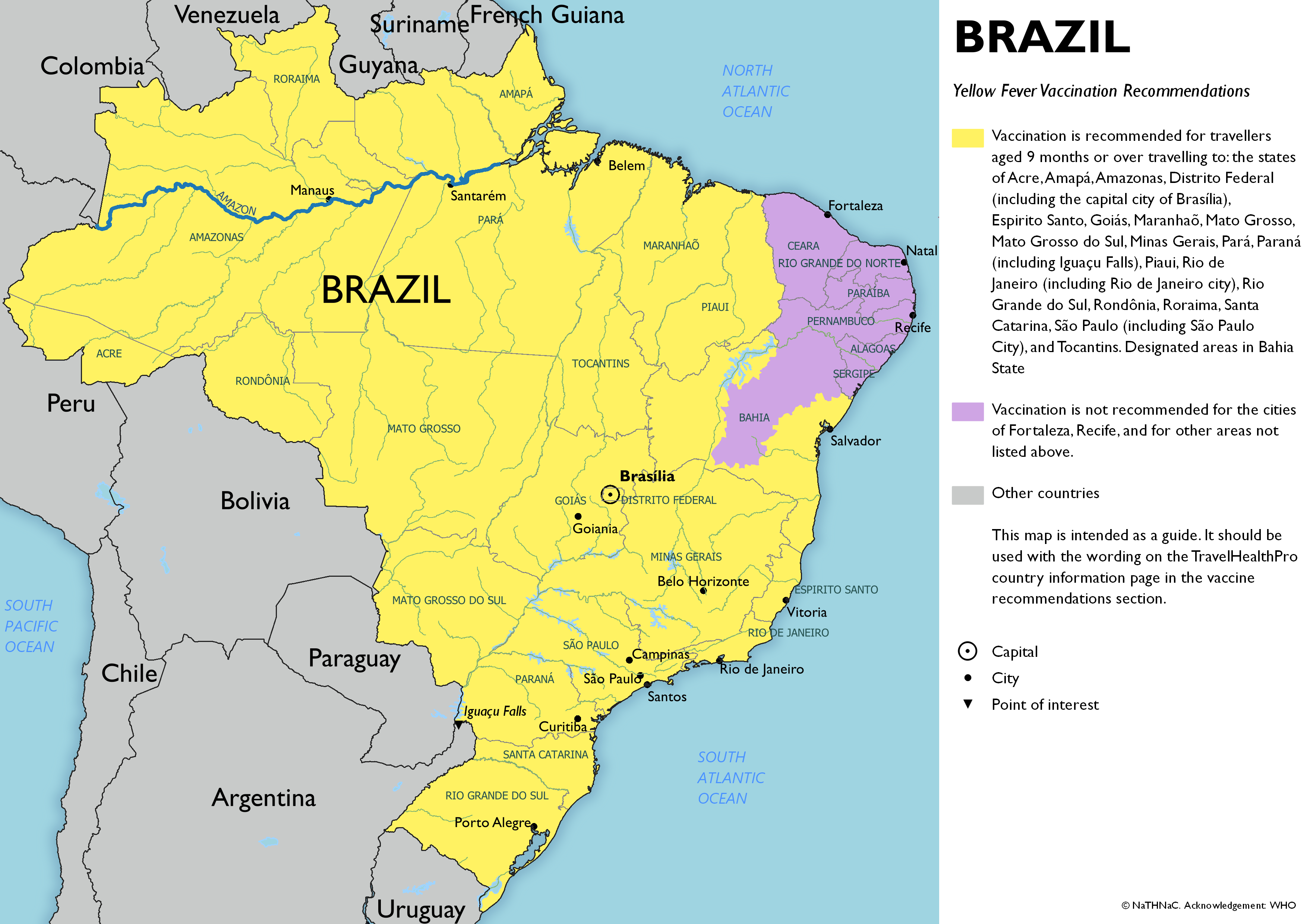
Vaccination is recommended for travellers aged 9 months and older travelling to:
The states of Acre, Amapá, Amazonas, Distrito Federal (including the capital Brasília), Espirito Santo, Goiás, Maranhaõ, Mato Grosso, Mato Grosso do Sul, Minas Gerais, Pará, Paraná (including Iguazu Falls), Piaui, Rio de Janeiro (including Rio de Janeiro city), Rio Grande do Sul, Rondônia, Roraima, Santa Catarina, São Paulo (including São Paulo City), and Tocantins.
Designated areas (see map below) in Bahia State.
Vaccination is not recommended for the cities of Fortaleza, Recife, and for other areas not listed above.
The yellow fever vaccine is not suitable for all travellers, there are specific undesirable effects associated with it. This vaccine is only available at registered yellow fever vaccination centres. يجب على المتخصصين في الرعاية الصحية تقييم المخاطر والفوائد المتعلقة باللقاح بعناية، وطلب المشورة من المختصين إذا لزم الأمر.
Yellow fever vaccine recommendation map for Brazil
انقر على الخريطة لفتحها في نافذة جديدة
Is there a malaria risk in Brazil?
الملاريا هي مرض خطير ناتج عن إصابة خلايا الدم الحمراء بطفيلي يسمى البلازموديوم. يتم نقل المرض عن طريق البعوض الذي يتغذى بشكل رئيسي بين الغسق والفجر.
عادةً ما تبدأ الأعراض بحمى (درجة حرارة مرتفعة) تبلغ 38 درجة مئوية (100 درجة فهرنهايت) أو أكثر. قد تشمل الأعراض الأخرى الشعور بالبرد والارتعاش، والصداع، والغثيان، والتقيؤ، وآلام العضلات. قد تظهر الأعراض بين ثمانية أيام وسنة واحدة بعد لدغة البعوضة المصابة.
يتطلب التشخيص والعلاج السريع حيث يمكن أن تتدهور حالة الأشخاص المصابين بالملاريا بسرعة. الأشخاص الأكثر عرضة لخطر الإصابة بالملاريا، أو المضاعفات الشديدة منها، يشملون النساء الحوامل، الرضع والأطفال الصغار، كبار السن، المسافرين الذين ليس لديهم طحال وظيفي وأولئك الذين يزورون الأصدقاء والأقارب.
الوقاية
يجب على المسافرين اتباع دليل ABCD للوقاية من الملاريا:
تالوعي بالمخاطر – تعتمد المخاطر على الموقع المحدد، موسم السفر، مدة الإقامة، الأنشطة ونوع الإقامة.
لالوقاية من لدغات البعوض – يجب على المسافرين اتخاذ تدابير لتجنب لدغات البعوض.
حالوقاية الدموية – يجب على المسافرين تناول الأدوية المضادة للملاريا (أقراص الوقاية من الملاريا) إذا كانت مناسبة للمنطقة (انظر أدناه). لا توجد أدوية مضادة للملاريا فعالة بنسبة 100%، ولكن تناولها مع اتخاذ تدابير لتجنب لدغات البعوض سيمنح حماية كبيرة ضد الملاريا.
Dالتشخيص – يجب على المسافرين الذين يصابون بحمى تصل إلى 38 درجة مئوية [100 درجة فهرنهايت] أو أعلى بعد أكثر من أسبوع من التواجد في منطقة خطر الملاريا، أو الذين يظهر عليهم أي أعراض تشير إلى الملاريا خلال سنة من العودة، أن يسعوا للحصول على رعاية طبية فورية. قد يتم النظر في العلاج الطارئ الاحتياطي لأولئك الذين يذهبون إلى مناطق نائية ذات وصول محدود إلى الرعاية الطبية.
مناطق الخطر
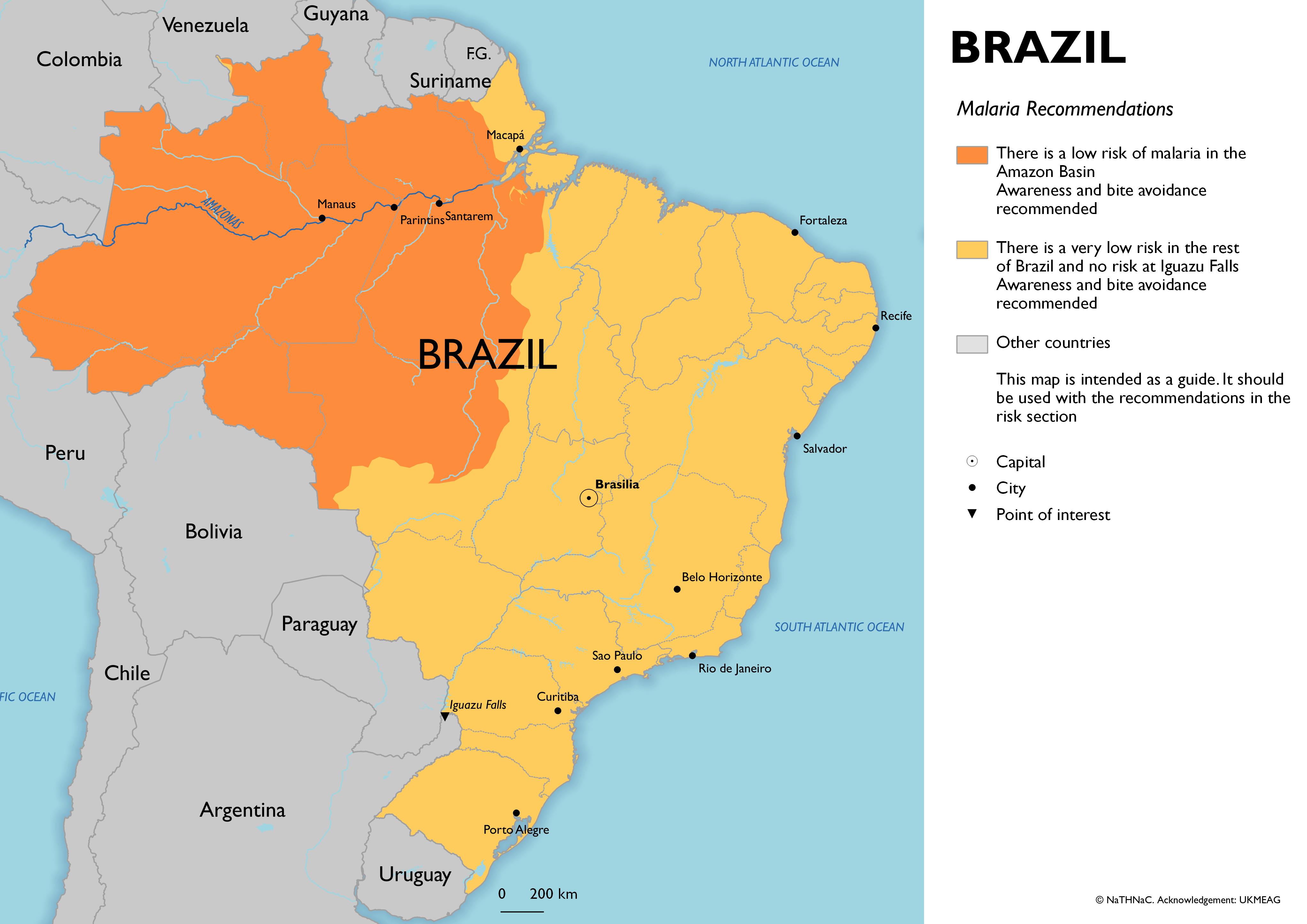
There is a low risk of malaria in the Amazon basin of Brazil, including in the city of Manaus: الوعي بالمخاطر و تجنب اللدغات موصى به.
There is a very low risk of malaria in the rest of Brazil: الوعي بالمخاطر و تجنب اللدغات موصى به.
There is no risk of malaria in Iguaçu Falls: bite avoidance recommended.
مجموعات الخطر الخاصة
في المناطق ذات المخاطر المنخفضة، يمكن النظر في استخدام الأدوية المضادة للملاريا في ظروف استثنائية للمسافرين الذين يكونون في خطر أعلى للإصابة بالملاريا (مثل المسافرين لفترات طويلة لزيارة الأصدقاء والأقارب)، أو لخطر حدوث مضاعفات شديدة من الملاريا (مثل كبار السن [أكثر من 70 عامًا]، والمصابين بنقص المناعة، والذين يعانون من أمراض مصاحبة معقدة، والنساء الحوامل، والرضع والأطفال الصغار). القرار النهائي بشأن تقديم المشورة لاستخدام الأدوية المضادة للملاريا يعتمد على مستشار الصحة للسفر والمسافر بعد تقييم المخاطر الفردية.
يجب تثبيط المسافرين الذين يعانون من غياب أو ضعف في وظيفة الطحال عن السفر إلى أي منطقة بها خطر الإصابة بالملاريا. في الحالات التي يكون فيها السفر ضروريًا، يجب تقديم النصيحة بضرورة الوعي، وتجنب لدغات البعوض بشكل صارم، واستخدام الأدوية المضادة للملاريا حتى في المناطق ذات الخطر المنخفض. بالنسبة للمناطق التي تعتبر ذات خطر "منخفض جدًا" للإصابة بالملاريا، لن يُنصح باستخدام الأدوية المضادة للملاريا، ولكن يجب الاستمرار في تجنب اللدغات والوعي بالمخاطر.
بالنسبة للمجموعات ذات المخاطر الخاصة، قد ترغب في استشارة أخصائي. بالنسبة للمناطق ذات المخاطر المنخفضة في هذا البلد/المنطقة، فإن الأتوفاكون/بروغوانيل أو الدوكسيسيكلين أو الميفلوكين ستكون خيارات مناسبة.
خريطة توصيات مكافحة الملاريا
انقر على الخريطة لفتحها في نافذة جديدة
الموارد
What other health risks are there in Brazil?
هناك بعض المخاطر التي تهم جميع المسافرين بغض النظر عن الوجهة. قد تشمل هذه المخاطر على سبيل المثال حوادث المرور والحوادث الأخرى، الأمراض التي تنتقل عن طريق الحشرات أو القراد، الأمراض التي تنتقل عن طريق الطعام والماء الملوثين، أو المشاكل الصحية المتعلقة بالحرارة أو البرد.
يتم ذكر بعض المخاطر الإضافية (التي قد تكون موجودة في كل أو جزء من هذا البلد) أدناه وتُعرض بترتيب أبجدي.
الارتفاع
هناك خطر الإصابة بمرض الارتفاع عند السفر إلى وجهات بارتفاع 2,500 متر (8,200 قدم) أو أكثر. العوامل المهمة التي تزيد من الخطر هي الارتفاع المكتسب، معدل الصعود وارتفاع النوم. الصعود السريع دون فترة تأقلم يعرض المسافر لخطر أكبر.
هناك ثلاثة متلازمات؛ داء الجبال الحاد (AMS)، وذمة الدماغ الناتجة عن الارتفاعات العالية (HACE) وذمة الرئة الناتجة عن الارتفاعات العالية (HAPE). تتطلب HACE وHAPE النزول الفوري والعلاج الطبي.
Altitude illness in Brazil
يوجد نقطة ارتفاع في هذا البلد أعلى من 2500 متر.
الوقاية
يجب على المسافرين قضاء بضعة أيام على ارتفاع أقل من 3000 متر.
حيثما أمكن، يجب على المسافرين تجنب السفر من ارتفاعات أقل من 1,200 متر إلى ارتفاعات تزيد عن 3,500 متر في يوم واحد.
يجب أن يكون الصعود فوق 3000 متر تدريجيًا. يجب على المسافرين تجنب زيادة ارتفاع النوم بأكثر من 500 متر في اليوم والتأكد من وجود يوم راحة (على نفس الارتفاع) كل ثلاثة أو أربعة أيام.
يمكن استخدام الأسيتازولاميد للمساعدة في التأقلم، ولكن لا ينبغي أن يحل محل الصعود التدريجي.
يجب على المسافرين الذين تظهر عليهم أعراض داء المرتفعات الحاد (الصداع، التعب، فقدان الشهية، الغثيان واضطرابات النوم) تجنب الصعود إلى ارتفاعات أعلى. في حالة عدم التحسن أو تفاقم الأعراض، يجب أن يكون الرد الأول هو النزول إلى ارتفاعات أقل.
تطور أعراض HACE أو HAPE يتطلب النزول الفوري والعلاج الطبي الطارئ.
الحشرات القارضة أو القراد
يمكن أن تسبب لدغات الحشرات أو القراد تهيجًا وعدوى في الجلد في موقع اللدغة. كما يمكنها أيضًا نقل بعض الأمراض.
Diseases in South America
There is a risk of insect or tick-borne diseases in some areas of South America. This includes diseases such as American Trypanosomiasis (Chagas Disease), داء الليشمانيات و فيروس غرب النيل.
الوقاية
يجب على جميع المسافرين تجنب لدغات الحشرات والقراد نهارًا وليلاً.
لا توجد لقاحات (أو أدوية) للوقاية من هذه الأمراض.
يمكن العثور على مزيد من المعلومات حول الأمراض التي تنقلها الحشرات أو القراد في هذا البلد، إذا كان ذلك مناسبًا، في هذه الصفحة، وفي أقسام أخرى من صفحات معلومات البلد و نشرة حقائق حول تجنب لدغات الحشرات والقراد.
الإنفلونزا
الإنفلونزا الموسمية هي عدوى فيروسية تصيب الجهاز التنفسي وتنتشر بسهولة من شخص لآخر عبر الرذاذ التنفسي عند السعال والعطس. تظهر الأعراض بسرعة وتشمل الحمى، آلام العضلات، الصداع، الشعور بالتعب (الشعور بالمرض)، السعال، التهاب الحلق وسيلان الأنف. في الأفراد الأصحاء، تتحسن الأعراض دون علاج في غضون يومين إلى سبعة أيام. المرض الشديد أكثر شيوعًا لدى الأشخاص الذين تبلغ أعمارهم 65 عامًا أو أكثر، أو الذين تقل أعمارهم عن سنتين، أو الذين لديهم حالات طبية كامنة تزيد من خطر تعرضهم لمضاعفات الإنفلونزا.
Seasonal influenza in Brazil
تحدث الإنفلونزا الموسمية في جميع أنحاء العالم. في نصف الكرة الشمالي (بما في ذلك المملكة المتحدة)، تحدث معظم حالات الإنفلونزا من بداية أكتوبر حتى مارس. في نصف الكرة الجنوبي، تحدث الإنفلونزا غالبًا بين أبريل وسبتمبر. في المناطق الاستوائية، يمكن أن تحدث الإنفلونزا على مدار السنة.
الوقاية
يجب على جميع المسافرين:
تجنب الاتصال الوثيق مع الأفراد الذين تظهر عليهم الأعراض
تجنب الأماكن المزدحمة قدر الإمكان
غسل أيديهم بشكل متكرر
مارس 'نظافة السعال': العطس أو السعال في منديل والتخلص منه بأمان على الفور، وغسل اليدين
تجنب السفر إذا كنت تشعر بأعراض تشبه الإنفلونزا
يتوفر لقاح في ظروف معينة (انظر أدناه)*
*في المملكة المتحدة، يتم تقديم لقاح الإنفلونزا الموسمية بشكل روتيني كل عام لأولئك الذين هم في خطر أعلى لتطوير مرض شديد بعد الإصابة بالإنفلونزا، وبعض المجموعات الإضافية مثل العاملين في الرعاية الصحية والأطفال كجزء من الجدول الوطني في المملكة المتحدة (انظر معلومات عن التطعيم). بالنسبة لأولئك الذين لا ينتمون إلى هذه الفئات، قد يتوفر التطعيم بشكل خاص.
إذا كان الأفراد المعرضون لخطر أكبر للإصابة بمرض شديد بعد عدوى الإنفلونزا يسافرون إلى بلد من المحتمل أن تنتشر فيه الإنفلونزا، فيجب عليهم التأكد من أنهم تلقوا لقاح الإنفلونزا في الأشهر الـ 12 السابقة.
اللقاح المستخدم في المملكة المتحدة يحمي ضد السلالات المتوقع حدوثها خلال أشهر الشتاء في نصف الكرة الشمالي. لا يمكن الحصول على لقاح لنصف الكرة الجنوبي في المملكة المتحدة، ولكن اللقاح المستخدم خلال موسم الإنفلونزا في المملكة المتحدة يجب أن يوفر حماية مهمة ضد السلالات التي من المحتمل أن تحدث خلال موسم الإنفلونزا في نصف الكرة الجنوبي، وفي المناطق الاستوائية.
إنفلونزا الطيور
يمكن لفيروسات إنفلونزا الطيور أن تصيب البشر وتسبب لهم المرض نادرًا. عادة ما ترتبط هذه الحالات بالتعرض المباشر لمجموعات الطيور أو الحيوانات المصابة. عند الاقتضاء، ستكون المعلومات حول هذه الحالات متاحة في أقسام التفشي والأخبار في صفحات الدول المعنية. لن توفر لقاحات الإنفلونزا الموسمية الحماية ضد إنفلونزا الطيور.
جودة الهواء الخارجي
تعتبر جودة الهواء الرديئة مشكلة صحية عامة كبيرة في العديد من مناطق العالم. يرتبط التعرض لمستويات عالية من تلوث الهواء على مدى فترات زمنية قصيرة (مثل الدقائق/الساعات/الأيام) وفترات زمنية أطول (مثل السنوات) بالعديد من المشاكل الصحية الحادة والمزمنة المختلفة. تؤثر هذه الآثار بشكل رئيسي على الجهاز التنفسي (الرئتين والمجاري الهوائية) والجهاز القلبي الوعائي (وظيفة القلب والدورة الدموية).
المعلومات الحالية عن جودة الهواء العالمية متاحة من مشروع مؤشر جودة الهواء العالمي.
الوقاية
يجب على المسافرين الذين يعانون من مشاكل صحية قد تجعلهم أكثر عرضة لتأثيرات تلوث الهواء والذين يسافرون إلى مناطق ذات تلوث عالٍ أن:
ناقش خطط سفرهم مع طبيبهم، واحملوا كميات كافية من أدويتهم المعتادة.
اتخاذ احتياطات معقولة لتقليل تعرضهم لمستويات عالية من تلوث الهواء.
تحقق من بيانات جودة الهواء المحلية وعدل أنشطتهم وفقًا لذلك.
انتبه لأي إرشادات صحية تنشرها وزارة الصحة المحلية ووزارة البيئة، واتبع التوجيهات المقدمة.
من غير الواضح ما إذا كانت الأقنعة الوجهية مفيدة في تقليل التعرض وقد تجعل التنفس أكثر صعوبة للأشخاص الذين يعانون من حالات رئوية موجودة مسبقًا. يجب على أولئك الذين يختارون استخدامها التأكد من أن القناع يناسب بشكل جيد ومعرفة كيفية ارتدائه بشكل صحيح.
البلهارسيا
داء البلهارسيات هو عدوى طفيلية. يتم إطلاق يرقات البلهارسيا من القواقع المائية العذبة المصابة ويمكنها اختراق الجلد البشري السليم بعد الاتصال بالمياه العذبة الملوثة. قد يتعرض المسافرون للإصابة أثناء القيام بأنشطة مثل الخوض في الماء، السباحة، الاستحمام أو غسل الملابس في الجداول أو الأنهار أو البحيرات العذبة.
قد لا تسبب عدوى البلهارسيا أي أعراض، ولكن الأعراض المبكرة يمكن أن تشمل طفح جلدي وحكة في الجلد ('حكة السباحين')، حمى، قشعريرة، سعال، أو آلام في العضلات. إذا لم يتم علاجها، يمكن أن تسبب مشاكل صحية خطيرة على المدى الطويل مثل أمراض الأمعاء أو المثانة.
هناك خطر الإصابة بالبلهارسيا في هذا البلد.
الوقاية
لا يوجد لقاح أو أقراص للوقاية من داء البلهارسيات.
يجب على جميع المسافرين تجنب الخوض أو السباحة أو الاستحمام في المياه العذبة. السباحة في المياه المعالجة بالكلور بشكل كافٍ أو في مياه البحر لا تشكل خطرًا للإصابة بالبلهارسيا.
اشرب الماء المغلي أو المصفى أو المعبأ في زجاجات.
تطبيق طارد الحشرات قبل التعرض للمياه العذبة أو تجفيف الجسم بالمنشفة بعد التعرض المحتمل للبلهارسيا ليس موثوقًا في منع العدوى.
يجب على جميع المسافرين الذين قد تعرضوا للبلهارسيا إجراء فحص صحي لاختبار الإصابة بالبلهارسيا.
الأمراض المنقولة جنسياً
الأمراض المنقولة جنسياً (STIs) هي مجموعة من العدوى الفيروسية والبكتيرية والطفيليات التي تنتشر أثناء الجماع أو من خلال الاتصال الحميم. قد يكون علاج بعض الأمراض المنقولة جنسياً أكثر صعوبة بسبب مستويات أعلى من مقاومة المضادات الحيوية، وقد تكون بعض الأمراض المنقولة جنسياً التي نادرة في المملكة المتحدة أكثر شيوعاً في مناطق أخرى من العالم.
أي شخص نشط جنسيًا معرض لخطر الإصابة بعدوى منقولة جنسيًا أينما كان في العالم.
المخاطر أعلى للمسافرين الذين:
ممارسة الجنس بدون واقي ذكري
ممارسة الجنس مع شركاء جدد أو غير رسميين
الانخراط في سياحة الجنس
ممارسة الجنس تحت تأثير المخدرات أو الكحول
تختلف أعراض الأمراض المنقولة جنسيًا حسب نوع العدوى؛ قد تسبب بعضها أعراضًا خفيفة أو غير ملحوظة. إذا ظهرت الأعراض، فقد تشمل طفح جلدي، إفرازات، حكة، بثور، تقرحات أو ثآليل في المناطق التناسلية و/أو الشرجية، ألم عند التبول وأعراض تشبه الإنفلونزا.
إذا تُركت الأمراض المنقولة جنسيًا دون علاج، يمكن أن تسبب مشاكل صحية خطيرة على المدى الطويل مثل مشاكل الخصوبة، ومرض التهاب الحوض، ومضاعفات الحمل.
الوقاية
استخدام الواقيات الذكرية بشكل منتظم وصحيح مع الشركاء الجدد أو العابرين هو الطريقة الأكثر فعالية لتقليل خطر الإصابة بالأمراض المنقولة جنسياً.
يمكن للمسافرين أيضًا تقليل خطر الإصابة بالأمراض المنقولة جنسيًا عن طريق:
ضمان أنهم محدثون لجميع اللقاحات الموصى بها في المملكة المتحدة، بما في ذلك إذا كان ذلك مناسبًا السيلان, التهاب الكبد B, جدري القرود و الورم الحليمي البشري (HPV) كوفيد-19
بالنظر إلى الوقاية قبل التعرض لفيروس نقص المناعة البشرية (PrEP) إذا كان مناسبًا
يجب على المسافرين طلب المشورة الطبية وتقديم تاريخ سفرهم إذا كانوا يعتقدون أنهم قد يكون لديهم عدوى منقولة جنسيًا، حتى لو لم تظهر عليهم أي أعراض. كما ينبغي عليهم إجراء اختبار للعدوى المنقولة جنسيًا إذا كانوا قد مارسوا الجنس بدون واقيات ذكرية مع شريك جديد أو عابر أثناء السفر.
في المملكة المتحدة اختبار الأمراض المنقولة جنسياً مجاني وسري.
فيروس زيكا
فيروس زيكا (ZIKV) هو عدوى فيروسية تنتقل عن طريق البعوض الذي يتغذى بشكل رئيسي خلال ساعات النهار. تم الإبلاغ عن عدد قليل من حالات انتقال فيروس زيكا عن طريق الاتصال الجنسي. معظم الأشخاص المصابين بفيروس زيكا لا تظهر عليهم أعراض. عندما تظهر الأعراض، تكون عادة خفيفة وقصيرة الأمد. المضاعفات الخطيرة والوفيات ليست شائعة. ومع ذلك، فإن فيروس زيكا هو سبب متلازمة زيكا الخلقية (صغر الرأس وتشوهات خلقية أخرى) ومضاعفات عصبية مثل متلازمة غيلان باريه.
هناك خطر الإصابة بفيروس زيكا في هذا البلد. تفاصيل المناطق المتأثرة بشكل محدد داخل هذا البلد غير متوفرة، ولكن سيتم الإبلاغ عن المعلومات حول الفاشيات الحالية، حيثما توفرت، على قاعدة بيانات مراقبة التفشي.
يجب على النساء الحوامل مناقشة مدى ملاءمة السفر والمخاطر المحتملة التي قد يشكلها فيروس زيكا مع مقدم الرعاية الصحية الخاص بهن.
الوقاية
يجب على جميع المسافرين تجنب لدغات البعوض، خاصة خلال ساعات النهار.
لا يوجد لقاح أو دواء للوقاية من عدوى فيروس زيكا.
يجب على النساء تجنب الحمل أثناء السفر في هذا البلد، ولمدة شهرين (8 أسابيع) بعد آخر تعرض محتمل لفيروس زيكا* (انظر أدناه إذا كان الشريك الذكر قد سافر).
إذا ظهرت على المرأة أعراض تتوافق مع عدوى فيروس زيكا، يُوصى بأن تتجنب الحمل لمدة شهرين إضافيين بعد التعافي.
يجب على النساء اللواتي زرن هذا البلد أثناء الحمل، أو اللواتي يحملن في غضون شهرين بعد آخر تعرض محتمل لفيروس زيكا*، الاتصال بطبيبهن العام أو طبيب التوليد أو القابلة للحصول على مزيد من النصائح، حتى لو لم يكن يشعرن بأي مرض.
يرجى ملاحظة أن فحص المسافرين العائدين بدون أعراض فيروس زيكا غير متاح في هيئة الخدمات الصحية الوطنية. يجب على الأزواج الذين يخططون للحمل في المستقبل القريب التفكير فيما إذا كان ينبغي عليهم تجنب السفر إلى بلد أو منطقة بها خطر فيروس زيكا، بدلاً من تأخير الحمل للفترة الموصى بها (انظر أدناه) بعد السفر. يشمل ذلك بشكل خاص الأزواج في برامج الخصوبة المساعدة.
الوقاية من انتقال العدوى الجنسية
يجب على الأزواج اتباع إرشادات حول الوقاية من انتقال فيروس زيكا عبر الاتصال الجنسي وتجنب الحمل كما يلي:
إذا سافر كلا الشريكين، لمدة 3 أشهر بعد آخر تعرض محتمل لفيروس زيكا.*
مسافر ذكر فقط، لمدة 3 أشهر بعد آخر تعرض محتمل لفيروس زيكا.*
للمسافرات فقط، لمدة شهرين بعد آخر تعرض محتمل لفيروس زيكا.*
عرض معلومات إضافية للنساء الحوامل، شركائهن والأزواج الذين يخططون للحمل.
*يُعرّف آخر تعرض محتمل لفيروس زيكا على أنه التاريخ الأحدث بين تاريخ مغادرة بلد أو منطقة بها خطر انتقال فيروس زيكا، أو التاريخ الذي حدث فيه اتصال جنسي غير محمي مع شريك قد يكون معديًا.
عرض إرشادات مفصلة حول العوامل التي يجب مراعاتها عند تقييم خطر فيروس زيكا.
المصدر وإخلاء المسؤولية
تستند معلومات الصحة السفرية هذه إلى بيانات مقدمة من NaTHNaC (الشبكة والمركز الوطني للصحة السفرية). جميع حقوق الملكية الفكرية في البيانات مملوكة لـ NaTHNaC. لا يجوز نسخها أو إعادة إنتاجها أو توزيعها أو تعديلها أو عرضها للبيع دون موافقة خطية مسبقة من NaTHNaC.
يضمن موقع Patient.info أن يتم مراجعة وتحديث هذه المعلومات على الأقل بشكل أسبوعي. ومع ذلك، فإن بيانات NaTHNaC دقيقة فقط اعتبارًا من تاريخ إعدادها، ويكون موقع Patient.info هو المسؤول الوحيد عن الحفاظ على دقتها واكتمالها بعد ذلك التاريخ. لا يتحمل NaTHNaC أي مسؤولية عن استخدام هذه البيانات من قبل موقع Patient.info أو مستخدميه.
اختيارات المرضى لـ الصحة أثناء السفر حسب البلد
السفر والتطعيمات
نصائح صحية للسفر إلى الخارج
السفر إلى الخارج يعني مواجهة أماكن ومواقف غير مألوفة قد تحمل مخاطر غير متوقعة. التخطيط الجيد وتقييم المخاطر يسمحان لنا بالتنبؤ وتجنب العديد من الصعوبات المحتملة. تتناول هذه النشرة التحضير للسفر، جوانب السلامة الشخصية، والصحة أثناء السفر. وتشير إلى مصادر المعلومات والنصائح للمساعدة في التخطيط.
بقلم الدكتورة توني هازيل، FRCGP

السفر والتطعيمات
تطعيمات السفر
التطعيمات الخاصة بالسفر جزء أساسي من تخطيط العطلات والسفر، خاصة إذا كانت رحلتك تأخذك إلى وجهة غريبة أو "بعيدة عن المسار المعتاد". المخاطر ليست مقتصرة على السفر إلى المناطق الاستوائية، على الرغم من أن معظم لقاحات السفر تستهدف الأمراض الأكثر شيوعًا في المناطق الاستوائية. لمزيد من المعلومات العامة حول السفر، انظر النشرة المنفصلة المسماة نصائح صحية للسفر إلى الخارج. تناقش هذه النشرة التطعيمات المتاحة وتقدم فكرة عن الوقت الذي تحتاجه لإكمال دورة تطعيم وقائية كاملة. يمكن الحصول على مزيد من المعلومات الخاصة بوجهتك من عيادتك (إذا كانت لديهم الموارد لتقديم هذه الخدمة)، من عيادات السفر المتخصصة ومن عدد من المواقع الإلكترونية. ستجد مجموعة من هذه المواقع مدرجة في أسفل هذه النشرة وتحت المراجع.
بقلم الدكتورة توني هازيل، FRCGP
عن المؤلفعرض السيرة الذاتية الكاملة

الشبكة والمركز الوطني لصحة السفر (NaTHNaC)
تم إنشاء NaTHNaC من قبل وزارة الصحة في عام 2002 بهدف عام هو "حماية صحة المسافرين البريطانيين". يسعون لتحسين جودة النصائح الصحية المتعلقة بالسفر المقدمة من قبل ممارسات الأطباء العامين، وعيادات السفر، والصيدليات، ومقدمي الرعاية الصحية الآخرين، وتوفير معلومات موثوقة ومحدثة للمسافر الدولي، وصناعة السفر، والحكومة الوطنية.
حول المراجععرض السيرة الذاتية الكاملة
الشبكة والمركز الوطني لصحة السفر (NaTHNaC)
تم إنشاء NaTHNaC من قبل وزارة الصحة في عام 2002 بهدف عام هو "حماية صحة المسافرين البريطانيين". يسعون لتحسين جودة النصائح الصحية المتعلقة بالسفر المقدمة من قبل ممارسات الأطباء العامين، وعيادات السفر، والصيدليات، ومقدمي الرعاية الصحية الآخرين، وتوفير معلومات موثوقة ومحدثة للمسافر الدولي، وصناعة السفر، والحكومة الوطنية.
تاريخ المقال
تمت كتابة المعلومات على هذه الصفحة ومراجعتها من قبل أطباء مؤهلين.
المقال متاح أيضًا باللغة الإنجليزية, الألمانية, إسبانية, الفرنسية, إيطالي, البرتغالية, الهندية, العبرية, العربية ,، و السويدية.
٣ يونيو ٢٠٢٦ | أحدث إصدار
آخر تحديث بواسطة
الشبكة والمركز الوطني لصحة السفر (NaTHNaC)مراجعة من قبل
الشبكة والمركز الوطني لصحة السفر (NaTHNaC)23 أكتوبر 2025 | نُشر في الأصل
كتبه:
الشبكة والمركز الوطني لصحة السفر (NaTHNaC)

اسأل، شارك، تواصل.
تصفح المناقشات، اطرح الأسئلة، وشارك التجارب عبر مئات المواضيع الصحية.

هل تشعر بتوعك؟
قم بتقييم أعراضك عبر الإنترنت مجانًا
اشترك في النشرة الإخبارية للمرضى
جرعتك الأسبوعية من النصائح الصحية الواضحة والموثوقة - مكتوبة لمساعدتك على الشعور بالاطلاع والثقة والتحكم.
من خلال الاشتراك، فإنك تقبل سياسة الخصوصية. يمكنك إلغاء الاشتراك في أي وقت. نحن لا نبيع بياناتك أبدًا.