التهاب الجلد الدهني عند الرضع
مراجعة من قبل الدكتور كريشنا فاخاريا، MRCGPآخر تحديث بواسطة الدكتور كولين تايدي، MRCGPآخر تحديث 15 ديسمبر 2022
يتوافق مع الإرشادات التحريرية
- تنزيلتنزيل
- مشاركة
- Language
- نقاش
- نسخة صوتية
- أضف إلى المصادر المفضلة على جوجل
المهنيين الطبيين
تم تصميم مقالات المراجع المهنية لاستخدامها من قبل المتخصصين في الرعاية الصحية. يتم كتابتها بواسطة أطباء من المملكة المتحدة وتستند إلى أدلة بحثية وإرشادات المملكة المتحدة وأوروبا. قد تجد التهاب الجلد الدهني عند الرضع مقالة أكثر فائدة، أو واحدة من مقالاتنا الأخرى مقالاتنا الصحية.
Synonym: cradle cap
What is seborrhoeic dermatitis?1
Seborrhoeic dermatitis is a common skin condition in infants, adolescents, and adults. The characteristic symptoms-scaling, erythema, and itching-occur most often on the scalp, face, chest, back, axilla, and groin.
In infants, seborrhoeic dermatitis typically causes yellow crusty greasy scaling. This is most frequently found on the scalp and, when confined to the scalp, is known as 'cradle cap'.
In adults, seborrhoeic dermatitis usually starts around puberty.
انظر إلى القسم المنفصل Seborrhoeic Dermatitis مقالة.
التسبب في المرض1
Seborrhoeic dermatitis is a papulosquamous disorder affecting the areas with most sebum, such as the scalp, face, and trunk. There is known to be an association with skin yeasts of Malassezia spp. This is thought to be due to a reaction to the yeast, rather than a simple infection. Overactivity of the sebaceous glands in the newborn may be a factor.
How common is seborrhoeic dermatitis in infants? (Epidemiology)2
Seborrhoeic dermatitis is extremely common in infants. Many children with the condition are not brought to the attention of the medical services and so the precise incidence is unknown. It most commonly presents in the first six weeks, and the majority resolve over the next few weeks. Less commonly, it persists for 6-9 months or more.
Seborrhoeic dermatitis symptoms3
Seborrhoeic dermatitis presenting in infancy is a very common condition which may be brought to the attention of the health visitor or GP.
In the majority of cases it is a benign self-limiting condition which usually clears spontaneously during the first 6-12 months of life but, in a small number, it can be particularly troublesome and require treatment.
Infant seborrhoeic dermatitis occurs most commonly in the lipid-rich areas of skin and, in infants, occurs predominantly on the scalp and upper face, producing an appearance which may give rise to some concern from parents. It may also occur behind the ears and in the creases of the neck, axillae and groins.
Cradle cap
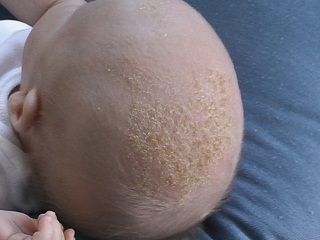
© Image via Wikimedia Commons
Cradle cap is very common and usually appears in the first few weeks of life. There are greasy, yellow scaling patches that may eventually coalesce to a thick, scaly layer. The condition is not usually itchy and the child is not distressed by it. There may be loss of small amounts of hair in the area of scalp affected. There may be some areas of redness around the plaques. It tends to be very scaly on the scalp, whereas in the flexural areas it may be more erythematous in nature4 .
التشخيص التفريقي3 4
Areas of reddened skin with scales may be mistaken for atopic eczema.
If the plaques become infected, they may resemble القوباء.
Nappy rash or داء المبيضات in the groin and perianal areas (the rash of seborrhoeic dermatitis is usually sharply demarcated and brightly erythematous).
الصدفية may cause confusion and can look extremely similar in babies.5 . Indeed there are some who are of the opinion that seborrhoeic dermatitis in the nappy area is in fact psoriasis.6 .
Fungal infections - eg, tinea.
Irritant or contact dermatitis.
التحقيقات
Usually no investigation is required and the diagnosis is made on clinical appearance alone.
Infant seborrhoeic dermatitis is uncommon in pre-adolescent children and tinea capitis is uncommon after adolescence. Dandruff in a child is more likely to represent a fungal infection. A fungal culture may aid the diagnosis but the disease may occur with a negative culture and a positive culture is not diagnostic.
Infant seborrhoeic dermatitis treatment3
Reassurance - typically resolves spontaneously within a few months.
Scalp is affected ( most common presentation):
Advise massage a topical emollient onto the scalp to loosen scales, brush gently with a soft brush and wash off with shampoo.
If not effective, consider topical imidazole cream (clotrimazole 1% or miconazole 2% cream) daily for up to 4 weeks.
If symptoms persist longer than 4 weeks with treatment, seek specialist advice.
Areas other than the scalp (including the nappy area):
Advise bathing the infant every day using an emollient as a soap substitute. Avoid soaps/detergents and vigorous cleansing.
Encourage frequent nappy changes and use of barrier emollients such as Zinc and Castor Oil ointment BP, or white soft paraffin BP ointment.
Consider a topical imidazole (clotrimazole 1% or miconazole 2%) for up to 4 weeks until symptoms resolve.
If symptoms persist longer than 4 weeks with treatment, seek specialist advice.
Low potency topical corticosteroids (such as 1% hydrocortisone) may be helpful for some infants with nappy rash.
إحالة3
Consider referral to a dermatologist/paediatrician if there is:
Severe or widespread seborrhoeic dermatitis: consider possible underlying conditions such as immunodeficiency.
Diagnostic uncertainty.
Failure to respond to routine treatment.
المضاعفات3 7
Secondary infection can occur occasionally.
Leiner's disease (severe generalised seborrhoeic dermatitis - lesions become confluent and there is widespread redness and scaling). The child becomes unwell with diarrhoea, vomiting and anaemia.
التكهن
This condition usually resolves spontaneously within three to four months.8 In some it takes 6-9 months or longer. The majority of children with infant seborrhoeic dermatitis will have complete resolution and have no further skin disease. It is not known whether they have an increased risk of seborrhoeic dermatitis later in life.4
تحديثات حصرية لمتخصصي الرعاية الصحية
ابقَ على اطلاع بأحدث التحديثات السريرية، والرؤى المهنية، والإرشادات المستندة إلى الأدلة. تقوم نشرة Patient Pro الإخبارية بتجميع محتوى أساسي لمتخصصي الرعاية الصحية - يتم تسليمه مباشرة إلى بريدك الوارد.
من خلال الاشتراك، فإنك تقبل سياسة الخصوصية. يمكنك إلغاء الاشتراك في أي وقت. نحن لا نبيع بياناتك أبدًا.
قراءة إضافية ومراجع
- Clark GW, Pope SM, Jaboori KA; Diagnosis and treatment of seborrheic dermatitis. Am Fam Physician. 2015 Feb 1;91(3):185-90.
- Cradle cap (infantile seborrhoeic dermatitis); ديرم نت نيوزيلندا
- التهاب الجلد الدهني; NICE CKS، نوفمبر 2024 (الوصول متاح فقط في المملكة المتحدة)
- O'Connor NR, McLaughlin MR, Ham P; جلد المولود الجديد: الجزء الأول. الطفح الجلدي الشائع. طبيب الأسرة الأمريكي. 1 يناير 2008;77(1):47-52.
- Sampaio AL, Mameri AC, Vargas TJ, et al; Seborrheic dermatitis. An Bras Dermatol. 2011 Nov-Dec;86(6):1061-71; quiz 1072-4.
- Seborrhoeic eczema; جمعية الأمراض الجلدية للرعاية الأولية (PCDS)
- Leiner disease; ديرم نت نيوزيلندا
- Gary G; Optimizing treatment approaches in seborrheic dermatitis. J Clin Aesthet Dermatol. 2013 Feb;6(2):44-9.
عن المؤلفعرض السيرة الذاتية الكاملة

الدكتور كولين تايدي، MRCGP
طبيب عام، مؤلف طبي
MBBS, MRCGP, MRCP (Paediatrics), DCH
الدكتور كولين تايدي هو طبيب في هيئة الخدمات الصحية الوطنية، ويعمل في أوكسفوردشاير.
حول المراجععرض السيرة الذاتية الكاملة

الدكتور كريشنا فاخاريا، MRCGP
كبير المسؤولين الطبيين للصحة، أوبتوم المملكة المتحدة
MBChB, MRCGP(2013), BMedSci (hons), DFSRH, DRCOG, PGDipDerm (Distn)
الدكتورة كريشنا فاخاريا هي طبيبة عامة في هيئة الخدمات الصحية الوطنية. كما أنها ممتحنة منتظمة لدبلوم الدراسات العليا في الأمراض الجلدية العملية في جامعة كارديف، بالإضافة إلى كونها كبيرة المسؤولين الطبيين للصحة في Optum UK.
تاريخ المقال
تمت كتابة المعلومات على هذه الصفحة ومراجعتها من قبل أطباء مؤهلين.
المقال متاح أيضًا باللغة الإنجليزية, الألمانية, إسبانية, الفرنسية, إيطالي, البرتغالية, الهندية, العبرية, العربية ,، و السويدية.
Next review due: 14 Dec 2027
15 ديسمبر 2022 | أحدث إصدار

اسأل، شارك، تواصل.
تصفح المناقشات، اطرح الأسئلة، وشارك التجارب عبر مئات المواضيع الصحية.

هل تشعر بتوعك؟
قم بتقييم أعراضك عبر الإنترنت مجانًا
المزيد في طب الأطفال
- التهاب الأذن الوسطى الحاد عند الأطفال
- اضطراب نقص الانتباه مع فرط النشاط
- اضطراب التعلق عند الأطفال
- فقر الدم في مرحلة الطفولة
- اضطراب التفكك الطفولي
- المشاكل السلوكية الشائعة لدى الأطفال
- الأكزيما عند الأطفال
- تشويه الأعضاء التناسلية الأنثوية
- النوبة الأولى
- التهاب المعدة والأمعاء عند الأطفال
- نزيف داخل البطين عند الرضع
- اعتلالات العضلات
- PANDAS
- مرض بانر
- خلع جزئي في رأس الكعبرة
- حماية الأطفال - كيفية التعرف على الإساءة أو الطفل المعرض للخطر
- فحص الطفل في ستة أسابيع
- الآفات التي تشغل حيزًا في الدماغ
- متلازمة توريت واضطرابات التشنج الأخرى
- التواء الأمعاء واضطرابات دوران الأمعاء الوسطى