التهاب الجلد الدهني عند الرضع
قبعة المهد
مراجعة من قبل الدكتور كولين تايدي، MRCGPآخر تحديث بواسطة الدكتورة هايلي ويلاسي، زميلة الكلية الملكية للأطباء العامين آخر تحديث 14 أبريل 2025
يتوافق مع الإرشادات التحريرية
- تنزيلتنزيل
- مشاركة
- Language
- نقاش
- Ask Patient
- نسخة صوتية
- أضف إلى المصادر المفضلة على جوجل
في هذه السلسلة:التهاب الجلد الدهني
التهاب الجلد الدهني عند الأطفال يسبب قشرة سيئة (قبعة المهد). أحيانًا يسبب طفحًا جلديًا في مناطق أخرى من الجلد. عادةً لا تكون هناك حاجة للعلاج، حيث إنه لا يسبب عادةً أي إزعاج وعادةً ما يختفي من تلقاء نفسه.
نظرة سريعة
Seborrhoeic dermatitis in babies is a skin inflammation often called cradle cap.
It typically starts between 2 and 6 weeks of age, affecting the scalp and face.
Symptoms include greasy, yellow, scaly patches on the scalp.
It is usually not itchy or painful and often clears up by itself.
Treatment is not usually needed, but daily washing may help remove scales.
See a doctor if scales become thick or inflamed.
Explore treatments for cradle cap
احصل على مشورة صحية متخصصة وأنت في راحة منزلك. أكمل استشارة سريعة عبر الإنترنت، متاحة على مدار الساعة طوال أيام الأسبوع، وسيراجع طلبك ممارس صحي مسجل في المملكة المتحدة. تتوفر خدمة التوصيل في اليوم التالي للعلاجات المؤهلة.

What is seborrhoeic dermatitis (cradle cap)?
Seborrhoeic dermatitis in babies is a type of skin inflammation which mainly affects the scalp and face. Cradle cap affects many newborns, typically starting between the ages of 2 and 6 weeks. It is most common in babies under 1 year of age, though it can sometimes persist beyond the first year.
The exact cause of seborrhoeic dermatitis is not known. It is thought that babies who develop seborrhoeic dermatitis may produce more oil (sebum) from the sebaceous glands in their skin. Yeast germs from the Malassezia species may also be involved. However, seborrhoeic dermatitis is not just a simple skin infection and you cannot catch this condition from others (it is not contagious). The fungal germ lives in the sebum of human skin and some babies may react to the germ in some way which causes the skin inflammation.
Many babies have a mild form of seborrhoeic dermatitis within the first six months of life but it usually goes away on its own after a few months. In most children, cradle cap has cleared by the age of 6 months. It does not usually occur in older children. Some teenagers and adults have a related condition which causes bad dandruff and a rash. See the separate leaflet called Seborrhoeic dermatitis (Dandruff) for more details.
What are the symptoms of seborrhoeic dermatitis in babies?
Symptoms include:
قبعة المهد. This is areas of greasy, yellow, scaly patches on the scalp. In some cases a thick scaly layer covers the whole scalp. Over time the scales may become flaky and rub off easily. Cradle cap is not usually itchy and, in most cases, the baby is not aware of any problem or discomfort.
قبعة المهد
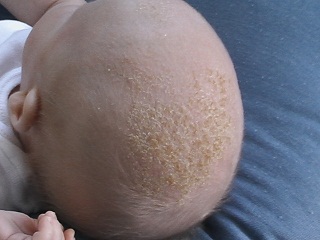
الطفح الجلدي. In addition to cradle cap, some affected babies develop a mild red rash. This can appear on the eyebrows, on the skin next to their nose, or in the creases of the skin such as around the neck, behind the ears or in the armpits. Sometimes it can cause a kind of nappy rash in the groin creases.
Is cradle cap painful?
Cradle cap is generally not painful or itchy, though some babies may experience mild irritation. It does not cause discomfort, but in some cases, the scales can become thicker or inflamed, requiring treatment.
What is the treatment for seborrhoeic dermatitis in babies?
Treatment for seborrhoeic dermatitis is not usually needed, as the condition is usually mild, is not serious and does not usually cause any discomfort to the baby. Seborrhoeic dermatitis will usually clear up by itself eventually.
However, the appearance of the scalp can be improved by daily washing with a baby shampoo followed by gentle brushing with a soft brush to loosen scales.
Alternatively, soften the scales with baby oil first, followed by gentle brushing and then washing off with baby shampoo.
If this does not work, it may be helpful to soften the scales by rubbing in olive oil, vegetable oil or white petroleum jelly. Leave this in overnight to allow it time to work. Wash it off with baby shampoo in the morning.
Another option is to try a greasy moisturising lotion (emollient) such as emulsifying ointment.
If other areas are affected by seborrhoeic dermatitis, regular washing helps. Use an emollient cream instead of soap on the affected skin.
If needed, a medicated كريم مضاد للفطريات may be prescribed by your doctor. Creams which may be used are كلوتريمازول, إيكونازول أو miconazole. This will usually clear the rash. Rarely, if inflammation is more severe, a mild steroid cream may be prescribed by your doctor.
How to prevent cradle cap
There is no guaranteed way to prevent cradle cap, but you can help reduce the risk by:
Gently washing your baby's scalp with mild soap or shampoo.
Avoiding harsh chemicals or products that could irritate the skin.
Using soft brushes to keep the scalp clean and free from excessive buildup.
Explore treatments for cradle cap
احصل على مشورة صحية متخصصة وأنت في راحة منزلك. أكمل استشارة سريعة عبر الإنترنت، متاحة على مدار الساعة طوال أيام الأسبوع، وسيراجع طلبك ممارس صحي مسجل في المملكة المتحدة. تتوفر خدمة التوصيل في اليوم التالي للعلاجات المؤهلة.
اختيارات المرضى لـ الرضع والأطفال الصغار
صحة الأطفال
التهاب القصيبات
التهاب القصيبات هو عدوى فيروسية في الصدر. يؤثر على الممرات الهوائية الصغيرة في الرئة (القصيبات). إنه حالة شائعة لدى الأطفال الرضع. معظم الأطفال المصابين لا يكونون مرضى بشكل خطير ويتعافون تمامًا. أحيانًا يصبح أكثر خطورة وقد تكون هناك حاجة إلى رعاية في المستشفى.
بقلم الدكتور دوغ مكيتشني، MRCGP
صحة الأطفال
الشفة الأرنبية والحنك المشقوق
Cleft lip and palate are facial abnormalities which can affect babies at birth. They are common worldwide and can affect the lip, the palate or both. If untreated they can lead to feeding difficulties early on, and psychological difficulties as your child grows up. However, modern treatment begins early in your baby's life, with surgery to correct the defect, and continues as your baby grows. The expert nature of modern surgery means that the health, development and appearance of a baby with cleft lip and palate should not be affected.
بقلم الدكتورة روزالين أدلمان، MRCGP
الأسئلة الشائعة
What is the difference between cradle cap and nappy rash caused by seborrhoeic dermatitis?
Cradle cap specifically refers to greasy, yellow, scaly patches on the scalp. However, seborrhoeic dermatitis can also manifest as a type of nappy rash in the groin creases, which is a rash in a different location but related to the same underlying condition.
If my baby has seborrhoeic dermatitis on other parts of their body, how should I care for their skin?
For areas affected by seborrhoeic dermatitis other than the scalp, regular washing is helpful. You should use an emollient cream instead of soap on the affected skin to keep it moisturised and reduce irritation.
When might a doctor prescribe a medicated cream for cradle cap or other seborrhoeic dermatitis symptoms?
A doctor may prescribe a medicated antifungal cream if the usual methods of loosening scales and washing don't clear the rash. Examples of such creams include clotrimazole, econazole, or miconazole. In rare cases, if inflammation is severe, a mild steroid cream might also be prescribed.
قراءة إضافية ومراجع
- Nobles T, Harberger S, Krishnamurthy K; Cradle Cap.
- التهاب الجلد الدهني; NICE CKS، نوفمبر 2024 (الوصول متاح فقط في المملكة المتحدة)
- Seborrhoeic dermatitis - infants (Simple advice); NICE CKS، نوفمبر 2024 (الوصول متاح فقط في المملكة المتحدة)
- قبعة المهد (التهاب الجلد الدهني الطفلي); ديرم نت نيوزيلندا
عن المؤلفعرض السيرة الذاتية الكاملة
تم التحديث بواسطة

الدكتورة هايلي ويلاسي، زميلة الكلية الملكية للأطباء العامين
طبيب عام، مؤلف طبي
MBChB (1992), DRCOG, DFFP, MRCOG (Part 1) MRCGP (2007), DFSRH (2013), MSc - medical education (2020)
كانت الدكتورة هايلي ويلاسي طبيبة عامة في هيئة الخدمات الصحية الوطنية تعمل في شمال غرب إنجلترا، وتقاعدت من الممارسة السريرية في عام 2022 بعد 30 عامًا.
حول المراجععرض السيرة الذاتية الكاملة

الدكتور كولين تايدي، MRCGP
طبيب عام، مؤلف طبي
MBBS, MRCGP, MRCP (Paediatrics), DCH
الدكتور كولين تايدي هو طبيب في هيئة الخدمات الصحية الوطنية، ويعمل في أوكسفوردشاير.
تاريخ المقال
المقال متاح أيضًا باللغة الإنجليزية, الألمانية, إسبانية, الفرنسية, إيطالي, البرتغالية, الهندية, العبرية, العربية ,، و السويدية.
Next review due: 3 Apr 2028
14 أبريل 2025 | أحدث إصدار
آخر تحديث بواسطة
الدكتورة هايلي ويلاسي، زميلة الكلية الملكية للأطباء العامينمراجعة من قبل
الدكتور كولين تايدي، MRCGP
المهنيين الطبيين
Looking for more in-depth clinical detail? Our Professional Reference articles are written for doctors, nurses and other healthcare professionals. They include comprehensive clinical guidance, diagnostic information and UK/European evidence summaries. If you need the clinical version, you can read the Professional Reference article on this topic.
شارك أفكارك أو تجاربك مع الآخرين في مجتمعات المرضى.
وصول بسيط إلى العلاجات والخدمات الصحية الموثوقة عبر الإنترنت.
Common conditions
Get help with common conditions through the NHS, without a GP appointment.
 التهاب الجيوب الأنفية الحاد
 التهاب اللوزتين البكتيري
 القوباء
 لدغات الحشرات
 الحزام الناريعدوى المسالك البولية
اشترك في النشرة الإخبارية للمرضى
جرعتك الأسبوعية من النصائح الصحية الواضحة والموثوقة - مكتوبة لمساعدتك على الشعور بالاطلاع والثقة والتحكم.
من خلال الاشتراك، فإنك تقبل سياسة الخصوصية. يمكنك إلغاء الاشتراك في أي وقت. نحن لا نبيع بياناتك أبدًا.