
هل نظام تصنيف إشارات المرور الغذائية مفيد؟
مراجعة من قبل الدكتورة سارة جارفيسآخر تحديث بواسطة Rose Constantine Smith, ANutrآخر تحديث 4 Sept 2018
يتوافق مع الإرشادات التحريرية
- تنزيلتنزيل
- مشاركة
- Language
- نقاش
- نسخة صوتية
- أضف إلى المصادر المفضلة على جوجل
These days supermarkets are bursting with an overwhelming variety of packaged food and drinks to suit all dietary wants and needs. But it's not just choice that has increased - there's now more nutritional information on food packaging than ever. The question is, is this info actually helping us make healthier choices?
Information overload?
In the past, we didn't always have recommended daily intakes for nutrients like calories, fat and sugar. Instead, people were cooking the majority of their meals from scratch. This meant that there was not much demand for processed foods, let alone ingredients lists and nutritional information.
Between the 1900s and now, more and more processed foods have come to market in response to our need for more convenient meals. In 1987, Dietary Reference Values were published to give the public a guide to how much they should be getting of key nutrients.
Since then, food labelling has evolved and with it, rules and regulations about what must and must not be said. By law, there's some nutritional information which should always be available on food packing in the UK. This includes:
The food or drink's energy value given in both kilojoules (kJ) and kilocalories (kcal).
The amounts in grams (g) of fat, saturates, carbohydrate, sugars, protein and salt.
Traffic light labels
The traffic light label was introduced in 2014, as part of an initiative by the government to improve public health. It was designed to give consumers an immediate idea as to whether something is: healthy (green or low) or not (red or high) in terms of fat, sugar or salt.
نظام إشارات المرور
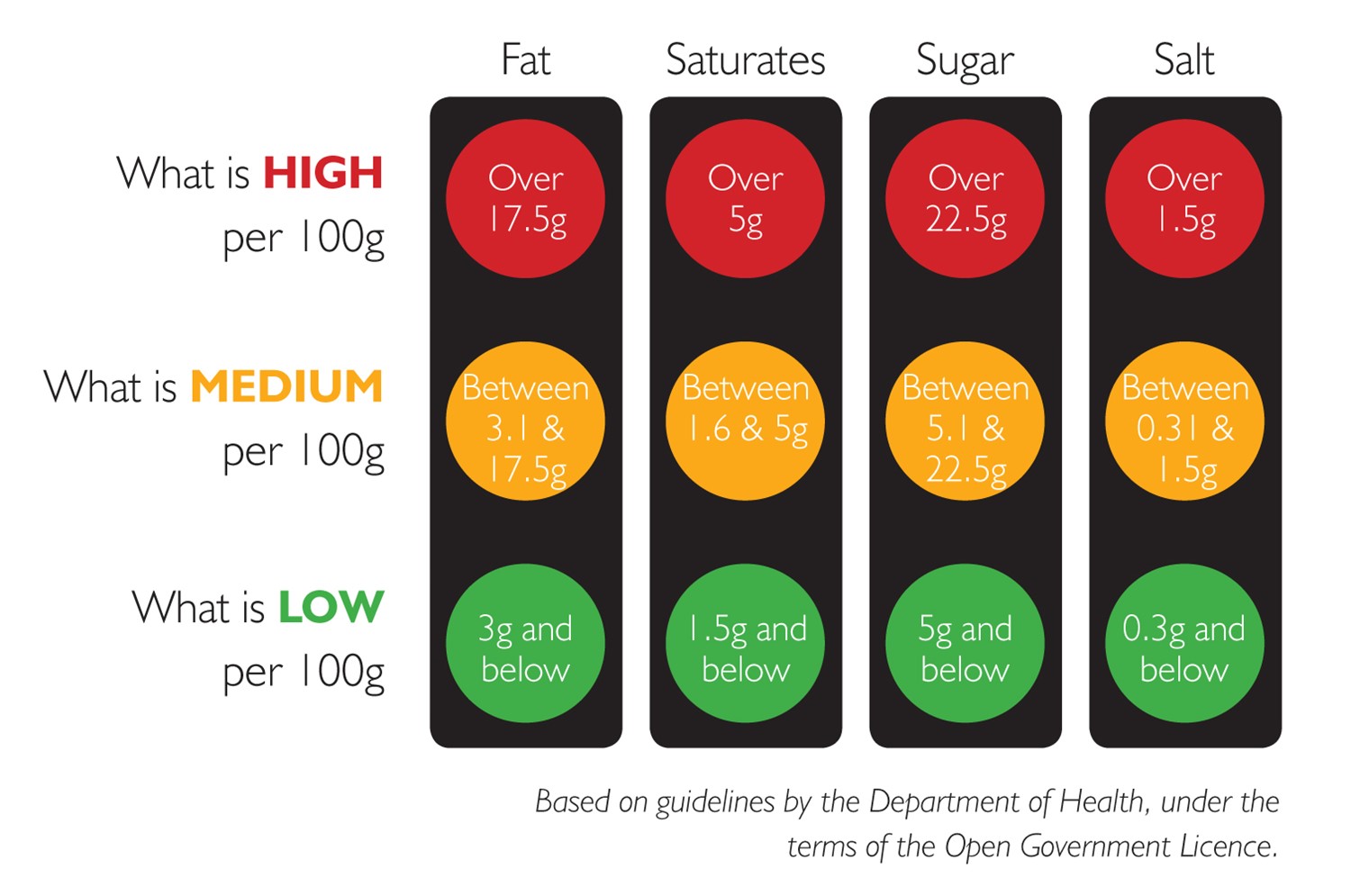
High (often shown in red) means that there is a lot of that nutrient within the food and therefore should not be eaten regularly, or in large amounts as it could be bad for your health in the long run.
Medium (often shown in orange) shows that it is neither high nor low and so can be consumed most of the time as part of a healthy diet.
منخفض (often shown in green) highlights items that do not contain much of the nutrients we need to be wary of (fat, sugar and salt) so they can be consumed regularly as part of your daily diet.
Consultant dietician and spokesperson for the جمعية التغذية البريطانية, Sian Porter says: "Understanding and being able to use food labelling information is really helpful for making healthy food and drink choices. Comparing foods side by side can be useful. You don't have to be a maths genius to know if something has more sugar, say, than another food, or see if a food is mostly green and amber traffic lights versus mostly reds."
Pros and cons
But is it as simple as stopping when we see red? The simple answer is no. However, this opens a whole can of worms.
Traffic light labelling is a fantastic tool for giving a consumer an immediate look at whether an item is 'healthy' or 'unhealthy'. But what it fails to tell you is why it is red. And the system does not distinguish between nutritional quality; more beneficial and less beneficial types of fat, sugar and salt.
For example, take a 100 ml of orange juice and 100 ml of a fizzy drink. Both would be higher in sugar. So, some may think: "Well I may as well have the fizzy drink." This is where we need to be careful.
Yes, they both contain sugar, but the fresh orange juice also contributes towards your 5 a day and provides 60% of your vitamin C intake. A fizzy drink provides none of these benefits, as they are effectively 'empty calories'.
The problem with traffic light labelling at the moment is that it is not compulsory. And if companies do decide to display it there isn't tight enough regulation around how to use it or display it. This is why many of us get so confused.
This problem has been highlighted recently by the British Medical Association who released a report in 2016, 'Food For Thought', which highlighted that: "A mandatory, standardised approach for displaying nutritional information should be introduced for all pre-packaged food and drink products."
How to make the most of food labels
There are a few things you can do to check whether or not a food product is as good, or as bad, as it first appears.
Look further than red
If a value is in the red, take a closer look. Yes, we should not eat too much of that food or drink or too often, but some reds are better than others - eg, cheese versus lard, oily fish versus processed meat. Use the red flag or 'high' value as a signal to investigate further.
Check the ingredients list
See what is at the top of the list. Ingredients lists are given in order of quantity so the higher up the list, the more there is of it in the product.
Let's say you look at a dish and it has a 'red' for fat. If you check the back and one of the first ingredients is salmon then you know that the fats within the dish are likely to be coming from a naturally fatty food which provides omega 3. You can sometimes check this by looking at the nutritional information on the back of the pack, which gives you more information about what type of fats are present.
Conversely, if you look at the back of the pack and one of the first ingredients is palm oil then you know that this is not a fat we want to be eating a lot of. So it may be worth thinking again and not eating it too frequently.
Check the serving size
Has it said a quantity that you are expecting to eat?
Often manufacturers will say 'a serving of ... provides a set amount of kcal, fat, sat fat, sugar and salt'. But more often than not it is a lot less than you plan to eat. The snack packs of nuts are a great example of this. They will generally say a 25 g serving but when you check the weight of the snack pack it is actually 50 g, even though it isn't a resealable package.
If it is less, be mindful of how much you consume, perhaps save a bit for another day if it is something that you can keep.
Other offenders for this include cereals, chocolate bars with more than one piece, pizzas and soft drinks.
Porter says: "As we do not have standard portion sizes in the UK, I encourage people to know what is an appropriate portion for them such as a handful of nuts rather than what the manufacturer suggests or how a food is packaged."
When green doesn't mean 'go'
If it is all green but seems too good to be true, be a little wary. Diet drinks are a great example of this. Although, yes they aren't breaking the bank with regards to our regular offenders (kcal, sugar, fat and salt), they also aren't providing your body with many quality nutrients either.
The bottom line
Traffic light labelling and other nutritional information is a useful tool that we all should be aware of and utilise. But we need to get into the habit of thinking further than the front of pack information and appreciate that not all calories are equal.
Seeing red on one of our recipes?
We work hard to make sure that we provide a range of recipes to users, which suit all dietary wants and needs. Some of our recipes may be higher in fat or sugar. However, these will never be due to added fat or sugar but instead those naturally present in the food. For example, fat from nuts or sugar from dried fruit.
We do however advise that these dishes should be consumed in moderation and at the recommended serving size.
اختيارات المرضى لـ التغذية الصحية

النظام الغذائي والتغذية
9 بدائل غذائية لعشاء عيد ميلاد لذيذ وصحي
قد لا يكون الحفاظ على الصحة أول ما يخطر ببالك في يوم عيد الميلاد. ولكن ماذا لو قلنا لك أنه يمكنك إجراء بعض التبديلات الغذائية المغذية بحيث يكون عشاء عيد الميلاد لذيذًا كما هو، ولكنه أكثر صحة بشكل سري؟
بقلم فيكتوريا راو

النظام الغذائي والتغذية
كيف يمكن لوجبة إفطار غنية بالبروتين أن تعزز صحتك
عندما نفكر في الإفطار، غالبًا ما نتخيل وعاء من رقائق الذرة مع الحليب. على الرغم من أنه عنصر أساسي كلاسيكي في الصباح، إلا أنه قد لا يكون الطريقة الأكثر فعالية لبدء يومك، لأنه يفتقر إلى البروتين. إضافة المزيد من البروتين إلى إفطارك يمكن أن يعزز مستويات الطاقة لديك ويساعدك على الشعور بالشبع لفترة أطول.
بقلم فيكتوريا راو
عن المؤلفعرض السيرة الذاتية الكاملة

روز كونستانتين سميث، أخصائية تغذية معتمدة
Nutritionist
BSc (Hons), ANutr
Rose has authored for several publications including The Healthy Food Guide and is a Nutrition and Wellbeing Manager for The Good Eating Co.
حول المراجععرض السيرة الذاتية الكاملة

الدكتورة سارة جارفيس
استشاري سريري
MA (Cantab), BM, BCh (Oxon), DRCOG, FRCGP, MBE
بعد التدريب في الطب في كامبريدج وأكسفورد، أصبحت الدكتورة سارة جارفيس حاصلة على وسام الإمبراطورية البريطانية طبيبة عامة.
تاريخ المقال
تمت مراجعة المعلومات الموجودة في هذه الصفحة من قبل أطباء مؤهلين.
المقال متاح أيضًا باللغة الإنجليزية, الألمانية, إسبانية, الفرنسية, إيطالي, البرتغالية, الهندية, العبرية, العربية ,، و السويدية.
4 Sept 2018 | أحدث إصدار

اسأل، شارك، تواصل.
تصفح المناقشات، اطرح الأسئلة، وشارك التجارب عبر مئات المواضيع الصحية.

هل تشعر بتوعك؟
قم بتقييم أعراضك عبر الإنترنت مجانًا
اشترك في النشرة الإخبارية للمرضى
جرعتك الأسبوعية من النصائح الصحية الواضحة والموثوقة - مكتوبة لمساعدتك على الشعور بالاطلاع والثقة والتحكم.
من خلال الاشتراك، فإنك تقبل سياسة الخصوصية. يمكنك إلغاء الاشتراك في أي وقت. نحن لا نبيع بياناتك أبدًا.
المزيد في النظام الغذائي والتغذية
- هل الكربوهيدرات ضارة لك بالفعل؟
- هل يمكن أن يساعد تغيير نظامك الغذائي في علاج الصدفية؟
- هل يمكن لمكملات التورين أن تبطئ الشيخوخة؟
- هل "الأطعمة الخارقة" موجودة حقًا؟
- هل تحتاج إلى شرب ثمانية أكواب من الماء يوميًا؟
- نظام غذائي للخصوبة: ماذا تأكلين عندما تحاولين الحمل
- كيف يؤثر النظام الغذائي على الخرف؟
- كيفية تناول الطعام الصحي بميزانية محدودة
- كيفية الحصول على شواء أكثر صحة
- كيفية الحفاظ على تناول طفلك الطعام الصحي في المدرسة الثانوية
- كيفية اتخاذ خيارات صحية أكثر دون تفويت الفرص
- هل شرب زيت الزيتون مفيد لك؟
- الفوائد الصحية للقهوة والشاي
- قد يزيد تناول مشروبين غازيين يوميًا من خطر الوفاة المبكرة
- علامات نقص فيتامين B12 التي تحتاج إلى معرفتها
- ما هي البروبيوتيك؟
- ما هي فوائد النظام الغذائي النباتي؟
- ماذا يحدث لجسمك بعد التوقف عن تناول الكافيين؟
- ما هو أفضل نظام غذائي لمرض كرون؟
- ما هو الرابط بين التعافي من السكتة الدماغية وصحة الأمعاء؟