عقدة
مراجعة من قبل الدكتورة توني هازيل، زميلة الكلية الملكية للأطباء العامينآخر تحديث بواسطة الدكتورة فيليبا فينسنت، MRCGPآخر تحديث 11 أغسطس 2025
يتوافق مع الإرشادات التحريرية
- تنزيلتنزيل
- مشاركة
- Language
- نقاش
- نسخة صوتية
- أضف إلى المصادر المفضلة على جوجل
A ganglion cyst is a harmless fluid-filled lump which can occur near joints or tendons. They are most commonly found on the wrists or hands. They are harmless but can cause discomfort, pain and weakness. Some people find them unsightly. Usually, no treatment is needed. Sometimes a ganglion can be removed by a small operation.
نظرة سريعة
A ganglion cyst is a lump under the skin containing jelly-like fluid.
It often appears on the back or front of the wrist, foot or fingers.
Ganglion cysts vary in size and can sometimes be painful.
They are not cancerous and do not spread to other parts of the body.
Some ganglion cysts disappear over time without any treatment.
Treatment options include aspiration (sucking out fluid) or surgical removal.
What is a ganglion cyst?
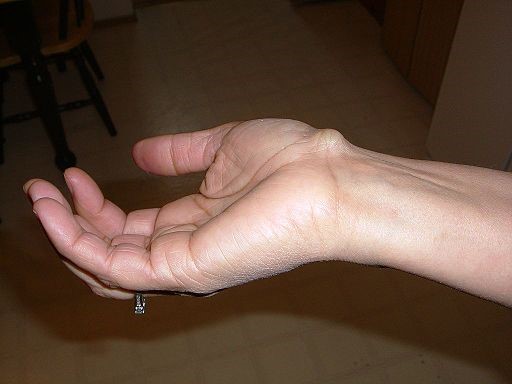
Wrist ganglion cyst
© GEMalone, CC BY 3.0, via Wikimedia Commons
A ganglion cyst is a small swelling that contains a thick jelly-like material. It looks and feels like a smooth lump under the skin. It is not fully understood how it occurs but most experts think that they occur due to multiple micro-traumas to the area of the body.
A ganglion is usually attached to a joint or tendon, and the fluid inside is a thicker version of the fluid which 'lubricates' the joint and tendon sheaths (synovial fluid).
Where are ganglion cysts found?
Back of the wrist. The most common site for a ganglion to be found is on the back of the wrist. 7 out of 10 ganglion cysts are found here.
Front of the wrist (the same side as the palm). It can also occur on the other side of the wrist. 2 out of 10 ganglion cysts are found here.
Top of foot, ankle, top parts of the fingers. 1 out of 10 ganglion cysts are found here.
Other sites of the body are affected less commonly.
Ganglion cyst symptoms
التورم. The main symptom is a lump, which is usually very smooth and round.
Size. Their size can vary from being very small (pea-sized) to being larger (plum-sized).
Painful. They can sometimes be painful or tender, particularly if they lie next to a nerve.
Never spread. They never spread to other areas of the body.
Usually when a ganglion cyst is present it is there all the time but sometimes they come and go. 5 out of 10 ganglion cysts disappear completely over time without any treatment.
Your doctor will usually be able to tell if the lump is a ganglion just by examining it. Very occasionally, if the diagnosis is not clear, a scan such as فحص بالموجات فوق الصوتية أو فحص الرنين المغناطيسي may be needed.
Ganglion cyst treatment
If a ganglion cyst does not cause symptoms it can be best just to leave it alone. However, many people prefer to get rid of them.
Many people have heard of the traditional cure, which is to smash them with a heavy book (tradition holds it to be the family bible). This bursts the cyst under the skin. The fluid is then absorbed into the bloodstream. In some people this works well, but there is a high chance of it coming back (recurring), as the walls of the cyst can reform. It is not usually recommended as there is a risk of injury to the area around the ganglion cyst.
Medical treatment is not always available on the NHS.
Aspiration
In some cases it is possible to suck out (aspirate) the fluid with a needle and syringe. If the jelly-like fluid is very thick this may not work. Also, if it does work, there is a chance that the cyst will recur, as the wall of the cyst is not removed, and the fluid may form again to refill the ganglion. However, in some people it cures the problem. As it is quite easy for a doctor (usually an orthopaedic surgeon) to do, this is often attempted first.
الجراحة
Surgical removal of the ganglion cyst is the most successful cure. This is a relatively minor operation. This is the treatment that is most likely to be permanent but still around 3 cases in 20 will come back.
اختيارات المرضى لـ الكتل والنتوءات

العلامات والأعراض
كتل وتورمات الرقبة
الكتل والنتوءات في الرقبة شائعة ولها العديد من الأسباب المحتملة. قد تنشأ من الجلد أو من الهياكل الموجودة تحته.
بقلم الدكتور دوغ مكيتشني، MRCGP

العلامات والأعراض
الكتل
معظم الكتل غير ضارة ولا تحتاج إلى أي علاج. ومع ذلك، من المهم جدًا زيارة طبيبك إذا كان لديك أي قلق بشأن الكتلة، أو إذا لم تختف الكتلة خلال أسبوعين.
بقلم الدكتورة هايلي ويلاسي، FRCGP
الأسئلة الشائعة
What is the fluid inside a ganglion cyst made of?
The fluid inside a ganglion cyst is a thicker version of synovial fluid. Synovial fluid is what normally lubricates joints and the sheaths surrounding tendons in the body.
Do ganglion cysts always stay the same size?
No, the size of a ganglion cyst can change. They can vary from very small, like a pea, to larger, like a plum. Their size can also fluctuate, and sometimes they may even disappear on their own.
Are ganglion cysts a sign of a more serious condition, like cancer?
No, ganglion cysts are not cancerous or malignant, and they never spread to other areas of the body. They are a benign condition.
How can a doctor determine if a lump is a ganglion cyst?
Most of the time, a doctor can identify a ganglion cyst just by examining the lump. In rare cases where the diagnosis isn't clear, further imaging like an ultrasound or MRI scan might be used to confirm it.
If I have a ganglion cyst that doesn't bother me, do I need to treat it?
If a ganglion cyst isn't causing you any symptoms or pain, it can often be left alone. Many people choose not to treat them if they aren't causing problems.
قراءة إضافية ومراجع
- Gude W, Morelli V; Ganglion cysts of the wrist: pathophysiology, clinical picture, and management. Curr Rev Musculoskelet Med. 2008 Dec;1(3-4):205-11. doi: 10.1007/s12178-008-9033-4. Epub 2008 Aug 26.
- Ganglion - Clinical guidance; Primary Care Dermatology Society. November 2021.
- Ganglion cysts; British Society for Surgery of the Hand (BSSH)
- BSSH Evidence for Surgical Treatment - Wrist Ganglion; British Society for Surgery of the hand
عن المؤلفعرض السيرة الذاتية الكاملة

الدكتورة فيليبا فينسنت، MRCGP
طبيب عام، مؤلف طبي
MB BS, Bsc, MRCGP (2000), DCH, DFSRH, DRCOG
الدكتورة فيليبا فينسنت هو طبيب عام في هيئة الخدمات الصحية الوطنية يعمل في شمال لندن.
حول المراجععرض السيرة الذاتية الكاملة

Dr Toni Hazell, FRCGP
بكالوريوس الطب والجراحة، بكالوريوس العلوم، زميل الكلية الملكية للأطباء العامين، دبلوم في الصحة الجنسية والإنجابية، دبلوم في طب الجهاز البولي التناسلي، دبلوم الكلية الملكية لأطباء النساء والتوليد، دبلوم في صحة الطفل (لندن، المملكة المتحدة، 2000)
تخرجت الدكتورة توني هازيل من كلية الطب بمستشفى سانت ماري وأكملت تدريبها في مستشفى نورثويك بارك.
تاريخ المقال
تمت كتابة المعلومات على هذه الصفحة ومراجعتها من قبل أطباء مؤهلين.
المقال متاح أيضًا باللغة الإنجليزية, الألمانية, إسبانية, الفرنسية, إيطالي, البرتغالية, الهندية, العبرية, العربية ,، و السويدية.
Next review due: 10 Aug 2025
11 أغسطس 2025 | أحدث إصدار

اسأل، شارك، تواصل.
تصفح المناقشات، اطرح الأسئلة، وشارك التجارب عبر مئات المواضيع الصحية.

هل تشعر بتوعك؟
قم بتقييم أعراضك عبر الإنترنت مجانًا
اشترك في النشرة الإخبارية للمرضى
جرعتك الأسبوعية من النصائح الصحية الواضحة والموثوقة - مكتوبة لمساعدتك على الشعور بالاطلاع والثقة والتحكم.
من خلال الاشتراك، فإنك تقبل سياسة الخصوصية. يمكنك إلغاء الاشتراك في أي وقت. نحن لا نبيع بياناتك أبدًا.