تضيق البواب
مراجعة من قبل الدكتورة توني هازيل، زميلة الكلية الملكية للأطباء العامينآخر تحديث بواسطة الدكتورة فيليبا فينسنت، MRCGPآخر تحديث 18 نوفمبر 2024
يتوافق مع الإرشادات التحريرية
- تنزيلتنزيل
- مشاركة
- Language
- نقاش
- نسخة صوتية
- أضف إلى المصادر المفضلة على جوجل
Pyloric stenosis affects between 2 and 5 out of 1,000 newborn babies. It causes a blockage of food at the stomach outlet (pylorus). The main symptom is projectile vomiting after every meal causing weight loss and dehydration. A small operation is needed, which cures the problem.
نظرة سريعة
Pyloric stenosis is a narrowing of the stomach outlet into the small intestine.
Symptoms often start in babies aged 2 to 6 weeks, who appear otherwise healthy.
Forceful vomiting after feeds is the main symptom, which tends to worsen over days.
Babies with pyloric stenosis remain alert and hungry but may not gain weight.
An operation usually cures the problem, allowing babies to recover quickly.
See a doctor if your baby has forceful vomiting to rule out pyloric stenosis.
What is pyloric stenosis?
pyloric stenosis
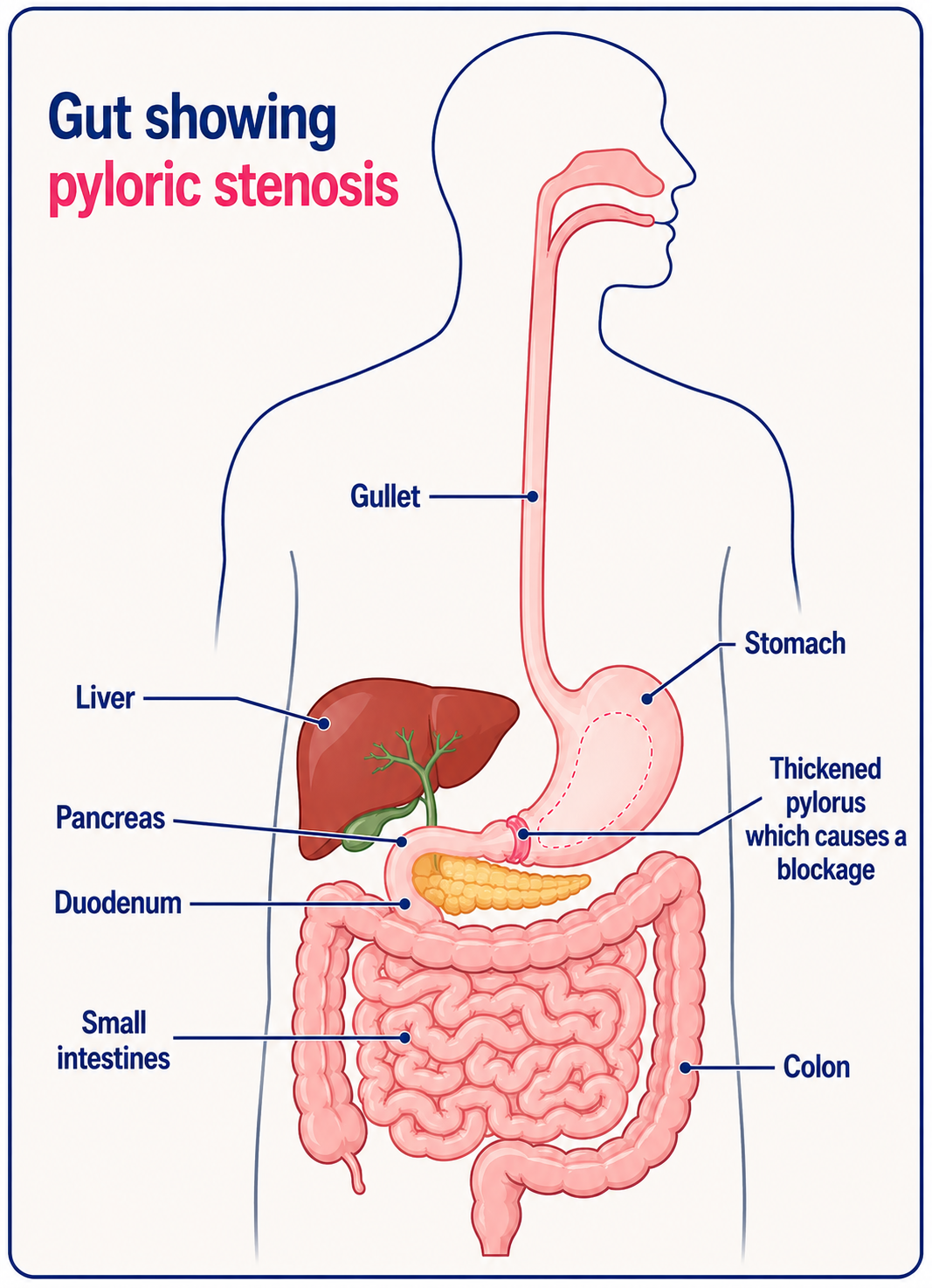
The outlet of the stomach into the small intestine is called the pylorus. Stenosis means a narrowing. Pyloric stenosis means a narrowed outlet of the stomach.
Food and drink pass down the gullet (oesophagus) into the stomach. Here the food and drink mixes with acid and are partially digested. The stomach then normally passes the food and drink into the small intestine to be fully digested and absorbed into the body.
When the outlet from the stomach into the small intestine is narrowed this causes a serious illness unless it is treated.
What are the symptoms of pyloric stenosis?
Symptoms typically begin in a baby aged between 2 and 6 weeks who is otherwise healthy.
Vomiting after a feed is the main symptom. The vomiting may start like a 'normal' vomit but often the vomiting is forceful and milk may be vomited quite a distance like a fountain. This is called projectile vomiting.
The baby remains alert and hungry, and will usually feed well - only to vomit the milk back soon after feeding. The vomiting tends to become worse and worse over several days.
Little food or drink passes through the narrowed pylorus which becomes narrower over time. This means that little or no food reaches the bowels, so babies often pass very little faeces (poo). Affected babies do not gain weight, and are in danger of quickly becoming dehydrated and seriously ill if the condition is not treated.
ملاحظة: it is very common for newborn babies to vomit. The vast majority of babies who vomit do ليست have pyloric stenosis.
What causes pyloric stenosis?
The muscle in the wall of the outlet of the stomach into the small intestine (pylorus) is abnormally thick. This causes the outlet from the stomach to become narrowed (stenosed). It is not known why this occurs though some risk factors have been identified. Use of a particular type of antibiotic shortly after birth has been shown to be a risk factor for developing pyloric stenosis.
Pyloric stenosis affects between 2 and 5 out of 1,000 babies. Boys are affected more commonly than girls. It can sometimes run in families. It is more common in babies who are bottle fed, who were born by caesarean section or who were born prematurely. It is more common in first-born babies. It is also more common in babies born to women who smoked during pregnancy.
It is seen most commonly in white babies and less frequently in Black or Asian babies.
Are any tests needed for pyloric stenosis?
Often the story is enough to make a doctor suspect the diagnosis of pyloric stenosis. A doctor may examine the baby's abdomen whilst they are feeding. A typical bulge next to the stomach can sometimes be felt as the muscles in the stomach and stomach outlet (pylorus) contract.
An ultrasound scan may be done if there is doubt about the diagnosis. This painless test is very reliable at detecting the thickened pylorus. Possibly because ultrasound is being used more frequently, pyloric stenosis is being diagnosed earlier and fewer babies are becoming very unwell before being diagnosed.
What is the treatment for pyloric stenosis?
A small operation, done under a general anaesthetic, normally cures the problem. A small cut is made in the skin over the stomach outlet (pylorus) and the pylorus itself is then cut to create a channel for food to pass through. This operation is called a pyloromyotomy.
Food and milk can then pass easily out of the stomach into the bowel.
A pyloromyotomy is now usually done by keyhole surgery. This uses only a tiny cut to the skin to allow fine instruments into the abdomen to cut the pylorus muscle.
The operation is usually totally successful. Normal feeds are started again shortly after the operation. Most babies recover quickly and have no further problems.
Can pyloric stenosis be prevented?
Pyloric stenosis cannot be prevented. Although there are certain risk factors which might make it more likely, there is always a combination of factors causing pyloric stenosis so it cannot be prevented.
اختيارات المرضى لـ الرضع والأطفال الصغار

صحة الأطفال
علاج مشاكل صحة حديثي الولادة
Treatment depends on the problem, but the conditions being screened for are all ones for which there is a treatment if they are picked up.
بقلم الدكتورة ماري هاردينغ، MRCGP

صحة الأطفال
ارتجاع المريء لدى الأطفال
الارتجاع المعدي المريئي شائع جدًا بين الرضع والأطفال الصغار. ارتجاع كمية صغيرة من الحليب بعد الرضاعة دون أي أعراض أخرى (التجشؤ) غير ضار في الرضع الصغار ولا يحتاج إلى أي تحقيقات أو علاج. قد يكون الارتجاع أكثر شدة ويرتبط بأعراض أخرى. عادة ما يتم تشخيص هذه الحالة دون الحاجة إلى أي اختبارات، ولكن قد يتم إحالة بعض الرضع الذين يعانون من أعراض أكثر إزعاجًا لإجراء تحقيقات إضافية. هناك علاجات مختلفة متاحة بما في ذلك مكثفات التغذية، الحليب المضاد للارتجاع، Gaviscon® ومختلف الأدوية. ومع ذلك، في الغالبية العظمى من الحالات، يعتبر الارتجاع المعدي المريئي حالة محدودة ذاتيًا ومع مرور الوقت يتحسن دون أي مضاعفات.
بقلم الدكتور دوغ مكيتشني، MRCGP
الأسئلة الشائعة
How quickly do symptoms of pyloric stenosis usually get worse?
The vomiting from pyloric stenosis tends to worsen gradually over several days. Initially, it might seem like a 'normal' vomit, but it becomes more frequent and forceful over time.
How does pyloric stenosis affect a baby’s bowel movements?
Because very little food or drink can pass through the narrowed pylorus into the bowels, babies with pyloric stenosis often pass very little faeces (poo). This is due to the lack of material reaching the intestines for digestion and elimination.
What is the recovery like immediately after the operation for pyloric stenosis?
After the pyloromyotomy operation, babies typically recover quickly. Normal feeding can usually be restarted shortly after the procedure, and most babies experience no further problems.
Are there any long-term effects on a baby's health after having pyloric stenosis and surgery?
The operation for pyloric stenosis is usually totally successful. Most babies recover quickly and generally have no further problems after the condition is treated.
When should I be concerned about my baby's vomiting?
You should be concerned if your baby, typically between 2 and 6 weeks old, starts vomiting forcefully, especially if the vomit shoots out some distance. This is called projectile vomiting. Also, be concerned if the vomiting gets progressively worse over several days, even if your baby remains hungry.
قراءة إضافية ومراجع
- Galea R, Said E; Infantile Hypertrophic Pyloric Stenosis: An Epidemiological Review. Neonatal Netw. 2018 Jul;37(4):197-204. doi: 10.1891/0730-0832.37.4.197. Epub 2018 Jul 1.
- Garfield K, Sergent SR; Pyloric Stenosis.
عن المؤلفعرض السيرة الذاتية الكاملة

الدكتورة فيليبا فينسنت، MRCGP
طبيب عام، مؤلف طبي
MB BS, Bsc, MRCGP (2000), DCH, DFSRH, DRCOG
الدكتورة فيليبا فينسنت هو طبيب عام في هيئة الخدمات الصحية الوطنية يعمل في شمال لندن.
حول المراجععرض السيرة الذاتية الكاملة

Dr Toni Hazell, FRCGP
بكالوريوس الطب والجراحة، بكالوريوس العلوم، زميل الكلية الملكية للأطباء العامين، دبلوم في الصحة الجنسية والإنجابية، دبلوم في طب الجهاز البولي التناسلي، دبلوم الكلية الملكية لأطباء النساء والتوليد، دبلوم في صحة الطفل (لندن، المملكة المتحدة، 2000)
تخرجت الدكتورة توني هازيل من كلية الطب بمستشفى سانت ماري وأكملت تدريبها في مستشفى نورثويك بارك.
تاريخ المقال
تمت كتابة المعلومات على هذه الصفحة ومراجعتها من قبل أطباء مؤهلين.
المقال متاح أيضًا باللغة الإنجليزية, الألمانية, إسبانية, الفرنسية, إيطالي, البرتغالية, الهندية, العبرية, العربية ,، و السويدية.
المراجعة التالية مستحقة: 17 نوفمبر 2027
18 نوفمبر 2024 | أحدث إصدار

اسأل، شارك، تواصل.
تصفح المناقشات، اطرح الأسئلة، وشارك التجارب عبر مئات المواضيع الصحية.

هل تشعر بتوعك؟
قم بتقييم أعراضك عبر الإنترنت مجانًا
اشترك في النشرة الإخبارية للمرضى
جرعتك الأسبوعية من النصائح الصحية الواضحة والموثوقة - مكتوبة لمساعدتك على الشعور بالاطلاع والثقة والتحكم.
من خلال الاشتراك، فإنك تقبل سياسة الخصوصية. يمكنك إلغاء الاشتراك في أي وقت. نحن لا نبيع بياناتك أبدًا.
المزيد في صحة الأطفال
- القلق لدى الأطفال
- التهاب الزائدة الدودية
- آلام الظهر عند الأطفال
- أجهزة إنذار التبول اللاإرادي
- دواء التبول اللاإرادي - ديسموبريسين
- الاكتئاب عند الأطفال
- السكري عند الأطفال
- عسر القراءة
- عسر الحركة
- إطعام الأطفال الخدج
- إطعام طفلك الصغير
- مرض هنتنغتون
- الانغلاف والتواء الأمعاء عند الأطفال
- التهاب السحايا
- لقاح المكورات السحائية للالتهاب السحائي
- تطعيم الحصبة والنكاف والحصبة الألمانية (MMR)
- ضمور العضلات
- التهاب الأمعاء الناخر
- اليرقان الوليدي
- نزيف المستقيم عند الأطفال