التهاب الجلد الحلئي
مراجعة من قبل الدكتورة توني هازيل، زميلة الكلية الملكية للأطباء العامينآخر تحديث بواسطة الدكتورة هايلي ويلاسي، زميلة الكلية الملكية للأطباء العامين آخر تحديث 29 مارس 2023
يتوافق مع الإرشادات التحريرية
- تنزيلتنزيل
- مشاركة
- Language
- نقاش
- نسخة صوتية
- أضف إلى المصادر المفضلة على جوجل
في هذه السلسلة:مرض السيلياكسوء الامتصاص المعوي
Dermatitis herpetiformis is a skin condition where you develop a very itchy rash. It is caused by intolerance to a food ingredient called gluten. It can be effectively treated with medication plus a gluten-free diet. Dermatitis herpetiformis is linked to a condition called coeliac disease, which is also caused by gluten intolerance. Treatment for both conditions is often needed.
نظرة سريعة
Dermatitis herpetiformis (DH) is a very itchy skin rash caused by gluten intolerance.
Most people with DH also have coeliac disease, an associated gut condition.
The rash often appears on elbows, knees, buttocks, and scalp, usually on both sides of the body.
DH is diagnosed with a skin biopsy, which looks for specific antibodies.
Treatment includes a gluten-free diet and medication like dapsone to control symptoms.
A gluten-free diet can eventually lead to a full recovery for many people with DH.
What is dermatitis herpetiformis?
Dermatitis herpetiformis (DH) is a skin condition causing a very itchy rash. It is due to intolerance to gluten, which is a natural substance (a protein) found in certain foods. Gluten is in wheat, rye and barley. Gluten intolerance also causes a gut condition called مرض السيلياك, which is closely linked to DH.
What causes dermatitis herpetiformis?
The cause of dermatitis herpetiformis is gluten intolerance. In this condition, your body reacts to gluten in food. Gluten intolerance is also sometimes called gluten sensitivity.
People with gluten intolerance have a kind of allergy to gluten, but it is not the same as a typical food allergy. With gluten intolerance, the gluten somehow triggers your body's immune system to react against the body's own organs.
This is instead of doing what the immune system normally does, which is to be a defence against infections, etc. This may lead to various symptoms in different parts of your body. With dermatitis herpetiformis, it is your skin which is affected.
It is not known exactly what causes the gluten intolerance in the first place.
Does dermatitis herpetiformis always mean you have coeliac disease?
Gluten intolerance also usually causes inflammation in the gut (in the small intestine). When this happens it is called مرض السيلياك. Most people with dermatitis herpetiformis have some degree of coeliac disease. However, they may not have had any noticeable symptoms and their coeliac disease may not have been diagnosed. See the separate leaflet called Coeliac Disease for more details.
The rest of this leaflet deals with dermatitis herpetiformis.
How common is dermatitis herpetiformis?
Around 1 in 10,000 people have dermatitis herpetiformis. About 1 in 8 people with coeliac disease will have DH.
Dermatitis herpetiformis is more common in men than in women and usually starts between ages 30-50 years, although it can occur at any age.
What are the symptoms of dermatitis herpetiformis?
There is an extremely itchy rash. It can affect any part of your skin, but is usually on your elbows, knees, buttocks and scalp. The rash is usually on both sides of your body at the same time (symmetrical). The rash has blisters and/or raised spots (papules) - but the blisters usually get scratched off to leave scabs. There may be burning or stinging on the area before the blisters start.
The rash can vary from week to week but does not usually clear up without treatment.
Dermatitis herpetiformis rash
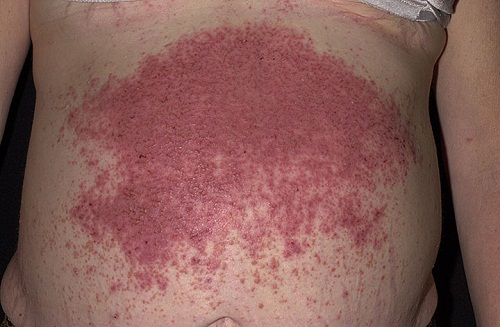
© Madhero88, CC BY-SA 3.0, via Wikimedia Commons
You may also have symptoms of coeliac disease, such as tummy (abdominal) symptoms or unexplained الإرهاق. However, some people with coeliac disease have little in the way of symptoms, and dermatitis herpetiformis may be the first sign of coeliac disease.
How is dermatitis herpetiformis diagnosed?
There are various skin conditions that cause itchy rashes with blisters, so a test is needed to diagnose dermatitis herpetiformis for certain. The test is a a skin biopsy. This involves taking a small sample of skin under local anaesthetic. The sample is examined under the microscope in a laboratory, using a special test to look for antibodies called IgA. This test can reliably diagnose DH.
If dermatitis herpetiformis is suspected, you will usually be offered tests for coeliac disease as well. اختبارات الدم can help to show if coeliac disease is likely. If the blood tests are positive, you may be offered a test on the gut (a biopsy to sample the lining of your bowel), which can confirm if you have coeliac disease.
How is dermatitis herpetiformis treated?
There are two treatments for dermatitis herpetiformis:
Diet.
Medication.
الحمية
In the long term, a diet free of gluten will gradually reduce the dermatitis herpetiformis symptoms and may cure DH completely. (This diet also treats coeliac disease.) However, it can take months or years for the diet to improve DH. Therefore, medication is often needed to bring the skin symptoms under control. See the separate leaflet called Coeliac Disease Diet Sheet for more information about the gluten-free diet. In the UK more information is also available from Coeliac UK - see under 'Further Reading and References', below.
الأدوية
Medication helps control the rash quickly. The usual medication for dermatitis herpetiformis is dapsone. Dapsone often stops the itching within two days. Dapsone may have side-effects, including فقر الدم. Therefore, regular check-ups and blood tests are needed while you are taking it.
Dapsone is used to treat certain skin conditions, including DH. Exactly how it works is not known. However, it seems to have anti-inflammatory and antibacterial actions. In dermatitis herpetiformis, it is probably the anti-inflammatory action that is helpful.
If you cannot take dapsone or you have side-effects from it, other alternative medicines are available - for example, sulfasalazine or sulfapyridine.
هل هناك أي مضاعفات محتملة؟
Dermatitis herpetiformis itself does not usually cause complications. However, the gluten intolerance and coeliac disease, if untreated, may make you ill and have possible complications. Most of these problems can be prevented or treated by following a gluten-free diet, which treats both dermatitis herpetiformis and coeliac disease.
ما هو التشخيص المتوقع؟
Untreated, dermatitis herpetiformis tends to go up and down in severity, but usually continues.
With treatment, the outlook (prognosis) is very good, as dermatitis herpetiformis clears up with medication and a gluten-free diet. Dapsone usually improves the rash quickly. The gluten-free diet takes longer to help - it may take a year or more to get the full benefit. About 8 in 10 people with dermatitis herpetiformis have good results from the diet so they can either stop taking dapsone, or can reduce the dose.
اختيارات المرضى لـ حساسية الطعام وعدم التحمل

الحساسية، الدم والجهاز المناعي
حساسية الطعام وعدم التحمل
حساسية الطعام وعدم تحمل الطعام ليسا نفس الشيء. يستعرض الكتيب التالي الفرق بينهما، وأسبابهما، وكيفية تشخيصهما وإدارتهما.
بقلم الدكتورة هايلي ويلاسي، FRCGP

الحساسية، الدم والجهاز المناعي
اللقاحات وحساسية البيض
بعض أنواع اللقاحات تُصنع باستخدام عملية تتضمن بيض الدجاج أو أجنة الدجاج، وتحتوي على كميات صغيرة من بروتين البيض. حساسية البيض هي واحدة من أكثر أنواع الحساسية الغذائية شيوعًا، خاصةً لدى الأطفال. في الماضي، كان يُنصح الأشخاص الذين يعانون من حساسية البيض بتجنب أي لقاحات مصنوعة من بيض الدجاج، بسبب مخاوف تتعلق بالسلامة. في العديد من الحالات، أظهرت الأبحاث منذ ذلك الحين أن هذه اللقاحات آمنة للأشخاص الذين يعانون من حساسية البيض، على الرغم من أنه يجب تجنب بعض اللقاحات.
بقلم الدكتور دوغ مكيتشني، MRCGP
الأسئلة الشائعة
Can I prevent dermatitis herpetiformis?
The exact cause of gluten intolerance, which leads to dermatitis herpetiformis, is not known. Therefore, there are no specific known ways to prevent the condition from developing in the first place.
How long do I need to follow a gluten-free diet if I have dermatitis herpetiformis?
A gluten-free diet is a long-term treatment for dermatitis herpetiformis and also treats coeliac disease. It can take months or even years for the diet to fully improve the condition. Many people with DH have good results from the diet, allowing them to reduce or stop their medication, suggesting it's an ongoing lifestyle change.
Are there any specific foods I need to avoid beyond wheat, rye, and barley?
The article states that gluten is a natural substance in wheat, rye, and barley. For more detailed information on a gluten-free diet, it recommends consulting the 'Coeliac Disease Diet Sheet' leaflet and Coeliac UK, implying there may be other food considerations not explicitly listed here.
What happens if I stop taking dapsone too soon?
Medical treatment with dapsone helps control the rash quickly. The article states that untreated dermatitis herpetiformis tends to go up and down in severity but usually continues, suggesting that stopping treatment prematurely could lead to the return or persistence of symptoms.
Can dermatitis herpetiformis affect children?
Although dermatitis herpetiformis usually starts between the ages of 30-50, the article mentions that it 'can occur at any age,' which suggests it is possible for children to develop the condition, though it may be less common.
قراءة إضافية ومراجع
- Coeliac UK
- Reunala T, Hervonen K, Salmi T; Dermatitis Herpetiformis: An Update on Diagnosis and Management. Am J Clin Dermatol. 2021 May;22(3):329-338. doi: 10.1007/s40257-020-00584-2.
- Mirza HA, Gharbi A, Bhutta BS; Dermatitis Herpetiformis.
عن المؤلفعرض السيرة الذاتية الكاملة

الدكتورة هايلي ويلاسي، زميلة الكلية الملكية للأطباء العامين
طبيب عام، مؤلف طبي
MBChB (1992), DRCOG, DFFP, MRCOG (Part 1) MRCGP (2007), DFSRH (2013), MSc - medical education (2020)
كانت الدكتورة هايلي ويلاسي طبيبة عامة في هيئة الخدمات الصحية الوطنية تعمل في شمال غرب إنجلترا، وتقاعدت من الممارسة السريرية في عام 2022 بعد 30 عامًا.
حول المراجععرض السيرة الذاتية الكاملة

Dr Toni Hazell, FRCGP
بكالوريوس الطب والجراحة، بكالوريوس العلوم، زميل الكلية الملكية للأطباء العامين، دبلوم في الصحة الجنسية والإنجابية، دبلوم في طب الجهاز البولي التناسلي، دبلوم الكلية الملكية لأطباء النساء والتوليد، دبلوم في صحة الطفل (لندن، المملكة المتحدة، 2000)
تخرجت الدكتورة توني هازيل من كلية الطب بمستشفى سانت ماري وأكملت تدريبها في مستشفى نورثويك بارك.
تاريخ المقال
تمت كتابة المعلومات على هذه الصفحة ومراجعتها من قبل أطباء مؤهلين.
المقال متاح أيضًا باللغة الإنجليزية, الألمانية, إسبانية, الفرنسية, إيطالي, البرتغالية, الهندية, العبرية, العربية ,، و السويدية.
المراجعة التالية مستحقة: 27 مارس 2028
29 مارس 2023 | أحدث إصدار
آخر تحديث بواسطة
الدكتورة هايلي ويلاسي، زميلة الكلية الملكية للأطباء العامينمراجعة من قبل
Dr Toni Hazell, FRCGP

اسأل، شارك، تواصل.
تصفح المناقشات، اطرح الأسئلة، وشارك التجارب عبر مئات المواضيع الصحية.

هل تشعر بتوعك؟
قم بتقييم أعراضك عبر الإنترنت مجانًا
اشترك في النشرة الإخبارية للمرضى
جرعتك الأسبوعية من النصائح الصحية الواضحة والموثوقة - مكتوبة لمساعدتك على الشعور بالاطلاع والثقة والتحكم.
من خلال الاشتراك، فإنك تقبل سياسة الخصوصية. يمكنك إلغاء الاشتراك في أي وقت. نحن لا نبيع بياناتك أبدًا.