الديدان الأسطوانية
Nematodes
مراجعة من قبل الدكتورة هايلي ويلاسي، زميلة الكلية الملكية للأطباء العامين آخر تحديث بواسطة الدكتور كولين تايدي، MRCGPآخر تحديث ١٣ ديسمبر ٢٠٢٢
يتوافق مع الإرشادات التحريرية
- تنزيلتنزيل
- مشاركة
- Language
- نقاش
- Ask Patient
- نسخة صوتية
- أضف إلى المصادر المفضلة على جوجل
المهنيين الطبيين
تم تصميم مقالات المراجع المهنية لاستخدامها من قبل المتخصصين في الرعاية الصحية. يتم كتابتها بواسطة أطباء من المملكة المتحدة وتستند إلى أدلة بحثية وإرشادات المملكة المتحدة وأوروبا. قد تجد الديدان الأسطوانية مقالة أكثر فائدة، أو واحدة من مقالاتنا الأخرى مقالاتنا الصحية.
What are roundworms (nematodes)?
Roundworms (nematodes) have elongated, bilaterally long cylindrical bodies which contain an intestinal system and a large body cavity. Parasitic nematodes vary in length from several millimetres to approximately 2 metres and have larval stages and adult worms of both sexes. Approximately 60 species of roundworms are parasites of humans.1
Some roundworm infections can be transmitted directly from person to person but, in others, the nematode eggs must mature outside the host. The parasites may spend a part of their life cycle in the soil before becoming infective to humans. Nematodes commonly parasitic on humans include (click links below for separate articles which provide more detail):
Ascaris Lumbricoides.
Roundworm ascaris lumbricoides
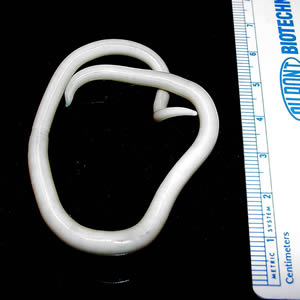
Filariasis, which is caused by thread-like filarial roundworms (nematodes) in the family Filarioidea (also known as 'filariae'). There are eight known filarial roundworms which use humans as the host. These are divided into three groups:
Lymphatic Filariasis - caused by the worms Wuchereria bancrofti, Brugia malayi ,، و Brugia timori.
Cutaneous Filariasis - caused by Loa loa (the African eye worm), Mansonella streptocerca و Onchocerca volvulus.
Body Cavity Filariasis - caused by the worms Mansonella perstans و Mansonella ozzardi.
Trichuriasis (Whipworm).
Trichinellosis.
Angiostrongyliasis.
Strongyloidiasis.
Gnathostomiasis.
Anisakiasis.
يرقات الجلد المهاجرة is caused by skin penetration and subsequent migration of larvae of various roundworm parasites.
Helminth infections can affect the immune system in positive and negative ways. The host can benefit from suppression of collateral damage during parasite infection and from reduced allergic, autoimmune, and inflammatory reactions. However, helminth infection can also be detrimental in reducing vaccine responses, increasing susceptibility to co-infection and potentially reducing the body's protection against tumours.2
How common are roundworms (nematodes)?
The bowel of a child living in poverty in a developing country is likely to be parasitised with at least one nematode and, in many cases, multiple infection (eg, whipworms, ascaris, and hookworms), with resultant impairments in physical, intellectual, and cognitive development.1 3
The prevalence of roundworm infections throughout the world is generally increasing but varies according to levels of poverty, natural disasters and human conflicts.4
The spread of infection is also increasing in line with increased travel and mobility (eg, angiostrongyliasis and anisakiasis). However, some eradication programmes (notably for guinea worm disease) have been effective in reducing the burden of infection.
Roundworm infections are rare in the UK. Infections diagnosed in the UK are likely to have been acquired abroad. Travellers and migrant populations are most often affected. It is estimated that up to 20% of migrants from endemic countries may have helminth infections at the time of their arrival in the UK.5
Roundworm (nematode) treatment3
Control of roundworm (nematode) infections is based on drug treatment, improved sanitation and health education.
Antihelmintic drugs (eg, mebendazole, albendazole and tiabendazole) are often used for both symptomatic infections and for large-scale prevention of morbidity in children living in endemic areas. This has resulted in improvements in child health and education after deworming.
Concerns about the sustainability of periodic deworming with available drugs and the emergence of resistance mean that a great deal more needs to be done in terms of new drugs and developing effective vaccines, as well as education and alleviating poverty.
See the British National Formulary (BNF) treatment summary for helminth infections for further recommendations for treatment, and contact details for further advice on prophylaxis and treatment in the UK.6
تحديثات حصرية لمتخصصي الرعاية الصحية
ابقَ على اطلاع بأحدث التحديثات السريرية، والرؤى المهنية، والإرشادات المستندة إلى الأدلة. تقوم نشرة Patient Pro الإخبارية بتجميع محتوى أساسي لمتخصصي الرعاية الصحية - يتم تسليمه مباشرة إلى بريدك الوارد.
من خلال الاشتراك، فإنك تقبل سياسة الخصوصية. يمكنك إلغاء الاشتراك في أي وقت. نحن لا نبيع بياناتك أبدًا.
قراءة إضافية ومراجع
- الطفيليات من الألف إلى الياء; مراكز السيطرة على الأمراض والوقاية منها
- Cox FEG; History of Human Parasitology
- Stepek G, Buttle DJ, Duce IR, et al; Human gastrointestinal nematode infections: are new control methods required? Int J Exp Pathol. 2006 Oct;87(5):325-41.
- Maizels RM, McSorley HJ; Regulation of the host immune system by helminth parasites. J Allergy Clin Immunol. 2016 Sep;138(3):666-675. doi: 10.1016/j.jaci.2016.07.007. Epub 2016 Jul 29.
- Bethony J, Brooker S, Albonico M, et al; Soil-transmitted helminth infections: ascariasis, trichuriasis, and hookworm. Lancet. 2006 May 6;367(9521):1521-32.
- Beyrer C, Villar JC, Suwanvanichkij V, et al; الأمراض المهملة، النزاعات المدنية، والحق في الصحة. لانسيت. 18 أغسطس 2007;370(9587):619-27.
- Roundworm؛ NICE CKS، مارس 2018 (للوصول من المملكة المتحدة فقط)
- Helminth infections; British National Formulary (BNF).
عن المؤلفعرض السيرة الذاتية الكاملة
تم التحديث بواسطة

الدكتور كولين تايدي، MRCGP
طبيب عام، مؤلف طبي
MBBS, MRCGP, MRCP (Paediatrics), DCH
الدكتور كولين تايدي هو طبيب في هيئة الخدمات الصحية الوطنية، ويعمل في أوكسفوردشاير.
حول المراجععرض السيرة الذاتية الكاملة

الدكتورة هايلي ويلاسي، زميلة الكلية الملكية للأطباء العامين
طبيب عام، مؤلف طبي
MBChB (1992), DRCOG, DFFP, MRCOG (Part 1) MRCGP (2007), DFSRH (2013), MSc - medical education (2020)
كانت الدكتورة هايلي ويلاسي طبيبة عامة في هيئة الخدمات الصحية الوطنية تعمل في شمال غرب إنجلترا، وتقاعدت من الممارسة السريرية في عام 2022 بعد 30 عامًا.
تاريخ المقال
المقال متاح أيضًا باللغة الإنجليزية, الألمانية, إسبانية, الفرنسية, إيطالي, البرتغالية, الهندية, العبرية, العربية ,، و السويدية.
المراجعة التالية مستحقة: 12 ديسمبر 2027
١٣ ديسمبر ٢٠٢٢ | أحدث إصدار
آخر تحديث بواسطة
الدكتور كولين تايدي، MRCGPمراجعة من قبل
الدكتورة هايلي ويلاسي، زميلة الكلية الملكية للأطباء العامين
وصول بسيط إلى العلاجات والخدمات الصحية الموثوقة عبر الإنترنت.
Common conditions
Get help with common conditions through the NHS, without a GP appointment.
 التهاب الجيوب الأنفية الحاد
 التهاب اللوزتين البكتيري
 القوباء
 لدغات الحشرات
 الحزام الناريعدوى المسالك البولية
المزيد في أمراض الجهاز الهضمي
- اختبارات وظائف الكبد غير الطبيعية
- داء الأميبات
- أورام الكارسينويد
- الإسهال في مرحلة الطفولة
- التهاب الكبد المزمن
- سرطان المعدة
- أورام اللحمة المعدية المعوية
- متلازمة جيلبرت
- إحساس الغصة
- متلازمة الكبد الكلوي
- الإنتان داخل البطن والخراجات
- رتج ميكل
- مرض مينيترييه
- الأورام الصماء المتعددة النوع 1
- سرطان الكبد الأولي
- التهاب القولون الغشائي الكاذب
- الفيروس العجلي وتطعيم الفيروس العجلي
- متلازمة الأمعاء القصيرة
- التهاب الكبد الدهني والتنكس الدهني
- التهاب القولون التقرحي