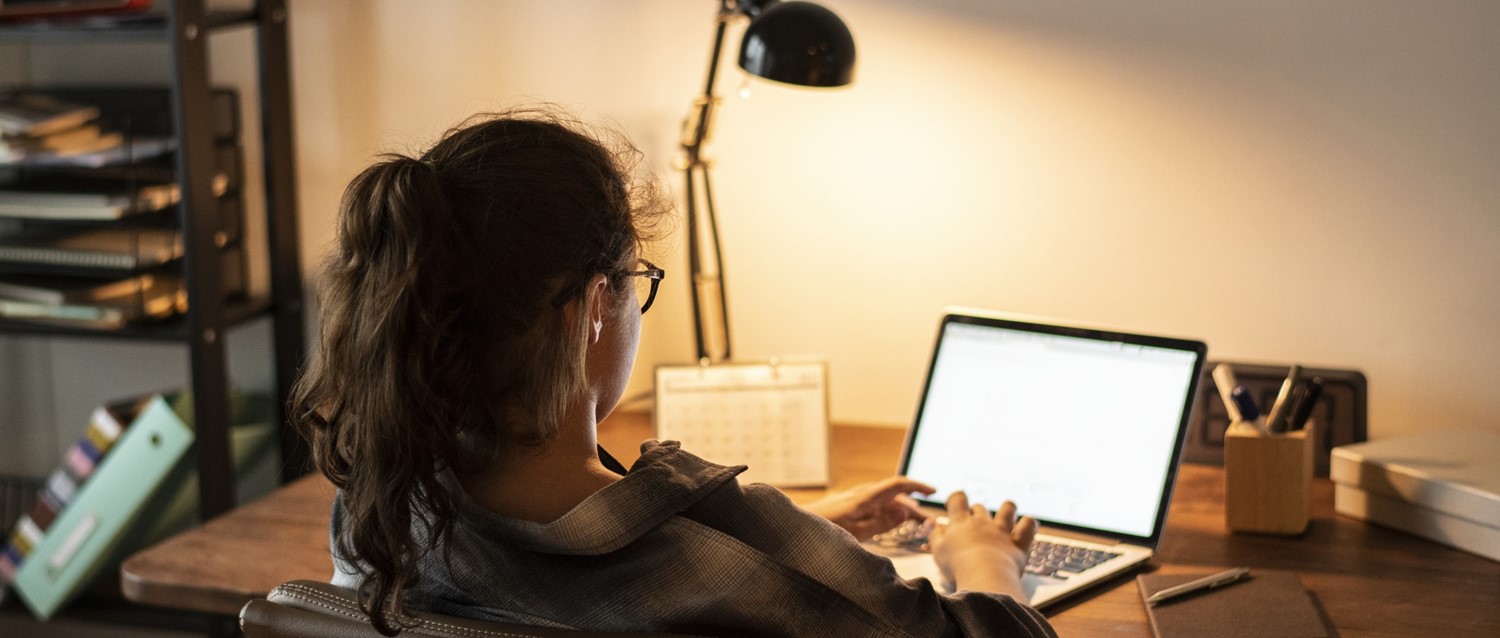
Why video calls can leave you anxious and exhausted
Peer reviewed by Dr Krishna Vakharia, MRCGPLast updated by Victoria RawLast updated 19 May 2024
Meets Patient’s editorial guidelines
- DownloadDownload
- Share
- Language
- Discussion
- Audio Version
- Add to preferred sources on Google
With more of us working from home than ever before, many face-to-face meetings have been replaced with video chats and conference calls on Zoom, Skype and social media apps. For some, meeting up online has become the default social activity - allowing us to chat, play games and work from virtually anywhere.

Video chatting helps us stay connected with loved ones and can even create more job opportunities. So why do so many of us find it stressful and tiring?
In today's remote work era, we inevitably spend far more time in virtual than in real life meetings than we used to. This can take its toll on our well-being. Firstly, there are sound issues, glitches and screen freezes to contend with, as well as the urge to fill any silences when you're staring at people on a screen.
For those of us working from home, we might also feel pressured to accept every video invitation or phone call.
"Zoom fatigue is doing nothing for my anxiety," says Hayley Smith, who works in PR. "At first, I found them really productive, as I wasn't spending time travelling to meetings and felt like it was streamlining my workload. But people are starting to want calls for everything."
Virtual communication
"Until recently, many of us only took part in video calls very occasionally. But we now use them on a regular basis - and it's challenging to navigate a form of communication that until the last few years was unfamiliar," says Emma Russell, a reader in occupational and organisational psychology at the University of Sussex.
"Negotiating a new medium for communicating with people - as per video calls – is effortful and can be resource depleting," she explains. "We are working out the new social etiquette, how to be effectively heard, how to ensure we stay on top of the video meeting, how to speak up without being rude and even whether to make eye contact."
Russell also says we need to regulate ourselves in a different way when video calling. This might mean thinking twice about actions we normally do at home - for example, scratching ourselves - because other people might see us.
"We are attending to a number of faces staring right at us, and our face is also on screen for all to see," Russell adds. "It can be very draining to be paying attention to how people see us and how they view our reactions."
Reading body language
A significant proportion of how we communicate is non-verbal. The way we move, hold ourselves and our facial expressions convey a lot of information - and these cues can be harder to read via virtual chat, which can lead to video call exhaustion.
"In the online domain, we can no longer rely on our innate, instinctive abilities to assess the situation via non-verbal language such as body language and social cues," says psychologist Charlotte Armitage, a member of the British Psychological Society.
"As a consequence, we have to adapt our style of communicating," she adds. "This process requires the use of additional psychological resources to accurately convey our own message as well as to interpret and understand the messages from the other individual."
The psychology of being watched
If we are physically on camera, we are very aware of being watched. "Seeing ourselves on screen can make us self-conscious. It can trigger anxiety from two angles: the judgement of ourselves, and the social judgement of others - whether it be how we look, or how we perform," says Lee Chambers, an environmental psychologist.
And for those who already struggle with anxiety over social situations, taking part in a video call can be even more intimidating.
"Social phobia is also incredibly common. What this tells us is that any form of social or public display - especially in an unfamiliar situation - is likely to lead to some anxiety," says Professor Thomas Hills from the department of psychology at the University of Warwick.
"For many of us video calls are a new form of communication, a bit like standing up in front of the classroom. It's just going to feel uncomfortable for that reason alone."
How to manage video anxiety
For many, working from home has blurred the boundaries between our professional and personal lives, which can make it harder to switch off from work and relax.
"Being anxious is a fundamentally tiring process," Armitage says. "When we have a baseline level of anxiety, it requires extra psychological processing and makes functioning in normal daily activities much more demanding. This in itself may be making us feel anxious at the idea of engaging in video conferencing."
That being said, video calls can be a good way to keep in touch with others if loneliness is affecting our well-being.
So what can we do to reduce anxiety when connecting virtually?
Avoid back-to-back calls
Firstly, it’s important to avoid doing video calls back-to-back, if possible.
"This is draining because we tend to be stationary on these calls, and give ourselves less chance to recover from each exchange," says Russell. "The constant switch of attention from topic to topic, from meeting to meeting, with fewer breaks, fewer chances to get up and walk about can be tiring."
Spend time away from your computer
It's important to take breaks from your computer, as too much screen time can negatively affect your sleep.
Going outside for a walk or getting fresh air can help reduce feelings of anxiety. If you're confined to the home, closing your laptop and doing something else - stretches or a workout video - can be a good break.
“Practise deep breathing and ensure that you have enough time away from your computer screen by going outdoors for exercise," Armitage says.
Set rules
It can also help to set rules and codes of social etiquette for a work video call, so people don't have to worry about how to act.
"Managers or hosts could give people permission to turn off camera-sharing for periods within the meetings, so attendees can have a rest from constant self-regulation and have a chance to stand up, stretch out and move about," Russell says.
If you're not presenting or speaking, try turning off your video and microphone. "Passive social monitoring is much less fatiguing than active social engagement," Hill adds.
Reduce awkwardness
"It helps to take the perspective of the people on the other side of the camera. Greet them, smile, say something nice like you normally would," Hill says. "To make video calls more familiar, we have to make them more human."
If you are struggling with your mental health, you should contact your doctor for advice on the best course of action for you. If you think you might be struggling with social anxiety, talking therapy might be able to help. You can book private video counselling sessions via Patient Access. The mental health charity Mind also has some very useful advice.
Patient picks for Anxiety

Mental health
Can magnesium help with anxiety?
TikTok is full of claims over the health benefits of magnesium, including that it can help relieve anxiety - something many of us struggle with, especially around Christmas. As anxiety is so common, it's understandable that people turn to different methods to deal with it. But are the claims made on social media backed by science?
by Lydia Smith
Mental health
Popcorn brain: what it is, why it happens, and how to reset your focus
In a world of constant notifications, endlessly refreshing newsfeeds, and rapid-fire entertainment, many people say their brains feel “fried”, “distracted”, or unable to settle. Increasingly, this feeling is being described with a modern phrase: popcorn brain. Popcorn brain isn’t a medical diagnosis, but it’s a useful way of describing the sense that your mind is constantly “popping” with new stimuli. You might recognise it if you struggle to focus on longer tasks, find silence uncomfortable, or feel restless when you’re not scrolling or multitasking. Here’s what we know about popcorn brain, why it happens, and what you can do to regain calm and attention.
by Thomas Andrew Porteus, MBCS
About the authorView full bio

Lydia Smith
Feature writer
BA, MA, MSc
Lydia Smith is an award-winning journalist and feature writer who has written extensively on women's health and mental health. She is currently studying for an MSc in psychology.
About the reviewerView full bio

Dr Krishna Vakharia, MRCGP
Chief Medical Officer for Health, Optum UK
MBChB, MRCGP(2013), BMedSci (hons), DFSRH, DRCOG, PGDipDerm (Distn)
Dr Krishna Vakharia is an NHS GP. She is also a regular examiner for the postgraduate Diploma in Practical Dermatology at Cardiff University as well as being the Chief Medical Officer for health at Optum UK.
Article history
The information on this page is peer reviewed by qualified clinicians.
Article also available in English, German, Spanish, French, Italian, Portuguese, Hindi, Hebrew, Arabic, and Swedish.
Next review due: 19 May 2027
19 May 2024 | Latest version
8 Jan 2020 | Originally published
Authored by:
Lydia Smith
Join the conversation
Share your thoughts or experiences with others in our patient communities.

Ask, share, connect.
Browse discussions, ask questions, and share experiences across hundreds of health topics.

Feeling unwell?
Assess your symptoms online for free
Sign up to the Patient newsletter
Your weekly dose of clear, trustworthy health advice - written to help you feel informed, confident and in control.
By subscribing you accept our Privacy Policy. You can unsubscribe at any time. We never sell your data.
More in mental health
- 5 ways to look after your mental health this Christmas
- 9 tips to enjoy yourself and budget well this Christmas
- Dealing with depression and anxiety caused by adult acne
- How to combat winter depression and increase your serotonin
- How to look after your mental health this winter
- How to manage your mental health if you've been made redundant
- How to spot the signs of anxiety in kids
- How to stop ‘mum guilt’ from impacting your mental health
- How to talk to people about your mental health
- Is ASMR the secret to sensory bliss?
- Is Christmas music good or bad for your mental health?
- Managing PTSD during fireworks season
- More than just entertainment: Jeanie Y. Chang on K-dramas and mental health
- Popcorn brain: what it is, why it happens, and how to reset your focus
- Re-sparkling - the science of finding more joy
- What is 'Skinnymaxxing' - and why are health experts concerned about it?
- What is CBD oil and does it work?
- Where does a fear of vaccines come from?
- Why our brains are hooked on bad news
- Work, rest, repeat: How to break the burnout cycle