آلام الدورة الشهرية
عسر الطمث
مراجعة من قبل الدكتور كولين تايدي، MRCGPآخر تحديث بواسطة الدكتور دوغ مكيتشني، MRCGPآخر تحديث 13 Mar 2023
يتوافق مع الإرشادات التحريرية
- تنزيلتنزيل
- مشاركة
- Language
- نقاش
- نسخة صوتية
- أضف إلى المصادر المفضلة على جوجل
Most women have some pain during periods. The pain is often mild but, in about 1 in 10 women, the pain is severe enough to affect day-to-day activities. The pain can be so severe that they are unable to go to school or work. Doctors may call period pain 'dysmenorrhoea'. Period pain is one type of pelvic pain.
نظرة سريعة
ألم الدورة الشهرية، أو عسر الطمث، هو ألم تشنجي في أسفل البطن.
يمكن أن ينتشر إلى أسفل ظهرك أو أعلى ساقيك.
عسر الطمث الأولي ليس له سبب كامن، بينما عسر الطمث الثانوي يرجع إلى حالات أخرى.
يمكن أن تساعد مسكنات الألم مثل الإيبوبروفين أو الباراسيتامول، والدفء، والتمارين الخفيفة.
راجع الطبيب إذا كنت تعاني من حمى، إفرازات مهبلية غير عادية، أو ألم شديد مفاجئ.
اطلبي المشورة الطبية إذا تغيرت آلام الدورة الشهرية لديك أو أصبحت أكثر حدة.
What does period pain feel like?
The main symptom is crampy pain in your lower tummy (abdomen). Often, the first few periods that you have are painless. Period pains may only begin 6-12 months after you have started your periods. The pain:
May spread to your lower back, or to the top of your legs.
Usually starts as the bleeding starts, but it may start up to a day before.
Usually lasts 12-24 hours but lasts 2-3 days in some cases.
Can vary with each period. Some periods are worse than others.
Tends to become less severe as you get older, or after having a baby.
In some women, other symptoms occur as well as pain - for example:
الصداع.
الإرهاق.
Faintness.
Breast tenderness.
الشعور بالمرض (الغثيان).
الانتفاخ.
Feeling emotional or tearful.
ملاحظة: the following symptoms can indicate other medical conditions:
High temperature (الحمى).
Sudden severe abdominal pain.
Pain when you have sex.
Vaginal bleeding between periods.
Vaginal bleeding after having sex.
You should see your doctor if any of these symptoms develop. Keeping a diary of your symptoms can help your doctor to better understand the cause of your period pain.
What is dysmenorrhoea?
"Dysmenorrhoea" is the medical term for painful menstrual periods.
Primary dysmenorrhoea
This is the most common type of painful period. This occurs where there is no underlying problem of the womb (uterus) or pelvis. "Primary" means that there's no other health condition causing it. It often occurs in teenagers and in women in their 20s.
Secondary dysmenorrhoea
This is pain caused by a problem of the womb or pelvis. "Secondary" means that the pain is due to another medical condition. This is less common and is more likely to occur in women in their 30s and 40s.
What causes dysmenorrhoea?
The cause is often not clear (this is called primary dysmenorrhoea). In primary dysmenorrhoea, the womb (uterus) is normal. It is thought that normal body chemicals called prostaglandins build up in the lining of the womb. Prostaglandins help the muscular wall of the womb to contract and remove the lining of the womb during a period.
In women with period pain there seems to be a build-up of too much prostaglandin, or the womb may be extra sensitive to the prostaglandins. This may cause the womb to contract too hard. This reduces the blood supply to the womb and leads to pain.
Secondary dysmenorrhoea
A problem of the womb or pelvis sometimes causes painful periods. For example:
Infection of the womb and Fallopian tubes (مرض التهاب الحوض).
Secondary dysmenorrhoea symptoms
Again, the main symptom is lower tummy pain during your periods (menstrual cramps). With secondary dysmenorrhoea, your periods tend to become more painful after several years of 'normal' periods (that is, periods with normal, mild, period pains).
The following may indicate secondary dysmenorrhoea:
If you have a change in your usual pattern of pain. For example, if your periods become more painful than they used to be, or the pain lasts longer than it used to. In some women with secondary dysmenorrhoea the pain starts several days before the period begins, and lasts all the way through the period. (This is uncommon with primary dysmenorrhoea.)
If you have other symptoms - for example:
Irregular periods.
Bleeding between periods.
Pains between periods.
The bleeding becomes heavier than previously.
Vaginal discharge.
ألم أثناء الجماع.
Pain in your back passage (rectum).
You should see your doctor if you develop any of these problems.
What tests are needed for painful periods?
In many cases (particularly in teenagers) the symptoms are so typical that it can be confidently diagnosed by your doctor just by asking about your symptoms. Your doctor will probably also examine the front of your tummy (abdomen) just to check that it is normal (which it is in primary dysmenorrhoea).
Tests and an internal (pelvic) examination are not normally needed unless symptoms are unusual. In that case an underlying cause of painful periods (secondary dysmenorrhoea) may be suspected.
Secondary dysmenorrhoea
Your doctor will usually examine you if they suspect that you have secondary dysmenorrhoea. This may involve an internal examination to check your womb (uterus) and pelvis as well as an examination of your tummy. The idea is to look for possible causes of your painful periods, such as fibroids in your womb. Your doctor may also suggest that they take some samples (swabs) during the examination to look for any signs of infection.
If your GP feels that you have secondary dysmenorrhoea, they may arrange further tests (such as an ultrasound scan) or refer you to a specialist (usually a gynaecologist) for their opinion and other investigations. The investigations that are carried out depend on the likely underlying problem. They may include:
An ultrasound scan of your womb and pelvis.
باستخدام telescope to examine the inside of your womb (a hysteroscopy).
Using a telescope to examine the internal organs of your pelvis (a laparoscopy). See the separate leaflet called Laparoscopy and Laparoscopic Surgery for more detail.
How to ease period pain
Most women with painful periods have mild pain that they can treat themselves at home. However, if your pain becomes more severe and is interfering with your usual activities, you should see your doctor.
There are a number of treatments that may help if you have primary dysmenorrhoea:
Keep active
Try light exercise and try gentle massage and relaxation techniques.
Warmth
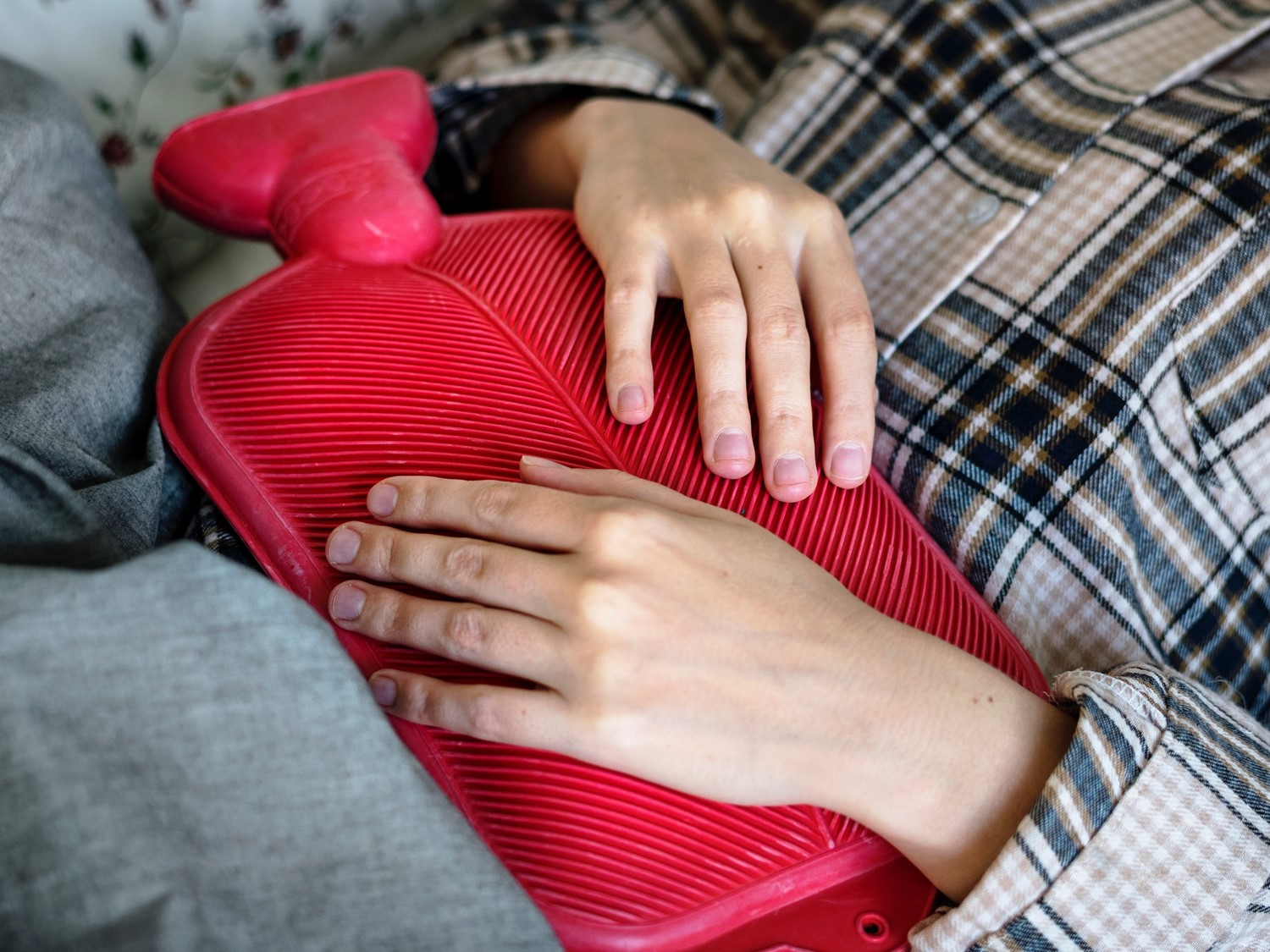
You may find it soothing to hold a hot water bottle against your lower tummy (abdomen), or to have a hot bath. The pain often does not last long, and this may be all that you need. (Be careful not to burn yourself with a hot water bottle which is too hot.)
Non-steroidal anti-inflammatory painkillers
مسكنات الألم المضادة للالتهابات can greatly ease the pain in about 7 out of 10 cases. They work by blocking the effect of the prostaglandin chemicals that are thought to cause the pain. Also, non-steroidal anti-inflammatory painkillers usually reduce the amount of bleeding. There are several types and brands, and most need a prescription.
A commonly prescribed option is mefenamic acid. However, you can buy one type (الإيبوبروفين) at pharmacies. Some tips when using an anti-inflammatory include the following:
Take the first dose as soon as your pain begins, or as soon as the bleeding starts, whichever comes first. Some doctors advise to start taking the tablets the day before your period is due. This may prevent the pain from building up.
Take the tablets regularly, for 2-3 days each period, rather than 'now and then' when pain builds up.
Take a strong enough dose. If your pains are not eased, ask your doctor or pharmacist if the dose that you are taking is the maximum allowed. An increase in dose may be all that you need.
Some people cannot take non-steroidal anti-inflammatory painkillers. For example, people with a stomach ulcer, and some people with asthma.
Side-effects are uncommon if you take a non-steroidal anti-inflammatory painkiller for just a few days at a time, during each period. Read the leaflet that comes with the tablets for a full list of possible side-effects and cautions.
الباراسيتامول
الباراسيتامول is an alternative painkiller that you can try if you cannot take non-steroidal anti-inflammatory painkillers. Also, paracetamol can be used in combination with a non-steroidal anti-inflammatory painkiller if the anti-inflammatory alone is not enough. Always read the details on the packet so that you do not exceed the maximum daily dose of either painkiller.
Combined hormonal contraceptive (CHC) in the form of 'the pill', the patch or the ring
These are called 'combined' hormonal contraceptives because they contain two hormones - oestrogen and progesterone. They provide contraception (preventing pregnancy), but are still a good option for heavy periods even if you don't need contraception. Heavy and painful periods are much less likely if you take CHC. You can also take them in a way so that you have fewer periods in a year, giving you control over when you have a period. This will reduce the number of times you have pain. See the separate leaflet called Contraceptive Hormone Pills, Patches and Rings for more detail.
النظام داخل الرحم (IUS)
A special intrauterine contraceptive called the IUS is an option if you also need long-term contraception. This is a T-shaped plastic frame that is inserted into the womb (uterus). The IUS slowly releases a progestogen hormone called levonorgestrel. This 'thins' the lining of the womb. It is a very effective contraceptive, and also reduces the amount of pain and bleeding during periods. See the separate leaflet called Intrauterine System (IUS) which describes the IUS in more detail.
Other progestogen contraceptives
Another option if you also need contraception is to try another type of contraception that contains progestogen. These might also be recommended if you can't have combined hormonal contraception (some people have medical conditions that make it unsafe). Options include the progestogen only contraceptive pill, the progestogen implant, or an injectable progestogen contraceptive. See the separate leaflets called Progestogen-only Contraceptive Pill (POP), Contraceptive Implant ,، و Contraceptive Injection which describe these options in more detail.
A transcutaneous electrical nerve stimulation (TENS) machine
ت TENS machine can be an option for women who prefer not to use medication. These machines give out a small electrical current. They seem to work by interfering with pain signals which are sent to the brain from the nerves. However, you would normally have to buy a TENS machine, as they are not available on the NHS for the treatment of period pain. See the separate leaflet called TENS Machines for more details.
Secondary dysmenorrhoea treatment
The treatment of secondary dysmenorrhoea depends on the underlying cause. Read more about الأورام الليفية. See the separate leaflets called الانتباذ البطاني الرحمي و Pelvic Inflammatory Disease, which describe in more detail some of the problems that can cause secondary dysmenorrhoea. These leaflets also discuss treatment.
If you have an intrauterine device (IUD - also known as 'the copper coil') and have painful periods, the treatments for primary dysmenorrhoea (described above) often help. However, some women prefer to have their IUCD removed if symptoms do not improve.
اختيارات المرضى لـ الدورات الشهرية ومشاكلها
صحة المرأة
كيفية تأخير الدورة الشهرية
قد ترغب بعض النساء في تأخير الدورة الشهرية. قد يكون ذلك إذا كانت الدورة متوقعة في وقت غير مناسب - على سبيل المثال، أثناء عطلة أو خلال امتحان.
بقلم الدكتورة توني هازيل، FRCGP
صحة المرأة
الدورات الشهرية ومشاكلها
بدء الدورة الشهرية هو جزء من النمو. تبدأ الدورة الشهرية في الحدوث في نفس الوقت تقريبًا الذي تحدث فيه تغييرات أخرى في الجسم، مثل بدء نمو الثديين أو نمو شعر العانة. متوسط العمر لبدء الدورة الشهرية هو 13 عامًا، ولكن من الطبيعي أن تبدأ في أي وقت بين سن 9 و15 عامًا. قد تبدأ نسبة صغيرة من الفتيات قبل أو بعد ذلك. تستمر الدورة الشهرية حتى سن اليأس الذي يكون عادةً حوالي سن 50 عامًا.
بقلم الدكتورة هايلي ويلاسي، FRCGP
الأسئلة الشائعة
متى يمكن أن يبدأ ألم الدورة الشهرية بعد أن أبدأ في الحصول على الدورة الشهرية؟
من الشائع أن تكون الفترات الأولى غير مؤلمة. قد يبدأ الألم المرتبط بالدورة الشهرية بعد 6-12 شهرًا من بدء الدورة.
ما هو الفرق بين عسر الطمث الأولي والثانوي؟
عسر الطمث الأولي هو النوع الأكثر شيوعًا من الدورة الشهرية المؤلمة، ويحدث دون أي مشكلة كامنة في الرحم أو الحوض. أما عسر الطمث الثانوي، فهو ألم ناتج عن حالة طبية أخرى تؤثر على الرحم أو الحوض، وهو أقل شيوعًا.
ما نوع التمارين التي يمكن أن تساعد في تخفيف آلام الدورة الشهرية؟
يمكن أن تساعد التمارين الخفيفة والتدليك اللطيف، إلى جانب تقنيات الاسترخاء، في تخفيف آلام الدورة الشهرية.
هل يمكن علاج آلام الدورة الشهرية بدون أدوية؟
نعم، بالإضافة إلى أدوية تخفيف الألم، يمكن أن تساعد الحرارة (مثل زجاجة الماء الساخن أو الحمام الدافئ)، والتمارين الخفيفة، والتدليك اللطيف، وتقنيات الاسترخاء. كما أن جهاز TENS، الذي يستخدم تيارًا كهربائيًا صغيرًا للتداخل مع إشارات الألم، هو خيار أيضًا لأولئك الذين يفضلون عدم استخدام الأدوية.
كيف تساعد وسائل منع الحمل الهرمونية المركبة في تخفيف آلام الدورة الشهرية؟
وسائل منع الحمل الهرمونية المركبة، مثل الحبوب أو اللصقة أو الحلقة، تحتوي على هرمونين (الإستروجين والبروجسترون). إنها تقلل بشكل كبير من احتمالية حدوث فترات حيض ثقيلة ومؤلمة. يمكنك أيضًا استخدامها لتقليل عدد فترات الحيض في السنة، مما يساعد في التحكم في توقيت الألم.
قراءة إضافية ومراجع
- Marjoribanks J, Ayeleke RO, Farquhar C, et al; Nonsteroidal anti-inflammatory drugs for dysmenorrhoea. Cochrane Database Syst Rev. 2015 Jul 30;(7):CD001751. doi: 10.1002/14651858.CD001751.pub3.
- Pattanittum P, Kunyanone N, Brown J, et al; Dietary supplements for dysmenorrhoea. Cochrane Database Syst Rev. 2016 Mar 22;3:CD002124. doi: 10.1002/14651858.CD002124.pub2.
- Smith CA, Armour M, Zhu X, et al; Acupuncture for dysmenorrhoea. Cochrane Database Syst Rev. 2016 Apr 18;4:CD007854. doi: 10.1002/14651858.CD007854.pub3.
- عسر الطمث; NICE CKS، أكتوبر 2023 (الوصول متاح فقط في المملكة المتحدة)
عن المؤلفعرض السيرة الذاتية الكاملة

الدكتور دوغ مكيتشني، MRCGP
كاتب طبي
MA, MBBS, MSc, DRCOG, MRCP(UK), MRCGP(2021), FHEA
الدكتور دوغ مكيتشني هو طبيب عام في هيئة الخدمات الصحية الوطنية يعمل في لندن. يعمل بدوام كامل في المجال السريري وهو أيضًا نائب رئيس وحدة الممارسة السريرية والمهنية في كلية الطب بجامعة كوليدج لندن.
حول المراجععرض السيرة الذاتية الكاملة

الدكتور كولين تايدي، MRCGP
طبيب عام، مؤلف طبي
MBBS, MRCGP, MRCP (Paediatrics), DCH
الدكتور كولين تايدي هو طبيب في هيئة الخدمات الصحية الوطنية، ويعمل في أوكسفوردشاير.
تاريخ المقال
تمت كتابة المعلومات على هذه الصفحة ومراجعتها من قبل أطباء مؤهلين.
المقال متاح أيضًا باللغة الإنجليزية, الألمانية, إسبانية, الفرنسية, إيطالي, البرتغالية, الهندية, العبرية, العربية ,، و السويدية.
Next review due: 10 Feb 2028
13 Mar 2023 | أحدث إصدار

اسأل، شارك، تواصل.
تصفح المناقشات، اطرح الأسئلة، وشارك التجارب عبر مئات المواضيع الصحية.

هل تشعر بتوعك؟
قم بتقييم أعراضك عبر الإنترنت مجانًا
اشترك في النشرة الإخبارية للمرضى
جرعتك الأسبوعية من النصائح الصحية الواضحة والموثوقة - مكتوبة لمساعدتك على الشعور بالاطلاع والثقة والتحكم.
من خلال الاشتراك، فإنك تقبل سياسة الخصوصية. يمكنك إلغاء الاشتراك في أي وقت. نحن لا نبيع بياناتك أبدًا.