الدورات الشهرية ومشاكلها
مراجعة من قبل الدكتورة توني هازيل، زميلة الكلية الملكية للأطباء العامينآخر تحديث بواسطة الدكتورة هايلي ويلاسي، زميلة الكلية الملكية للأطباء العامين آخر تحديث 13 فبراير 2023
يتوافق مع الإرشادات التحريرية
- تنزيلتنزيل
- مشاركة
- Language
- نقاش
- نسخة صوتية
- أضف إلى المصادر المفضلة على جوجل
في هذه السلسلة:انقطاع الطمثالدورات الشهرية الثقيلةمتلازمة ما قبل الحيضالأورام الليفيةكيفية تأخير الدورة الشهريةخزعة بطانة الرحم
بدء الدورة الشهرية هو جزء من النمو. تبدأ الدورة الشهرية في الحدوث في نفس الوقت تقريبًا الذي تحدث فيه تغييرات أخرى في الجسم، مثل بدء نمو الثديين أو نمو شعر العانة. متوسط العمر لبدء الدورة الشهرية هو 13 عامًا، ولكن من الطبيعي أن تبدأ في أي وقت بين سن 9 و15 عامًا. قد تبدأ نسبة صغيرة من الفتيات قبل أو بعد ذلك. تستمر الدورة الشهرية حتى سن اليأس الذي يكون عادةً حوالي سن 50 عامًا.
Note: for the purposes of this patient information leaflet, 'girls, females or women' are those individuals who are assigned to be female at birth. It is not intended to exclude or dismiss individuals who do not identify as female.
نظرة سريعة
الدورة الشهرية هي تساقط بطانة الرحم شهريًا، مما يؤدي إلى نزيف مهبلي.
تشمل الدورة الشهرية الطبيعية فقدان 20-60 مل من الدم ويمكن أن تستمر حتى ثمانية أيام.
آلام الدورة الشهرية، عادة في أسفل البطن والحوض، شائعة وطبيعية.
تشمل الخيارات لامتصاص الدم الفوط الصحية، والسدادات القطنية، والأكواب الحيضية، والسراويل الخاصة بالدورة الشهرية.
على الرغم من أنه غير محتمل، إلا أنه من الممكن أن تصبحي حاملاً إذا مارست الجنس خلال دورتك الشهرية.
يجب عليك زيارة الطبيب إذا تغير نمط دورتك الشهرية، أو إذا حدث نزيف بين الدورات، أو بعد الجماع أو انقطاع الطمث.
What are the different types of period problems?
What is a period?
For several days each month there is blood loss from the vagina. The amount of blood loss varies from period to period, and between women. The nature of the blood loss may also vary with some women having a dark scanty loss, and others having a heavier loss which is a brighter red. Sometimes clots are passed, especially if the loss is heavy. Sometimes there are small flaky fragments in with the menstrual blood. A normal amount of blood loss during each period is between 20 and 60 ml. (This is about 4 to 12 teaspoonfuls.) Bleeding can last up to eight days but five days is the average. The bleeding is usually heaviest on the first two days. Some pain in the lower tummy (abdomen) and pelvic pain - period pain - is common and normal.
Sanitary towels or tampons?
When you have a period, you will need to use something to absorb the blood you lose. It is common to use sanitary towels when periods first start. These are placed in your underwear to soak up the blood. They come in different sizes and styles. You may need a pad which is bigger or bulkier at night, or on the heavy days of your period. When it is light, a small panty liner may be enough.
Tampons, which you insert into your vagina to absorb the blood, can be more convenient. They need to be changed regularly. You can start to use tampons at any age after you start having periods. They may feel uncomfortable to start with and may take a little bit of practice to get used to. There are different sizes, so start with the smallest to get used to it. You may need to use several sizes of tampon during a period, depending on how heavy the bleeding is. A larger size may be needed in the early heavy stages, then a smaller one when bleeding becomes lighter. Some tampons come with an applicator. Other types are put in with your fingers. Some women prefer one type, others another. You will find the one which is easiest for you.
Sometimes you may like to mix and match - for example, using tampons for swimming but pads at other times. For very heavy periods you may even need to use both together.
An alternative to towels and tampons is a menstrual cup. This is a reusable device, about two inches long which is made from soft medical-grade silicone. It is placed in the vagina. The cup collects menstrual blood. It is folded and inserted into the vagina, then removed. It can be rinsed and reinserted up to every eight hours.
Another alternative is re-usable period pants. They are designed to avoid leakages and be more comfortable than towels or tampons.
See the separate article called Supporting your child when they start menstruation for more details.
Can you get pregnant during your period?
Although unlikely, it is possible to get pregnant by having sex during your period. Sperm can stay alive inside you for up to five days. So if you ovulate early and have a short menstrual cycle (see below) then it is possible for you to become pregnant. See below for more information about ovulation and the menstrual cycle.
Do I have to avoid anything when I have a period?
No. Carry on as normal. If you find the periods painful, regular exercise sometimes helps. Periods are not dirty; they are a normal part of a woman's life. You can go swimming, have a bath, etc. You may prefer to use tampons if you enjoy swimming.
What is the menstrual cycle?
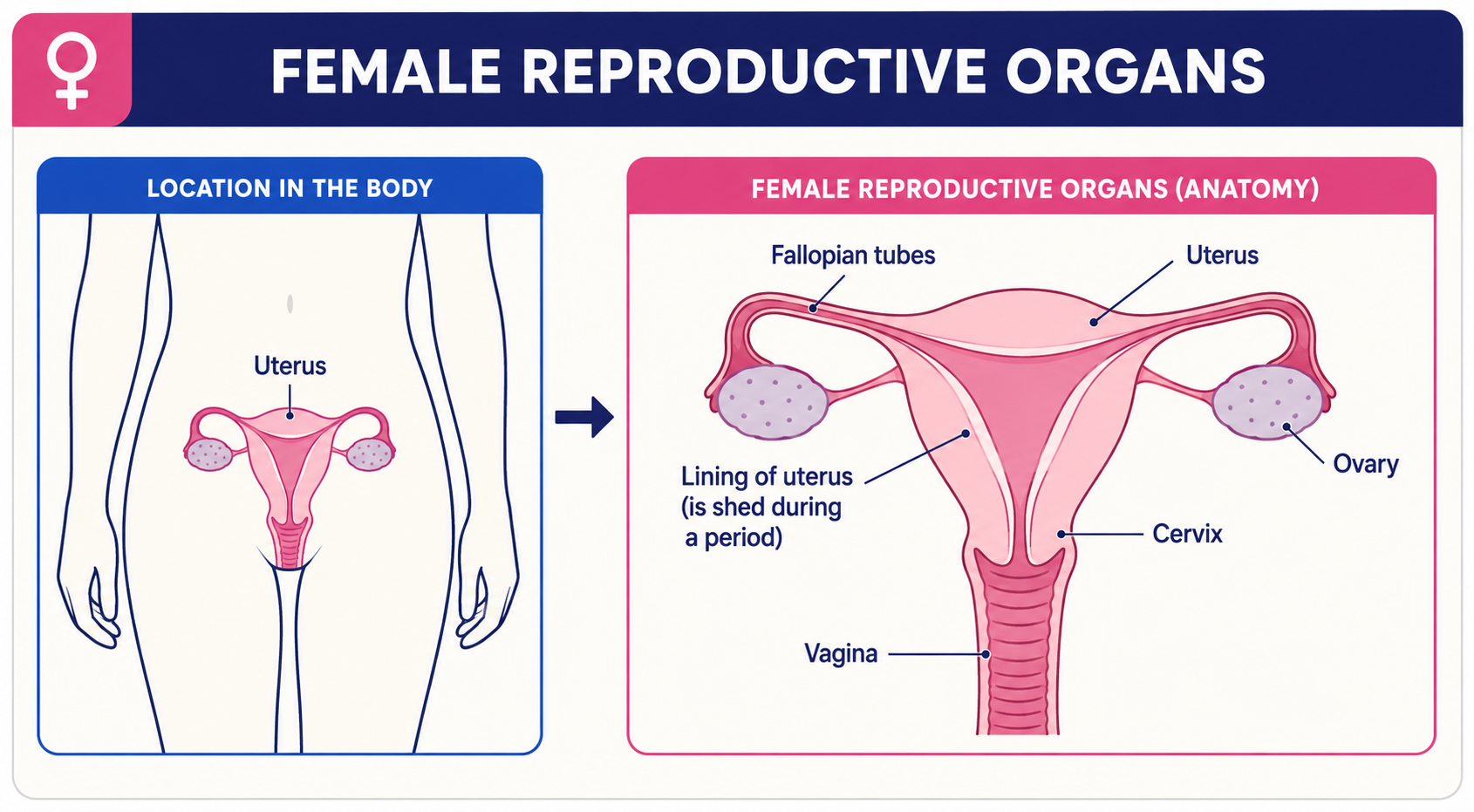
Small organs called ovaries lie in the lower part of their tummy (abdomen). The ovaries lie either side of the womb (uterus). The ovaries start to produce female hormones around puberty which cause changes to the uterine lining. Every month during your period the lining of your womb is shed together with some blood.
Female reproductive organs (periods)
How long does a menstrual period last?
The time between the start of one period and the start of the next is called the menstrual cycle. The average length of a menstrual cycle is 28 days. However, anything between 24 and 35 days is common. During the cycle various changes occur in your body. The changes are controlled by chemical substances called hormones, which act like messengers in your body. There are changing amounts of your female hormones at different times of your cycle. The menstrual cycle is split roughly into two halves:
The first half of your cycle is called the follicular or proliferative phase. The levels of two main hormones, oestrogen and progesterone, are low to start with and you shed the inner lining of your womb (endometrium). This causes your period (menstrual bleeding).
During this phase your ovaries are stimulated by other hormones. These travel to the ovary in the bloodstream from a gland near your brain, called the pituitary gland. One of these hormones causes some eggs in your ovaries to grow and develop in tiny fluid-filled cavities called follicles. The follicles produce oestrogen. Throughout the first half of your cycle the level of oestrogen in your blood rises. One function of oestrogen is to cause the lining of your womb to thicken (proliferate).
Ovulation occurs about halfway through your cycle (about 14 days after the start of your period). Ovulation is the release of an egg into your Fallopian tube from a follicle in an ovary. The egg travels along your Fallopian tube into your womb. The egg may be fertilised if you have recently had sex and there are sperm in your womb.
The second half of the cycle is called the secretory or luteal phase. After ovulation, the follicle that released the egg makes a hormone called progesterone as well as oestrogen. Progesterone causes the lining of the uterus to swell and be ready to receive a fertilised egg. If the egg is not fertilised, the levels of progesterone and oestrogen gradually fall. When they fall to a low level, they lose their effect on your womb. The lining of your womb is then shed (a period) and a new cycle then begins.
Some symptoms relating to periods
In general, if you have a تغيير from your usual pattern that lasts for several periods, it may be abnormal. You should contact a doctor if this occurs.
Heavy periods (menorrhagia)
الدورات الشهرية الثقيلة are very common. It is difficult to measure blood loss accurately. Periods are considered heavy if they are affecting your life and causing problems.
Painful periods (dysmenorrhoea)
Painful periods are common and you may experience an ache in your lower abdomen, back and tops of your legs, especially in the first few days of your period. The first two days are usually the worst. Some women have more pain than others. The cause of the pain is often not fully understood. Sometimes conditions such as endometriosis can make period pains become worse.
Bleeding at abnormal times
If you have vaginal bleeding at times apart from your expected periods, you should see a doctor. This includes if bleeding occurs after you have sex, or after the انقطاع الطمث. Bleeding after sex is also called postcoital bleeding.
Bleeding in between your periods (intermenstrual bleeding) can also occur. This has several causes. They include infections or polyps. Polyps are small fleshy lumps that can occur on the neck of the womb or inside the cavity of the womb. There are various causes of bleeding between periods:
One common cause is called breakthrough bleeding, which is small bleeds that occur in the first few months after starting the birth control pill. This usually settles over a few months.
It may be because the neck of the womb (cervix) is sore and inflamed. This can make it more likely to bleed after sex. The most common reasons for this are infections - such as الكلاميديا - and hormonal changes.
It is very important to see your doctor because abnormal vaginal bleeding can be caused by cancer - for example, cancer of the الرحم أو cancer of the womb.
Periods which stop (amenorrhoea) or are irregular
Periods may stop or become irregular. Pregnancy is the most common reason for periods to stop. However, it is not uncommon to miss the odd period for no apparent reason. Apart from pregnancy, other causes of periods stopping include stress, اضطرابات الأكل, losing weight, exercising too much and hormonal imbalance. Blood tests can help diagnose the cause of the irregular bleeding.
The interval between periods can also vary between women. Irregular periods may indicate that you do not ovulate every month. Irregular periods are common in the few years leading up to the menopause.
اختيارات المرضى لـ الدورات الشهرية ومشاكلها

صحة المرأة
انقطاع الطمث
Missed periods can happen for many reasons. Most of the time there is no worrying cause. As long as you are sure you are not pregnant and you feel well in yourself there is no need for concern if you miss one or two periods. If you don't have a period for 3-6 months, or have other symptoms then you should consult a doctor. Sometimes periods in teenage girls start later than in others. If your periods haven't started by the time you are 16 (or 14 if you have not started developing in other ways such as getting pubic hair and breasts) then contact your doctor. Periods can also be infrequent, erratic or irregular. If you bleed between your periods or after sex, or after the menopause, you should discuss this with your doctor.
بقلم الدكتورة روزالين أدلمان، MRCGP

صحة المرأة
الدورات الشهرية الثقيلة
Heavy periods are common. In most cases no cause can be found. In some cases a cause is found - these can include endometriosis, fibroids and other conditions. There are a number of ways of improving heavy periods and making them more manageable. Options include medication to reduce bleeding, use of an intra-uterine system (sometimes known as a hormonal coil) or an operation.
بقلم الدكتورة فيليبا فينسنت، MRCGP
الأسئلة الشائعة
ما هو الجزء السفلي من البطن ومنطقة الحوض؟
يشير الجزء السفلي من البطن إلى الجزء السفلي من بطنك، وتقع منطقة الحوض في نفس المنطقة العامة. هذه هي المناطق التي يحدث فيها ألم الدورة الشهرية بشكل شائع، وغالبًا ما يوصف بأنه ألم.
متى يمكنني التفكير في استخدام كأس الحيض بدلاً من الفوط الصحية أو السدادات القطنية؟
كوب الحيض هو خيار قابل لإعادة الاستخدام لامتصاص دم الحيض. إنه مصنوع من السيليكون الطبي الناعم ويتم إدخاله في المهبل، مشابهًا للسدادة القطنية. يجمع الدم ويمكن شطفه وإعادة إدخاله، ويستمر حتى ثماني ساعات. تفضل بعض النساء استخدامه كبديل للفوط أو السدادات القطنية ذات الاستخدام الواحد.
ما هي السراويل القابلة لإعادة الاستخدام للدورة الشهرية؟
السراويل القابلة لإعادة الاستخدام لفترة الحيض هي بديل للمنتجات الصحية التقليدية مثل الفوط والسدادات القطنية. تم تصميمها لمنع التسربات وتوفير المزيد من الراحة. ترتديها مثل الملابس الداخلية العادية، وتمتص الدم الحيضي.
ما هو النزيف بعد الجماع؟
النزيف بعد الجماع يشير إلى النزيف المهبلي الذي يحدث بعد ممارسة الجنس. إذا واجهت هذا، من المهم زيارة الطبيب.
ما هو النزيف بين الدورات الشهرية؟
النزيف بين الدورات الشهرية هو أي نزيف يحدث بين فترات الدورة المتوقعة. يمكن أن يكون له عدة أسباب، بما في ذلك العدوى، أو الزوائد اللحمية، أو النزيف الاختراقي إذا كنت قد بدأت مؤخرًا في تناول حبوب منع الحمل. من المهم زيارة الطبيب إذا واجهت هذا النوع من النزيف.
قراءة إضافية ومراجع
- إدارة متلازمة ما قبل الحيض; الكلية الملكية لأطباء النساء والتوليد (2016)
- نزيف الحيض الغزير: التقييم والإدارة; إرشادات NICE (مارس 2018 - تم التحديث في مايو 2021)
- عسر الطمث; NICE CKS، أكتوبر 2023 (الوصول متاح فقط في المملكة المتحدة)
- انقطاع الطمث; NICE CKS، فبراير 2024 (الوصول متاح فقط في المملكة المتحدة)
عن المؤلفعرض السيرة الذاتية الكاملة

الدكتورة هايلي ويلاسي، زميلة الكلية الملكية للأطباء العامين
طبيب عام، مؤلف طبي
MBChB (1992), DRCOG, DFFP, MRCOG (Part 1) MRCGP (2007), DFSRH (2013), MSc - medical education (2020)
كانت الدكتورة هايلي ويلاسي طبيبة عامة في هيئة الخدمات الصحية الوطنية تعمل في شمال غرب إنجلترا، وتقاعدت من الممارسة السريرية في عام 2022 بعد 30 عامًا.
حول المراجععرض السيرة الذاتية الكاملة

Dr Toni Hazell, FRCGP
بكالوريوس الطب والجراحة، بكالوريوس العلوم، زميل الكلية الملكية للأطباء العامين، دبلوم في الصحة الجنسية والإنجابية، دبلوم في طب الجهاز البولي التناسلي، دبلوم الكلية الملكية لأطباء النساء والتوليد، دبلوم في صحة الطفل (لندن، المملكة المتحدة، 2000)
تخرجت الدكتورة توني هازيل من كلية الطب بمستشفى سانت ماري وأكملت تدريبها في مستشفى نورثويك بارك.
تاريخ المقال
تمت كتابة المعلومات على هذه الصفحة ومراجعتها من قبل أطباء مؤهلين.
المقال متاح أيضًا باللغة الإنجليزية, الألمانية, إسبانية, الفرنسية, إيطالي, البرتغالية, الهندية, العبرية, العربية ,، و السويدية.
المراجعة التالية مستحقة: 12 فبراير 2028
13 فبراير 2023 | أحدث إصدار
آخر تحديث بواسطة
الدكتورة هايلي ويلاسي، زميلة الكلية الملكية للأطباء العامينمراجعة من قبل
Dr Toni Hazell, FRCGP

اسأل، شارك، تواصل.
تصفح المناقشات، اطرح الأسئلة، وشارك التجارب عبر مئات المواضيع الصحية.

هل تشعر بتوعك؟
قم بتقييم أعراضك عبر الإنترنت مجانًا
اشترك في النشرة الإخبارية للمرضى
جرعتك الأسبوعية من النصائح الصحية الواضحة والموثوقة - مكتوبة لمساعدتك على الشعور بالاطلاع والثقة والتحكم.
من خلال الاشتراك، فإنك تقبل سياسة الخصوصية. يمكنك إلغاء الاشتراك في أي وقت. نحن لا نبيع بياناتك أبدًا.
المزيد في صحة المرأة
- سرطان عنق الرحم
- فحص عنق الرحم
- وسائل منع الحمل للنساء فوق سن الأربعين
- طرق منع الحمل
- النظام الغذائي ونمط الحياة أثناء الحمل
- خزعة بطانة الرحم
- تعقيم الإناث
- متلازمة مضادات الاختلاج الجنينية
- الأورام الليفية
- مقياس غرين لانقطاع الطمث
- التهاب المثانة الخلالي
- تصوير الثدي الشعاعي
- مرض التهاب الحوض
- ألم الحوض لدى النساء
- متلازمة تكيس المبايض
- اكتئاب ما بعد الولادة
- التهاب بطانة الرحم بعد الولادة
- ذهان ما بعد الولادة
- السنسنة المشقوقة
- حبوب منع الحمل المركبة عن طريق الفم (COC)