إصبع الزناد
مراجعة من قبل الدكتور كولين تايدي، MRCGPآخر تحديث بواسطة الدكتورة هايلي ويلاسي، زميلة الكلية الملكية للأطباء العامين آخر تحديث 10 أبريل 2025
يتوافق مع الإرشادات التحريرية
- تنزيلتنزيل
- مشاركة
- Language
- نقاش
- نسخة صوتية
- أضف إلى المصادر المفضلة على جوجل
A trigger finger does not straighten easily. The cause is not clear. Sometimes it settles and goes away without treatment. An injection of steroid will usually cure the problem. A small operation is needed in a small number of cases.
نظرة سريعة
الإصبع الزنادية هي حالة تتسبب في انغلاق أو طقطقة إصبعك أو إبهامك عندما تحاول فرده.
يحدث ذلك بسبب التهاب وتثخن الوتر أو غمده في الإصبع المصاب.
تشمل الأعراض ألمًا في قاعدة الإصبع، وتيبسًا، وإحساسًا بالفرقعة أو الانغلاق.
إنه أكثر شيوعًا لدى النساء فوق سن الأربعين ويمكن أن يكون مرتبطًا بحركات اليد المتكررة أو حالات صحية أخرى.
تشمل خيارات العلاج الراحة، والتجبير، وحقن الستيرويد، أو الجراحة إذا فشلت العلاجات الأخرى.
What is trigger finger?
Trigger finger (also known as stenosing tenosynovitis) is a condition that affects the tendons in your fingers or thumb, causing them to become inflamed and thickened. This can lead to difficulty in straightening or bending the affected finger, often resulting in it "locking" or "catching" in a bent position, like a trigger being pulled and released. It is difficult to straighten out without pulling on it by the other hand. When the finger "snaps" back into place, it can be painful.
You may hear a popping or clicking sound when it is pulled straight. This clicking may be worse in the morning. Sometimes there is mild pain and/or a small swelling at the base of the affected finger or thumb.
One or more fingers may be affected. Trigger finger most commonly affects your little finger, ring finger or thumb. It is actually more common in the right hand.
Diagram: trigger finger
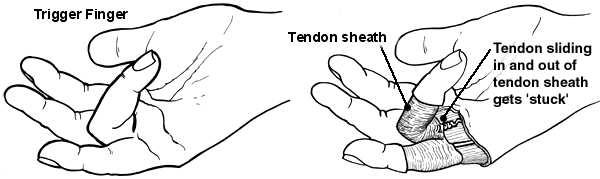
What causes trigger finger?
The cause is often not clear. It is thought to be due to some inflammation which causes swelling of a tendon or the covering of the tendon (tendon sheath).
A tendon is a strong tissue that attaches a muscle to a bone. In this case the tendon comes from a muscle in the forearm. It passes through the palm and attaches to the finger bone. The muscle pulling on this tendon bends (flexes) the finger towards the palm.
A tendon sheath is like a tunnel that covers and protects parts of a tendon. Normally, the tendon slides easily in and out of the sheath as you bend and straighten the finger. In trigger finger the tendon can slide out of the sheath when you bend your finger. However, it cannot easily slide back in due to the swelling. The finger then remains bent (flexed) unless you pull it straight with your other hand.
Most cases occur for no apparent reason in healthy people. Around 2 in 100 people develop trigger finger. It is more common if you are aged over 40 and if you are female. It may also be more likely to develop if you have had a previous injury to your palm or finger.
In some cases it occurs after you have used your palm a lot - for example, it can happen:
After jobs which involve a lot of screwdriver use.
After working with tools that press on the palm.
These may cause some inflammation in the palm.
Sometimes trigger finger occurs as a feature of another disease. For example, trigger finger is more common in people with التهاب المفاصل الروماتويدي, amyloidosis, السكري, قصور الغدة الدرقية gland, تقلص دوبويترين و متلازمة النفق الرسغي and in people on dialysis. In these situations you will have other symptoms of the condition and the trigger finger is just one feature.
ملاحظة: most people with trigger finger do ليست have any of these conditions.
What are the symptoms of trigger finger?
Symptoms can vary from mild to severe and typically affect one finger or the thumb. They may include:
Pain or tenderness: Pain is often felt at the base of the finger or thumb, particularly when bending or straightening the finger.
Stiffness: The finger may feel stiff, especially in the morning.
Snapping or clicking sensation: The finger may make a snapping or clicking sound as it moves, particularly when it is being straightened after being bent.
Locking or catching: The finger may "lock" in a bent position and may need help to straighten it. This can be painful.
Swelling: The affected area may be swollen or appear thicker than usual.
How is trigger finger diagnosed?
Your doctor will diagnose trigger finger based on your medical history, symptoms, and a physical examination. During the exam, they may ask you to move your fingers in different ways to assess for pain, stiffness, or clicking. In some cases, your doctor may use an ultrasound or an X-ray to rule out other conditions.
What is the treatment for trigger finger?
Not treating is an option at first
Around one in five people will improve without any treatment. Simply resting the hand and fingers, allowing any inflammation to settle, may resolve the problem without the need for treatment. You may be advised to take a painkiller (for example, paracetamol or ibuprofen) to relieve the pain.
Splinting
Your symptoms may improve if your finger (or trigger thumb) is strapped to a plastic splint so that it is completely straight. Some people wear a splint just at night.
A steroid injection
A steroid injection into the tendon sheath is one treatment if the condition does not settle. The steroid is combined with a local anaesthetic to make the injection less painful.
Steroids work by reducing inflammation. A finger splint may be advised for a few days after the injection to rest the finger. This treatment works in about 9 in 10 cases. A second injection may be needed if the first does not work.
الجراحة
An operation done under local anaesthetic may be advised if the above does not work. A small cut is usually made at the base of the finger and the tendon sheath is widened. The surgical treatment of trigger finger is usually very successful.
An alternative operation is a percutaneous trigger finger release. A needle is used to release the tight mouth of the tunnel so an open operation is avoided.
If you have rheumatoid arthritis, these types of surgery may not be suitable for you. If you do need surgery, you may be offered an operation to remove part of the tendon sheath instead.
However, with an operation there is a small risk of damaging the tiny finger nerve and causing some numbness to the finger. Also, as with any operation, there is a small risk of any wound becoming infected.
فreventing trigger finger
While trigger finger may not always be preventable, you can reduce your risk by:
Taking breaks from repetitive hand movements.
Stretching your fingers and wrists regularly if you do activities that involve gripping or bending.
Using ergonomic tools that reduce strain on your hands.
Maintaining a healthy lifestyle to reduce the risk of conditions such as diabetes and arthritis, which can contribute to trigger finger.
Outlook for trigger finger (prognosis)
In most cases, trigger finger improves with treatment. Non-surgical treatments, such as rest, splinting, and corticosteroid injections, are often effective in reducing symptoms. Surgery is rarely necessary and is typically only recommended if other treatments fail. Most people recover fully and regain normal hand function.
اختيارات المرضى لـ اضطرابات النسيج الضام

العظام والمفاصل والعضلات
تقلص دوبويترين
Dupuytren's contracture causes thickening of tissues (fascia) in the palm. A fascia is a band or sheet of tissue beneath the skin. If Dupuytren's contracture progresses, one or more fingers bend (contract) into the palm and you cannot straighten the finger/s. The cause is not known. In many cases it remains mild and does not require treatment. If the condition becomes more severe or the function of the hand becomes affected then a specialist may recommend treatment. Dupuytren's contracture is named after Baron Dupuytren who described the condition (and invented an operation for it) in 1831.
بقلم الدكتورة توني هازيل، FRCGP

العظام والمفاصل والعضلات
اضطرابات طيف فرط الحركة
تشمل اضطرابات طيف فرط الحركة جميع الأشخاص الذين كانوا يعانون مما كان يُعرف سابقًا بمتلازمة فرط الحركة المفصلية، وقبل ذلك متلازمة فرط الحركة المفصلية الحميدة. أي شخص يعاني من أعراض نتيجة لوجود مفاصل مفرطة الحركة، ولكنه لا يمتلك جميع خصائص متلازمة إهلرز-دانلوس، يعاني من اضطراب طيف فرط الحركة. تؤثر هذه المشاكل بشكل رئيسي على الأطفال والمراهقين الصغار الذين لديهم مفاصل فائقة المرونة (مفرطة الحركة) والذين يصابون بألم عند ممارسة الرياضة، والذي يستمر عند الراحة. يمكن أن يكون لهذه الحالات تأثير كبير على الحياة المدرسية والرياضية. وعلى الرغم من أنها لا تسبب عادة ضررًا طويل الأمد، إلا أنها يمكن أن ترتبط بالإصابات وأحيانًا تستمر حتى مرحلة البلوغ. يهدف العلاج إلى زيادة قوة العضلات ومرونة المفاصل دون التسبب في إصابة.
بقلم الدكتور كولين تايدي، MRCGP
الأسئلة الشائعة
هل يمكن أن يؤثر الإصبع الزنادي على أكثر من إصبع واحد؟
نعم، قد يتأثر إصبع أو أكثر بإصبع الزناد. غالبًا ما يؤثر على الإصبع الصغير أو الإصبع الخاتم أو الإبهام، وغالبًا ما يُلاحظ في اليد اليمنى.
هل يسبب الإصبع الزنادي تورمًا في المنطقة المصابة؟
نعم، التورم هو عرض محتمل للإصبع الزنادي. قد يظهر الجزء المصاب متورمًا أو أكثر سمكًا من المعتاد عند قاعدة الإصبع أو الإبهام.
كيف يتم تشخيص الإصبع الزنادي من قبل الطبيب؟
سيقوم طبيبك بتشخيص إصبع الزناد من خلال مراجعة تاريخك الطبي، وتقييم الأعراض الخاصة بك، وإجراء فحص بدني. خلال الفحص، قد يطلب منك تحريك أصابعك للتحقق من الألم أو التيبس أو الطقطقة. في بعض الأحيان، قد يتم استخدام الموجات فوق الصوتية أو الأشعة السينية لاستبعاد حالات أخرى.
هل هناك أي مخاطر مرتبطة بالجراحة لعلاج الإصبع الزنادي؟
نعم، هناك مخاطر صغيرة مرتبطة بجراحة الإصبع الزنادي. تشمل هذه المخاطر احتمال ضئيل لتلف عصب صغير في الإصبع، مما قد يؤدي إلى بعض الخدر في الإصبع. بالإضافة إلى ذلك، كما هو الحال مع أي إجراء جراحي، هناك خطر صغير من إصابة الجرح بالعدوى.
كيف يمكنني تقليل خطر الإصابة بإصبع الزناد؟
يمكنك تقليل خطر الإصابة بإصبع الزناد عن طريق أخذ فترات راحة من الحركات اليدوية المتكررة، وتمديد أصابعك ومعصميك بانتظام إذا كانت أنشطتك تتضمن القبض أو الانحناء، واستخدام أدوات مريحة لتقليل إجهاد اليد، والحفاظ على نمط حياة صحي لتقليل خطر الإصابة بحالات مثل السكري والتهاب المفاصل التي يمكن أن تسهم في الإصابة بإصبع الزناد.
قراءة إضافية ومراجع
- Peters-Veluthamaningal C, van der Windt DA, Winters JC, et al; Corticosteroid injection for trigger finger in adults. Cochrane Database Syst Rev. 2009 Jan 21;(1):CD005617. doi: 10.1002/14651858.CD005617.pub2.
- Jeanmonod R, Harberger S, Waseem M; Trigger Finger. StatPearls.
- Fiorini HJ, Tamaoki MJ, Lenza M, et al; Surgery for trigger finger. Cochrane Database Syst Rev. 2018 Feb 20;2:CD009860. doi: 10.1002/14651858.CD009860.pub2.
- Merry SP, O'Grady JS, Boswell CL; Trigger Finger? Just Shoot! J Prim Care Community Health. 2020 Jan-Dec;11:2150132720943345. doi: 10.1177/2150132720943345.
- Ferrara PE, Codazza S, Maccauro G, et al; Physical therapies for the conservative treatment of the trigger finger: a narrative review. Orthop Rev (Pavia). 2020 Jun 26;12(Suppl 1):8680. doi: 10.4081/or.2020.8680. eCollection 2020 Jun 29.
- Abdulsalam AJ, Mezian K, Ricci V, et al; Injecting the Trigger Finger: Target (With Ultrasound), Then Shoot! J Prim Care Community Health. 2021 Jan-Dec;12:21501327211000237. doi: 10.1177/21501327211000237.
عن المؤلفعرض السيرة الذاتية الكاملة

الدكتورة هايلي ويلاسي، زميلة الكلية الملكية للأطباء العامين
طبيب عام، مؤلف طبي
MBChB (1992), DRCOG, DFFP, MRCOG (Part 1) MRCGP (2007), DFSRH (2013), MSc - medical education (2020)
كانت الدكتورة هايلي ويلاسي طبيبة عامة في هيئة الخدمات الصحية الوطنية تعمل في شمال غرب إنجلترا، وتقاعدت من الممارسة السريرية في عام 2022 بعد 30 عامًا.
حول المراجععرض السيرة الذاتية الكاملة

الدكتور كولين تايدي، MRCGP
طبيب عام، مؤلف طبي
MBBS, MRCGP, MRCP (Paediatrics), DCH
الدكتور كولين تايدي هو طبيب في هيئة الخدمات الصحية الوطنية، ويعمل في أوكسفوردشاير.
تاريخ المقال
تمت كتابة المعلومات على هذه الصفحة ومراجعتها من قبل أطباء مؤهلين.
المقال متاح أيضًا باللغة الإنجليزية, الألمانية, إسبانية, الفرنسية, إيطالي, البرتغالية, الهندية, العبرية, العربية ,، و السويدية.
المراجعة التالية مستحقة: 9 أبريل 2028
10 أبريل 2025 | أحدث إصدار
آخر تحديث بواسطة
الدكتورة هايلي ويلاسي، زميلة الكلية الملكية للأطباء العامينمراجعة من قبل
الدكتور كولين تايدي، MRCGP

اسأل، شارك، تواصل.
تصفح المناقشات، اطرح الأسئلة، وشارك التجارب عبر مئات المواضيع الصحية.

هل تشعر بتوعك؟
قم بتقييم أعراضك عبر الإنترنت مجانًا
اشترك في النشرة الإخبارية للمرضى
جرعتك الأسبوعية من النصائح الصحية الواضحة والموثوقة - مكتوبة لمساعدتك على الشعور بالاطلاع والثقة والتحكم.
من خلال الاشتراك، فإنك تقبل سياسة الخصوصية. يمكنك إلغاء الاشتراك في أي وقت. نحن لا نبيع بياناتك أبدًا.
المزيد عن العظام والمفاصل والعضلات
- كيس بيكر
- الأدوية البيولوجية لالتهاب المفاصل الروماتويدي
- البيسفوسفونات
- تلين غضروف الرضفة
- متلازمة إهلرز دانلوس
- إصابة في أوتار الركبة
- متلازمة اهتزاز اليد والذراع
- كسر الورك
- مشاكل الورك
- إصابات أربطة الركبة
- تمزقات الغضروف الهلالي
- مرض العصبون الحركي
- ضمور العضلات
- مرض أوسغود-شلاتر
- التهاب العضلات الروماتزمي المتعدد
- إصابة الإجهاد المتكرر
- التخدير النخاعي
- إصابات الرياضة
- تصلب الجلد الجهازي
- التواء الرقبة