سرطان المثانة
مراجعة من قبل الدكتور كولين تايدي، MRCGPآخر تحديث بواسطة الدكتورة راشيل هدسون، MRCGPآخر تحديث 30 يونيو 2023
يتوافق مع الإرشادات التحريرية
- تنزيلتنزيل
- مشاركة
- Language
- نقاش
- نسخة صوتية
- أضف إلى المصادر المفضلة على جوجل
The common early symptom of bladder cancer is blood in the urine. In most cases, the cancer is confined to the inside lining of the bladder. Treatment of these superficial bladder cancers is relatively easy and often curative.
If the cancer has spread into or through the muscle layer of the bladder wall then curative treatment is more difficult, but possible. If the cancer is not curative, treatment often slows the progress of the cancer, and alleviates symptoms
نظرة سريعة
سرطان المثانة هو نوع شائع من السرطان في المملكة المتحدة، وغالبًا ما يتطور من الخلايا الانتقالية التي تبطن المثانة.
النوعان الرئيسيان هما الأورام السطحية، التي يمكن علاجها عادة، والأورام الغازية للعضلات، التي يصعب علاجها.
أكثر الأعراض الأولية شيوعًا هو وجود دم غير مؤلم في البول، مما يتطلب عناية طبية فورية.
تشمل عوامل الخطر التدخين، العمر، التعرض لبعض المواد الكيميائية، وكون الشخص ذكراً.
غالبًا ما يتضمن التشخيص إجراء تنظير المثانة، حيث يقوم الطبيب بفحص المثانة باستخدام تلسكوب صغير.
عادةً ما يتضمن علاج الأورام السطحية إزالة الورم والعلاج الكيميائي داخل المثانة.
قد يتم علاج الأورام الغازية للعضلات بالجراحة لإزالة المثانة أو العلاج الإشعاعي أو العلاج الكيميائي.
What is bladder cancer?
In most cases in the UK, the bladder cancer develops from the transitional cells which line the inside of the bladder. This type of cancer is called transitional cell bladder cancer.
The rest of this leaflet only deals with the common type of bladder cancer - transitional cell bladder cancer.
Transitional cell bladder cancer is divided into two groups:
Superficial tumours. These occur in about 4 in 5 cases. These tumours are confined to the inner lining, or just below the inside lining, of the bladder. Sometimes the cells which form this type of cancer multiply to form little growths which stick out like warts from the inside lining of the bladder.
Muscle-invasive tumours. These occur in about 1 in 5 cases. These tumours have spread to the muscle layer of the bladder or right through the wall of the bladder.
The treatment and outlook for each of these two groups are very different. Superficial tumours rarely spread and can usually be cured. However, if left untreated, in some cases they can develop into muscle-invasive tumours.
Muscle-invasive tumours have a high chance of spreading to other parts of the body (they metastasise) and treatment has less chance of being curative.
See the separate leaflet called Cancer for more information about cancer.
أعراض سرطان المثانة
دم في البول
In most cases, the first symptom is to pass blood in your urine (haematuria). Haematuria caused by an early bladder tumour is usually painless. You should always see your doctor if you pass blood in your urine. The blood in your urine may come and go as the tumour bleeds from time to time. Blood in the urine does not mean you definitely have bladder cancer as there are other causes, such as a urine infection, but it is important to see your doctor to have it checked out.
أعراض أخرى
Some tumours may cause irritation of the bladder and cause symptoms similar to a urine infection. For example, passing urine frequently or pain on passing urine. If the cancer is a muscle-invasive type, and grows through the wall of the bladder, other symptoms may develop over time. For example, pain in the lower tummy (abdomen).
إذا انتشر السرطان إلى أجزاء أخرى من الجسم، يمكن أن تتطور أعراض أخرى متنوعة.
How common is bladder cancer?
Bladder cancer is a common cancer; it is the seventh most common cancer in the UK. About 10,000 people develop bladder cancer in the UK each year. The most common type of bladder cancer in the UK is transitional cell bladder cancer, other types of bladder cancer are rare in the UK.
What causes bladder cancer?
A cancerous tumour starts from one abnormal cell. The exact reason why a cell becomes cancerous is unclear. It is thought that something damages or alters certain genes in the cell. This makes the cell abnormal and multiply out of control. انظر النشرة المنفصلة بعنوان أسباب السرطان لمزيد من التفاصيل.
In many cases, the reason why a bladder cancer develops is not known. However, there are factors which are known to alter the risk of bladder cancer developing. These include:
زيادة العمر. Most bladder cancers occur in people over the age of 50. It is rare in people aged younger than 40.
التدخين. Bladder cancer is 2-6 times more common in smokers than in non-smokers. Some of the chemicals from tobacco get into the body and are passed out in urine. These chemicals in the urine are damaging (carcinogenic) to the bladder cells. It is estimated that about half of bladder cancers are related to smoking.
Other chemicals. Certain workplace and environmental chemicals have been linked to bladder cancer - for example, substances used in the rubber and dye industries. Many of these chemicals are now banned in the UK. However, bladder cancer may develop as late as 10-25 years after exposure to certain chemicals. This means that some cases are still being diagnosed in people who worked with these chemicals years ago.
Gender. Bladder cancer is about three times more common in men than in women.
Ethnic background. Bladder cancer is more common in white people than in black people.
Previous radiotherapy or chemotherapy slightly increases the risk.
البلهارسيا. This bladder infection, which is caused by a parasite in certain hot countries, increases the risk.
Repeated bouts of other types of bladder infection may also slightly increase the risk in some people.
How is bladder cancer diagnosed?
Urine Microscopy
If you see blood in your urine, or it is picked up on a urine dipstick test, a sample is sent to the laboratory to confirm if red blood cells are visible under a microscope.
تنظير المثانة
Cystoscopy is the main test done to confirm a bladder tumour. Having a cystoscopy entails a doctor or nurse looking into your bladder with a special thin telescope called a cystoscope. The cystoscope is passed into your bladder via your water pipe (urethra).
A cystoscopy which is done just to look into your bladder is normally carried out under local anaesthetic. If a procedure is done, such as removing a tumour via a cystoscope, a general anaesthetic is usually used.
During cystoscopy a doctor or nurse can:
See any areas on the lining of your bladder which look abnormal.
Take small samples (biopsies) of suspicious areas. A small sample of tissue is removed from a part of the body and then examined under the microscope to look for abnormal cells.
Remove a superficial tumour with instruments which can be passed down a side channel of the cystoscope.
See the separate leaflet called Cystoscopy for more details.
Special urine tests
Urine tests have been developed which can detect bladder cancer. For example, urine tests such as the UroVysion test, ImmunoCyt test and NMP-22 test. These tests detect chemicals, proteins and chromosomal changes in urine that are made by bladder cancer cells. However these tests are not routinely done, although their use is increasing in some hospitals. They can be used in some circumstances, to detect transitional cell carcinoma higher up the urinary system than the bladder, ie in the ureter (the tube that connects the kidney to the bladder on each side)
فحص بالموجات فوق الصوتية
This is a safe and painless test which uses sound waves to create images of organs and structures inside your body. فحص بالموجات فوق الصوتية may be used to diagnose a bladder cancer.
CT scan (computerised tomography)
Another test called CT urogram is a special type of فحص الأشعة المقطعية that obtains pictures of your urinary tract. This is sometimes done to look for a bladder tumour.
ملاحظة المحرر
الدكتور كريشنا فاخاريا, 16th October 2023
أوصى المعهد الوطني للصحة والرعاية الممتازة (NICE) بأن يحصل الشخص على تشخيص أو استبعاد للسرطان في غضون 28 يومًا من إحالته بشكل عاجل من قبل طبيبه العام للاشتباه في الإصابة بالسرطان.
Assessing the extent and spread of bladder cancer
If initial tests confirm that the cancer is a superficial tumour then no further tests may be necessary. Superficial bladder tumours have a low risk of spread to other parts of the body.
However, if you have a muscle-invasive tumour, further tests may be advised to assess if the cancer has spread. For example, a CT scan, فحص التصوير بالرنين المغناطيسي (MRI) or other tests. This assessment is called staging of the cancer.
The aim of staging is to find out:
How much the tumour in the bladder has grown, and whether it has grown to the edge or through the outer part of the bladder wall.
Whether the cancer has spread to local lymph nodes.
ما إذا كان السرطان قد انتشر إلى مناطق أخرى من الجسم (انتشر).
Cancer stages
By finding out the stage of the cancer, it helps doctors to advise on the best treatment options. It also gives a reasonable indication of outlook (prognosis). انظر النشرة المنفصلة بعنوان مراحل السرطان لمزيد من التفاصيل.
How fast does bladder cancer spread?
Transitional cell cancer usually doesn't spread quickly. If it is superficial when diagnosed, treatment can prevent spread effectively.
Superficial/non-invasive bladder tumours are staged, depending on how big/thick they are, and classified as low, medium or high risk, depending on how likely they are to spread. This staging will help to decide which treatment(s) are required.
Treating superficial bladder tumours
Removal of the tumour
Most superficial bladder tumours are removed by a specialist with the aid of a cystoscope (described earlier). This is called transurethral resection (TUR), as the tumour is removed (resected) via a cystoscope which is passed up the water pipe (urethra). It does not involve an operation to cut into the bladder. Thin instruments can be passed down a side channel of the cystoscope to remove the tumour.
Immediate chemotherapy
Following a TUR, it is usual to have one dose of chemotherapy in the bladder (intravesical chemotherapy). This is usually done within 24 hours of having a TUR. It involves inserting a liquid into the bladder via a tube (catheter) which then remains for a few hours.
The liquid contains a chemotherapy medicine. Chemotherapy medicines kill cancer cells or stop them from multiplying. The aim is to kill any cancer cells that have been left behind following the TUR.
Studies have shown that one dose of intravesical chemotherapy reduces the chance of the tumour returning in the future. See the separate leaflet called Chemotherapy for more details.
Further chemotherapy/immunotherapy
The tumour that is removed during a TUR is examined under the microscope. This enables the exact stage and type of the tumour to be determined. Depending on the stage and type of the cancer, further intravesical chemotherapy may be advised.
This is done by using a catheter (as described above) and may be done every 1-4 weeks for several months. The aim is to be as certain as possible that all cancer cells are killed, which reduces the chance of the cancer returning.
The most commonly used medicine for further chemotherapy is called BCG. This is actually a vaccine which is used to prevent tuberculosis (TB). It is not clear how it works for bladder cancer.
It may stimulate the immune system in some way to clear any abnormal cells in the bladder lining. So, strictly speaking, treatment with BCG is immunotherapy. Other chemotherapy medicines are occasionally used instead of BCG.
Repeat checks
After a superficial tumour is removed, you will need a cystoscopy every so often. A return of a tumour occurs in some cases, and routine check cystoscopies will detect these at an early stage. If one returns, it can be treated again.
The time interval between check cystoscopies is every three months at first. It then becomes longer if your bladder remains free of tumour at each check. You may need a check cystoscopy every now and then for several years to make sure the tumour has not returned.
As mentioned above, urine tests have been developed to diagnose bladder cancer. If trials are successful, a urine test may become the way to check if a tumour has returned, rather than having a cystoscopy.
Treating muscle-invasive tumours
Treatment options that may be considered include surgery, chemotherapy and radiotherapy. The treatment advised for each case depends on various factors such as the stage of the cancer (how large the cancer is and whether it has spread), and your general health.
You should have a full discussion with a specialist who knows your case. They will be able to give the pros and cons, the likely success rate, the possible side-effects and other details about the possible treatment options for your type of cancer.
يجب عليك أيضًا مناقشة أهداف العلاج مع الأخصائي الخاص بك. على سبيل المثال:
Treatment may aim to cure the cancer. Some bladder muscle-invasive cancers can be cured, particularly if they are treated in the early stages of the disease. (Doctors tend to use the word remission rather than the word cured. Remission means there is no sign of the cancer following treatment. If you are in remission, you may be cured. However, in some cases a cancer returns months or years later. This is why doctors are sometimes reluctant to use the word cured.)
Treatment may aim to control the cancer. If a cure is not realistic, with treatment it is often possible to limit the growth or spread of the cancer so that it progresses less rapidly. This may keep you free of symptoms for some time.
Treatment may aim to ease symptoms. If a cure is not possible, treatments may be used to reduce the size of a cancer, which may ease symptoms such as pain. If a cancer is advanced then you may require treatments such as painkillers or other treatments to help keep you free of pain or other symptoms.
Cystectomy
A surgical operation to remove your bladder (a cystectomy) is the most common treatment. This is a major operation. Before surgery you need a full discussion with a surgeon to understand the implications of the operation planned. For example, you will need an alternative way of passing urine if you have your bladder removed.
One way for this is by a urostomy. This involves a surgeon using a technique to arrange a system for urine to drain into a bag which you wear on the outside of your tummy (abdomen). An alternative operation may be possible where the surgeon creates an artificial type of bladder from a part of the gut.
A cystectomy can be undertaken by an open operation where you will have a scar on your abdominal wall or by keyhole surgery. Your surgeon will be able to discuss with you in detail which type of operation is most suitable for you.
Even if the cancer is advanced and a cure is not possible, some surgical techniques may still have a place to ease symptoms. For example, if the passage of urine is blocked by a tumour then placing a tube (catheter) or other techniques may be appropriate.
العلاج الإشعاعي
Radiotherapy is often used instead of surgery as a curative treatment. It can also be used for some people who have symptoms of pain or bleeding that are not improving. Radiotherapy is a treatment which uses high-energy beams of radiation which are focused on cancerous tissue. This kills cancer cells or stops cancer cells from multiplying. انظر النشرة المنفصلة المسماة العلاج الإشعاعي لمزيد من التفاصيل.
العلاج الكيميائي
Chemotherapy is a treatment of cancer by using anti-cancer medicines which kill cancer cells or stop them from multiplying. Prior to surgery or radiotherapy, a course of chemotherapy may be advised. This is called neoadjuvant chemotherapy.
Chemotherapy used before surgery may improve the outlook (prognosis). In some cases a course of chemotherapy is given following surgery. See the separate leaflet called Chemotherapy for more details.
العلاج المناعي
These are medicines given into the blood stream by an infusion. They prompt the immune system to recognise cancer cells and destroy them.
Nivolumab - given to people with muscle-invasive bladder cancer after bladder removal surgery (cystectomy), to reduce the risk of the cancer returning (called adjuvant treatment).
Avelumab - given as a maintenance treatment after chemotherapy to patients with metastatic cancer (cancer which has spread to other areas of the body) to extend their life.
Atezolizumab - given to patients with metastatic cancer if their cancer has progressed following chemotherapy.
What is the outlook for bladder cancer?
Superficial bladder tumours
There is a good chance of a cure with treatment. Also, routine checks every few months following treatment will often detect returning tumours early and treatment can be repeated as necessary.
Muscle-invasive bladder tumours
A cure is less likely than with a superficial tumour. As a rule, the earlier the stage of the tumour, the better the chance of a cure with the treatments listed above. However, even if it is not cured, treatment can often slow down the progression of the cancer.
Can you prevent bladder cancer?
According to Cancer Research UK, 49% of cases of bladder cancer in the UK are preventable. The vast majority of these are caused by smoking, so if you are a smoker, stopping smoking is the most effective way to prevent bladder cancer.
Other ways to prevent bladder cancer are avoiding exposure to chemicals in the workplace, and avoiding exposure to large amounts of ionising radiation.
What is the bladder?
الجهاز البولي
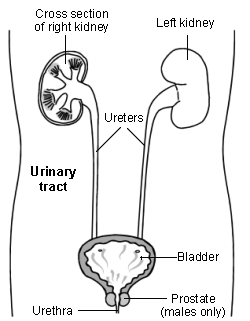
The bladder is part of the urinary tract. It is at the bottom of the abdomen. It fills with urine and we pass urine out through a tube called the urethra. The urethra passes through the prostate gland and penis in men. The urethra is shorter in women and opens just above the vagina.
Cells that line the inside of the bladder are called transitional cells or urothelial cells. The outer part of the bladder wall contains a thick layer of muscle tissue which contracts from time to time to push out the urine.
اختيارات المرضى لـ أنواع السرطان الأخرى

السرطان
سرطان الفم
يمكن أن يؤثر سرطان الفم على أي جزء من الفم، بما في ذلك اللسان والشفتين. الأعراض الأكثر شيوعًا هي وجود قرحة أو تقرح لأكثر من ثلاثة أسابيع. يجب عليك زيارة طبيب الأسنان أو الطبيب إذا كان لديك أي أعراض غير عادية في فمك. التوقعات (التشخيص) للأشخاص المصابين بسرطان الفم جيدة إذا تم تشخيصه مبكرًا.
بقلم الدكتورة هايلي ويلاسي، FRCGP
السرطان
مرض باجيت العظمي
مرض باجيت في العظام يؤثر على بنية أجزاء من عظمة واحدة أو أكثر. في معظم الحالات لا يسبب أي أعراض ولا يحتاج إلى علاج. تتطور الأعراض في بعض الحالات ويعتبر الألم في الجزء المصاب من العظم هو العرض الأكثر شيوعًا. العظام المصابة تكون أضعف من الطبيعي وقد تصبح مشوهة وقد تنكسر (تتكسر) بسهولة أكبر من الطبيعي. يتم استخدام علاج بدواء البيسفوسفونات في بعض الحالات لتخفيف الألم والمساعدة في علاج المضاعفات.
بقلم الدكتور كولين تايدي، MRCGP
الأسئلة الشائعة
ما هو احتمال عودة سرطان المثانة بعد العلاج الناجح؟
بالنسبة لأورام المثانة السطحية، تعتبر الفحوصات الروتينية ضرورية لأن هناك احتمال لعودة الورم. تساعد هذه الفحوصات في اكتشاف أي عودة للورم في مرحلة مبكرة بحيث يمكن تكرار العلاج. يتزايد الوقت بين هذه الفحوصات تدريجياً إذا ظلت المثانة خالية من الأورام.
ما الفرق بين الهدأة والشفاء من سرطان المثانة؟
غالبًا ما يستخدم الأطباء مصطلح "الهدوء" بدلاً من "الشفاء". الهدوء يعني أنه لا يوجد أي علامة قابلة للكشف عن السرطان بعد العلاج. بينما قد يعني أن تكون في حالة هدوء أنك شفيت، إلا أن السرطان يمكن أن يعود أحيانًا بعد شهور أو سنوات، ولهذا السبب يكون الأطباء حذرين في استخدام مصطلح "الشفاء".'
ما هي الآثار الجانبية الشائعة لجراحة إزالة المثانة (استئصال المثانة)؟
استئصال المثانة هو عملية جراحية كبيرة تتضمن إزالة المثانة. من الآثار الهامة لهذه الجراحة الحاجة إلى طريقة بديلة لتمرير البول. يمكن أن يشمل ذلك فغر المثانة، حيث يتم تصريف البول في كيس يُرتدى خارجيًا، أو في بعض الحالات، يمكن إنشاء مثانة صناعية من جزء من الأمعاء.
هل هناك أنواع أخرى من سرطان المثانة غير سرطان الخلايا الانتقالية للمثانة؟
بينما يُعتبر سرطان المثانة ذو الخلايا الانتقالية النوع الأكثر شيوعًا ومحور هذه المعلومات، فإن الأنواع الأخرى من سرطان المثانة نادرة. يناقش المقال بشكل أساسي سرطان المثانة ذو الخلايا الانتقالية، الذي يتطور من الخلايا المبطنة لداخل المثانة.
كيف يحدد الأطباء أفضل نهج علاجي لسرطان المثانة؟
يعتمد اختيار العلاج على عدة عوامل، بما في ذلك مرحلة السرطان (حجمه وما إذا كان قد انتشر)، وصحتك العامة. سيناقش الأخصائيون الإيجابيات والسلبيات، ونسب النجاح، والآثار الجانبية المحتملة، وتفاصيل أخرى عن خيارات العلاج المناسبة لحالتك الخاصة.
قراءة إضافية ومراجع
- Urinary incontinence in neurological disease: assessment and management; NICE Clinical Guideline (August 2012 - last updated October 2023)
- سرطان المثانة: تشخيص وإدارة سرطان المثانة; NICE Guideline (February 2015)
- Bellmunt J, Orsola A, Leow JJ, et al; سرطان المثانة: إرشادات الممارسة من ESMO للتشخيص والعلاج والمتابعة. Ann Oncol. سبتمبر 2014;25 Suppl 3:iii40-8. doi: 10.1093/annonc/mdu223. نُشر إلكترونياً في 5 أغسطس 2014.
- سرطان المثانة غير الغازي للعضلات; إرشادات الجمعية الأوروبية لجراحة المسالك البولية (2016)
- سرطان المثانة الغازي للعضلات والمنتشر; إرشادات الجمعية الأوروبية لجراحة المسالك البولية (2016)
- إحصائيات سرطان المثانة; أبحاث السرطان في المملكة المتحدة.
- أفيلوماب لعلاج الصيانة لسرطان الخلايا البولية المتقدم محليًا أو النقيلي بعد العلاج الكيميائي القائم على البلاتين; إرشادات تقييم التكنولوجيا من NICE، مايو 2022
- نيفولوماب للعلاج المساعد لسرطان الظهارة البولية الغازي المعرض لخطر عالٍ من التكرار; إرشادات تقييم التكنولوجيا من NICE، أغسطس 2022
- van der Heijden MS, Loriot Y, Duran I, et al; Atezolizumab Versus Chemotherapy in Patients with Platinum-treated Locally Advanced or Metastatic Urothelial Carcinoma: A Long-term Overall Survival and Safety Update from the Phase 3 IMvigor211 Clinical Trial. Eur Urol. 2021 Jul;80(1):7-11. doi: 10.1016/j.eururo.2021.03.024. Epub 2021 Apr 23.
عن المؤلفعرض السيرة الذاتية الكاملة
تم التحديث بواسطة

الدكتورة راشيل هدسون، MRCGP
طبيب عام وكاتب طبي
بكالوريوس الطب والجراحة، زميل الكلية الملكية للممارسين العامين (2008)، بكالوريوس العلوم (العلوم الطبية)، دبلوم في الصحة الجنسية والإنجابية، دبلوم الكلية الملكية لأطباء النساء والتوليد، دبلوم صحة الطفل
الدكتورة راشيل هدسون، طبيبة عامة في هيئة الخدمات الصحية الوطنية تعمل في شمال غرب إنجلترا.
حول المراجععرض السيرة الذاتية الكاملة

الدكتور كولين تايدي، MRCGP
طبيب عام، مؤلف طبي
MBBS, MRCGP, MRCP (Paediatrics), DCH
الدكتور كولين تايدي هو طبيب في هيئة الخدمات الصحية الوطنية، ويعمل في أوكسفوردشاير.
تاريخ المقال
المقال متاح أيضًا باللغة الإنجليزية, الألمانية, إسبانية, الفرنسية, إيطالي, البرتغالية, الهندية, العبرية, العربية ,، و السويدية.
المراجعة التالية مستحقة: 12 مايو 2028
30 يونيو 2023 | أحدث إصدار
انضم إلى المحادثة
شارك أفكارك أو تجاربك مع الآخرين في مجتمعات المرضى.

اسأل، شارك، تواصل.
تصفح المناقشات، اطرح الأسئلة، وشارك التجارب عبر مئات المواضيع الصحية.

هل تشعر بتوعك؟
قم بتقييم أعراضك عبر الإنترنت مجانًا
اشترك في النشرة الإخبارية للمرضى
جرعتك الأسبوعية من النصائح الصحية الواضحة والموثوقة - مكتوبة لمساعدتك على الشعور بالاطلاع والثقة والتحكم.
من خلال الاشتراك، فإنك تقبل سياسة الخصوصية. يمكنك إلغاء الاشتراك في أي وقت. نحن لا نبيع بياناتك أبدًا.