تنظير المثانة
مراجعة من قبل الدكتور كولين تايدي، MRCGPآخر تحديث بواسطة الدكتورة فيليبا فينسنت، MRCGPآخر تحديث 10 أغسطس 2023
يتوافق مع الإرشادات التحريرية
- تنزيلتنزيل
- مشاركة
- Language
- نقاش
- نسخة صوتية
- أضف إلى المصادر المفضلة على جوجل
A cystoscopy is a procedure which looks into the bladder with a special telescope called a cystoscope.
ملاحظة: المعلومات أدناه هي دليل عام فقط. قد تختلف الترتيبات وطريقة إجراء الاختبارات بين المستشفيات المختلفة. دائماً اتبع التعليمات المقدمة من طبيبك أو المستشفى المحلي.
نظرة سريعة
يستخدم تنظير المثانة منظارًا رفيعًا لفحص المثانة عبر الإحليل.
يساعد في تشخيص التهابات المسالك البولية المتكررة، الدم في البول، السلس البولي، والتبول المؤلم.
يمكن أيضًا استخدامه لعلاج حالات مثل حصوات المثانة أو إزالة أورام المثانة.
عادةً ما تستغرق العملية من 5 إلى 10 دقائق وغالبًا ما تُجرى بينما تكون مستيقظًا.
بعد ذلك، قد تشعر بإحساس حارق خفيف عند التبول.
اطلب المساعدة الطبية إذا كان الألم أو النزيف شديدًا أو استمر لأكثر من يومين.
أيضًا، اطلب المساعدة إذا أصبت بحمى أو ظهرت عليك أعراض أخرى للعدوى.
Why is a cystoscopy done?
To help with diagnosis
A cystoscopy may be done to help to find the cause of symptoms such as:
Unusual cells found in a urine sample.
Persistent pain when passing urine.
Difficulty in passing urine - which may be due to prostate enlargement أو narrowing (stricture) of the urethra.
Cystoscopy may also be done to monitor progress of conditions. For example, some people have a routine cystoscopy every now and then after treatment for a bladder tumour. This helps to detect any early recurrence which can be treated before it spreads further.
To treat certain conditions, or to do certain procedures
By using various instruments which are passed down the side channels a doctor can:
Remove bladder stones. If a stone is lodged higher - in a ureter - the doctor may extend the cystoscope up into a ureter. The ureters are the tubes that drain urine from the kidneys to the bladder.
Remove small lumps (polyps) or الأورام from the lining of the bladder.
Insert a small tube (stent) into a narrowed ureter. This helps the flow of urine if there is a narrowing.
Perform a special X-ray of the ureters and kidneys. A doctor can inject a dye into the ureters up towards the kidney. This shows up on X-ray pictures and helps to show problems of the kidney or ureter.
Remove the prostate gland (by using a special type of cystoscope which 'chips' away at the prostate gland bit by bit).
What is a cystoscope?
A cystoscope is a thin telescope which is passed into the bladder via the urethra, the tube that takes urine from the bladder to the outside of the body. There are two types. The cystoscope can be looked down but it also transmits pictures to a computer screen so they can be seen by other members of the team. Both types of cystoscope have side channels where various thin instruments can be passed down. For example a small sample (خزعة) may be taken from the bladder wall using an instrument which can pinch tissue and carry it back down the side channel.
Types of cystoscopy
A flexible cystoscope is the most commonly used. It is a thin, flexible, fibre-optic telescope which is about as thick as a pencil. As it is flexible, it passes easily along the curves of the urethra. The flexible tip can also be moved easily so that the whole of the bladder lining can be seen.
Flexible cystoscope
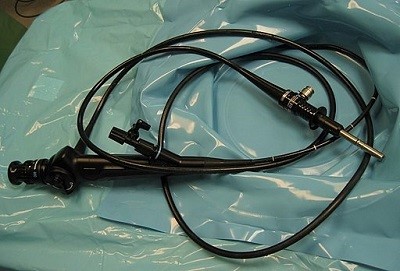
© By Michael Reeve, via Wikimedia Commons
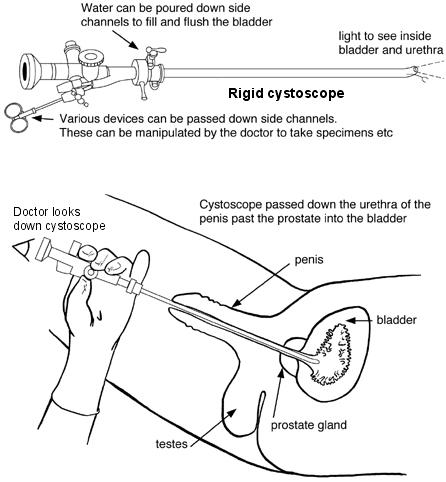
A rigid cystoscope is a thin, solid, straight telescope. It allows a greater variety of devices to pass down the side channels so can be used for a wider variety of procedures.
Diagram of a rigid cystoscope and how a cystoscopy is performed
Cystoscopy procedure
Cystoscopy is usually done as an outpatient procedure. This means people go home the same day and aren't required to stay overnight. It is usually done whilst awake. Some people are given a sedative to help them to relax.
The opening to the urethra (at the end of the penis, or the outside of the vagina) and the nearby skin will be cleaned. Some 'jelly' is then squirted into the opening of the urethra. The jelly usually contains a local anaesthetic to numb the lining of the urethra. This helps the cystoscope to pass into the urethra with as little discomfort as possible.
Male and female cystoscopy
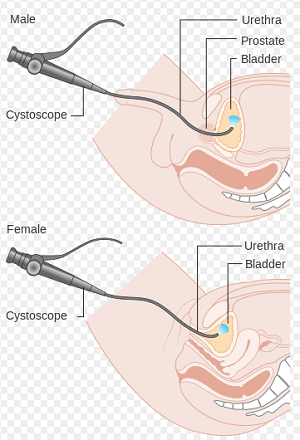
The cystoscope is then gently pushed up into the bladder and the lining of the urethra and bladder is carefully examined. Sterile water is passed down a side channel in the cystoscope to fill the bladder slowly. This makes it easier to see the lining of the bladder and the bladder wall. As the bladder fills it causes the feeling of a need to pass urine which may be uncomfortable.
The cystoscope is then gently pulled out. If a biopsy was taken, the sample would be sent away to be tested and looked at under a microscope. It can take several weeks for the report of the biopsy to come back to the doctor.
In some cases a general anaesthetic is given when a cystoscopy is done, particularly if a rigid cystoscope is used. In some cases a spinal anaesthetic is given which numbs all the lower half of the body.
How long does a cystoscopy take?
A cystoscopy takes about 5-10 minutes if it is just to look inside the bladder. It may last longer if a procedure is being performed - for example, taking a sample (خزعة) from the lining of the bladder.
Is a cystoscopy painful?
Cystoscopies are not usually painful, particularly as local anaesthetic is used to insert the cystoscope. They can be uncomfortable, especially when the bladder has been filled with water.
Complications of a cystoscopy
Most cystoscopies are done without any problem.
For the following 24 hours there may be a mild burning sensation when passing urine and a feeling of a need to pass urine more often than usual. The urine may also look pink due to mild bleeding, particularly if a biopsy was taken.
Occasionally, a عدوى بولية develops shortly after a cystoscopy. This can cause a ارتفاع درجة الحرارة (الحمى) and pain on passing urine.
Rarely, the cystoscope may damage or perforate the bladder. After having a cystoscopy, medical advice should be sought if:
Pain or bleeding is severe.
Pain or bleeding lasts longer than two days.
Symptoms of infection develop, such as a fever.
Preparing for a cystoscopy
There are not usually any particular preparations needed before a flexible cystoscopy. Usually it is possible to eat and drink as normal beforehand. There is no need to empty the bladder. A rigid cystoscopy normally requires a general anaesthetic so guidance will be given about when to stop eating and drinking and what to do.
After a cystoscopy
After a flexible cystoscopy, it is usual to need to empty the bladder urgently and then to go home without any need for additional support. After a rigid cystoscopy, a catheter may be used to empty the bladder and the normal advice would be given about having a general anaesthetic (to wait in the hospital for a few hours to recover, to be unable to drive home, to need support at home for 24 hours).
اختيارات المرضى لـ اختبارات البول والمثانة
الفحوصات والتحقيقات
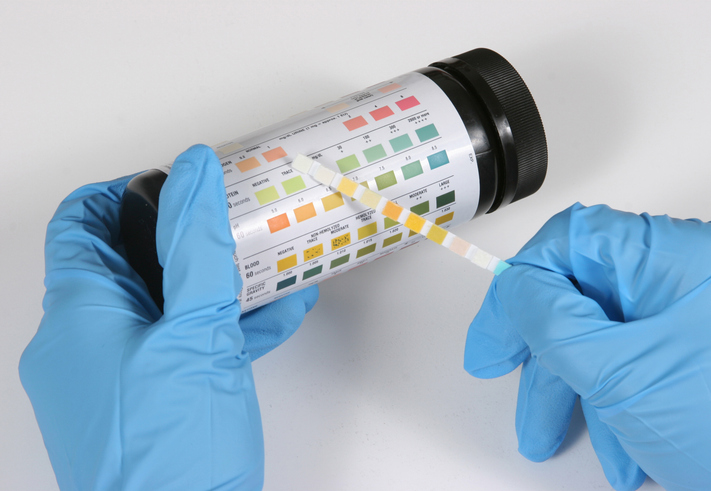
اختبار شريط البول
A urine dipstick test tests the urine using a special strip of paper that is dipped into a sample of urine. The result is available almost immediately. It is sometimes called a rapid urine test.
بقلم الدكتورة فيليبا فينسنت، MRCGP
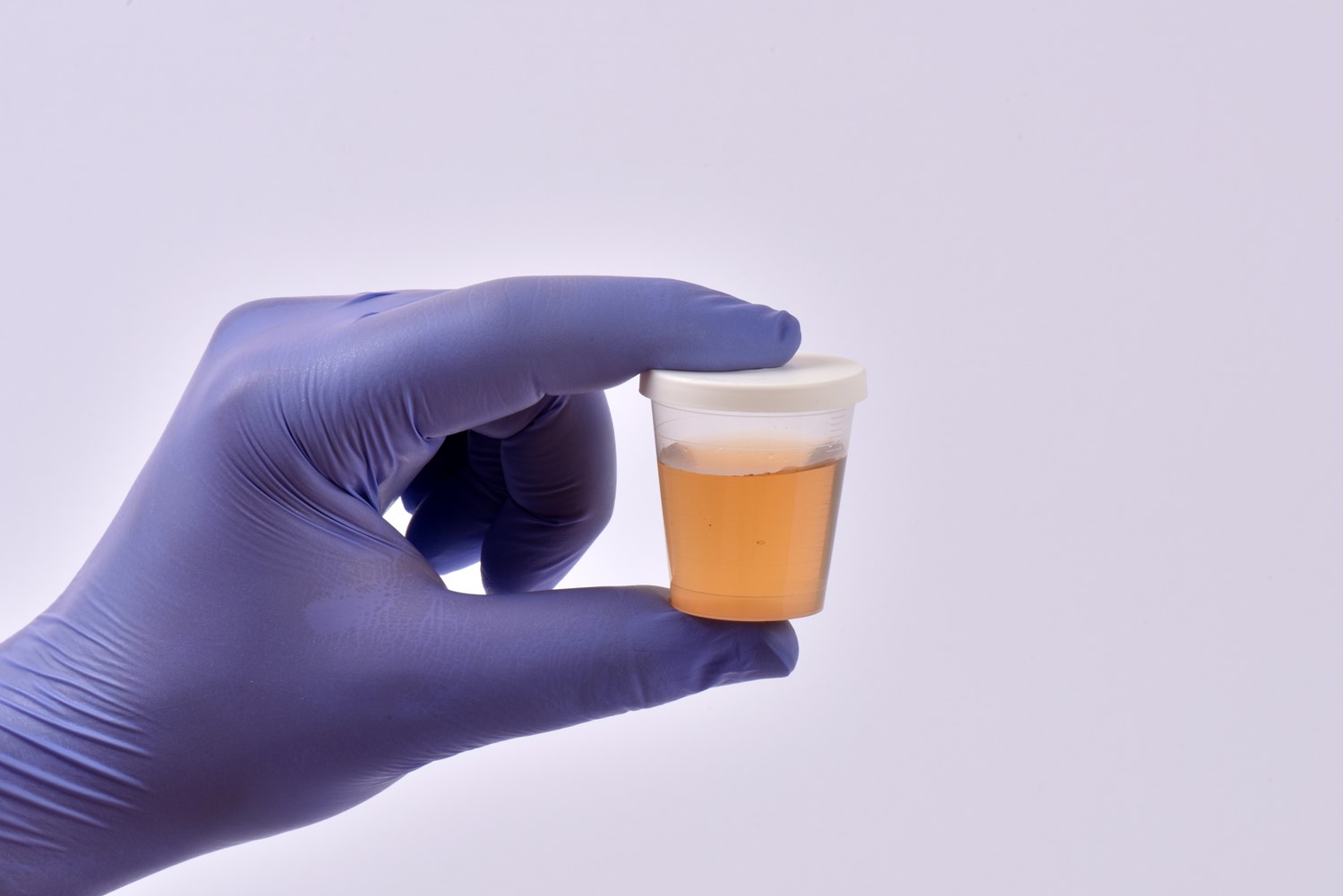
الفحوصات والتحقيقات
عينة بول في منتصف الجريان
عادةً ما يتم اختبار عينة بول في منتصف التدفق (MSU أو MSSU) للبحث عن العدوى، على الرغم من أنه في بعض الحالات، قد يتم تشخيص مرض غير العدوى استنادًا جزئيًا إلى ما يُرى في عينة MSU.
بقلم الدكتورة راشيل هدسون، MRCGP
الأسئلة الشائعة
ما هو استخدام منظار المثانة؟
السيستوسكوب هو تلسكوب رفيع يتم إدخاله في المثانة عبر الإحليل. يساعد الأطباء على النظر داخل المثانة والإحليل، كما يحتوي على قنوات جانبية يمكن من خلالها تمرير أدوات رفيعة مختلفة لإجراء إجراءات مثل إزالة حصوات المثانة أو أخذ الخزعات.
How long does a cystoscopy take?
عادةً ما تستغرق عملية تنظير المثانة القياسية، إذا كانت فقط لأغراض الفحص، حوالي 5-10 دقائق. ومع ذلك، إذا تم إجراء إجراءات إضافية مثل أخذ خزعة من بطانة المثانة أو إزالة الحصوات الصغيرة، فستكون المدة أطول.
هل يتطلب تنظير المثانة أي تحضير خاص؟
عادةً، لا تحتاج إلى تحضير خاص لإجراء تنظير المثانة المرن؛ يمكنك الأكل والشرب بشكل طبيعي ولا تحتاج إلى إفراغ المثانة مسبقًا. إذا كان من المقرر إجراء تنظير المثانة الصلب، والذي غالبًا ما يتضمن تخديرًا عامًا، سيتم تقديم تعليمات محددة بشأن الأكل والشرب وما يجب القيام به.
ماذا يجب أن أتوقع بعد تنظير المثانة؟
بعد إجراء تنظير المثانة المرن، من المحتمل أن تشعر بحاجة ملحة لتفريغ المثانة قبل العودة إلى المنزل، وعادة لن تحتاج إلى دعم إضافي. أما في حالة تنظير المثانة الصلب، خاصة مع التخدير العام، فقد يتم استخدام قسطرة، وستتلقى نصائح حول التعافي من التخدير، مثل عدم القيادة والحاجة إلى دعم في المنزل لمدة 24 ساعة.
متى يجب أن أطلب المشورة الطبية بعد تنظير المثانة؟
على الرغم من أن معظم عمليات تنظير المثانة تكون خالية من المشاكل، يجب عليك استشارة الطبيب إذا شعرت بألم شديد أو نزيف، أو إذا استمر الألم أو النزيف لأكثر من يومين. يجب عليك أيضًا الاتصال بطبيبك إذا ظهرت عليك أعراض عدوى، مثل الحمى.
قراءة إضافية ومراجع
- Zhang ZS, Wang XL, Xu CL, et al; Music reduces panic: an initial study of listening to preferred music improves male patient discomfort and anxiety during flexible cystoscopy. J Endourol. 2014 Jun;28(6):739-44. doi: 10.1089/end.2013.0705. Epub 2014 Mar 31.
- Gee JR, Waterman BJ, Jarrard DF, et al; Flexible and rigid cystoscopy in women. JSLS. 2009 Apr-Jun;13(2):135-8.
- Engelsgjerd JS, Deibert CM; Cystoscopy
- DeGeorge KC, Holt HR, Hodges SC; Bladder Cancer: Diagnosis and Treatment. Am Fam Physician. 2017 Oct 15;96(8):507-514.
عن المؤلفعرض السيرة الذاتية الكاملة

الدكتورة فيليبا فينسنت، MRCGP
طبيب عام، مؤلف طبي
MB BS, Bsc, MRCGP (2000), DCH, DFSRH, DRCOG
الدكتورة فيليبا فينسنت هو طبيب عام في هيئة الخدمات الصحية الوطنية يعمل في شمال لندن.
حول المراجععرض السيرة الذاتية الكاملة

الدكتور كولين تايدي، MRCGP
طبيب عام، مؤلف طبي
MBBS, MRCGP, MRCP (Paediatrics), DCH
الدكتور كولين تايدي هو طبيب في هيئة الخدمات الصحية الوطنية، ويعمل في أوكسفوردشاير.
تاريخ المقال
تمت كتابة المعلومات على هذه الصفحة ومراجعتها من قبل أطباء مؤهلين.
المقال متاح أيضًا باللغة الإنجليزية, الألمانية, إسبانية, الفرنسية, إيطالي, البرتغالية, الهندية, العبرية, العربية ,، و السويدية.
Next review due: 8 Aug 2028
10 أغسطس 2023 | أحدث إصدار

اسأل، شارك، تواصل.
تصفح المناقشات، اطرح الأسئلة، وشارك التجارب عبر مئات المواضيع الصحية.

هل تشعر بتوعك؟
قم بتقييم أعراضك عبر الإنترنت مجانًا
اشترك في النشرة الإخبارية للمرضى
جرعتك الأسبوعية من النصائح الصحية الواضحة والموثوقة - مكتوبة لمساعدتك على الشعور بالاطلاع والثقة والتحكم.
من خلال الاشتراك، فإنك تقبل سياسة الخصوصية. يمكنك إلغاء الاشتراك في أي وقت. نحن لا نبيع بياناتك أبدًا.
المزيد في الاختبارات والتحقيقات
- حقنة الباريوم الشرجية
- اختبار جلوكوز الدم (سكر الدم) و HbA1c
- فحص العظام
- اختبار كومبس
- تصوير الأوعية التاجية
- ERCP
- شفط بإبرة دقيقة
- تنظير المعدة
- الفحص الجيني
- اختبار تحمل الجلوكوز
- تصوير الرحم والبوق
- فحص MRCP
- اختبار السمع لحديثي الولادة
- برنامج الفحص التابع لهيئة الخدمات الصحية الوطنية
- اختبار الرقعة لالتهاب الجلد التماسي
- اختبار دم روتيني لوظائف الكلى
- اختبار العرق
- الثلاسيميا
- فحوصات الغدة الدرقية واختبارات الامتصاص
- تصوير المثانة والإحليل أثناء التبول