توسع القصبات
مراجعة من قبل الدكتور كريشنا فاخاريا، MRCGPآخر تحديث بواسطة الدكتورة هايلي ويلاسي، زميلة الكلية الملكية للأطباء العامين آخر تحديث 30 يناير 2023
يتوافق مع الإرشادات التحريرية
- تنزيلتنزيل
- مشاركة
- Language
- نقاش
- Ask Patient
- نسخة صوتية
- أضف إلى المصادر المفضلة على جوجل
Bronchiectasis is a problem with the lungs, where you cough up lots of phlegm, (sputum): far more than usual. It is usually caused by something that has already affected the lungs, like a bad infection; but sometimes no cause is found. It generally affects older people. There are some good treatments available to keep it under control.
نظرة سريعة
توسع القصبات هو حالة رئوية حيث تصبح الممرات الهوائية أوسع من المعتاد بشكل غير طبيعي.
هذا التوسع يؤدي إلى تجمع المخاط، مما يسبب أعراضًا مثل السعال الرطب اليومي وضيق التنفس.
يمكن أن يكون ناتجًا عن التهابات شديدة، مشاكل في الجهاز المناعي، أو حالات تؤثر على إزالة المخاط.
عادةً ما يتضمن التشخيص الأعراض وفحص الأشعة المقطعية للرئتين.
يركز العلاج على إدارة الأعراض، مثل إزالة المخاط وتناول المضادات الحيوية للعدوى.
لا يمكن عكس توسع القصبات، ولكن يمكن للعلاج أن يوقف تفاقمه.
Understanding the airways
Usually air travels from our windpipes down into our lungs through small tubes. The tubes that come off the windpipe are called bronchi; then they split into bronchioles which are a bit smaller. Finally the small bronchioles split into tiny tubes called alveoli. In a normal person all these tubes are fairly small: up to 2 cm in diameter at the windpipe, all the way down to just a few millimetres for the alveoli. Our airways are a bit like a tree: the tree trunk is the biggest bit, but it gradually splits off into branches, then twigs.
What is bronchiectasis?
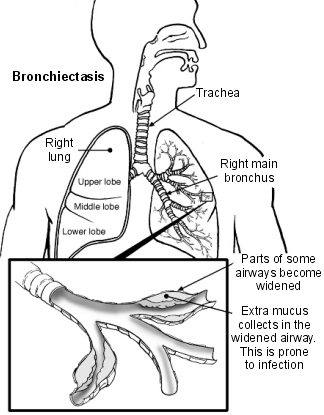
In bronchiectasis the airways gradually become bigger than they are meant to be. So instead of the tiny alveoli being just a few millimetres in diameter, they might be a centimetre wide. And instead of bronchioles being about a centimetre wide, they become 1.5 centimetres in diameter.
The problem then is that mucus, which we all have in our lungs to some degree, can pool and collect in the airways. And because the airways aren't meant to be that wide in the first place, they produce more mucus than usual. Mucus is the same as sputum, or phlegm: sticky, slightly thick liquid that can be white, clear, green or yellow. It can usually be coughed up.
This picture shows what happens in bronchiectasis:
Lungs and airways - bronchiectasis
What causes bronchiectasis?
Generally the cause is something that has created infection or inflammation in the lungs:
A bad infection with السل.
A bad case of الالتهاب الرئوي.
A blood clot in the lungs, called a الانسداد الرئوي.
A bad infection with whooping cough (pertussis) as a child.
Or it could be from a problem with the immune system:
امتلاك فيروس نقص المناعة البشرية.
Having a low immune system from birth.
Or a problem with how the lungs clear away mucus already, such as occurs with:
التليف الكيسي from childhood.
Some other type of rare condition like Kartagener's syndrome.
There are other rare conditions that can cause bronchiectasis, such as:
Alpha-1 antitrypsin deficiency.
Yellow nail syndrome.
Allergic bronchopulmonary aspergillosis.
These problems could have occurred in childhood, but it's only in adulthood or even older that you develop bronchiectasis.
In at least a third of cases of bronchiectasis, no cause is found.
How common is bronchiectasis?
Bronchiectasis is not particularly common: most family doctors in the UK will have some patients with the condition but will not see new cases very often. Around 1% of people have been diagnosed with bronchiectasis in the general population; but people with a chronic lung condition like الربو, التليف الكيسي أو مرض الانسداد الرئوي المزمن (COPD) will have a higher rate of bronchiectasis. The condition gets more common with old age.
It seems to be getting more common lately but that is probably because lung scans are more detailed and picking up on the lung changes of bronchiectasis more easily.
What are the symptoms of bronchiectasis?
The symptoms are caused by there being too much mucus inside the lungs:
A wet cough every day, despite taking antibiotics.
Coughing up lots of sputum (also called phlegm or mucus).
Feeling slightly breathless or unable to do as much exercise as you used to.
Frequent chest infections, particularly with a bug called Pseudomonas aeruginosa.
As a child: asthma that is difficult to control; or having recurrent chest or ear infections.
How is bronchiectasis diagnosed?
Bronchiectasis is usually diagnosed by a lung specialist rather than a family doctor. It is usually diagnosed by:
The general clinical picture of someone with a long-term cough that produces large amounts of sputum.
ت فحص الأشعة المقطعية of the lungs that shows enlargement (or what is often called 'dilatation') of the airways and usually thickening of the wall of the airways.
How to treat bronchiectasis
Once bronchiectasis sets in, it can't ever be reversed. However, it can be prevented from getting worse by:
Taking regular التمارين.
Using 'airways clearance techniques' that help to drain off mucus from the lungs. This usually involves seeing a physiotherapist who is trained in treating the lungs: what is usually termed a respiratory physiotherapist or 'chest physio'. The patient can also be taught how to use postural drainage techniques themself, along with special breathing techniques to bring up the mucus.
Nebulised saline can help to make the sputum thinner and easier to cough up.
Nebulised bronchodilators can help the mucus to drain away too.
Long-term macrolide antibiotics such as azithromycin, can help to prevent infections and dampen down inflammation in the lungs.
Treating any underlying cause, like السل أو التليف الكيسي, is also important.
Inhaled steroids or nebulised steroids do not seem to help.
If the bronchiectasis is confined to just one area of the lungs (which is unusual) then surgery can be considered.
ما هي التوقعات؟
Most people with bronchiectasis (with no underlying cause) have a good outlook (prognosis). Symptoms in many affected people do not become severe. Treatment, in particular with antibiotics when an infection occurs, or regularly when needed, keeps most people reasonably well.
The condition becomes worse in some cases and breathing problems may develop. In a small number of cases the condition becomes gradually worse over time as more and more of the airways become affected.
A life-threatening bleed from a damaged airway may also occur but is rare.
The outlook for people where bronchiectasis is part of another condition depends on the underlying cause. Generally it gets a little bit worse as you get older, but if you follow treatment plans then you should be able to stop it getting much worse.
اختيارات المرضى لـ حالات الرئة

الصدر والرئتين
الانصباب الجنبي
الانصباب الجنبي هو تجمع للسوائل بجانب الرئة. هناك أسباب مختلفة لذلك. قد يسبب الانصباب ضيقًا في التنفس. يمكن تصريف السوائل إذا لزم الأمر. يهدف العلاج بشكل رئيسي إلى معالجة السبب الأساسي.
بقلم الدكتورة هايلي ويلاسي، FRCGP
الصدر والرئتين
فشل الجهاز التنفسي
يحدث فشل الجهاز التنفسي عندما يفشل الجهاز التنفسي في الحفاظ على مستويات كافية من الأكسجين في الدم. قد تكون هناك أيضًا صعوبات في إزالة الغازات الضارة، وخاصة ثاني أكسيد الكربون في الدم.
بقلم الدكتور كولين تايدي، MRCGP
الأسئلة الشائعة
ما هو النطاق العمري النموذجي لتطور توسع القصبات؟
يمكن أن يتطور توسع القصبات نتيجة لمشاكل حدثت في الطفولة، ولكن قد لا تظهر الأعراض إلا في مرحلة البلوغ أو حتى في وقت لاحق في الشيخوخة. كما يُلاحظ أن الحالة تصبح أكثر شيوعًا في سن الشيخوخة.
إذا كنت أعاني من توسع القصبات، هل سأعاني دائمًا من سعال رطب وأنتج الكثير من البلغم؟
نعم، السعال الرطب المستمر كل يوم، حتى عند تناول المضادات الحيوية، والسعال المصحوب بكميات كبيرة من البلغم (المخاط) يوصفان كأعراض رئيسية لتوسع القصبات. هذه الأعراض ناتجة عن الإفرازات المخاطية الزائدة في الرئتين.
هل هناك تمارين أو أنشطة معينة يجب أن أتجنبها إذا كنت أعاني من توسع القصبات؟
لا يحدد المقال الأنشطة التي يجب تجنبها، لكنه يوصي بممارسة التمارين الرياضية بانتظام كوسيلة لمنع تفاقم الحالة. كما يذكر أن الشعور بضيق التنفس قليلاً أو عدم القدرة على ممارسة التمارين كما كنت تفعل سابقاً يمكن أن يكون عرضاً.
كيف تساعد تقنيات تنظيف الشعب الهوائية في علاج توسع القصبات؟
تقنيات تنظيف الممرات الهوائية هي طرق تساعد في تصريف المخاط من الرئتين. غالبًا ما يتضمن ذلك العمل مع أخصائي علاج طبيعي تنفسي يمكنه تعليم تقنيات تنفس محددة وتصريف وضعي للمساعدة في إخراج المخاط، والذي يمكن جعله أرق وأسهل في السعال باستخدام محلول ملحي مبخر.
ما هو بالضبط 'أخصائي العلاج الطبيعي التنفسي' وماذا يفعلون؟
أخصائي العلاج الطبيعي التنفسي، المعروف أيضًا باسم 'أخصائي العلاج الطبيعي للصدر'، هو متخصص مدرب على علاج حالات الرئة. يلعبون دورًا رئيسيًا في تعليم المرضى 'تقنيات تنظيف الممرات الهوائية' وطرق التنفس المحددة للمساعدة في تصريف المخاط من الرئتين.
هل من الممكن أن يؤثر توسع القصبات على رئة واحدة أو جزء من رئة واحدة فقط؟
على الرغم من أنه غير معتاد، إلا أنه من الممكن أن يقتصر توسع القصبات على منطقة واحدة فقط من الرئتين. في مثل هذه الحالات النادرة، قد يتم النظر في الجراحة كخيار علاجي.
ماذا يعني "توسع الشعب الهوائية" في سياق تشخيص الأشعة المقطعية؟
توسع الشعب الهوائية، كما يظهر في فحص الأشعة المقطعية، يشير إلى تضخم الشعب الهوائية، وهو سمة مميزة لمرض توسع القصبات. وهذا يدل على أن الأنابيب في الرئتين أصبحت أوسع من حجمها الطبيعي.
قراءة إضافية ومراجع
- توسع القصبات; NICE CKS، مارس 2024 (الوصول متاح فقط في المملكة المتحدة)
- Snell N, Gibson J, Jarrold I, et al; Epidemiology of bronchiectasis in the UK: Findings from the British lung foundation's 'Respiratory health of the nation' project. Respir Med. 2019 Oct-Nov;158:21-23. doi: 10.1016/j.rmed.2019.09.012. Epub 2019 Sep 17.
- Hill AT, Sullivan AL, Chalmers JD, et al; British Thoracic Society Guideline for bronchiectasis in adults. Thorax. 2019 Jan;74(Suppl 1):1-69. doi: 10.1136/thoraxjnl-2018-212463.
- Lee AL, Burge AT, Holland AE; Positive expiratory pressure therapy versus other airway clearance techniques for bronchiectasis. Cochrane Database Syst Rev. 2017 Sep 27;9(9):CD011699. doi: 10.1002/14651858.CD011699.pub2.
عن المؤلفعرض السيرة الذاتية الكاملة
تم التحديث بواسطة

الدكتورة هايلي ويلاسي، زميلة الكلية الملكية للأطباء العامين
طبيب عام، مؤلف طبي
MBChB (1992), DRCOG, DFFP, MRCOG (Part 1) MRCGP (2007), DFSRH (2013), MSc - medical education (2020)
كانت الدكتورة هايلي ويلاسي طبيبة عامة في هيئة الخدمات الصحية الوطنية تعمل في شمال غرب إنجلترا، وتقاعدت من الممارسة السريرية في عام 2022 بعد 30 عامًا.
حول المراجععرض السيرة الذاتية الكاملة

الدكتور كريشنا فاخاريا، MRCGP
كبير المسؤولين الطبيين للصحة، أوبتوم المملكة المتحدة
MBChB, MRCGP(2013), BMedSci (hons), DFSRH, DRCOG, PGDipDerm (Distn)
الدكتورة كريشنا فاخاريا هي طبيبة عامة في هيئة الخدمات الصحية الوطنية. كما أنها ممتحنة منتظمة لدبلوم الدراسات العليا في الأمراض الجلدية العملية في جامعة كارديف، بالإضافة إلى كونها كبيرة المسؤولين الطبيين للصحة في Optum UK.
تاريخ المقال
المقال متاح أيضًا باللغة الإنجليزية, الألمانية, إسبانية, الفرنسية, إيطالي, البرتغالية, الهندية, العبرية, العربية ,، و السويدية.
المراجعة التالية مستحقة: 29 يناير 2028
30 يناير 2023 | أحدث إصدار
آخر تحديث بواسطة
الدكتورة هايلي ويلاسي، زميلة الكلية الملكية للأطباء العامينمراجعة من قبل
الدكتور كريشنا فاخاريا، MRCGP
المهنيين الطبيين
Looking for more in-depth clinical detail? Our Professional Reference articles are written for doctors, nurses and other healthcare professionals. They include comprehensive clinical guidance, diagnostic information and UK/European evidence summaries. If you need the clinical version, you can read the Professional Reference article on this topic.
شارك أفكارك أو تجاربك مع الآخرين في مجتمعات المرضى.
وصول بسيط إلى العلاجات والخدمات الصحية الموثوقة عبر الإنترنت.
Common conditions
Get help with common conditions through the NHS, without a GP appointment.
 التهاب الجيوب الأنفية الحاد
 التهاب اللوزتين البكتيري
 القوباء
 لدغات الحشرات
 الحزام الناريعدوى المسالك البولية
اشترك في النشرة الإخبارية للمرضى
جرعتك الأسبوعية من النصائح الصحية الواضحة والموثوقة - مكتوبة لمساعدتك على الشعور بالاطلاع والثقة والتحكم.
من خلال الاشتراك، فإنك تقبل سياسة الخصوصية. يمكنك إلغاء الاشتراك في أي وقت. نحن لا نبيع بياناتك أبدًا.