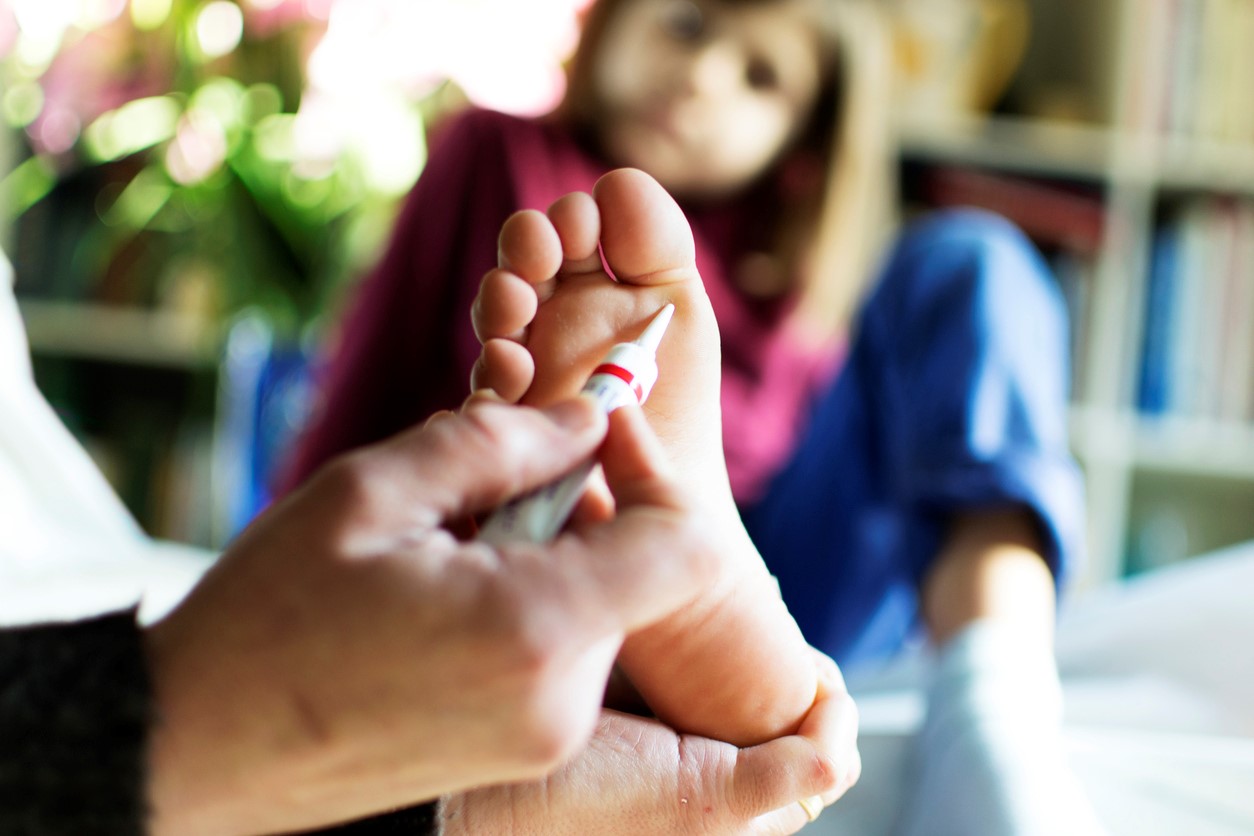
خيارات علاج الثآليل والزوائد الجلدية
مراجعة من قبل الدكتورة هايلي ويلاسي، زميلة الكلية الملكية للأطباء العامين آخر تحديث بواسطة الدكتور كولين تايدي، MRCGPآخر تحديث 1 Jul 2018
يتوافق مع الإرشادات التحريرية
- تنزيلتنزيل
- مشاركة
- Language
- نقاش
- نسخة صوتية
- أضف إلى المصادر المفضلة على جوجل
الثآليل شائعة جدًا وعادة ما تكون غير ضارة. الثآليل التي تظهر على القدمين تُسمى الثآليل الأخمصية (أو الثآليل الأخمصية) وأحيانًا تكون مؤلمة. عادةً ما تختفي الثآليل والثآليل الأخمصية دون علاج ولكن يمكن أن تبقى لفترة طويلة. هناك عدد من العلاجات المختلفة التي يمكن أن تساعد في التخلص منها بسرعة أكبر.
There are three options for the management of warts and verrucas (warts on the soles of the feet):
Do not treat them. If warts don't bother you, there is no reason for active treatment.
Use home treatment. There are a number of home treatments to try, including:
Covering them up (occlusion).
Chemical burning (salicylic acid).
Freezing (cryotherapy).
Liquid nitrogen cryotherapy (intensive freezing) or minor surgery.
There is no perfect treatment with no risks so it's important to consider which treatment (if any) is best for you. The following information may help you compare and weigh up the different options.
لا يوجد علاج
| No active treatment. Just leave them to go away on their own. |
Benefits | 3 in 10 cases of warts will disappear without treatment within three months. However, some will last for years. Not using any treatment has no side-effects and you don't need to bother about them. You do not need to cover them when you swim because this does not reduce the risk of infecting others. |
المخاطر | 7 in 10 cases of warts will not go within three months. There is a small possibility they might spread. Plantar warts (verrucas - on the bottom of your feet) can be painful but you can pare them down with an emery board. |
Home treatments
| Covering with duct tape. | Caustic agents - eg, salicylic acid preparations. | Home freezing (cryotherapy). |
| This involves covering the wart with a piece of waterproof tape (ie duct tape) and leaving it for six days. After removing the tape, rub with a nail file or pumice stone and reapply the tape the next day. Repeat until the wart has gone, but for no longer than two months. | These are widely available over the counter. Involves putting ointment directly on to the wart, sometimes covering with a dressing. Follow the instructions on the label. These agents are more effective if you soften the wart first. | You can buy an over-the-counter 'freezing' kit. Follow the instructions on the label.
|
Benefits | This treatment may be effective in about 8 in every 10 people. It is cheap and easy to apply. The duct tape softens the skin and may make it less painful. There is no danger of chemical burns or ulceration. It can be used to treat a wider area of warts and large areas of verrucas. | One study suggested about 8 in every 10 warts cleared within 6 weeks. It works as well as or better than any other treatment for warts, but may take some weeks or months. Relatively cheap and easy to apply. Softens and dissolves the skin and may make it less painful. Can be used in young children (from 4-5 years). | This can be a quick, one-off treatment, but you can repeat it. Can work for a single localised wart or verruca. Some GP practices offer this treatment. |
المخاطر | It will NOT work in 2 in every 10 people. Can cause verrucas to become more painful or uncomfortable when standing on them. The tape can loosen and roll up. This treatment takes time. It should not be used on feet which have reduced feeling or poor circulation (such as if you have diabetes). | These can irritate the surrounding skin which can cause more pain. Can cause ulceration and should not be used by patients with diabetes or bad circulation. Can only be used on a small area at a time. | This is relatively expensive unless your GP practice offers it. This treatment can be painful. It is only useful for individual warts. It should not be used for young
|
Intensive freezing (cryotherapy) or minor surgery
| Freezing (cryotherapy). | Minor surgery. |
| Involves freezing the wart, usually using liquid nitrogen. The result is a small area of frostbite where the wart was. This is often done as a one-off treatment but sometimes a course of treatments is needed. | Surgical excision of the wart and surrounding tissue. The wound is usually stitched. This is done in a minor surgery clinic but many |
Benefits | Causes a deeper and more thorough 'freeze' than home treatment options. Seems to work best for single or small warts or verrucae. Studies vary but about 4 in every 10 warts or verrucas will be cured. Repeated treatments are probably better than single treatments. | One-off treatment. Removes the wart or verruca completely. |
المخاطر | Treatment can be painful. Can only be used to treat small areas at one time. Not for use in children under 8 years old. Can cause ulceration in people with poor circulation to hands or feet. | Requires local anaesthetic (an injection). Requires a visit to the doctor and may not always be available in your area. Warts often return after
|
اختيارات المرضى لـ الحالات العامة للبشرة
صحة الجلد والأظافر والشعر
كيف تؤثر بيئتك على حالات البشرة
هل تعلم أن المكان الذي تعيش وتعمل فيه يمكن أن يكون له تأثير كبير على صحة بشرتك؟ يمكن أن تتحسن أو تتفاقم حالات مثل الإكزيما، والصدفية، والوردية، وحب الشباب بناءً على البيئة التي تتواجد فيها.
بقلم سارة ليندبرج
صحة الجلد والأظافر والشعر
كيفية منع طفلك من الإصابة بالثآليل
Verrucas are very common in children and teenagers – around one in three will get them. They’re actually warts on the feet, caused by the human papillomavirus, but they don’t look like normal warts because they’re pressed in.
بواسطة داني تشادبورن
عن المؤلفعرض السيرة الذاتية الكاملة

الدكتور كولين تايدي، MRCGP
طبيب عام، مؤلف طبي
MBBS, MRCGP, MRCP (Paediatrics), DCH
الدكتور كولين تايدي هو طبيب في هيئة الخدمات الصحية الوطنية، ويعمل في أوكسفوردشاير.
حول المراجععرض السيرة الذاتية الكاملة

الدكتورة هايلي ويلاسي، زميلة الكلية الملكية للأطباء العامين
طبيب عام، مؤلف طبي
MBChB (1992), DRCOG, DFFP, MRCOG (Part 1) MRCGP (2007), DFSRH (2013), MSc - medical education (2020)
كانت الدكتورة هايلي ويلاسي طبيبة عامة في هيئة الخدمات الصحية الوطنية تعمل في شمال غرب إنجلترا، وتقاعدت من الممارسة السريرية في عام 2022 بعد 30 عامًا.
تاريخ المقال
تمت مراجعة المعلومات الموجودة في هذه الصفحة من قبل أطباء مؤهلين.
المقال متاح أيضًا باللغة الإنجليزية, الألمانية, إسبانية, الفرنسية, إيطالي, البرتغالية, الهندية, العبرية, العربية ,، و السويدية.
1 Jul 2018 | أحدث إصدار
آخر تحديث بواسطة
الدكتور كولين تايدي، MRCGPمراجعة من قبل
الدكتورة هايلي ويلاسي، زميلة الكلية الملكية للأطباء العامين

اسأل، شارك، تواصل.
تصفح المناقشات، اطرح الأسئلة، وشارك التجارب عبر مئات المواضيع الصحية.

هل تشعر بتوعك؟
قم بتقييم أعراضك عبر الإنترنت مجانًا
اشترك في النشرة الإخبارية للمرضى
جرعتك الأسبوعية من النصائح الصحية الواضحة والموثوقة - مكتوبة لمساعدتك على الشعور بالاطلاع والثقة والتحكم.
من خلال الاشتراك، فإنك تقبل سياسة الخصوصية. يمكنك إلغاء الاشتراك في أي وقت. نحن لا نبيع بياناتك أبدًا.
المزيد في صحة الجلد والأظافر والشعر
- دليل لنظارات الحماية من الأشعة فوق البنفسجية
- العودة إلى المدرسة: كيفية فحص طفلك للكشف عن القمل والصئبان
- هل يمكن للفيتامينات حقًا منع تساقط الشعر؟
- المحفزات الشائعة للوردية وكيفية تجنبها
- هل تعزز البروبيوتيك صحة الشعر؟
- جفاف البشرة في الشتاء: ما الذي يمكن أن يفعله الطقس البارد لبشرتك
- كيفية اختيار واقي الشمس المناسب
- كيفية اكتشاف بق الفراش والتخلص منه
- كيفية علاج ثقب مصاب
- حمض الهيالورونيك: فوائد العناية بالبشرة، الآثار الجانبية والمزيد
- الحمى القرمزية: نصيحة طبيب
- فيديوهات عن حالات الجلد
- البلوغ الثاني: لماذا قد تظهر لديك البثور في الثلاثينيات
- علامات التحذير من ضربة الشمس والإجهاد الحراري
- ما هي فوائد الكولاجين، وهل يمكنه منع شيخوخة الجلد؟
- ما هي مخاطر الشرب في الطقس الحار؟
- ما هو التهاب الجلد الفرجى؟
- ماذا تفعل إذا كان لديك شعر نامٍ مصاب
- ما هي العلاجات الطبيعية التي تساعد في تهدئة الإكزيما؟
- لماذا يسبب الإكزيما الحكة - وكيفية إيقافها