خراج
مراجعة من قبل الدكتور كولين تايدي، MRCGPآخر تحديث بواسطة الدكتورة هايلي ويلاسي، زميلة الكلية الملكية للأطباء العامين آخر تحديث 26 سبتمبر 2023
يتوافق مع الإرشادات التحريرية
- تنزيلتنزيل
- مشاركة
- Language
- نقاش
- نسخة صوتية
- أضف إلى المصادر المفضلة على جوجل
في هذه السلسلة:ناسور شرجي
An abscess can develop in many different parts of the body. A small operation may be needed to drain the pus. You may also need to take antibiotic medicine.
نظرة سريعة
An abscess is a collection of pus, which is a thick fluid containing white blood cells, dead tissue, and germs.
غالبًا ما تظهر الخراجات الجلدية ككتلة متورمة مليئة بالصديد ويمكن أن تسبب ارتفاعًا في درجة الحرارة وقشعريرة.
يمكن أن تتكون الخراجات في أي مكان في الجسم، بما في ذلك تحت الجلد أو في عمق الأعضاء.
عادةً ما يقوم الطبيب بتصريف الخراج عن طريق إجراء قطع للسماح بخروج القيح، وقد يتم وصف المضادات الحيوية أيضًا.
راجع الطبيب إذا كان لديك كتلة مؤلمة أو حمراء أو ساخنة، خاصة إذا كنت تعاني من حمى أو كانت الكتلة تزداد حجماً.
What is an abscess?
An abscess is a collection of pus. Pus is a thick fluid that usually contains white blood cells, dead tissue and germs (bacteria). The pus may be yellow or green and may have a bad smell.
What does an abscess look like?
A skin abscess often appears as a swollen, pus-filled lump under the surface of the skin. You may also have other symptoms of an infection, such as a high temperature and chills.
An abscess can form anywhere in your body, and can be in or just below the skin, or deeper within your body. An abscess has a typical appearance depending on the body part where it is formed.
You might also notice that you have swollen lymph nodes near to where the abscess is. If you press them they might be tender.
Abscess: after five days
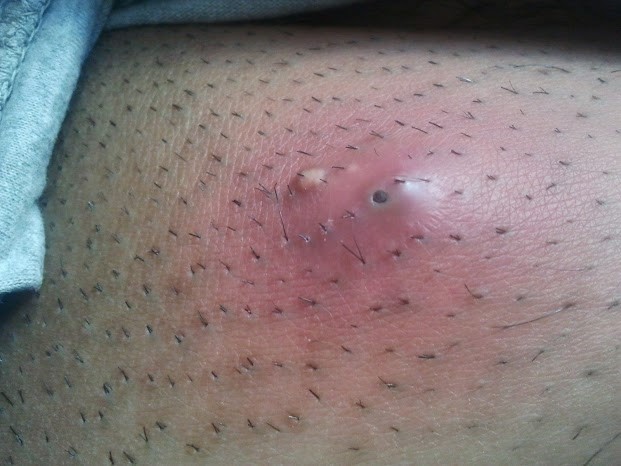
© Amrith Raj, CC BY-SA 3.0, via Wikimedia Commons
When an abscess forms in the skin, it initially looks like a pimple, boil, or an insect bite, but it then usually turns into a red, swollen lump, which is warm and tender to touch and filled with pus.
When an abscess forms under the skin, it forms a painful swollen lump with raised and inflamed edges, often with surrounding redness.
If an abscess forms deeper within the body, it usually causes localised pain with a very high temperature, but the symptoms will depend on which part of your body the abscess forms.
A pilonidal abscess is an infection of a pilonidal sinus. A pilonidal sinus develops in the cleft between your buttocks, just below the base of your spine (this is called the sacrococcygeal region). See also the leaflet Pilonidal Sinus for further information.
Types of abscesses
There are two different types of abscess:
Skin abscesses
Most abscesses form just under the skin. A boil is the most common example. In this case, a hair follicle becomes infected and develops into a small abscess. A gland just below the skin at the entrance to the vagina can become infected and develop into a Bartholin's abscess.
Occasionally, women who are breastfeeding can develop an infection in the breast and an abscess can occur (breast abscess). The symptoms of a skin abscess include swelling, redness, and pain, and they can often be warm to the touch. It is usually easier to treat a skin abscess.
Internal abscesses
An abscess sometimes forms inside the body within an organ or in a space between organs. Various symptoms may occur, depending on the site of the abscess. This usually happens because of another condition. Infection in the liver, for example, can result in a liver abscess.
أن الموجات فوق الصوتية or other types of scan can confirm the diagnosis. If infection occurs in the gums or teeth a dental abscess can develop. GP surgeries cannot provide treatment for dental abscesses. You should always see a dentist to assess your dental abscess and advise on the treatment you need.
What causes an abscess?
The usual cause is an infection with bacteria entering the body. Certain bacteria are more likely to be 'pus-forming' as they make chemicals that can damage the body's tissues. These include Staphylococcus aureus و Streptococcus pyogenes.
The infection causes the immune system to set off white blood cells and chemicals to fight the bacterial infection. In this 'battle' some tissue dies. A cavity forms and fills with pus. The cavity becomes bigger if the infection continues and the pus can't get out.
How to get rid of an abscess
Draining the abscess
The main treatment is to drain the abscess. Usually this involves a small operation to make a cut in the skin and allow the pus to drain. A local anaesthetic may be used to numb the area but may not be necessary. A scar will form as the skin heals. If the abscess is deep, a small piece of gauze (antiseptic wick) may be put in the drainage hole. This stops the hole from sealing over before all of the pus has drained and the cavity has shrunk.
A more difficult operation is needed to drain the infection when it is inside the body. The techniques vary, depending on the site. Sometimes a tube will be left in the hole to drain the pus.
Antibiotics may also be prescribed, especially if there is a skin infection (التهاب النسيج الخلوي). However, they are often not able to treat the infection on their own.
Can an abscess burst on its own?
A skin abscess would normally eventually burst on to the skin surface and let out the pus. This may be after it becomes larger and more painful. So surgical drainage is usually best. However, a small boil may burst and heal without treatment, particularly after applying a warm compress.
An untreated abscess inside the body is usually very serious. You are likely to become very ill and treatment is usually needed.
How to prevent an abscess
An abscess is difficult to prevent inside the body as it usually happens in people who are ill with other problems.
It may be possible to prevent a skin abscess. 1 in 10 people with them develop another one within 12 months. Good personal hygiene (washing with soap and water) will reduce the number of bacteria on the skin and prevent re-infection. A large number of bacteria are frequently present on sheets and clothes of people with boils. Carefully washing clothes and sheets, and not sharing clothes and towels, may reduce the chances of re-infection or the chances of spreading the infection to friends and family members.
Used dressings and gauze should be thrown away to avoid spreading the infection further. Frequent changing of dressings is recommended for the same reason.
They are more common in people who smoke or are obese, so stopping smoking or losing weight, may help to prevent boils. They are also more common in young people (aged under 30), people with السكري and people who have taken an antibiotic in the previous six months.
Who develops abscesses?
Most skin abscesses occur in people who are otherwise well. There is often no underlying cause and usually no further problems occur once it has gone. Your doctor may check your urine for sugar, as abscesses tend to occur more often in people with diabetes. Recurring skin abscesses may be the first indication of a problem with your immune system.
An abscess inside the body usually occurs in people who are ill with other medical conditions, or in people with a weakened immune system. For example, a lung abscess may form following a bout of pneumonia; a brain abscess may form after a penetrating head wound (an injury in which the outer covering of the brain is pierced) which can be life-threatening.
When to see a doctor for an abscess
If you have a lump that is painful, red or hot, or you feel hot and shivery you should see doctor urgently. Similarly, if you have a swelling or redness spreading away from the lump – the redness may be harder to see on brown or black skin.
You should also ask a doctor to check:
a lump that is getting bigger.
a lump anywhere on your body that lasts more than 2 weeks.
a lump that is hard and does not move.
a lump or swelling in your breast.
a lump and you have a weakened immune system or a long-term condition such as diabetes.
اختيارات المرضى لـ التهابات أخرى
العدوى
المكورات العقدية أ
المكورات العقدية من المجموعة أ، أو المكورات العقدية من النوع أ، هي نوع شائع من البكتيريا، وقد تم التعرف عليها كسبب للعدوى لسنوات عديدة. معظم حالات العدوى بالمكورات العقدية من المجموعة أ تكون خفيفة، ولكن في حالات نادرة، يمكن أن تسبب مرضًا خطيرًا وحتى الوفاة.
بقلم الدكتور كولين تايدي، MRCGP

العدوى
الحمى الروماتيزمية
Rheumatic fever is an illness caused by a particular type of bacterium called beta-haemolytic streptococcus. It is the same bug that can cause a sore throat. It can affect your heart, as well as your joints, skin and nervous system.
بقلم الدكتورة هايلي ويلاسي، FRCGP
الأسئلة الشائعة
هل يمكن أن ينتشر الصديد من الخراج ليصيب أجزاء أخرى من جسمي؟
نعم، يحتوي القيح من الخراج على بكتيريا. من المهم التخلص من الضمادات والشاش المستخدم بعناية وتغييرها بشكل متكرر لتجنب انتشار العدوى بشكل أكبر. النظافة الجيدة وعدم مشاركة الملابس أو المناشف هي أيضًا تدابير وقائية مهمة.
ماذا يجب أن أفعل إذا انفجر الخراج في المنزل؟
تتناول المقالة بشكل أساسي تصريف الجراحي أو انفجار دمل صغير من تلقاء نفسه. بينما تشير إلى أن الخراج الجلدي سينفجر عادة في النهاية، فإنها تقترح أن التصريف الجراحي هو الأفضل عادة. إذا انفجر في المنزل، فمن الحكمة متابعة الأمر مع طبيب للحصول على نصيحة، خاصة لضمان الشفاء بشكل صحيح وإدارة أي خطر عدوى مستمر.
هل هناك أي تغييرات في نمط الحياة يمكنني القيام بها لتقليل خطر الإصابة بالخراجات؟
نعم، يمكن لبعض العوامل المتعلقة بنمط الحياة أن تزيد من خطر الإصابة. إذا كنت تدخن أو تعاني من السمنة، فإن الإقلاع عن التدخين أو فقدان الوزن قد يساعد في منع الدمامل، وهي نوع من الخراجات الجلدية. كما أن الحفاظ على النظافة الشخصية الجيدة، مثل الغسل بالصابون والماء، يقلل من البكتيريا على الجلد ويمكن أن يمنع إعادة العدوى.
كم من الوقت يستغرق عادةً شفاء الخراج بعد تصريفه؟
تذكر المقالة أن ندبة ستتشكل مع شفاء الجلد بعد التصريف الجراحي. إذا تم استخدام قطعة صغيرة من الشاش، فإنها تمنع الفتحة من الانغلاق بسرعة كبيرة، مما يسمح للقيح بالتصريف وتجويف الانكماش. ومع ذلك، لم يتم تحديد المدة الدقيقة لعملية الشفاء ويمكن أن تختلف اعتمادًا على حجم وموقع الخراج.
هل يمكن للأطفال أن يصابوا بالخراجات، وهل يتم علاجهم بشكل مختلف؟
لا يناقش المقال بشكل محدد الخراجات عند الأطفال أو ما إذا كان علاجها يختلف عن البالغين. يركز على الأسباب العامة والأنواع والعلاجات للخراجات لدى الأفراد من جميع الأعمار. ومع ذلك، يلاحظ أن الخراجات الجلدية أكثر شيوعًا بين الشباب (تحت سن 30).
ما هو الفرق بين الدمّل والخراج؟
الدمل هو مثال شائع على الخراج الجلدي، حيث يصاب جريب الشعر ويتحول إلى تجمع صغير من القيح. في حين أن جميع الدمامل هي نوع من الخراج، إلا أن ليس كل الخراجات دمامل. يمكن أن تتكون الخراجات في أي مكان في الجسم، إما تحت الجلد مباشرة أو في عمق الأعضاء.
قراءة إضافية ومراجع
- Boils; ديرم نت نيوزيلندا
- Boils, carbuncles, and staphylococcal carriage; NICE CKS، مايو 2024 (الوصول متاح فقط في المملكة المتحدة)
- Thomas O, Ramsay A, Yiasemidou M, et al; The surgical management of cutaneous abscesses: A UK cross-sectional survey. Ann Med Surg (Lond). 2020 Nov 27;60:654-659. doi: 10.1016/j.amsu.2020.11.068. eCollection 2020 Dec.
- Pastorino A, Tavarez MM; Incision and Drainage.
عن المؤلفعرض السيرة الذاتية الكاملة

الدكتورة هايلي ويلاسي، زميلة الكلية الملكية للأطباء العامين
طبيب عام، مؤلف طبي
MBChB (1992), DRCOG, DFFP, MRCOG (Part 1) MRCGP (2007), DFSRH (2013), MSc - medical education (2020)
كانت الدكتورة هايلي ويلاسي طبيبة عامة في هيئة الخدمات الصحية الوطنية تعمل في شمال غرب إنجلترا، وتقاعدت من الممارسة السريرية في عام 2022 بعد 30 عامًا.
حول المراجععرض السيرة الذاتية الكاملة

الدكتور كولين تايدي، MRCGP
طبيب عام، مؤلف طبي
MBBS, MRCGP, MRCP (Paediatrics), DCH
الدكتور كولين تايدي هو طبيب في هيئة الخدمات الصحية الوطنية، ويعمل في أوكسفوردشاير.
تاريخ المقال
تمت كتابة المعلومات على هذه الصفحة ومراجعتها من قبل أطباء مؤهلين.
المقال متاح أيضًا باللغة الإنجليزية, الألمانية, إسبانية, الفرنسية, إيطالي, البرتغالية, الهندية, العبرية, العربية ,، و السويدية.
المراجعة التالية مستحقة: 24 سبتمبر 2028
26 سبتمبر 2023 | أحدث إصدار
آخر تحديث بواسطة
الدكتورة هايلي ويلاسي، زميلة الكلية الملكية للأطباء العامينمراجعة من قبل
الدكتور كولين تايدي، MRCGP

اسأل، شارك، تواصل.
تصفح المناقشات، اطرح الأسئلة، وشارك التجارب عبر مئات المواضيع الصحية.

هل تشعر بتوعك؟
قم بتقييم أعراضك عبر الإنترنت مجانًا
اشترك في النشرة الإخبارية للمرضى
جرعتك الأسبوعية من النصائح الصحية الواضحة والموثوقة - مكتوبة لمساعدتك على الشعور بالاطلاع والثقة والتحكم.
من خلال الاشتراك، فإنك تقبل سياسة الخصوصية. يمكنك إلغاء الاشتراك في أي وقت. نحن لا نبيع بياناتك أبدًا.
المزيد في العدوى
- العدوى الفطرية
- التهاب المعدة والأمعاء عند الأطفال
- الثآليل التناسلية
- متلازمة غيلان باريه
- علاج ومنع قمل الرأس
- القوباء
- البزل القطني
- الوقاية من الملاريا
- لقاح المكورات السحائية للالتهاب السحائي
- فيروس جدري القرود
- الميكوبلازما التناسلية
- نوروفيروس
- شلل الأطفال ولقاح شلل الأطفال
- ألم عصبي تالٍ للهربس
- فيروس الجهاز التنفسي المخلوي (RSV)
- التطعيم ضد فيروس الجهاز التنفسي المخلوي (RSV)
- الحمى الروماتيزمية
- الحزام الناري
- أعراض الإنتان لدى البالغين
- أدوية الديدان