
الختان
مراجعة من قبل الدكتورة روزالين أدلمان، MRCGPآخر تحديث بواسطة الدكتور محمد شريف رضائي، عضو الكلية الملكية للأطباء العامينآخر تحديث 18 نوفمبر 2024
يتوافق مع الإرشادات التحريرية
- تنزيلتنزيل
- مشاركة
- Language
- نقاش
- Ask Patient
- نسخة صوتية
- أضف إلى المصادر المفضلة على جوجل
في هذه السلسلة:مشاكل القضيب، حكة القضيب، وألم القضيبالقذف المبكرالتهاب الحشفةمرض بيرونيسرطان القضيبتضيق القلفة وانحباسها
Circumcision is an operation to remove the fold of skin, called the foreskin, that covers the tip of the penis. Circumcision is mostly performed on babies and young children, though it can be carried out at any age. It is done for both medical and religious reasons.
Circumcision is available on the NHS only for medical reasons. The procedure must be arranged privately for religious, cultural, or aesthetic reasons. Although some private clinics and providers offer circumcision safely and hygienically, they may not be subject to the same standards and regulations as NHS facilities. For non-medical circumcisions, parents might weigh the risks and benefits and choose to wait until their child is old enough to participate in the decision.
نظرة سريعة
Circumcision is the surgical removal of the foreskin from the penis.
It can be done for medical, religious, or cultural reasons.
Medical reasons include phimosis, paraphimosis, balanitis, and balanitis xerotica obliterans.
The procedure typically involves cutting the foreskin and can be done with stitches or clamps.
Recovery usually takes 7 to 10 days before returning to work or school.
Potential benefits include symptom relief and reduced risk of certain infections and cancers.
Risks include bleeding, infection, scarring, or changes in sensation.
Why is circumcision done?
Circumcision is usually performed for medical, religious and cultural reasons.
Medical reasons
There are several medical conditions affecting the foreskin for which circumcision is considered a treatment option. These include:
تضيق القلفة: this occurs when your foreskin becomes too tight to pull over the head of the penis (the glans). If the foreskin is not too tight, you may want to try other types of treatment, such as a steroid cream or an operation, to loosen or refashion the foreskin rather than remove it.
انحباس القلفة: if your foreskin is pulled back for cleaning or to insert a tube (a catheter) to drain the bladder and is not replaced in its normal position, the glans can start to swell, trapping the foreskin at its base.
التهاب الحشفة and posthitis: balanitis is an infection of the glans. Posthitis is an infection of the foreskin. Both can be caused by poor hygiene. However, there can be other causes, such as allergies and sexually transmitted diseases. If either condition persists, you may require circumcision.
التهاب الحشفة الجاف المصلب: a skin condition that can affect your foreskin, the skin of your glans and the channel through which urine is passed (the urethra). It can cause white lumps on the affected skin and thinning and scarring of the urethra. Medicines are usually used to treat the condition, but circumcision can often help, especially if the urethra is not involved.
What does circumcision involve?
The operation is usually done using anaesthetic gel or a local anaesthetic injection in babies. In older children and adults, a general anaesthetic is usually given so you will be asleep for the procedure. If you are given a general anaesthetic, you are usually advised not to eat or drink anything for six hours beforehand.
The classic operation involves cutting off the foreskin and stitching back the remaining skin. In recent years, various plastic clamps have been used, such as the Gomco®, Plastibell®, and Shang Ring®. These clamps make the operation easier and quicker, result in a neater scar, and reduce the need for stitches.
الختان
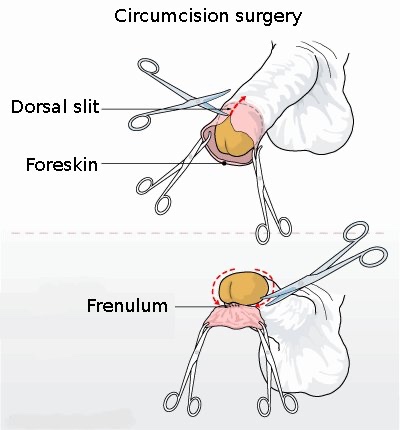
There is an alternative procedure called a preputioplasty which involves cutting and stretching the foreskin rather than removing it altogether.
How long does circumcision take?
The duration of the procedure may vary between babies and adults. In adults, it typically takes about 20 minutes. Additional time is usually needed for preparation and recovery before going home.
Is circumcision painful
Local or general anaesthesia is used to prevent pain during the procedure. Some soreness or discomfort afterwards is common and can be managed with pain relief. Pain may also occur if complications such as swelling or infection arise.
Recovering from circumcision
You should be able to leave hospital as soon as you are ready. However, if you have had a general anaesthetic, you may feel drowsy and should wait until you are fully awake.
You should not drive and should make sure someone is there to accompany you when you go home. You should refrain from drinking alcohol, operating machinery or signing legal documents for 24 hours after the procedure.
You can do any activity you feel comfortable with and should be able to return to work after seven to ten days. The same period applies to children returning to nursery or pre-school or school. If your job involves heavy physical work, you may need to take a couple of weeks off.
You should also avoid sex (intercourse) or masturbation for about four weeks, as this can lead to pain and bleeding.
What are the benefits of circumcision?
Benefits of circumcision include:
Relief from symptoms of any of the medical conditions described above.
Prevention of التهابات المسالك البولية.
Reduces the risk of getting a عدوى تنتقل عن طريق الاتصال الجنسي مثل فيروس نقص المناعة البشرية, الهربس البسيط or human papillomavirus.
Reduces the risk of you getting some types of سرطان القضيب.
What are the risks of circumcision?
As with any operation, you may have a reaction to a general anaesthetic, bleeding from the wound, swelling or infection. Bleeding can usually be stopped by applying pressure, but some people need to be taken back to the theatre to have stitches put in.
Other possible complications can include:
Removal of too much or too little foreskin.
Loss of sensation in the tip of the penis.
Rare complications include scarring of the urethra (meatal stenosis), damage to the end of the penis and scar tissue (adhesions) between the glans and the shaft.
اختيارات المرضى لـ اضطرابات القضيب

صحة الرجال
الإحليل التحتي
Hypospadias is a common abnormality of the urethra and penis that is present at birth; a type of birth defect. This can cause problems with passing urine and also with erections. It can range in severity. Surgical correction is usually very successful.
بقلم الدكتورة توني هازيل، FRCGP

صحة الرجال
مشاكل القضيب، حكة القضيب، وألم القضيب
هناك عدد من المشاكل التي يمكن أن تؤدي إلى ألم في القضيب، أو حكة في القضيب، أو شعور عام بعدم الراحة في القضيب. على سبيل المثال، يمكن أن تسبب أنواع مختلفة من العدوى أو الالتهابات حكة أو ألم في القضيب، مثل القلاع، والهربس، والأكزيما. أحيانًا تكون هناك أعراض أخرى، مثل نتوءات أو تقرحات على القضيب، أو إفرازات من القضيب.
بقلم الدكتور دوغ مكيتشني، MRCGP
الأسئلة الشائعة
What is the difference between classic circumcision and using plastic clamps?
The classic operation involves cutting off the foreskin and then stitching the remaining skin. Newer methods using plastic clamps like Gomco®, Plastibell®, and Shang Ring® simplify and speed up the procedure, result in a neater scar, and often reduce the need for stitches.
Are there any alternative procedures to full circumcision?
Yes, there is an alternative called a preputioplasty. This procedure involves cutting and stretching the foreskin rather than removing it completely.
How long after circumcision can I resume normal activities?
You can generally resume most activities you feel comfortable with. You should be able to return to work, nursery, or school after seven to ten days. If your job involves heavy physical work, you might need two weeks off. It is also advised to avoid sex or masturbation for about four weeks to prevent pain and bleeding.
Is it normal to have soreness or discomfort after the procedure?
Yes, some soreness or discomfort following the procedure is common. This can usually be managed with pain relief medication. Pain may also occur if complications like swelling or infection develop.
What are some of the less common risks associated with circumcision?
Beyond general surgical risks, less common complications can include scarring of the urethra (meatal stenosis) and damage to the end of the penis. There can also be scar tissue (adhesions) forming between the glans and the shaft.
قراءة إضافية ومراجع
- Management of foreskin conditions; British Association of Paediatric Urologists (2013)
- Friedman B, Khoury J, Petersiel N, et al; Pros and cons of circumcision: an evidence-based overview. Clin Microbiol Infect. 2016 Sep;22(9):768-774. doi: 10.1016/j.cmi.2016.07.030. Epub 2016 Aug 4.
- Piontek EA, Albani JM; Male Circumcision: The Clinical Implications Are More Than Skin Deep. Mo Med. 2019 Jan-Feb;116(1):35-37.
- Sharma SC, Raison N, Khan S, et al; Male circumcision for the prevention of human immunodeficiency virus (HIV) acquisition: a meta-analysis. BJU Int. 2018 Apr;121(4):515-526. doi: 10.1111/bju.14102. Epub 2018 Jan 29.
عن المؤلفعرض السيرة الذاتية الكاملة
تم التحديث بواسطة

الدكتور محمد شريف رضائي، عضو الكلية الملكية للأطباء العامين
طبيب عام. مؤلف طبي
BSc, BA, MBBChir, MA (Cantab), MRCGP (2021), FHEA, MA (Distn)
الدكتور محمد شريف رضائي عالم وطبيب ومعلّم متعدد التخصصات وحائز على جوائز. يحمل درجة الماجستير وبكالوريوس الطب والجراحة من جامعة كامبريدج، ودرجة البكالوريوس في العلوم من كلية لندن الجامعية، ودرجة الماجستير من جامعة بيركبيك في لندن.
حول المراجععرض السيرة الذاتية الكاملة

الدكتورة روزالين أدلمان، MRCGP
MRCGP
الدكتورة روزالين أدلمان، طبيبة عامة في هيئة الخدمات الصحية الوطنية تعمل في شمال لندن.
تاريخ المقال
المقال متاح أيضًا باللغة الإنجليزية, الألمانية, إسبانية, الفرنسية, إيطالي, البرتغالية, الهندية, العبرية, العربية ,، و السويدية.
المراجعة التالية مستحقة: 17 نوفمبر 2027
18 نوفمبر 2024 | أحدث إصدار
آخر تحديث بواسطة
الدكتور محمد شريف رضائي، عضو الكلية الملكية للأطباء العامينمراجعة من قبل
الدكتورة روزالين أدلمان، MRCGP
المهنيين الطبيين
Looking for more in-depth clinical detail? Our Professional Reference articles are written for doctors, nurses and other healthcare professionals. They include comprehensive clinical guidance, diagnostic information and UK/European evidence summaries. If you need the clinical version, you can read the Professional Reference article on this topic.
شارك أفكارك أو تجاربك مع الآخرين في مجتمعات المرضى.
وصول بسيط إلى العلاجات والخدمات الصحية الموثوقة عبر الإنترنت.
Common conditions
Get help with common conditions through the NHS, without a GP appointment.
 التهاب الجيوب الأنفية الحاد
 التهاب اللوزتين البكتيري
 القوباء
 لدغات الحشرات
 الحزام الناريعدوى المسالك البولية
اشترك في النشرة الإخبارية للمرضى
جرعتك الأسبوعية من النصائح الصحية الواضحة والموثوقة - مكتوبة لمساعدتك على الشعور بالاطلاع والثقة والتحكم.
من خلال الاشتراك، فإنك تقبل سياسة الخصوصية. يمكنك إلغاء الاشتراك في أي وقت. نحن لا نبيع بياناتك أبدًا.