الكيتونات في البول
Urine ketones
مراجعة من قبل الدكتورة هايلي ويلاسي، زميلة الكلية الملكية للأطباء العامين آخر تحديث بواسطة الدكتورة سورانجي مينديس، MRCGPآخر تحديث 9 يناير 2024
يتوافق مع الإرشادات التحريرية
- تنزيلتنزيل
- مشاركة
- Language
- نقاش
- نسخة صوتية
- أضف إلى المصادر المفضلة على جوجل
تُنتج الكيتونات عندما يحرق الجسم الدهون للحصول على الوقود. عادةً ما يتم تكسير هذه الكيتونات بالكامل (استقلابها) بحيث يكون هناك عدد قليل جدًا من الكيتونات في البول. إذا لم يتمكن الجسم لأي سبب من الحصول على كمية كافية من الجلوكوز للطاقة، فسوف يتحول إلى استخدام دهون الجسم، مما يؤدي إلى زيادة الكيتونات في الجسم. وهذا يؤدي إلى زيادة الكيتونات في البول.
نظرة سريعة
Ketones are made when the body burns fat for energy, often when there isn't enough carbohydrate.
High levels of ketones can cause tummy pain, feeling sick, being sick, and diarrhoea.
Causes of high ketone levels include poorly controlled diabetes, starvation, or a ketogenic diet.
Ketones can be measured with a blood test or urine test using test strips.
If you have diabetes and high urine ketones, contact your GP or diabetes team immediately.
Diabetic ketoacidosis (DKA) is a serious condition where ketones build up due to lack of insulin.
What are ketones?
Ketones are produced when the body burns fat for energy. Normally, your body gets the energy it needs from carbohydrate in your diet. But stored fat is broken down and ketones are made if your diet does not contain enough carbohydrate to supply the body with sugar (glucose) for energy or if your body can't use blood sugar (glucose) properly.
Ketones are usually formed in the liver and are broken down so that very small amounts of ketones appear in the urine. However, when carbohydrates are unavailable (for example, in starvation) or can't to be used as an energy source (for example, in diabetes when there is insufficient insulin to create and use glucose in a healthy way), fat becomes the main source of energy and large amounts of ketones are made. Therefore, higher levels of urine ketones indicate that the body is using fat as the major source of energy.
High levels of ketones in your body can cause:
ألم في البطن (المعدة).
الشعور بالغثيان.
التقيؤ.
الإسهال.
The ketones that most often appear in the urine when fat instead of glucose for energy is used are called acetoacetate and beta-hydroxybutyric acid.
What are the causes of ketones in urine?
The causes of high levels of ketones and therefore urine ketones include:
Diabetic ketoacidosis (DKA).
Starvation: not eating for prolonged periods (for example, 12 to 18 hours).
النظام الغذائي الكيتوني (high-fat, low-carbohydrate diet). This can cause an increase in body ketones but much less than DKA and these are not usually harmful to the body. Ketogenic diets are sometimes used as a treatment for epilepsy.
How to test for ketones in urine
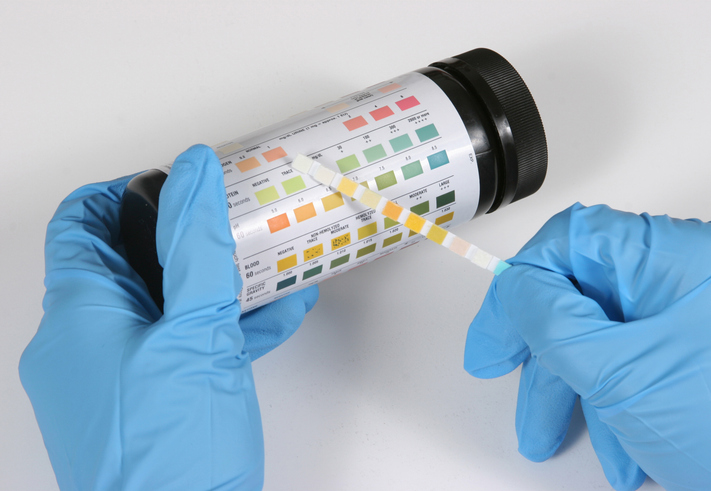
Ketones can be tested using a blood test or a urine test. Ketones in urine can be detected using test strips. There are several reasons why a urine ketone test may be needed:
It is a convenient way to monitor diabetes in addition to monitoring blood glucose levels, especially when the glucose levels are high and there is a risk of DKA.
It is also useful for people on a high-fat or low-carbohydrate diet to monitor and check ketone levels.
Ketone testing is also used for someone who cannot eat due to fasting or to eating disorders like anorexia. Pregnant women with diabetes should also be monitored with ketone testing.
Are ketones in urine test strips reliable?
Occasionally the urine ketone strips are positive but there aren't any urine ketones. The causes of this include:
If you are taking some medicines - for example, levodopa, sodium valproate.
If you are taking vitamin C.
If your body is very dry (dehydration).
One of the main problems with urine ketone testing is that there is a delay in the urine becoming positive to ketones. You may have a sudden increase in the level of ketones in your blood but there will usually be a delay in detecting the high level of urine ketones.
Equally your urine may also be positive to ketones because ketones have passed into your urine over the previous few hours, even though your blood ketone levels have already started to fall.
On other occasions the urine ketone strips may be negative when there are actually urine ketones. Most urine testing kits detect acetoacetate, not the main ketone, which is beta-hydroxybutyrate. It is possible for the test to be negative with high levels of beta-hydroxybutyrate.
What's the link between diabetes and ketones in urine?
Severe insulin deficiency causes an increase in blood sugar (glucose) levels (hyperglycaemia) and a very high level of ketones in the blood and urine (ketoacidosis). Urine is tested for ketones as part of monitoring of type 1 diabetes mellitus.
Monitoring of ketones is important in all people with diabetes:
When they feel unwell. See the separate leaflet called Diabetes and Illness for more information.
When the diet is low in carbohydrates or they are doing a lot of exercise.
In pregnant women with diabetes and in gestational diabetes.
When blood sugar levels are high (over 15 mmol/L).
If you have diabetes and there is a high level of urine ketones then you should contact your GP or diabetes team immediately. If you feel very unwell or a urine ketone test result is more than 2+ then there's a high chance you have DKA, requiring emergency medical care and treatment in hospital immediately.
الحماض الكيتوني السكري
DKA is a serious problem that can occur in people with diabetes if their body starts to run out of insulin. This causes ketones to build up in the body, which can be life-threatening if not spotted and treated quickly. DKA mainly affects people with داء السكري من النوع 1 but can sometimes occur in people with داء السكري من النوع 2.
If you have diabetes, it's important to be aware of the risk and know what to do if DKA occurs. Symptoms of DKA include:
Needing to pass more urine than usual.
Feeling very thirsty.
Feeling sick (nausea) and being sick (vomiting).
ألم في البطن (المعدة).
Your breath smelling fruity (like pear drop sweets).
Your breathing becoming fast and deep.
Feeling very tired and confused and as though you may collapse.
اختيارات المرضى لـ اختبارات البول والمثانة
الفحوصات والتحقيقات
اختبار شريط البول
A urine dipstick test tests the urine using a special strip of paper that is dipped into a sample of urine. The result is available almost immediately. It is sometimes called a rapid urine test.
بقلم الدكتورة فيليبا فينسنت، MRCGP

الفحوصات والتحقيقات
تصوير الجهاز البولي الوريدي
Intravenous urography is a test that uses X-rays and a special dye to help assess your kidneys, ureters, bladder and urethra. Note: the information below is a general guide only. The arrangements, and the way tests are performed, may vary between different hospitals. Always follow the instructions given by your doctor or local hospital.
بقلم الدكتور دوغ مكيتشني، MRCGP
الأسئلة الشائعة
What specifically is a 'ketogenic diet' mentioned in the article?
A ketogenic diet is a high-fat, low-carbohydrate eating plan that causes the body to produce ketones due to the lack of sufficient carbohydrates for energy. While it increases body ketones, the levels are generally much lower than those seen in conditions like DKA and are not usually considered harmful.
Are there different types of ketones, and do tests detect all of them?
Yes, there are different ketones. The ones most commonly found in urine when the body uses fat for energy are acetoacetate and beta-hydroxybutyric acid. Most urine testing kits primarily detect acetoacetate, not beta-hydroxybutyrate, which means a test could be negative even if high levels of beta-hydroxybutyrate are present.
How quickly do changes in blood ketone levels show up in a urine test?
There is a delay in detecting ketones in urine compared to blood. You may have a sudden increase in blood ketones, but it will take time for this to show in a urine test result. Conversely, your urine might still test positive for ketones from several hours prior, even if your blood ketone levels have already started to decrease.
If I have diabetes, what exact urine ketone test result should prompt me to seek immediate medical help?
If you have diabetes and a urine ketone test result is more than 2+, or if you feel very unwell, you should contact your GP or diabetes team immediately, as there's a high chance this indicates Diabetic Ketoacidosis (DKA) requiring emergency medical care.
قراءة إضافية ومراجع
- Mitchell R, Thomas SD, Langlois NE; How sensitive and specific is urinalysis 'dipstick' testing for detection of hyperglycaemia and ketosis? An audit of findings from coronial autopsies. Pathology. 2013 Oct;45(6):587-90. doi: 10.1097/PAT.0b013e3283650b93.
- What is DKA [Diabetic Ketoacidosis]?; داء السكري في المملكة المتحدة
- Arora S, Henderson SO, Long T, et al; Diagnostic accuracy of point-of-care testing for diabetic ketoacidosis at emergency-department triage: {beta}-hydroxybutyrate versus the urine dipstick. Diabetes Care. 2011 Apr;34(4):852-4. doi: 10.2337/dc10-1844. Epub 2011 Feb 9.
- Dhatariya K; Blood Ketones: Measurement, Interpretation, Limitations, and Utility in the Management of Diabetic Ketoacidosis. Rev Diabet Stud. 2016 Winter;13(4):217-225. doi: 10.1900/RDS.2016.13.217. Epub 2017 Feb 10.
- Veneti S, Grammatikopoulou MG, Kintiraki E, et al; Ketone Bodies in Diabetes Mellitus: Friend or Foe? Nutrients. 2023 Oct 16;15(20):4383. doi: 10.3390/nu15204383.
عن المؤلفعرض السيرة الذاتية الكاملة

الدكتور كولين تايدي، MRCGP
طبيب عام، مؤلف طبي
MBBS, MRCGP, MRCP (Paediatrics), DCH
الدكتور كولين تايدي هو طبيب في هيئة الخدمات الصحية الوطنية، ويعمل في أوكسفوردشاير.
حول المراجععرض السيرة الذاتية الكاملة

الدكتورة هايلي ويلاسي، زميلة الكلية الملكية للأطباء العامين
طبيب عام، مؤلف طبي
MBChB (1992), DRCOG, DFFP, MRCOG (Part 1) MRCGP (2007), DFSRH (2013), MSc - medical education (2020)
كانت الدكتورة هايلي ويلاسي طبيبة عامة في هيئة الخدمات الصحية الوطنية تعمل في شمال غرب إنجلترا، وتقاعدت من الممارسة السريرية في عام 2022 بعد 30 عامًا.
تاريخ المقال
تمت كتابة المعلومات على هذه الصفحة ومراجعتها من قبل أطباء مؤهلين.
المقال متاح أيضًا باللغة الإنجليزية, الألمانية, إسبانية, الفرنسية, إيطالي, البرتغالية, الهندية, العبرية, العربية ,، و السويدية.
Next review due: 5 Jan 2029
9 يناير 2024 | أحدث إصدار
آخر تحديث بواسطة
الدكتورة سورانجي مينديس، MRCGPمراجعة من قبل
الدكتورة هايلي ويلاسي، زميلة الكلية الملكية للأطباء العامين1 أغسطس 2017 | نُشر في الأصل
كتبه:
الدكتور كولين تايدي، MRCGP

اسأل، شارك، تواصل.
تصفح المناقشات، اطرح الأسئلة، وشارك التجارب عبر مئات المواضيع الصحية.

هل تشعر بتوعك؟
قم بتقييم أعراضك عبر الإنترنت مجانًا
اشترك في النشرة الإخبارية للمرضى
جرعتك الأسبوعية من النصائح الصحية الواضحة والموثوقة - مكتوبة لمساعدتك على الشعور بالاطلاع والثقة والتحكم.
من خلال الاشتراك، فإنك تقبل سياسة الخصوصية. يمكنك إلغاء الاشتراك في أي وقت. نحن لا نبيع بياناتك أبدًا.
المزيد في الاختبارات والتحقيقات
- تخطيط القلب الكهربائي المتنقل
- غازات الدم الشرياني
- تنظير القصبات
- فحص الأشعة المقطعية
- فحص DMSA
- تخطيط صدى القلب
- معدل الترشيح الكبيبي المقدر
- تسجيل ضغط الدم في المنزل والتنقل
- تصوير الجهاز البولي الوريدي
- خزعة الكلى
- عينة بول في منتصف الجريان
- فحص الرنين المغناطيسي
- الفحوصات البدنية لحديثي الولادة
- اختبار فحص حديثي الولادة
- اختبار دم روتيني لوظائف الكلى
- تنظير السيني
- الثلاسيميا
- اختبارات وظائف الغدة الدرقية
- فحوصات الغدة الدرقية واختبارات الامتصاص
- تصوير المثانة والإحليل أثناء التبول