Acid reflux diet: foods to eat and avoid
Peer reviewed by Dr Colin Tidy, MRCGPLast updated by Lynn StephenLast updated 21 Oct 2025
Meets Patient’s editorial guidelines
- DownloadDownload
- Share
- Language
- Discussion
- Audio Version
- Add to preferred sources on Google
If you have a burning pain in your chest or travelling up your throat after eating, you're probably experiencing acid reflux - a feeling more commonly described as heartburn. Some foods are more likely to trigger this annoying and uncomfortable symptom. So, if it keeps revisiting you after meals, it may help to look at how you eat as well as what you eat.

What is acid reflux?
Acid reflux, also known as gastro-oesophageal reflux disease (GORD) is caused by acid from the stomach leaking up into your food pipe (oesophagus).
When we say we have heartburn, we're describing the feeling of acid reflux - that burning pain in your chest. Acid reflux can also cause this sensation in your throat.
What causes acid reflux?
The symptoms can be caused by several different factors in your body:
Your stomach may be producing too much acid. One of the triggers for this can be stress.
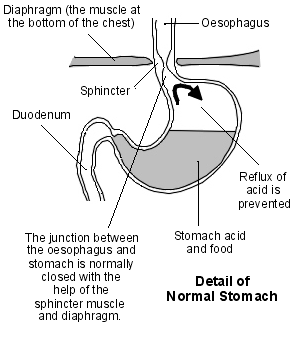
The muscle ring (sphincter) at the bottom of your food pipe may be too relaxed and open, allowing food and acid to reflux upwards. Alcohol and smoking both relax the sphincter.
In people with a hiatus hernia, stomach contents can reflux easily into your oesophagus.
Your stomach may be slow to empty after eating. This is more likely if you eat a fatty meal.
Something may be increasing the pressure in your tummy (abdomen), forcing stomach contents upwards. Factors which increase the pressure include tight clothing, obesity, pregnancy and coughing.
Diagram of upper gut and nearby organs
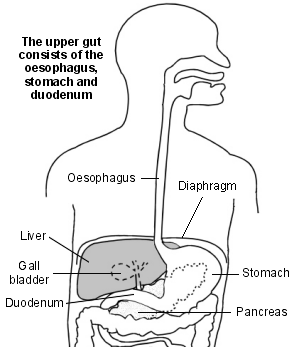
Diagram of normal stomach
What can trigger acid reflux?
It is helpful to try to identify whether there are any particular foods which trigger your acid reflux. It might be a good idea to keep a food diary for at least a week, recording what you eat and drink and what symptoms you have.
There is quite a big list of foods which are said to cause acid reflux. However, they may not all apply to you. For some people, acid reflux may not be triggered by particular foods at all but by other factors. Sometimes the trigger may be a combination of foods and other factors.
There are lots of factors around eating which can make these symptoms worse:
Eating late at night. If possible, don't eat a large meal within three hours of going to bed.
Eating just before you exercise.
Eating large meals.
Eating quickly.
Obesity. Even a moderate weight loss may help to reduce symptoms.
Having a lot of fluid to drink with a meal.
Foods to avoid with acid reflux
There are some foods which individual people find make acid reflux worse. An acid reflux diet doesn't have to mean missing out on all these foods - your food triggers may be different. But these foods have all been suggested as reflux triggers, so it's worth noting if you get symptoms after eating any of them.
Foods to avoid:
Chocolate.
Mint.
Tomatoes.
Onions.
Garlic.
Citrus fruits - such as oranges and lemons.
Caffeinated and fizzy drinks.
Coffee
Peppers.
Cucumber.
Spicy foods.
Processed meats - for example, salami, bacon.
How to get rid of acid reflux
An acid reflux diet involves cutting all of the suggested foods out of your diet for one or two weeks to see if your symptoms disappear. If they do disappear then you could add these foods back into your diet one at a time to see if they are what is causing your reflux.
If your symptoms come back, perhaps because of other factors as listed above, you may need to cut out potential triggers again until the symptoms have settled down.
Foods to eat with acid reflux
There aren't any specific foods to eat to treat that feeling of heartburn, but in general, a healthy diet is associated with a lower chance of acid reflux symptoms.
In particular:
Fresh fruits and vegetables, especially raw fruits and leafy green vegetables.
Non-acidic fruit, such as melons and bananas, may be better than more acidic fruits - such as oranges.
Good bacteria (probiotics), such as those found in yoghurt.
Indigestion and heartburn are rarely due to a serious cause, but there are some possible warning signs which should be checked out by a doctor.
Symptoms not to ignore when it comes to heartburn:
Persistent heartburn or indigestion (acid reflux, dyspepsia).
Vomiting after eating.
Feeling full after small amounts of food.
Food sticking as you try to swallow it - difficulty swallowing (dysphagia).
Weight loss.
Pain in the front or back of the chest as you swallow.
Loss of appetite.
Persistent stomach pain.
New feeling of being tired all the time (fatigue).
Darker poo - if it is black or tarry, call for an emergency ambulance immediately as this could be a stomach bleed and can be life threatening.
Patient picks for Indigestion and heartburn
Digestive health
IBS diet: foods to eat and avoid
Diet and lifestyle management can be used as a treatment for irritable bowel syndrome (IBS). People with IBS should use a staged approach to try and treat their symptoms. It may be as simple as eating healthily and changing lifestyle factors. There may be slightly stricter and more specific ways to manage symptoms with a plan called the low FODMAP diet.
by Victoria Raw

Digestive health
How to get rid of indigestion
Indigestion is incredibly common and can affect people differently. Fortunately, there are ways of managing it, most of which are simple lifestyle changes.
by Emily Jane Bashforth
About the authorView full bio

Dr Jan Sambrook, MRCGP
General Practitioner, Medical Author
MBChB, MRCGP
Dr Jan Sambrook qualified from the University of Sheffield in 1992.
About the reviewerView full bio

Dr Colin Tidy, MRCGP
General Practitioner, Medical Author
MBBS, MRCGP, MRCP (Paediatrics), DCH
Dr Colin Tidy is an NHS Doctor, based in Oxfordshire.
Article history
The information on this page is peer reviewed by qualified clinicians.
Article also available in English, German, Spanish, French, Italian, Portuguese, Hindi, Hebrew, Arabic, and Swedish.
Next review due: 22 Oct 2028
21 Oct 2025 | Latest version
10 Sept 2017 | Originally published
Authored by:
Dr Jan Sambrook, MRCGP
Join the conversation
Share your thoughts or experiences with others in our patient communities.

Ask, share, connect.
Browse discussions, ask questions, and share experiences across hundreds of health topics.

Feeling unwell?
Assess your symptoms online for free
Sign up to the Patient newsletter
Your weekly dose of clear, trustworthy health advice - written to help you feel informed, confident and in control.
By subscribing you accept our Privacy Policy. You can unsubscribe at any time. We never sell your data.
More in digestive health
- Crohn's disease in children: How to support your child
- Does aloe vera juice really help with gut health?
- Fatty liver diet: foods to eat and avoid
- Hiatus hernia treatment options
- How to avoid food poisoning this summer
- How to get rid of indigestion
- How to get rid of trapped wind: home remedies that work
- How to look after your liver
- How to look after your liver during freshers’ week
- How to treat food poisoning at home
- Hypnotherapy for IBS: the gut-brain axis
- Norovirus - when to see a doctor
- Piles (haemorrhoids) treatment options
- Poo - what's normal?
- Raw milk - is it actually good for you or just another wellness trend?
- The digestive system
- What causes nighttime stomach cramps?
- What is small intestinal bacterial overgrowth (SIBO)?
- What is the link between stroke recovery and gut health?
- What's the difference between hepatitis A, B, and C?