فتق الحجاب الحاجز
مراجعة من قبل الدكتورة توني هازيل، زميلة الكلية الملكية للأطباء العامينآخر تحديث بواسطة الدكتور كولين تايدي، MRCGPآخر تحديث 10 أكتوبر 2024
يتوافق مع الإرشادات التحريرية
- تنزيلتنزيل
- مشاركة
- Language
- نقاش
- Ask Patient
- نسخة صوتية
- أضف إلى المصادر المفضلة على جوجل
في هذه السلسلة:ارتجاع الحمض والتهاب المريءمريء باريتاختبارات الباريوم
Hiatus hernia is the term used to describe a condition where part of the stomach pushes up into the lower chest through a weakness in the diaphragm.
Not everyone with a hiatus hernia develops symptoms. However, if you have a hiatus hernia you are more prone to reflux acid into your gullet (oesophagus), which can cause heartburn and other symptoms. If symptoms do occur, treatment with acid-suppressing medication usually works well.
نظرة سريعة
الفتق الحجابي هو عندما يندفع جزء من عضو في بطنك عبر الحجاب الحاجز.
النوع الأكثر شيوعًا هو الفتق الحجابي الانزلاقي، حيث يبرز جزء من المعدة ومصرة المريء.
العديد من الأشخاص الذين يعانون من فتق الحجاب الحاجز لا تظهر عليهم أعراض، ولكن يمكن أن يزيد من خطر ارتجاع الحمض.
تشمل أعراض ارتجاع المريء حرقة المعدة، وآلام المعدة، والشعور بالغثيان، وطعم حمضي في الفم.
يمكن أن تساعد تغييرات نمط الحياة والأدوية مثل مثبطات مضخة البروتون في إدارة الأعراض.
راجع طبيبك إذا لم يتم التحكم في الأعراض بواسطة الدواء، أو إذا كنت تعاني من ألم أو صعوبة في البلع.
Explore treatment options for acid reflux
احصل على مشورة صحية متخصصة وأنت في راحة منزلك. أكمل استشارة سريعة عبر الإنترنت، متاحة على مدار الساعة طوال أيام الأسبوع، وسيراجع طلبك ممارس صحي مسجل في المملكة المتحدة. تتوفر خدمة التوصيل في اليوم التالي للعلاجات المؤهلة.

ما هو الفتق الحجابي؟
A hiatus hernia occurs when part of one of the organs in the tummy protrudes through the diaphragm. Most commonly this is a part of the stomach; however, it may be other organs, such as the pancreas, spleen or the upper gut (small intestine).
What is a hernia?
A hernia occurs when part of an organ pushes (protrudes) through a muscular wall that holds it in place. There are different types of hernia.
Types of hiatus hernia
Sliding hiatus hernias
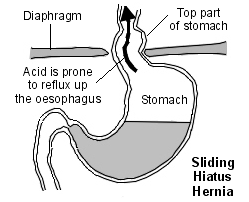
This is the most common type. In this situation, the sphincter muscle at the bottom of the gullet (oesophagus) and the top of the stomach protrudes through the hole (hiatus) opening in the diaphragm. This is the muscle separating the lungs from the tummy (abdomen).
The hernia may slide up and down, in and out of the lower chest. It is often quite small. This type of hiatus hernia tends to be associated with symptoms of acid reflux (see below.)
رسم توضيحي للفتق الحجابي الانزلاقي
Para-oesophageal hiatus hernia
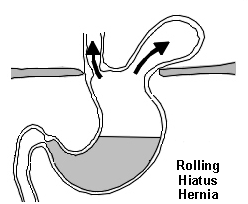
Also known as a rolling hiatus hernia, this type is less common. In this situation, a part of the stomach pushes (protrudes) up through the hole in the diaphragm next to the oesophagus.
Other organs from the tummy can also protrude through the hole in some cases. This could be the pancreas, the spleen or the upper gut (small intestine).
This is not the normal type of hiatus hernia and it is much less common than a sliding hiatus hernia. It is more risky, as there is more chance the organ protruding can get stuck, causing a blockage (obstruction).
رسم توضيحي للفتق الحجابي المتدحرج
You may also see hiatus hernias referred to as types 1-4 depending on where the stomach and oesophagus are in relation to the diaphragm.
Hiatus hernia symptoms
Often, many people have no hiatal hernia symptoms. However, if you have a hiatus hernia you are more prone to acid reflux (gastro-oesophageal reflux).
Acid reflux symptoms
أعراض ارتجاع الحمض (gastro-oesophageal reflux disease or GORD) include:
Heartburn: this is the main symptom. This is a burning feeling which rises from the upper tummy (abdomen) or lower chest up towards the neck.
Pain in the upper abdomen and chest.
الشعور بالغثيان.
An acid taste in the mouth.
الانتفاخ.
التجشؤ.
صعوبة في البلع(dysphagia).
A burning pain when you swallow hot drinks.
These symptoms tend to come and go and tend to be worse after a meal.
انظر أيضًا ارتجاع الحمض والتهاب المريء.
Uncommon symptoms
Some uncommon symptoms may occur. If any of these symptoms occur, it can make the diagnosis difficult, as these symptoms can mimic other conditions. For example:
A persistent cough, particularly at night, sometimes occurs. This is due to the refluxed acid irritating the windpipe (trachea). Asthma-like symptoms of cough and wheeze can sometimes be due to acid reflux.
Other mouth and throat symptoms sometimes occur such as gum problems, bad breath, sore throat, hoarseness and a feeling of a lump in the throat.
قد يظهر ألم شديد في الصدر في بعض الحالات (وقد يُظن خطأً أنه نوبة قلبية).
Rarely, in people with a para-oesophageal hernia, the symptoms can be those of a part of the bowel being blocked (obstructed). In this case there would be severe tummy pain or chest pain, with retching or being sick (vomiting).
ملاحظة: many people with acid reflux do not have a hiatus hernia. Also, many people with a hiatus hernia do not have symptoms of acid reflux. If you have a hiatus hernia it does not necessarily mean that the sphincter between the oesophagus and stomach does not work so well. It is just that having a hiatus hernia makes you more prone to having a poorly functioning sphincter and more prone to developing acid reflux symptoms.
However, people with a hiatus hernia who do get reflux, on average, tend to get more severe symptoms and problems associated with acid reflux. This may be because with a hiatus hernia any acid that gets into the oesophagus is more likely to remain in contact with the lining of the oesophagus for longer compared with people without a hiatus hernia.
What causes a hiatus hernia?
The cause of hiatus hernia is not clear. It is thought that most develop in people over the age of 50 years. It may be that the diaphragm muscle weakens with age. This allows part of the stomach to protrude through the hole in the diaphragm.
عوامل الخطر
Factors which increase the pressure in the tummy (abdomen), and may increase the risk of developing a hiatus hernia include:
Regular coughing.
Repeated lifting of heavy objects.
Family history of hiatus hernias.
Operations around the stomach and gullet can make you more likely to get the para-oesophageal type of hiatus hernia. You are also more likely to get this type if your spine or rib cage is more curved than usual. For example, people with scoliosis or kyphosis.
There is a rare type of hiatus hernia which occurs in newborn babies, due to a congenital defect of the stomach or diaphragm. 'Congenital' means that the condition is present from birth. This rare type is not dealt with further in this leaflet.
How common is a hiatus hernia?
The exact number of people with a hiatus hernia is not known, as many people with a hiatus hernia do not have symptoms. However, they are thought to be common. Some studies suggest that up to half of people having tests for indigestion (dyspepsia) are discovered to have a hiatus hernia.
How is a hiatus hernia diagnosed?
The standard tests used to diagnose a hiatus hernia are now endoscopy with or without manometry. A hiatus hernia may be seen on incidentally on a chest X-ray or on a CT scan.
تنظير داخلي
تنظير داخلي is increasingly being used for diagnosis. An endoscope is a thin, flexible telescope which is passed down the gullet (oesophagus) into the stomach. This allows a clinician to look inside. A hiatus hernia may be seen. Occasionally other tests are needed.
Manometry
Manometry is a test to measure muscle contractions of the oesophagus. The test measures the rhythmic muscle contractions in the oesophagus when you swallow. Manometry also measures the coordination and force used by the muscles of the oesophagus.
Barium swallow test
A hiatus hernia may be diagnosed if you have tests for symptoms of reflux. A special X-ray test called a barium swallow is sometimes used to confirm the presence of a hiatus hernia.
Hiatus hernia treatment
If you have no symptoms, in most cases you do not need any treatment for a hiatus hernia. The hernia usually causes no harm. However, if you have symptoms of acid reflux or your hernia is causing discomfort you be advised or offered the following:
تغييرات في نمط الحياة
If you have reflux symptoms, you should aim to lose weight if you are overweight.
Avoid anything that causes pressure on your stomach, such as tight clothing and corsets.
If you are a smoker you should aim to stop. If you drink a lot of alcohol, it also helps to cut down on alcohol.
Avoid laying your head flat. Raising the head of your bed may help with symptoms at night.
Avoiding eating your dinner too close to bedtime may also help with symptoms at night. Aim to have your dinner at least three hours before you go to bed ideally.
Smaller meals may be helpful, as may avoiding foods which you find make the reflux worse.
الأدوية
If changing your lifestyle does not help, you may need medication. Medicines which reduce the action or production of stomach acid may help.
The most effective medicines are مثبطات مضخة البروتون (PPIs). PPIs often used are:
If these do not suit you, your doctor will offer other options.
The current advice is to take PPIs at the lowest dose and for the shortest period of time possible; some people find they can get by taking them occasionally rather than every day. However, if other medicines do not help and your symptoms cause persistent problems, you should carry on with them for as long as required.
الجراحة
Rarely, a hiatus hernia causes severe symptoms of reflux which are not helped so well with medication. Therefore, an operation is occasionally advised. It may also be advisable if you cannot tolerate the medication for some reason.
During this operation the stomach is put back into the correct position and the weakened diaphragm muscle around the lower gullet (oesophagus) is tightened.
The operation is usually done these days using a laparoscope (a telescope inserted into the stomach). The operation quite often needs repeating in due course.
Complications of a hiatus hernia
Possible complications may occur if you have long-term reflux of acid into the gullet (oesophagus), which occurs in some cases. These include:
التهاب المريء
This is an inflammation of the lining of the gullet, caused by the acid washing against it over time. This can usually be treated with PPIs as mentioned above.
السعال
Sometimes the acid reflux can go back up and affect the voice box area (larynx) and give you a constant tickly سعال and/or sore throat/hoarse voice. This can also usually be treated successfully with anti-reflux medicines.
Narrowing (a stricture)
If you have severe and long-standing inflammation it can cause scarring and narrowing of the lower oesophagus. This is uncommon.
Twisting (volvulus)
This is also known as a strangulated hernia (trapping of the hernia with blockage of the blood supply). This is a rare complication which can occur with the uncommon para-oesophageal type of hiatus hernia.
مريء باريت
The lining of the oesophagus is made up of a number of units called cells. In مريء باريت the cells that line the lower oesophagus change. The changed cells are more prone than usual to becoming cancerous. (About 1 in 20 men and 1 in 33 women with Barrett's oesophagus develop cancer of the oesophagus.)
السرطان
Your risk of developing سرطان المريء is slightly increased compared with the normal risk if you have long-term acid reflux.
This small increased risk is slightly higher still in people with reflux plus a hiatus hernia. This is because reflux problems, on average, tend to be more severe in people with a hiatus hernia compared to those without a hiatus hernia.
ملاحظة: it has to be stressed that most people with reflux or hiatus hernia do not develop any of these complications. They are uncommon. Tell your doctor if you have pain or difficulty when you swallow (food sticking), which may be the first symptom of a complication. See your doctor if your symptoms aren't being controlled by the medicines you have been prescribed, or if there is any change.
Understanding the upper gut
The gut (gastrointestinal tract) is the tube that starts at the mouth and ends at the back passage (anus).
The upper gut includes the gullet (oesophagus), stomach and the first part of the small intestine (the duodenum). Food passes down the oesophagus into the stomach. The stomach makes acid which helps to digest food. After being mixed in the stomach, food passes into the duodenum to be digested by the digestive system.
Diagram of upper gut and nearby organs
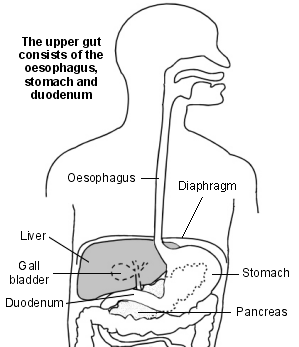
Diagram of normal stomach
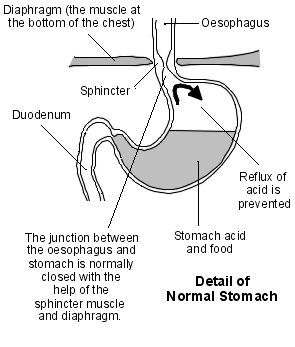
The walls of the stomach contain muscle. At the junction of the stomach and the oesophagus there is a thickened area of muscle which is called a sphincter. The sphincter acts like a valve. When food comes down the oesophagus into the stomach, the sphincter relaxes. However, it closes at other times to stop food and acid in the stomach going back up (refluxing) into the oesophagus.
The diaphragm is a large flat muscle that separates the lungs from the tummy (abdomen). It helps us to breathe.
The oesophagus comes through an opening (hiatus) in the diaphragm just before it joins to the stomach. Normally, all of the stomach is below the diaphragm. The muscle fibres in the diaphragm around the lower oesophagus help the sphincter to keep the oesophagus closed to prevent reflux of acid and food.
Explore treatment options for acid reflux
احصل على مشورة صحية متخصصة وأنت في راحة منزلك. أكمل استشارة سريعة عبر الإنترنت، متاحة على مدار الساعة طوال أيام الأسبوع، وسيراجع طلبك ممارس صحي مسجل في المملكة المتحدة. تتوفر خدمة التوصيل في اليوم التالي للعلاجات المؤهلة.
اختيارات المرضى لـ حالات هضمية أخرى
صحة الجهاز الهضمي
فتق
يحدث الفتق عندما يندفع جزء داخلي من الجسم عبر نقطة ضعيفة في العضلات المحيطة أو جدار الأنسجة. تتناول هذه النشرة الفتق البطني الذي يحدث عندما يؤدي ضعف في جدار البطن إلى بروز بعض محتويات التجويف البطني. يحتاج بعض الفتق إلى علاج عن طريق إجراء عملية جراحية. هناك الآن أنواع مختلفة من العمليات الجراحية، والتي عادة ما تكون ناجحة جدًا.
بقلم الدكتورة توني هازيل، FRCGP
صحة الجهاز الهضمي
متلازمة التقيؤ الدوري
متلازمة التقيؤ الدوري هي حالة تحدث بشكل رئيسي عند الأطفال ولكن يمكن أن تؤثر أيضًا على البالغين. وهي أكثر شيوعًا لدى الأشخاص الذين يعانون من الصداع النصفي. يعاني الأطفال من نوبات شديدة من الشعور بالغثيان (الغثيان) والتقيؤ (القيء)، وأحيانًا مع أعراض أخرى. بين هذه النوبات يكون الشخص بصحة جيدة تمامًا. تتوفر علاجات مختلفة لتقليل تكرار هذه النوبات وأيضًا لتحسين الأعراض عند حدوثها.
بقلم الدكتورة فيليبا فينسنت، MRCGP
الأسئلة الشائعة
هل يمكن أن يكون الفتق الحجابي وراثيًا؟
نعم، يُعتبر التاريخ العائلي للفتق الحجابي أحد عوامل الخطر. سبب الفتق الحجابي غير واضح، ولكن يُعتقد أن معظم الحالات تتطور لدى الأشخاص الذين تزيد أعمارهم عن 50 عامًا، ربما بسبب ضعف عضلة الحجاب الحاجز مع التقدم في العمر.
هل يمكن أن يسبب الفتق الحجابي مشاكل في التنفس؟
على الرغم من أنه لا يسبب مشاكل في التنفس بشكل مباشر، إلا أن السعال المستمر أو الأعراض المشابهة للربو مثل الصفير، خاصة في الليل، يمكن أن تحدث أحيانًا بسبب ارتجاع الحمض الذي يهيج القصبة الهوائية. ارتجاع الحمض هو عرض شائع مرتبط بالفتق الحجابي.
أين سأشعر بالألم إذا كان لدي فتق حجابي؟
إذا كنت تعاني من أعراض ارتجاع الحمض، وهو شائع مع الفتق الحجابي، فقد تشعر بإحساس حارق (حرقة) يرتفع من الجزء العلوي من البطن أو الصدر السفلي نحو الرقبة. قد تشعر أيضًا بألم في الجزء العلوي من البطن والصدر.
هل يمكنني الشعور بحركة الفتق الحجابي؟
تذكر المقالة أنه في حالة الفتق الحجابي المنزلق، وهو النوع الأكثر شيوعًا، قد ينزلق الفتق لأعلى ولأسفل، داخل وخارج الجزء السفلي من الصدر. ومع ذلك، لا تحدد المقالة ما إذا كان بإمكان الشخص الشعور بهذا الحركة.
هل يساعد تناول اللانسوبرازول في علاج الفتق الحجابي؟
لانسوبرازول هو نوع من مثبطات مضخة البروتون (PPI)، وهي أدوية فعالة تستخدم لتقليل عمل أو إنتاج حمض المعدة. إذا لم تكن تغييرات نمط الحياة كافية لإدارة الأعراض، قد يتم وصف أدوية مثل لانسوبرازول للمساعدة في أعراض ارتجاع الحمض المرتبطة بالفتق الحجابي. النصيحة هي تناول مثبطات مضخة البروتون بأقل جرعة ولأقصر فترة ممكنة، ولكن يمكن الاستمرار في استخدامها طالما كانت الأعراض مستمرة.
هل يمكن أن يؤدي الفتق الحجابي إلى السرطان؟
يزداد خطر إصابتك بسرطان المريء بشكل طفيف إذا كنت تعاني من ارتجاع الحمض لفترة طويلة. هذا الخطر المتزايد بشكل طفيف يكون أعلى قليلاً لدى الأشخاص الذين يعانون من الارتجاع بالإضافة إلى فتق الحجاب الحاجز، حيث تميل مشاكل الارتجاع إلى أن تكون أكثر حدة لدى أولئك الذين يعانون من فتق الحجاب الحاجز. هناك أيضًا حالة تسمى مريء باريت، حيث تتغير الخلايا المبطنة للجزء السفلي من المريء بسبب ارتجاع الحمض طويل الأمد، مما يجعلها أكثر عرضة لأن تصبح سرطانية.
هل يمكن أن يسبب الفتق الحجابي جفاف الفم؟
يذكر المقال أن أعراض الفم والحلق الأخرى يمكن أن تحدث أحيانًا، مثل مشاكل اللثة، رائحة الفم الكريهة، التهاب الحلق، بحة الصوت، والشعور بوجود كتلة في الحلق. ومع ذلك، فإن جفاف الفم ليس مدرجًا بشكل خاص كعرض من أعراض الفتق الحجابي أو الارتجاع الحمضي المرتبط به.
قراءة إضافية ومراجع
- مرض الارتجاع المعدي المريئي وعسر الهضم لدى البالغين: التحقيق والإدارة; الدليل الإرشادي السريري لـ NICE (سبتمبر 2014 - آخر تحديث أكتوبر 2019)
- Smith RE, Shahjehan RD; الفتق الحجابي. ستاتبيرلز، أغسطس 2023.
عن المؤلفعرض السيرة الذاتية الكاملة
تم التحديث بواسطة

الدكتور كولين تايدي، MRCGP
طبيب عام، مؤلف طبي
MBBS, MRCGP, MRCP (Paediatrics), DCH
الدكتور كولين تايدي هو طبيب في هيئة الخدمات الصحية الوطنية، ويعمل في أوكسفوردشاير.
حول المراجععرض السيرة الذاتية الكاملة

Dr Toni Hazell, FRCGP
بكالوريوس الطب والجراحة، بكالوريوس العلوم، زميل الكلية الملكية للأطباء العامين، دبلوم في الصحة الجنسية والإنجابية، دبلوم في طب الجهاز البولي التناسلي، دبلوم الكلية الملكية لأطباء النساء والتوليد، دبلوم في صحة الطفل (لندن، المملكة المتحدة، 2000)
تخرجت الدكتورة توني هازيل من كلية الطب بمستشفى سانت ماري وأكملت تدريبها في مستشفى نورثويك بارك.
تاريخ المقال
المقال متاح أيضًا باللغة الإنجليزية, الألمانية, إسبانية, الفرنسية, إيطالي, البرتغالية, الهندية, العبرية, العربية ,، و السويدية.
المراجعة التالية مستحقة: 9 أكتوبر 2027
10 أكتوبر 2024 | أحدث إصدار
المهنيين الطبيين
Looking for more in-depth clinical detail? Our Professional Reference articles are written for doctors, nurses and other healthcare professionals. They include comprehensive clinical guidance, diagnostic information and UK/European evidence summaries. If you need the clinical version, you can read the Professional Reference article on this topic.
شارك أفكارك أو تجاربك مع الآخرين في مجتمعات المرضى.
وصول بسيط إلى العلاجات والخدمات الصحية الموثوقة عبر الإنترنت.
Common conditions
Get help with common conditions through the NHS, without a GP appointment.
 التهاب الجيوب الأنفية الحاد
 التهاب اللوزتين البكتيري
 القوباء
 لدغات الحشرات
 الحزام الناريعدوى المسالك البولية
اشترك في النشرة الإخبارية للمرضى
جرعتك الأسبوعية من النصائح الصحية الواضحة والموثوقة - مكتوبة لمساعدتك على الشعور بالاطلاع والثقة والتحكم.
من خلال الاشتراك، فإنك تقبل سياسة الخصوصية. يمكنك إلغاء الاشتراك في أي وقت. نحن لا نبيع بياناتك أبدًا.