مريء باريت
مراجعة من قبل الدكتورة فيليبا فينسنت، MRCGPآخر تحديث بواسطة الدكتور كولين تايدي، MRCGPآخر تحديث 17 مارس 2023
يتوافق مع الإرشادات التحريرية
- تنزيلتنزيل
- مشاركة
- Language
- نقاش
- نسخة صوتية
- أضف إلى المصادر المفضلة على جوجل
في حالة مريء باريت، تكون الخلايا التي تبطن الجزء السفلي من المريء غير طبيعية. السبب الرئيسي هو الارتجاع الحمضي المزمن من المعدة إلى المريء. الأشخاص الذين يعانون من مريء باريت لديهم خطر متزايد للإصابة بسرطان المريء. الخطر صغير. ومع ذلك، قد يُنصح بإجراء تنظير منتظم للكشف عن التغيرات ما قبل السرطانية في خلايا المريء. إذا تطورت التغيرات ما قبل السرطانية، فقد يُنصح بالعلاج لإزالة أو تدمير الخلايا ما قبل السرطانية.
نظرة سريعة
Barrett's oesophagus is a condition affecting the lower gullet where cells change to resemble stomach lining cells.
It is often linked to long-term acid reflux.
Most people with Barrett's oesophagus do not have symptoms of the condition itself, but may have acid reflux symptoms.
Barrett's oesophagus is diagnosed through a gastroscopy and biopsies.
The changed cells are not cancerous but have an increased risk of developing into cancer.
Regular monitoring with gastroscopy and biopsies is common to check for cell changes.
Seek urgent medical advice for new symptoms like weight loss, vomiting blood, or difficulty swallowing.
What is Barrett's oesophagus?
مريء باريت
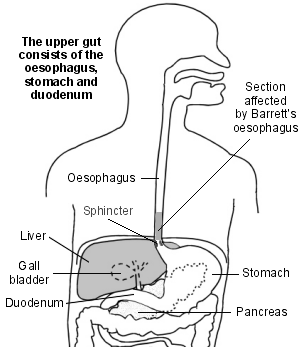
Barrett's oesophagus is a condition which affects the lower gullet (oesophagus). It is named after the doctor who first described it.
In Barrett's oesophagus, the cells lining the affected area of oesophagus become changed.
The cells of the inner lining (epithelium) of a normal oesophagus are pinkish-white, flat cells (squamous cells). The cells of the inner lining of the area affected by Barrett's oesophagus are tall, red cells (columnar cells). The columnar cells are similar to the cells that line the stomach.
Another name sometimes used by doctors for Barrett's oesophagus is columnar-lined oesophagus (CLO).
Understanding the oesophagus and stomach
When we eat, food passes down the gullet (oesophagus) into the stomach. Cells in the lining of the stomach make acid and other chemicals which help to digest food. Stomach cells also make a thick liquid (mucus) which protects them from damage caused by the acid. The cells on the inside lining of the oesophagus are different and have little protection from stomach acid.
There is a circular band of muscle (a sphincter) at the junction between the oesophagus and stomach. This relaxes to allow food down but normally tightens up and stops food and acid leaking back up (refluxing) into the oesophagus. So, the sphincter acts like a valve.
Is Barrett's oesophagus harmful?
The changed cells of Barrett's oesophagus are not cancerous (malignant). However, these cells have an increased risk, compared with normal gullet (oesophageal) cells, of turning cancerous in time. The changed cells in Barrett's oesophagus can develop something called dysplasia. A cell with dysplasia is an abnormal cell. It is not cancerous but is more likely than other cells to develop into cancer. It is often called a precancerous cell.
Dysplasia
There are various degrees of dysplasia - from low-grade dysplasia to high-grade (severe) dysplasia. Cells that are classed as high-grade dysplasia have a high risk of turning cancerous at some point in the future.
But note: if you have Barrett's oesophagus, the chance that it will progress to dysplasia, then to high-grade dysplasia, and then to cancer of the oesophagus, is small. In the majority of cases with Barrett's oesophagus, the changes in the cells remain constant and do not progress. Studies have shown that, for a person diagnosed with Barrett's oesophagus, their lifetime risk of developing cancer of the oesophagus is about 1 in 20 for men and about 1 in 33 for women.
Barrett's oesophagus causes
The cause of Barrett's oesophagus, in most cases, is thought to be due to long-term gastro-oesophageal reflux disease (GORD), with reflux of acid and other stomach contents into the gullet (oesophagus) from the stomach. The acid irritates the lining of the lower oesophagus and causes inflammation (oesophagitis). With persistent reflux, eventually the lining (epithelial) cells change to those described above.
عوامل الخطر
It is thought that about 1 in 20 people who have recurring acid reflux eventually develop Barrett's oesophagus. The risk is mainly in people who have had severe acid reflux for many years. However, some people who have had fairly mild symptoms of reflux for years can develop Barrett's oesophagus.
Barrett's oesophagus seems to be more common in men than in women. It typically affects people between the ages of 50 and 70 years.
Other risk factors include hiatus hernia, past history of inflammation of the oesophagus (التهاب المريء) or narrowing of the oesophagus (oesophageal stricture).
Symptoms of Barrett's oesophagus
Most people with Barrett's oesophagus have symptoms of acid reflux.
If you have Barrett's oesophagus and you develop any new symptoms, such as فقدان الوزن, bringing up (vomiting) blood أو صعوبة في البلع, it is very important that you see a doctor urgently. These are some of the symptoms that you may get from complications of gastro-oesophageal reflux and Barrett's oesophagus. These complications are rare but can include a sore (ulcer) or cancer of the gullet (oesophagus).
What are the symptoms of acid reflux and inflammation of the gullet (oesophagitis)?
Heartburn is the main symptom of acid reflux. It is a burning feeling that rises from the upper tummy (abdomen) or lower chest up towards the neck. (It is confusing, as it has nothing to do with the heart.) Other common acid reflux symptoms include:
الشعور بالمرض (nauseated).
An acid taste in the mouth.
Burping (belching).
A burning pain when you swallow hot drinks.
Like heartburn, these symptoms tend to come and go and tend to be worse after a meal. People with Barrett's oesophagus will usually have (or will have had in the past) the symptoms associated with acid reflux and oesophagitis.
What causes acid reflux and who is affected by it?
The circular band of muscle at the bottom of the oesophagus is called the sphincter. It normally prevents acid reflux. Problems occur if the sphincter does not work very well. This is common but in most cases it is not known why it does not work so well.
However, having a hiatus hernia makes you more prone to reflux. A hiatus hernia occurs when part of your stomach protrudes through the lower chest muscle (diaphragm) into the lower chest. See the separate leaflet called Hiatus Hernia for more details.
How is acid reflux treated?
A medicine which prevents your stomach from making acid is a common treatment and usually works well. Some people take short courses of treatment when symptoms flare up. Some people need long-term daily treatment to keep symptoms away. An operation to tighten the sphincter muscle is an option in severe cases which do not respond to medication, or where full-dose medication is needed every day to control symptoms.
There are also various things that you can try to change in your lifestyle that may help to treat your acid reflux. These include:
فقدان الوزن if you are overweight.
الإقلاع عن التدخين إذا كنت مدخنًا.
Reducing your alcohol intake if you drink a lot of alcohol.
راجع النشرة المنفصلة المسماة ارتجاع الحمض والتهاب المريء (حرقة المعدة) لمزيد من التفاصيل.
How is Barrett's oesophagus diagnosed?
مريء باريت itself usually causes no symptoms. However, you are likely to have, or have had, the symptoms of long-standing or severe reflux disease described earlier.
Gastroscopy (endoscopy)
Diagnosis of Barrett's oesophagus may include a gastroscopy if you have severe or persistent symptoms of acid reflux. For this test, a thin, flexible telescope is passed down the gullet (oesophagus) into the stomach. This allows a doctor or nurse to look inside. This test can usually help to diagnose Barrett's oesophagus. The change in colour of the lining of the lower oesophagus from its normal pale white to a red colour strongly suggests that Barrett's oesophagus has developed.
خزعة
If Barrett's oesophagus is suspected during gastroscopy then several small samples (biopsies) are taken of the lining of the oesophagus during the gastroscopy. These are sent to the laboratory to be looked at under the microscope. The characteristic columnar cells which are described above confirm the diagnosis. The cells are also examined to see if they have any signs of dysplasia (see above).
Barrett's oesophagus treatment
Treatment of acid reflux
This treatment is as described above. You are likely to be advised to take acid-suppressing medication for the rest of your life. It is unclear as to whether treating the acid reflux helps to treat or reverse your Barrett's oesophagus and more studies are ongoing. However, this treatment should help any symptoms that you may have.
Monitoring (surveillance)
When you have been diagnosed with Barrett's oesophagus, you may be advised to have a gastroscopy and biopsy at regular intervals to monitor the condition. This is called surveillance. The biopsy samples aim to detect whether dysplasia has developed in the cells, in particular if high-grade dysplasia has developed.
The exact time period between each gastroscopy and biopsy sample can vary from person to person. It may be every 2-5 years (depending on the length of oesophagus that is affected) if there are no dysplasia cells detected. Once dysplasia cells are found, the check may be needed more frequently. If high-grade dysplasia develops, you may be offered treatment to remove the affected cells from the gullet (oesophagus). (Treatment details are discussed below.)
Surgery may be considered
If you develop high-grade dysplasia or oesophageal cancer, the traditional treatment is to undergo surgery to remove the oesophagus (oesophagectomy). This is a major operation and complications following surgery, sometimes serious and life-threatening, are not uncommon.
But most people who develop Barrett's oesophagus do not go on to need an oesophagectomy. Also, newer therapies that have been developed are becoming more popular options if you develop high-grade dysplasia or early cancer.
Newer treatments for Barrett's oesophagus
Research continues to find out which treatment is best. If you are diagnosed with Barrett's oesophagus, your specialist should be able to give you up-to-date information on the pros and cons of surveillance. They should also be able to advise on the current situation about the various treatment options should you develop dysplastic changes to the cells.
Various ways of removing just the abnormal dysplastic cells from the lining of the oesophagus (or even early cancers that just affect the lining on the oesophagus) have recently been developed. These include the following:
Photodynamic therapy (PDT)
This is a type of laser treatment. It has been used in the past but has been largely replaced by radiofrequency ablation.
Epithelial radiofrequency ablation (EFA)
This treatment uses a radiofrequency energy coil. Again, this involves a gastroscopy. During the procedure a small coil is guided towards the abnormal section of your oesophagus. The coil then emits heat energy which destroys the abnormal cells. Nearby normal cells then multiply and replace the destroyed abnormal cells.
Argon plasma coagulation
This treatment uses a jet of argon gas, together with an electric current, to burn away dysplastic cells.
Endoscopic mucosal resection (EMR)
This is a procedure that is done via instruments passed down the side of a gastroscope. Basically, the affected inner lining of the oesophagus is stripped off.
Balloon cryotherapy
The National Institute for Health and Care Excellence (NICE) has looked at the evidence for effectiveness and safety of a procedure called balloon cryoablation in treating Barrett's oesophagus.
This procedure is usually done using sedation. A balloon catheter (a thin tube with a deflated balloon on the end) is passed into the oesophagus, using a small flexible telescope. It is lined up with the abnormal tissue and inflated. Nitrous oxide is then sprayed through very precisely into the area to destroy abnormal cells by the extreme cold.
The committee found that there was not enough evidence that it was safe and effective. They have therefore recommended that until there is more evidence, it should only be offered as part of a research study.
What is the outcome (prognosis) for Barrett's oesophagus?
Barrett's oesophagus increases the risk of oesophageal cancer, but most people with Barrett's oesophagus will not develop oesophageal cancer.
It is estimated that, without treatment, between 5 and 10 out of 100 people with Barrett's oesophagus will develop oesophageal cancer over 10-20 years.
اختيارات المرضى لـ حالات هضمية أخرى

صحة الجهاز الهضمي
كتل البطن
An abdominal mass is a lump felt in the tummy (abdomen). There are many different causes of an abdominal mass. Urgent medical attention should be sought if a new mass is found in the abdomen.
بقلم الدكتورة فيليبا فينسنت، MRCGP

صحة الجهاز الهضمي
خزل المعدة
Gastroparesis is now more commonly known as delayed gastric emptying. It is a chronic condition in which food passes through the stomach and into the gut (intestine) more slowly than usual. The nerves that usually trigger the stomach muscles to move food out of the stomach and into the intestine don't work as effectively as normal. This is not caused by an obstruction or structural abnormality but by a failure of the normal mechanisms.
بقلم الدكتورة فيليبا فينسنت، MRCGP
الأسئلة الشائعة
If I have Barrett's oesophagus, will it definitely turn into cancer?
No, if you have Barrett's oesophagus, the chance that it will progress to dysplasia, then to high-grade dysplasia, and then to cancer of the oesophagus, is small. In most cases, the cell changes stay constant and do not worsen. The lifetime risk of developing oesophageal cancer for someone with Barrett's oesophagus is about 1 in 20 for men and 1 in 33 for women.
Does treating my acid reflux cure Barrett's oesophagus?
Treating acid reflux with medication should help any symptoms you may experience. However, it is not yet clear if treating acid reflux directly helps to cure or reverse Barrett's oesophagus; studies are still ongoing to understand this.
What is 'dysplasia' in the context of Barrett's oesophagus?
Dysplasia refers to abnormal cells. While not cancerous itself, it indicates a higher likelihood of cells developing into cancer. There are different levels, from low-grade to high-grade (severe) dysplasia. High-grade dysplasia means the cells have a significant risk of becoming cancerous in the future.
What should I do if I have Barrett's oesophagus and develop new symptoms like weight loss or difficulty swallowing?
If you have Barrett's oesophagus and notice new symptoms such as weight loss, vomiting blood, or difficulty swallowing, it is very important to see a doctor urgently. These symptoms could indicate complications, although rare, such as an ulcer or cancer of the gullet.
Beyond medication, what lifestyle changes can help manage acid reflux associated with Barrett's oesophagus?
Several lifestyle changes can help manage acid reflux. These include losing weight if you are overweight, stopping smoking, and reducing your alcohol intake if you drink a lot.
قراءة إضافية ومراجع
- Fitzgerald RC, di Pietro M, Ragunath K, et al; British Society of Gastroenterology guidelines on the diagnosis and management of Barrett's oesophagus. Gut. 2014 Jan (updated 2015).
- Epithelial radiofrequency ablation for Barrett's oesophagus; NICE Interventional procedures guidance, May 2010
- Photodynamic therapy for Barrett's oesophagus; NICE Interventional procedures guidance, June 2010
- Balloon cryoablation for Barrett’s oesophagus; NICE Interventional procedures guidance, October 2020
- Bujanda DE, Hachem C; Barrett's Esophagus. Mo Med. 2018 May-Jun;115(3):211-213.
- Eluri S, Shaheen NJ; Barrett's esophagus: diagnosis and management. Gastrointest Endosc. 2017 May;85(5):889-903. doi: 10.1016/j.gie.2017.01.007. Epub 2017 Jan 18.
- Amadi C, Gatenby P; Barrett's oesophagus: Current controversies. World J Gastroenterol. 2017 Jul 28;23(28):5051-5067. doi: 10.3748/wjg.v23.i28.5051.
- Barrett's oesophagus and stage 1 oesophageal adenocarcinoma: monitoring and management; NICE guideline (February 2023)
- Endoscopic radiofrequency ablation for Barrett's oesophagus with low‑grade dysplasia or no dysplasia; NICE Interventional procedures guidance, July 2014.
عن المؤلفعرض السيرة الذاتية الكاملة

الدكتور كولين تايدي، MRCGP
طبيب عام، مؤلف طبي
MBBS, MRCGP, MRCP (Paediatrics), DCH
الدكتور كولين تايدي هو طبيب في هيئة الخدمات الصحية الوطنية، ويعمل في أوكسفوردشاير.
حول المراجععرض السيرة الذاتية الكاملة

الدكتورة فيليبا فينسنت، MRCGP
طبيب عام، مؤلف طبي
MB BS, Bsc, MRCGP (2000), DCH, DFSRH, DRCOG
الدكتورة فيليبا فينسنت هو طبيب عام في هيئة الخدمات الصحية الوطنية يعمل في شمال لندن.
تاريخ المقال
تمت كتابة المعلومات على هذه الصفحة ومراجعتها من قبل أطباء مؤهلين.
المقال متاح أيضًا باللغة الإنجليزية, الألمانية, إسبانية, الفرنسية, إيطالي, البرتغالية, الهندية, العبرية, العربية ,، و السويدية.
Next review due: 16 Feb 2028
17 مارس 2023 | أحدث إصدار

اسأل، شارك، تواصل.
تصفح المناقشات، اطرح الأسئلة، وشارك التجارب عبر مئات المواضيع الصحية.

هل تشعر بتوعك؟
قم بتقييم أعراضك عبر الإنترنت مجانًا
اشترك في النشرة الإخبارية للمرضى
جرعتك الأسبوعية من النصائح الصحية الواضحة والموثوقة - مكتوبة لمساعدتك على الشعور بالاطلاع والثقة والتحكم.
من خلال الاشتراك، فإنك تقبل سياسة الخصوصية. يمكنك إلغاء الاشتراك في أي وقت. نحن لا نبيع بياناتك أبدًا.
المزيد في صحة الجهاز الهضمي
- ألم البطن
- التهاب البنكرياس الحاد
- أمينوساليسيلات
- مضادات التشنج
- سرطان الأمعاء
- فحص سرطان الأمعاء
- كريبتوسبوريديوم
- قرحة الاثني عشر
- حساسية الطعام وعدم التحمل
- حصوات المرارة
- متلازمة جيلبرت
- عسر الهضم
- مرض التهاب الأمعاء
- متلازمة القولون العصبي
- اختبارات وظائف الكبد
- نوروفيروس
- سرطان المريء
- أنابيب التغذية عبر PEG
- قرحة المعدة
- إسهال المسافرين