ما هي العلاقة بين متلازمة القولون العصبي والقلق؟
مراجعة من قبل الدكتور كريشنا فاخاريا، MRCGPكتبه فيكتوريا راونُشر في الأصل 17 Feb 2025
يتوافق مع الإرشادات التحريرية
- تنزيلتنزيل
- مشاركة
- Language
- نقاش
- نسخة صوتية
- أضف إلى المصادر المفضلة على جوجل
يمكن أن يسبب متلازمة القولون العصبي (IBS) مجموعة من التشنجات البطنية، والإسهال، والانتفاخ، والإمساك. إنها حالة صحية طويلة الأمد يمكن أن تؤثر على جودة حياتك. على الرغم من أن تغيير نظامك الغذائي وتناول بعض الأدوية يمكن أن يساعد، إلا أن الصحة النفسية السيئة وأعراض القولون العصبي يمكن أن يفاقم كل منهما الآخر.

IBS is a common condition that affects up to 1 in 5 people in the world.
According to Tina Wright, IBS Psychotherapist, Evolve Psychotherapy, Norfolk, UK, up to 6 out of 10 people with IBS report having anxiety or depression.
She explains that people with IBS often develop a heightened fear of symptoms in public or social situations. This can create a cycle of worry and physical discomfort.
"Anxiety can trigger IBS flare-ups, while IBS symptoms like urgency or diarrhoea can, in turn, worsen anxiety," says Wright. "This interplay highlights the importance of addressing both physical and mental health when managing IBS."
What is the gut-brain axis?
Gut-brain axis

© Ben Hudson
Your emotional state can play a big role in influencing IBS and may cause your gut symptoms to worsen.
The gut-brain axis is a two-way communication system that connects your gut and your brain. This happens primarily through the vagus nerve - a major nerve responsible for transmitting signals between the two. Hormonal signals - such as serotonin - and the gut microbiome play significant roles in this relationship.
Wright explains further on the specific roles each component plays:
Serotonin - while it is often associated with mood regulation in your brain, 90% of serotonin is produced in the gut, where it regulates the movement of food through the digestive tract (gut motility). Serotonin produced in the gut cannot cross the blood-brain barrier, so it does not directly influence mood.
Stress, adrenaline, and the gut - when your body perceives a threat, it activates the 'fight or flight' response, releasing adrenaline. This can increase gut motility, causing diarrhoea by reducing the amount of water reabsorbed in the intestines. If you have IBS, this stress response may lead to heightened symptoms during anxiety-provoking situations.
Pain perception and gut sensitivity - research suggests that people with IBS have a heightened sensitivity to gut sensations. Even normal levels of gas or distention, which may go unnoticed by others, are perceived as painful or distressing in those with IBS. This heightened pain perception, combined with stress and anxiety, makes IBS symptoms feel worse.
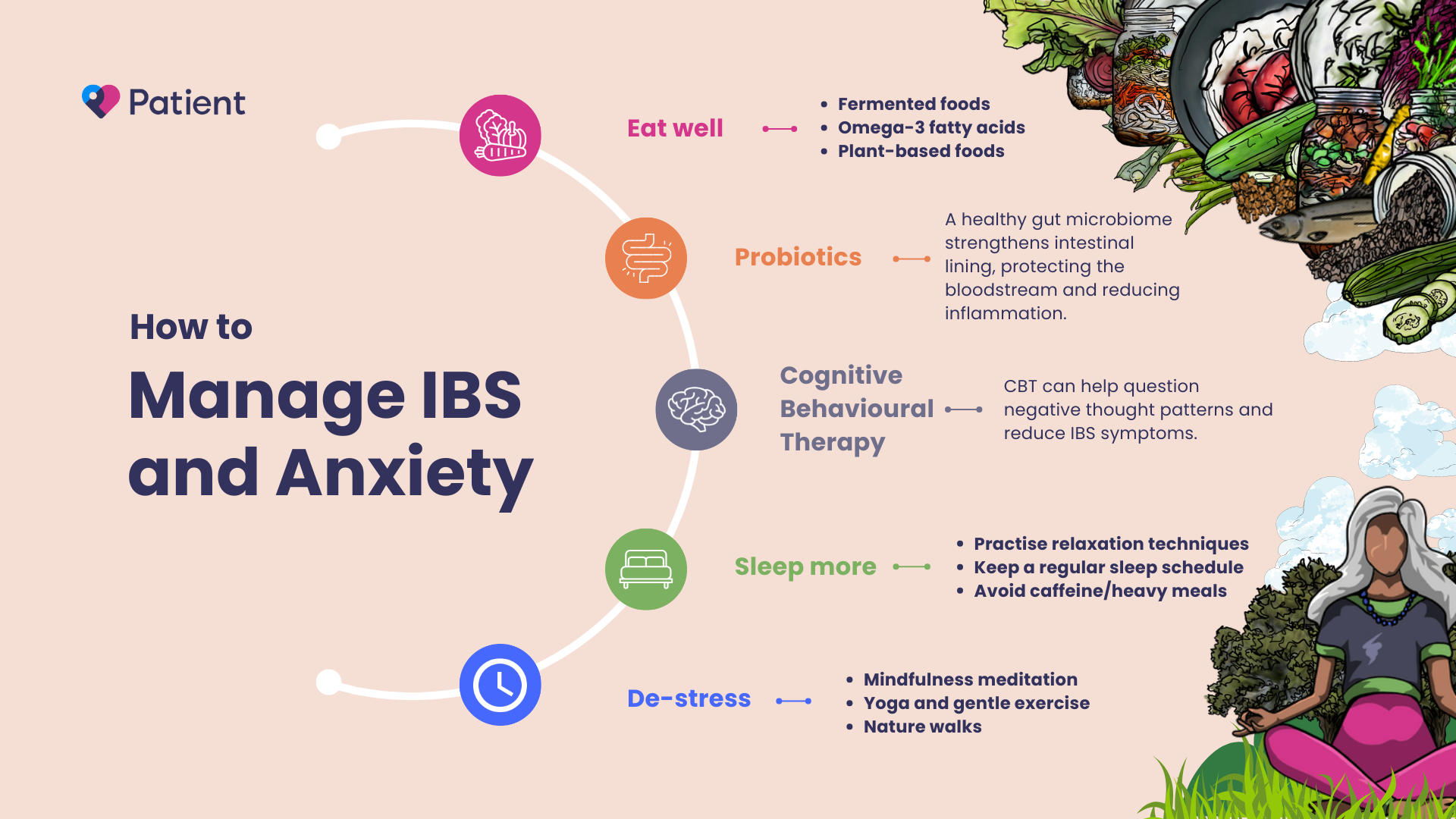
How to manage IBS and anxiety
How to manage IBS and anxiety
© الرسوم البيانية: بن هدسون
Making changes to your lifestyle can also help manage both IBS and anxiety. According to Wright, there are some effective strategies for minimising these symptoms.
De-stress
Long-term stress can negatively affect your gut, so finding ways to manage it is essential for your health.
Some helpful tips can include:
Mindfulness meditation - reduces the severity of your symptoms and fosters emotional resilience.
Yoga and gentle exercise - can help improve your gut motility and lower stress hormones such as cortisol.
Nature walks - exposure to green spaces can lessen your stress levels and improve your mood.
Sleep more
Not getting enough sleep - both in quality and quantity - can heighten stress levels and make your gut more sensitive.
You can support restful sleep by:
Maintaining a regular sleep schedule.
Avoiding caffeine or heavy meals before bed.
Practising relaxation techniques such as progressive muscle relaxation.
See here for some useful tips to help you get a good night's sleep.
تناول الطعام بشكل جيد
Eating foods that nourish your gut can improve both your gut health and your overall wellbeing.
Wright recommends the following foods as being especially good for your gut:
Fermented foods - yoghurt, kefir, and kimchi promote healthy gut bacteria.
الأحماض الدهنية أوميغا-3 - found in salmon, flaxseeds, and walnuts, these unsaturated fats can help reduce inflammation.
Plant-based foods - choose a variety of colourful fruits, vegetables, and whole grains to support a healthy gut microbiome.
Try probiotics
Probiotics are friendly microorganisms that help keep your gut healthy. By incorporating probiotics into your diet, you can keep a balanced gut microbiome, helping good bacteria to thrive, and minimising the growth of harmful ones.
Wright explains that a healthy gut microbiome is vital for both digestion and emotional wellbeing.
"Specific probiotic strains like Lactobacillus rhamnosus and Bifidobacterium longum have been shown to reduce abdominal pain and improve mental health," she says. "A wide range of plant-based foods supports microbial diversity, which is linked to improved gut and mental health."
Manage fears
While diet is not the only solution to reducing IBS symptoms, it plays a key role in managing them.
Fermentable Oligosaccharides, Disaccharides, Monosaccharides, and Polyols (FODMAPs) are carbohydrates that ferment in your gut, producing gas.
Common high-FODMAP foods include:
Onions.
الثوم.
فاصوليا.
Certain fruits.
"It is believed these foods can cause IBS flare-ups in some people," Wright explains. "However, research suggests the gas produced is no different in those with or without IBS. Instead, those with IBS may experience increased sensitivity to gas and bloating, making dietary discomfort more painful."
She adds that managing gut sensitivity and pain perception is better than relying on overly restrictive diets. This often involves addressing anxiety and building tolerance for previously feared foods.
"A diverse diet - such as the نظام غذائي متوسطي - rich in fruits, vegetables, nuts, seeds, pulses, whole grains, and healthy fats helps balance the gut microbiome," says Wright. "However, these foods are often avoided by people with IBS due to fear of symptoms, so working to reduce anxiety while gradually reintroducing variety is essential."
Relieve anxiety
Managing anxiety during IBS flare-ups is critical for breaking the stress-symptom cycle.
Wright recommends you try these quick techniques:
Diaphragmatic breathing - focus on slow, deep breaths that expand your belly rather than your chest. Breathe in for a count of 4 and out for a count of 6 and repeat 6 times.
Progressive muscle relaxation (PMR) - tense and release each muscle group from head to toe to ease physical tension and mental stress.
Grounding techniques - use the 5-4-3-2-1 method to anchor yourself in the present. Identify 5 things you can see, 4 you can touch, 3 you can hear, 2 you can smell, and 1 you can taste.
Self-reassurance - remind yourself that while IBS symptoms are uncomfortable, they are not dangerous. Practising self-compassion can help reduce the cycle of fear and symptoms.
العلاج السلوكي المعرفي (CBT)
Given the strong link between IBS, stress and anxiety, CBT can be a powerful tool for helping to question negative thought patterns and reduce IBS symptoms.
Wright explains it can help you:
Reframe anxious thoughts about your symptoms.
Challenge beliefs about catastrophic outcomes - for example, fear of public embarrassment.
Develop coping strategies to manage IBS-related distress.
Reduce triggers
IBS triggers often include stress, diet, or hormonal changes.
Wright suggests that a multi-pronged approach that addresses diet, gut microbiota, and stress is often the most effective way to manage IBS and anxiety.
"IBS and anxiety are closely linked, but understanding the gut-brain connection and adopting evidence-based strategies can break the cycle of symptoms and stress," she concludes. "By managing dietary fears, restoring gut balance, and building emotional resilience, it’s possible to regain control and lead a fulfilling life."
ما هي العلاقة بين متلازمة القولون العصبي والقلق؟
اختيارات المرضى لـ متلازمة القولون العصبي
صحة الجهاز الهضمي
ما الفرق بين متلازمة القولون العصبي (IBS) والتهاب الأمعاء (IBD)؟
Irritable bowel syndrome (IBS) and inflammatory bowel disease (IBD) are easy conditions to confuse. As well as having similar names, the two have many similar symptoms - if you have one of these conditions you may have abdominal pain, cramps, constipation, and diarrhoea, as well as feeling generally unwell. But the conditions are quite distinct, with different causes and different treatments. If you're having any of these symptoms, it's important to see your doctor who can give you a definite diagnosis.
بقلم لين ستيفن

صحة الجهاز الهضمي
التنويم المغناطيسي لمتلازمة القولون العصبي: محور الأمعاء والدماغ
متلازمة القولون العصبي (IBS) هي اضطراب في الأمعاء يسبب أعراضًا هضمية مثل الإسهال، والإمساك، والانتفاخ، وآلام البطن - فكيف يمكن للعلاج بالتنويم المغناطيسي أن يؤثر على ما يحدث في معدتك؟ تظهر مجموعة متزايدة من الأبحاث حول التواصل الثنائي الاتجاه بين الأمعاء والدماغ أن العلاج بالتنويم المغناطيسي لمتلازمة القولون العصبي يمكن أن يحسن الأعراض - وقد تثير النتائج إعجاب حتى أكبر المشككين في التنويم المغناطيسي.
بقلم أمبرلي ديفيس
عن المؤلفعرض السيرة الذاتية الكاملة

Victoria Raw
كاتب مميز
بكالوريوس (مع مرتبة الشرف)، الأدب الإنجليزي
فيكتوريا كاتبة محتوى مع Patient وتركز اهتماماتها الخاصة على الصحة النفسية، والاتجاهات المجتمعية، وتأثير التكنولوجيا على صحتنا.
حول المراجععرض السيرة الذاتية الكاملة

الدكتور كريشنا فاخاريا، MRCGP
كبير المسؤولين الطبيين للصحة، أوبتوم المملكة المتحدة
MBChB, MRCGP(2013), BMedSci (hons), DFSRH, DRCOG, PGDipDerm (Distn)
الدكتورة كريشنا فاخاريا هي طبيبة عامة في هيئة الخدمات الصحية الوطنية. كما أنها ممتحنة منتظمة لدبلوم الدراسات العليا في الأمراض الجلدية العملية في جامعة كارديف، بالإضافة إلى كونها كبيرة المسؤولين الطبيين للصحة في Optum UK.
تاريخ المقال
تمت مراجعة المعلومات الموجودة في هذه الصفحة من قبل أطباء مؤهلين.
المقال متاح أيضًا باللغة الإنجليزية, الألمانية, إسبانية, الفرنسية, إيطالي, البرتغالية, الهندية, العبرية, العربية ,، و السويدية.
Next review due: 17 Feb 2028
17 Feb 2025 | نُشر في الأصل
كتبه:
Victoria Rawمراجعة من قبل
الدكتور كريشنا فاخاريا، MRCGP

اسأل، شارك، تواصل.
تصفح المناقشات، اطرح الأسئلة، وشارك التجارب عبر مئات المواضيع الصحية.

هل تشعر بتوعك؟
قم بتقييم أعراضك عبر الإنترنت مجانًا
اشترك في النشرة الإخبارية للمرضى
جرعتك الأسبوعية من النصائح الصحية الواضحة والموثوقة - مكتوبة لمساعدتك على الشعور بالاطلاع والثقة والتحكم.
من خلال الاشتراك، فإنك تقبل سياسة الخصوصية. يمكنك إلغاء الاشتراك في أي وقت. نحن لا نبيع بياناتك أبدًا.
المزيد في صحة الجهاز الهضمي
- 6 علاجات طبيعية للإمساك
- حمية الارتجاع الحمضي: الأطعمة التي يجب تناولها وتجنبها
- التهاب الزائدة الدودية عند الأطفال: ما هي العلامات؟
- هل يمكن أن يكون لالتهاب المعدة والأمعاء آثار طويلة الأمد؟
- هل يمكن أن تكون حصوات المرارة؟
- هل يساعد عصير الصبار حقًا في صحة الأمعاء؟
- نظام غذائي للكبد الدهني: الأطعمة التي يجب تناولها وتجنبها
- كيف تؤثر بكتيريا الأمعاء على المزاج والتركيز وصحة الدماغ
- كيفية التخلص من عسر الهضم
- كيفية التخلص من الغازات المحبوسة: علاجات منزلية فعّالة
- كيفية العناية بالكبد
- كيفية علاج التسمم الغذائي في المنزل
- التنويم المغناطيسي لمتلازمة القولون العصبي: محور الأمعاء والدماغ
- جديدالحليب الخام - هل هو مفيد لك حقًا أم مجرد اتجاه آخر في عالم الصحة؟
- ما الذي يسبب تقلصات المعدة الليلية؟
- ماذا يحدث إذا انفجر الزائدة الدودية لديك؟
- ما هو أفضل نظام غذائي لمرض كرون؟
- ما هو ميكروبيوم الأمعاء لديك؟
- ما الفرق بين التهاب الكبد A و B و C؟
- ما هي الأطعمة التي تسبب متلازمة القولون العصبي؟