هل تعمل أي علاجات تقليدية أو عشبية للإنفلونزا؟
مراجعة من قبل الدكتورة سارة جارفيسكتبه إيلي بروتوننُشر في الأصل 3 نوفمبر 2020
يتوافق مع الإرشادات التحريرية
- تنزيلتنزيل
- مشاركة
- Language
- نقاش
- Ask Patient
- نسخة صوتية
- أضف إلى المصادر المفضلة على جوجل
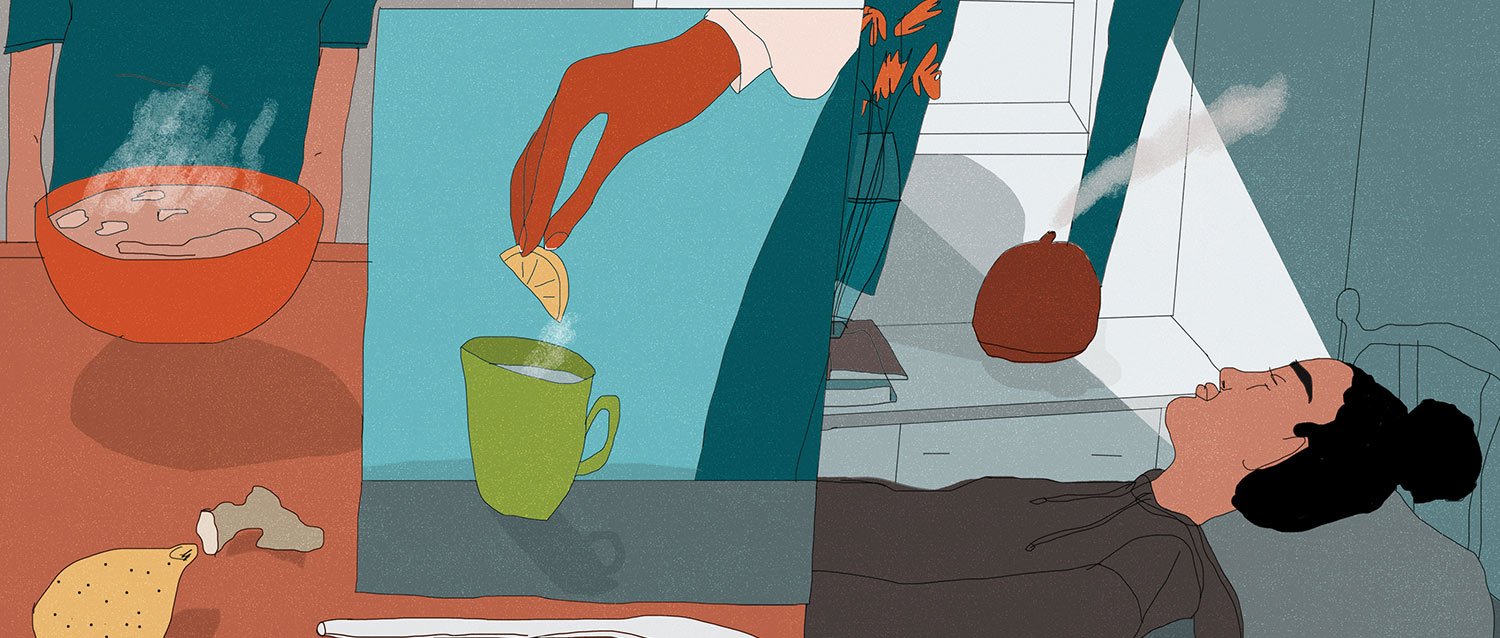
Advice for flu treatment is, and has always been, simply 'fluids and bed rest' - little wonder some of us turn to family recipes or alternative medicine to get creative with our approach. A virologist and a GP explain which traditional and herbal remedies work for flu, and why.
Explore relief for cold and flu symptoms
احصل على مشورة صحية متخصصة وأنت في راحة منزلك. أكمل استشارة سريعة عبر الإنترنت، متاحة على مدار الساعة طوال أيام الأسبوع، وسيراجع طلبك ممارس صحي مسجل في المملكة المتحدة. تتوفر خدمة التوصيل في اليوم التالي للعلاجات المؤهلة.

Feature illustrated by Hannah Buckman.
Dr Gavin Jamie is a GP in Swindon and he says that lots of traditional or herbal remedies are safe and helpful. For example, some of his South Asian patients use Ayurvedic medicine as well as Western.
Remedies like turmeric milk and ginger tea are in part good for الإنفلونزا because they fall within advice to stay hydrated. Dr Jamie says kitchen remedies like chicken soup, honey and garlic are all fine.
"Anything you would normally eat or drink is safe," he says. "Plus, anything aromatic will help clear congestion in your nose."
He advises that it's common to lose your appetite with a flu, as with any infection that affects your senses of التذوق والشم, so drink anything that appeals.
You don't need to chug litres and litres of الماء - tea and coffee are fine (up to 400 mg caffeine - about eight cups of tea or four cups of brewed coffee - a day), as are soups, broths and fruit juices. Raw الفواكه والخضروات also help you stay hydrated. Avoid الكحول - it dehydrates you - and as normal, mind your sugar and caffeine intake.
حافظ على الترطيب
Steam inhalation is good for keeping your respiratory tract moist and hydrated, and adding essential oils is absolutely fine.
"It's the water vapour that is good for you," he explains. "But using essential oils or eucalyptus might make you inhale a bit more deeply."
Why do I need to stay hydrated?
Dr James Harker is a virologist at Imperial College London. He says that advice about fluids is still the best advice for any infection that gives you a fever.
"A fever is the way the body tries to prevent a virus replicating," he explains. "But when your temperature goes up, people sweat more, and often if the fever raises their blood pressure they urinate more too."
Drinking fluids helps all the systems that fight the flu work harder. "Dehydration is bad because the less fluid your body has, the thicker the mucus in your mouth, nose and throat and the worse it is at protecting your respiratory system from the infection. Likewise, the more dehydrated our lymph system becomes - where our immune cells travel - the slower and worse that system becomes."
In short, drinking lots is a multitasking activity: "Staying hydrated - that is, keeping your bodily fluids at a proper volume - allows the movement of cells that protect you against infection, and molecules that repair your lungs after the infection has been cleared."
Get some rest
Like staying hydrated, Dr Harker explains, getting bed rest is good for a couple of reasons.
"Lying down helps you to clear mucus and stops it falling down into your lungs," he says. "If you've got the flu, you're going to be lethargic."
Not only is resting good for you, but exerting yourself slows down your recovery. "When you have a fever, the last thing you want to do is exert yourself and further increase your body temperature. It's going to dehydrate you faster and make it harder for you to breathe."
If you can اضطرابات النوم, great - but simply resting in bed (ie lying down, not working) is fine.
الطب البديل
Alternative approaches like homeopathy don't have any strong evidence basis (if any evidence at all). There is often no harm in taking homeopathic remedies, but there is also no point. For that reason, your doctor is unlikely to mind either way, but they're certainly unlikely to recommend them.
"Homeopathy is high on the list of things that do nothing but are probably safe," Dr Jamie says.
Echinacea is a popular herbal supplement and again, Dr Jamie says it's fine for most patients to take.
Some people advise taking willow extract for flu but Dr Jamie advises caution. Medicines that mention willow extract might contain salicylates (also found in aspirin) which are not suitable for children or people with asthma and a number of other conditions.
Antibiotics don't work
One last thing: in case you hadn't already heard, مضادات حيوية don't work on the flu, or any viral infections - if they did, coronavirus would have been a whole different story.
"Antibiotics do not touch the flu at all," Dr Gavin Jamie explains. "They're not going to shorten the course of the flu, and they're potentially going to create side effects such as stomach troubles."
In a few rare cases people can get a bacterial infection on top of flu - for example, الالتهاب الرئوي. Dr Jamie advises that if the flu gets worse, rather than better, after a few days, to contact your doctor to check your symptoms.
Explore relief for cold and flu symptoms
احصل على مشورة صحية متخصصة وأنت في راحة منزلك. أكمل استشارة سريعة عبر الإنترنت، متاحة على مدار الساعة طوال أيام الأسبوع، وسيراجع طلبك ممارس صحي مسجل في المملكة المتحدة. تتوفر خدمة التوصيل في اليوم التالي للعلاجات المؤهلة.
اختيارات المرضى لـ الإنفلونزا والتطعيم
العدوى
كيف يمكن أن تموت بسبب الإنفلونزا؟
For certain high-risk groups, people over 65 years of age and those with underlying health conditions among them, a dose of flu can have serious ramifications. We talk to the head of flu at Public Health England about effective prevention and treatment.
بواسطة جوليان تيرنر

العدوى
ما هو مرض الإنفلونزا الذي يصيب الطلاب الجدد وكم يستمر؟
From meeting your future besties to enduring messy sports team initiations, freshers’ week is an exciting time. Freshers' flu can sometimes ruin that fun, but there are things you can do to try to dodge start-of-term illnesses, and help yourself bounce back if it does strike you down.
بقلم لين ستيفن
عن المؤلف
كتبه

إيلي بروتون
حول المراجععرض السيرة الذاتية الكاملة

الدكتورة سارة جارفيس
استشاري سريري
MA (Cantab), BM, BCh (Oxon), DRCOG, FRCGP, MBE
بعد التدريب في الطب في كامبريدج وأكسفورد، أصبحت الدكتورة سارة جارفيس حاصلة على وسام الإمبراطورية البريطانية طبيبة عامة.
تاريخ المقال
المقال متاح أيضًا باللغة الإنجليزية, الألمانية, إسبانية, الفرنسية, إيطالي, البرتغالية, الهندية, العبرية, العربية ,، و السويدية.
3 نوفمبر 2020 | نُشر في الأصل
كتبه:
إيلي بروتون
مراجعة من قبل
الدكتورة سارة جارفيس
شارك أفكارك أو تجاربك مع الآخرين في مجتمعات المرضى.
وصول بسيط إلى العلاجات والخدمات الصحية الموثوقة عبر الإنترنت.
Common conditions
Get help with common conditions through the NHS, without a GP appointment.
 التهاب الجيوب الأنفية الحاد
 التهاب اللوزتين البكتيري
 القوباء
 لدغات الحشرات
 الحزام الناريعدوى المسالك البولية
اشترك في النشرة الإخبارية للمرضى
جرعتك الأسبوعية من النصائح الصحية الواضحة والموثوقة - مكتوبة لمساعدتك على الشعور بالاطلاع والثقة والتحكم.
من خلال الاشتراك، فإنك تقبل سياسة الخصوصية. يمكنك إلغاء الاشتراك في أي وقت. نحن لا نبيع بياناتك أبدًا.