السيلان
مراجعة من قبل الدكتورة توني هازيل، زميلة الكلية الملكية للأطباء العامينآخر تحديث بواسطة الدكتورة هايلي ويلاسي، زميلة الكلية الملكية للأطباء العامين آخر تحديث 29 مارس 2023
يتوافق مع الإرشادات التحريرية
- تنزيلتنزيل
- مشاركة
- Language
- نقاش
- نسخة صوتية
- أضف إلى المصادر المفضلة على جوجل
في هذه السلسلة:الأمراض المنقولة جنسياًالثآليل التناسليةالهربس التناسليالتهاب الإحليل عند الرجالداء المشعراتالميكوبلازما التناسلية
Gonorrhoea is a sexually transmitted infection caused by a germ (bacterium). It can be treated with antibiotics. Treatment is important to prevent complications.
نظرة سريعة
Gonorrhoea is a sexually transmitted infection (STI), mainly affecting the genital areas.
It is caused by bacteria and passed on through unprotected vaginal, oral, or anal sex.
About half of women and one in ten men with gonorrhoea have no symptoms.
In women, symptoms can include increased vaginal discharge or stomach pain.
In men, symptoms can include penis discharge or pain when passing urine.
Complications can include pelvic inflammatory disease in women and infection of the testicles in men.
If you suspect gonorrhoea, seek testing and treatment at a sexual health clinic.
Female genitals
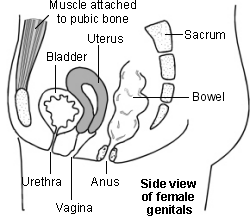
What is gonorrhoea?
What is gonorrhoea?
Gonorrhoea is an infection affecting mainly the genital areas. It can also affect the throat and eyes. Very occasionally the infection can spread to other parts of the body. Gonorrhoea accounts for 9 out of every 100 sexually transmitted infections (STIs) diagnosed in sexual health clinics in England. There were 57,084 cases in England in 2020. One in three of those cases were in young people aged 15-24 years.
What causes gonorrhoea?
How do you contract gonorrhoea?
Gonorrhoea is caused by the germ (a bacterium) Neisseria gonorrhoeae. It is passed on if you have:
Unprotected vaginal, oral or anal sex with an infected person.
Shared sex toys that have not been washed or covered with a new condom during use.
As gonorrhoea can be transmitted vaginally, anally and orally, it can therefore be passed during sex between men and women or sex between men and men.
In men, the infection usually affects the urethra (the tube between the bladder and the end of the penis) but can cause infection of the mouth or anus of both sexes. Vaginal liquid can be a source of infection so in theory it could be passed on during sex between women but this is very uncommon.
The bacterium that causes gonorrhoea cannot survive outside the human body for long. Therefore it is not spread by using communal swimming pools, public toilets, sharing baths, towels and cutlery, or hugging and kissing.
Gonorrhoea symptoms
Symptoms of gonorrhoea in women
Female genitals
There are no symptoms in about half of women who have infection with gonorrhoea.
About 1 in 2 women develop an increase or change in الإفرازات المهبلية.
About 1 in 4 women develop pain in the lower part of the stomach.
Rarely, women may notice bleeding between periods ,، أو فترات حيض غزيرة.
Pain when passing urine can sometimes mimic a urine infection.
There may be pain when having sex in some women.
Infection of the back passage (rectum) or throat (pharynx) can develop. Such infections do not usually cause symptoms, although occasionally rectal itching or a sore throat may be noticed.
Symptoms of gonorrhoea in men
Infection of the urethra (urethritis) is the typical infection in men. This commonly develops 5-7 days after having sex with an affected person. Symptoms include:
Discharge from the penis. This may stain underpants. It occurs in at least 8 out of 10 men with the infection.
Pain or burning sensation when passing urine. This occurs in about half of cases.
Irritation inside the penis, or a feeling of wanting to pass urine frequently.
Redness at the opening of the urethra at the end of the penis.
Infection of the back passage (rectum) or throat (pharynx) can develop. Such infections do not usually cause symptoms, although occasionally rectal pain, discharge or itching or a sore throat may be noticed.
Gonorrhoea is believed to cause symptoms in most infected men (about 9 in 10 affected). However, about 1 in 2 women with gonorrhoea do not have any symptoms.
The symptoms may clear over time, even without treatment. This may take up to six months but can be just a couple of weeks or so. However, without treatment, some germs (bacteria) usually remain in the urethra. It is just that the symptoms may go.
ملاحظة: even if symptoms go or are not present, there is a good chance that you can pass on the infection if you do not have treatment.
Gonorrhoea test
It is important to get tested and treated If you suspect that you have gonorrhoea or any other STI. You will need your diagnostic test to be done in a specialist genitourinary medicine (GUM) clinic, so if you think you have gonorrhoea you should make an appointment at your local genitourinary medicine GUM clinic. If you are not sure you can see your GP first, but they will need you to be seen at the clinic for proper diagnosis. In the UK you can go to the local GUM clinic without a referral from your GP. You can ring your GP surgery, local hospital or health authority and ask where the nearest clinic is. Local and national information is also available on the internet - for example, see Further Reading for the 'Find a sexual health clinic service'.
You will normally be advised to have tests if gonorrhoea is suspected - even if symptoms go. Ideally you should attend a local GUM clinic for this.
برعاية
Confidante Home STI Test
Confidante is quick, easy, and discreet to use from purchase to results. Test for 10 common STIs including infections that do not show any symptoms, to provide a comprehensive profile of your sexual health.

What happens during a gonorrhoea test?
A urine sample and/or a sample (swab) of the discharge will be taken to try to identify the germ (bacterium) that causes gonorrhoea. A urine test is not as accurate in women as it is in men. If a swab is taken for a man, it will be taken from the inside end of the penis (the urethra).
In women, a swab is taken from high up in the vagina. Another swab is taken from the inside the neck of the womb (the endocervix) at the womb's entrance. You will also be advised to have tests for other STIs. It will also be suggested that any sexual partners attend for tests and/or treatment.
Gonorrhoea complications
What are the long-term effects of gonorrhoea?
Complications of gonorrhoea in women
Infection can spread to the womb (uterus) to cause مرض التهاب الحوض. This can cause long-standing (chronic) pelvic pain and can lead to العقم.
Pregnancy can be complicated by الولادة المبكرة, الحمل خارج الرحم أو الإجهاض.
Infection present during pregnancy can lead to infection spreading to the eyes of a newborn baby. This is called ophthalmia neonatorum.
Pelvic infection can spread to the liver.
Abscesses can develop in the Bartholin's glands on either side of the lower part of the vaginal opening.
Rarely, there can be spread in the bloodstream to other parts of the body.
Complications of gonorrhoea in men
In a small number of cases the infection travels up the urethra to the prostate gland. It may also cause infection of the testicles or the tubes around them (epididymo-orchitis).
Rarely, a narrowing (stricture) of the urethra may develop.
It can affect future fertility.
Men who have sex with men can get infections of the back passage (anus) and throat.
Rarely, there can be spread in the bloodstream to other parts of the body.
Gonorrhoea treatment
The usual treatment is a single injection of an دواء مضاد حيوي plus a single large dose of a different antibiotic taken by mouth. However, sometimes other treatment regimes and schedules are used. For example, if you have an allergy to the usual antibiotic, or if you have another infection at the same time. Symptoms of gonorrhoea usually start to improve within a few days.
Previous successful treatment for gonorrhoea does not prevent you from catching it again.
Does my sexual partner need treatment?
Yes. Sexually active men and women should be tested for infection, even if they have no symptoms. Treatment with antibiotics is usually advised for sexual partners, even if the tests are negative, because:
Germs (bacteria) that cause gonorrhoea are often passed on during sex. Tests for bacteria are not foolproof. Treatment with antibiotics helps to make sure that any possible infection is cleared.
If a sexual partner is infected and not treated, infection can be passed back to you.
If you have gonorrhoea without symptoms then you may have had it for some time. In this situation any sexual partners within the previous three months should be tested and treated.
Treatment follow-up
A doctor or healthcare professional will normally want to know that treatment has worked. It is usual to be reviewed soon after you finish treatment. This is to check that symptoms have gone and to do a test to check that the infection has gone. Sometimes further treatment (perhaps with a different antibiotic) is needed if the infection has persisted despite treatment.
You should not have sex until both you and your sexual partner have finished treatment. ملاحظة: this will normally be for at least seven days after treatment has commenced. Even if the treatment is the usual one-dose schedule of two antibiotics as described above, it takes several days for the infection to clear after taking the treatment.
Gonorrhoea prevention
Wearing a الواقي الذكري during sex (including anal sex and oral sex) helps to prevent the spread of STIs.
The risk of STIs increases with the number of changes of sexual partner. So, the fewer partners you have, the lower your risk of STIs.
اختيارات المرضى لـ الأمراض المنقولة جنسياً

الصحة الجنسية
قمل العانة وقمل الجسم
قمل العانة هي حشرات صغيرة تعيش على البشر، عادة في شعر العانة. تنتقل من خلال الاتصال الجسدي الوثيق، مثل أثناء ممارسة الجنس. يمكن أن يسبب الإصابة بقمل العانة حكة ولكن ليس كل من يتأثر يعاني من أعراض. يتضمن العلاج استخدام غسول أو كريم مبيد للحشرات لقتل القمل. إذا كنت قد أصبت بقمل العانة من شريك جنسي، يجب أن تخضع لاختبار للكشف عن الأمراض المنقولة جنسياً الأخرى. ينتقل قمل الجسم أيضًا من خلال الاتصال الوثيق. يحدث غالبًا في المناخات الباردة وفي المناطق المكتظة حيث تكون النظافة سيئة ومعدل الفقر مرتفع. عدم القدرة على الغسل بانتظام أو ارتداء نفس الملابس لفترة طويلة يزيد من فرصة الإصابة بقمل الجسم، لذا فإن الأشخاص المشردين معرضون لخطر متزايد.
بقلم الدكتور كولين تايدي، MRCGP

الصحة الجنسية
الجنس الآمن
'Safer sex' usually refers to having sex in a way which reduces your risks of catching a sexually transmitted infection (STI).
بقلم الدكتور لورانس نوت
الأسئلة الشائعة
Can I get gonorrhoea if I've been successfully treated for it before?
Yes, having been successfully treated for gonorrhoea in the past does not make you immune. You can catch it again if you are re-exposed to the infection.
Why is it important for my sexual partner to get treated for gonorrhoea even if they don't have symptoms?
It is crucial for your sexual partner to be tested and treated, even without symptoms, because the germs causing gonorrhoea are easily passed during sex, and tests are not always foolproof. Treating your partner ensures any possible infection is cleared and prevents them from passing the infection back to you. If you had the infection without symptoms for some time, any sexual partners from the previous three months should be tested and treated.
How long after treatment do I need to wait before having sex again?
You should not have sex until both you and your sexual partner have finished your complete course of treatment. This typically means waiting for at least seven days after treatment has started, as it takes several days for the infection to fully clear, even with a single-dose treatment.
What is 'ophthalmia neonatorum' and how is it related to gonorrhoea?
Ophthalmia neonatorum is an infection that can spread to the eyes of a newborn baby. This can occur if a pregnant person has gonorrhoea and the infection is present during childbirth. It is one of the potential complications of gonorrhoea in women.
Are there any long-term consequences for future fertility for men or women if gonorrhoea is left untreated?
Yes, if gonorrhoea is left untreated, it can affect future fertility in both men and women. In women, it can lead to pelvic inflammatory disease, which can cause long-standing pelvic pain and infertility. In men, it can affect the testicles or surrounding tubes, which can impact fertility.
How soon after exposure to gonorrhoea do symptoms usually appear in men?
In men, if gonorrhoea infects the urethra, symptoms typically develop about 5-7 days after having sex with an infected person.
قراءة إضافية ومراجع
- Sexually transmitted infections (STIs): surveillance, data, screening and management; UK Health Security Agency (Last updated February 2020)
- Gonorrhoea: guidance, data and analysis; GOV.UK
- 2018 UK national guideline for the management of infection with Neisseria gonorrhoeae; British Association for Sexual Health and HIV (BASHH) - 2018: reviewed 2020
- Find a sexual health clinic near you; NHS services
- السيلان; NICE CKS، مارس 2024 (الوصول متاح فقط في المملكة المتحدة)
عن المؤلفعرض السيرة الذاتية الكاملة

الدكتورة هايلي ويلاسي، زميلة الكلية الملكية للأطباء العامين
طبيب عام، مؤلف طبي
MBChB (1992), DRCOG, DFFP, MRCOG (Part 1) MRCGP (2007), DFSRH (2013), MSc - medical education (2020)
كانت الدكتورة هايلي ويلاسي طبيبة عامة في هيئة الخدمات الصحية الوطنية تعمل في شمال غرب إنجلترا، وتقاعدت من الممارسة السريرية في عام 2022 بعد 30 عامًا.
حول المراجععرض السيرة الذاتية الكاملة

Dr Toni Hazell, FRCGP
بكالوريوس الطب والجراحة، بكالوريوس العلوم، زميل الكلية الملكية للأطباء العامين، دبلوم في الصحة الجنسية والإنجابية، دبلوم في طب الجهاز البولي التناسلي، دبلوم الكلية الملكية لأطباء النساء والتوليد، دبلوم في صحة الطفل (لندن، المملكة المتحدة، 2000)
تخرجت الدكتورة توني هازيل من كلية الطب بمستشفى سانت ماري وأكملت تدريبها في مستشفى نورثويك بارك.
تاريخ المقال
تمت كتابة المعلومات على هذه الصفحة ومراجعتها من قبل أطباء مؤهلين.
المقال متاح أيضًا باللغة الإنجليزية, الألمانية, إسبانية, الفرنسية, إيطالي, البرتغالية, الهندية, العبرية, العربية ,، و السويدية.
Next review due: 27 Mar 2028
29 مارس 2023 | أحدث إصدار
آخر تحديث بواسطة
الدكتورة هايلي ويلاسي، زميلة الكلية الملكية للأطباء العامينمراجعة من قبل
Dr Toni Hazell, FRCGP

اسأل، شارك، تواصل.
تصفح المناقشات، اطرح الأسئلة، وشارك التجارب عبر مئات المواضيع الصحية.

هل تشعر بتوعك؟
قم بتقييم أعراضك عبر الإنترنت مجانًا
اشترك في النشرة الإخبارية للمرضى
جرعتك الأسبوعية من النصائح الصحية الواضحة والموثوقة - مكتوبة لمساعدتك على الشعور بالاطلاع والثقة والتحكم.
من خلال الاشتراك، فإنك تقبل سياسة الخصوصية. يمكنك إلغاء الاشتراك في أي وقت. نحن لا نبيع بياناتك أبدًا.