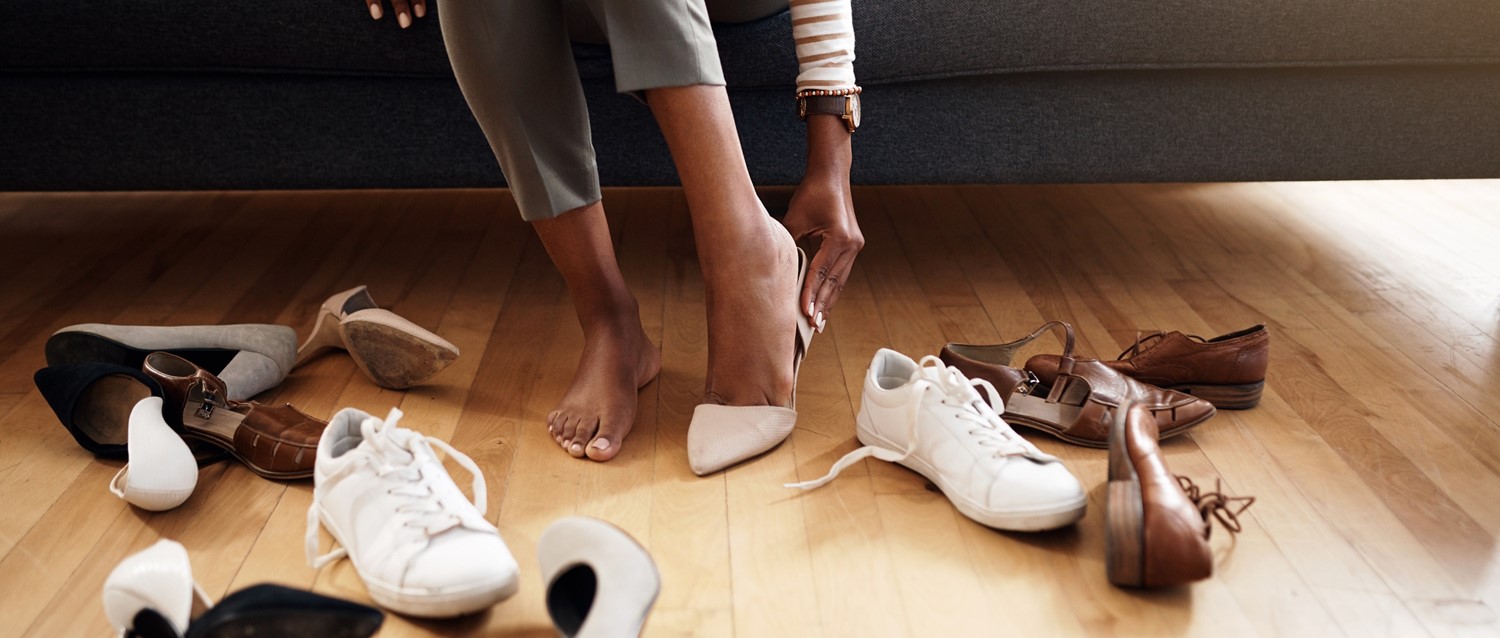
ما الذي يمكن أن تخبرك به حذاؤك عن قدميك
مراجعة من قبل الدكتورة سارة جارفيسآخر تحديث بواسطة ألي أندرسونآخر تحديث 11 Mar 2021
يتوافق مع الإرشادات التحريرية
- تنزيلتنزيل
- مشاركة
- Language
- نقاش
- نسخة صوتية
- أضف إلى المصادر المفضلة على جوجل
كما يقول المثل، الأحذية الجيدة تأخذك إلى أماكن جيدة. ومع ذلك، بالإضافة إلى الإشارة إلى نمط حياتك وحسك في الموضة، يمكن لحذائك أن يقول الكثير عن حالة قدميك.
Each foot has 26 bones, 33 joints, and more than 100 muscles, ligaments and tendons. "The feet are quite complex and no two are a pair," explains Emma McConnachie, podiatrist and spokesperson for The College of Podiatry. "There are plenty of issues that can occur, and podiatrists see a wide range of foot and lower-limb concerns."
Pain or discomfort is often the first sign of a foot problem, but for many people, the clues are in the shoes.
The sole of the problem
If you notice that the soles of your shoes wear down more markedly or quickly on one side than the other, it can be a sign that the pressure on your feet is being distributed unequally.
This doesn't necessarily mean there's anything wrong. However, while plenty of people experience no symptoms as a result of an uneven wear pattern, others get quite severe problems like pain, often in the big toe and sometimes dispersed to the ankle, or even up to the knee and hip.
"If your foot has a very low or high arch, it can cause different wear patterns in your shoes. Even one damaged joint can completely change things and it's unique to the patient," McConnachie says.
"Where the patient is reporting an issue, or where there is an uneven wear pattern, we would usually carry out a gait analysis - also known as a biomechanical assessment - to look at how the body is working."
This involves examining the structure and mechanics of the feet and lower limbs, how they function and move together when you're standing and walking, and whether they could be contributing to pain or discomfort.
If so, the solution might be as simple as wearing insoles or having custom-made orthotics to balance the unequal pressure on your feet.
Wear and tear
Comfortable footwear can help to keep your feet in tip-top shape, so it stands to reason that if your shoes don't fit properly - especially if they pinch and rub - they can cause you all manner of trouble.
Shoes that are too small, tight or poorly cushioned can lead to small lumps of hard skin (corns), larger areas of thickened, rough skin (calluses), and blisters, all of which can be bothersome though not serious. "The shoes can wear through to the end where the toes are pushing against the fabric, and this is often accompanied by a thick and damaged nail or ingrown toenail," McConnachie adds. Over-the-counter remedies from a pharmacy will often be sufficient to treat minor ailments like these.
If the footwear fits
Ill-fitting shoes, and certain styles of footwear, can also cause more serious problems and have a significant impact on your day-to-day life.
التهاب اللفافة الأخمصية is pain around the bottom of the heel and arch of your foot, caused by straining the part of the foot than connects the heel bone to the toes, called the plantar fascia.
It's often linked with activity - you might be more likely to get plantar fasciitis if you've recently started walking more or running, or working out on a hard surface - but it can also be caused by shoes that have insufficient cushioning or support.
A similarly painful foot complaint, ورم مورتون العصبي, is frequently the consequence of wearing high heels and tight, pointy shoes. Caused by inflammation of or damage to a nerve in between two (usually the third and fourth) toes, the main symptom is shooting or stabbing pain in the bottom of the foot, and sometimes a burning sensation in the area.
ورم إبهام القدم, on the other hand, are not caused by ill-fitting shoes - the cause is unknown, although there may be a genetic element. But these protruding bony lumps on the inside of the big toe often become more painful if you wear shoes that are too narrow and have a particularly hard sole.
Footwear woes
If your foot troubles come and go, you'll probably get away with continuing to wear the shoes of your choice.
However, if pain becomes hard to bear and problem feet are impacting your daily life, it might be time to ditch the stilettos and winklepickers in favour of a more sensible style.
"If you suffer from problems with your toes, such as corns or ingrown toenails, then avoid a narrow toe box, which is the front of your shoe," McConnachie says. "Yes, your toes really will slide forward into the pointy parts of your shoes! Even slight compression can cause problems, and I often see patients in my clinic suffering as a result of wearing shoes that are narrower than their forefoot."
If this is the case, try wide-fit shoes. But as McConnachie points out, a 'wide fit' is simply wider than other shoes in a particular range and doesn't necessarily mean they will fit if you have a wider foot, so having your feet measured properly is important.
She adds that our footwear needs are as unique as our feet, but we can all help to protect our feet by following some simple advice.
"Good support is key, and you should aim for shoes that have a good arch support and a way of staying on across the middle of your foot, such as straps or laces. This helps avoid straining your feet or clawing your toes to keep shoes on," she comments.
"If you wear insoles or orthotics, then look for shoes that have a removable liner as this makes them fit more easily."
اختيارات المرضى لـ Foot health
العناية بالقدم
أخطاء العناية بالقدم في الشتاء التي يجب تجنبها
As the cold weather starts to bite, it's important to wrap up and take care. But - whilst we might pull on our winter scarves and gloves - many of us neglect our feet at this time of year. We look at common winter foot care mistakes you might be making and how to avoid them.
بقلم جيليان هارفي
العناية بالقدم
كيفية الحفاظ على صحة قدميك هذا الصيف
We all know about using sun cream, aftersun, and moisturiser to protect ourselves against harmful UV rays. But what about looking after one of the most hardworking and underrated parts of the body - your feet? A qualified footcare expert shares some summer foot care tips to help keep your feet healthy this summer.
بقلم هيذر أينسورث
عن المؤلفعرض السيرة الذاتية الكاملة

ألي أندرسون
صحفي مستقل
NCTJ
آلي أندرسون صحفية مؤهلة من NCTJ ولديها سنوات عديدة من الخبرة في الكتابة والتحرير لمجموعة متنوعة من الناشرين.
حول المراجععرض السيرة الذاتية الكاملة

الدكتورة سارة جارفيس
استشاري سريري
MA (Cantab), BM, BCh (Oxon), DRCOG, FRCGP, MBE
بعد التدريب في الطب في كامبريدج وأكسفورد، أصبحت الدكتورة سارة جارفيس حاصلة على وسام الإمبراطورية البريطانية طبيبة عامة.
تاريخ المقال
تمت مراجعة المعلومات الموجودة في هذه الصفحة من قبل أطباء مؤهلين.
المقال متاح أيضًا باللغة الإنجليزية, الألمانية, إسبانية, الفرنسية, إيطالي, البرتغالية, الهندية, العبرية, العربية ,، و السويدية.
11 Mar 2021 | أحدث إصدار

اسأل، شارك، تواصل.
تصفح المناقشات، اطرح الأسئلة، وشارك التجارب عبر مئات المواضيع الصحية.

هل تشعر بتوعك؟
قم بتقييم أعراضك عبر الإنترنت مجانًا
اشترك في النشرة الإخبارية للمرضى
جرعتك الأسبوعية من النصائح الصحية الواضحة والموثوقة - مكتوبة لمساعدتك على الشعور بالاطلاع والثقة والتحكم.
من خلال الاشتراك، فإنك تقبل سياسة الخصوصية. يمكنك إلغاء الاشتراك في أي وقت. نحن لا نبيع بياناتك أبدًا.
المزيد في العناية بالقدم
- تشريح القدم
- هل تصبح رائحة قدميك أسوأ في الشتاء؟
- كيفية العثور على حذاء الجري المثالي لقدميك
- كيفية الحفاظ على صحة قدميك هذا الصيف
- كيفية الحفاظ على قدميك خالية من المشاكل
- كيفية منع طفلك من الإصابة بالثآليل
- التهاب اللفافة الأخمصية: كيفية تخفيف الألم والعثور على العلاج المناسب
- علامات تدل على أنك بحاجة لزيارة طبيب القدم
- نصائح لمنع الإصابات الشائعة في القدم
- فيديو: تمارين لألم القدم
- خيارات علاج الثآليل والزوائد الجلدية
- كيف تكون الحياة مع النقرس حقًا
- ما الذي يسبب برودة يديك وقدميك؟
- ما الذي يسبب ألم قدمك؟
- لماذا يعتبر العناية بقدميك أمرًا مهمًا جدًا إذا كنت مصابًا بالسكري
- أخطاء العناية بالقدم في الشتاء التي يجب تجنبها