What binge-watching is really doing to your health
Peer reviewed by Dr Sarah JarvisLast updated by Ross DaviesLast updated 22 Feb 2018
Meets Patient’s editorial guidelines
- DownloadDownload
- Share
- Language
- Discussion
- Audio Version
- Add to preferred sources on Google
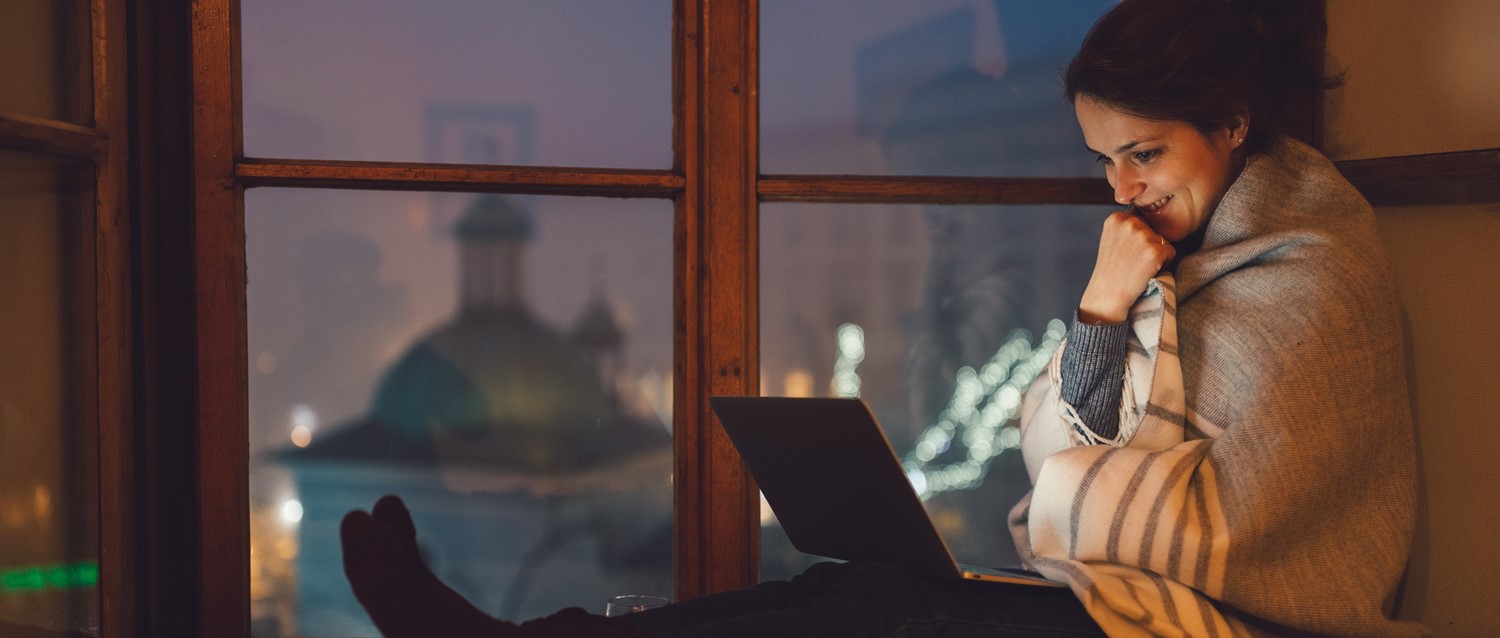
Almost all of us have probably been guilty of binge-watching our favourite show at some point. And with the rise of streaming services such as Netflix, it's becoming easier and easier to stay glued to screens for hours at a time - sometimes to the detriment of our health.
Conditions are perfect. The living room curtains are closed, obscuring a wintery cloudburst lashing down outside.
Within arm's reach on the coffee table stands a cold bottle of beer, alongside three aluminium trays of the New Hong Kong Garden's famous (well, in Greenwich) crispy chilli beef, aromatic duck and special rice.
There's nothing to do but hit the play button on the remote. The red, familiar letters of 'Netflix' appear centre-screen, amidst a white backdrop. I am primed for a long night ahead.
I've chosen to continue watching 'Dark', Netflix's latest big-hitter, following in the footsteps of 'Stranger Things', 'Narcos' and 'The Crown' - among others. It's a German-language show that seems to straddle several genres at once - family drama, mystery, thriller and time travel. I'm only an episode in, but am already intrigued. The reviews are favourable and I have high expectations.
The sensations I experience over the next five hours can be best described as a litany of contradictions. 'Dark' is immensely gripping, yet requires paramount levels of concentration; later on into my binge, I suffer dehydration and sinus trouble (as if my eyeballs have been gavelled into the back of my skull), but I won't stop watching. I don't want to.
I feel satisfied, but know what I'm doing can't be good for me.
When I finally turn in after midnight - the chilli beef long since congealed, and the beer drained - I can't sleep. Every time I close my eyes, carousels of light whirl around my head, featuring scenes of the last five hours' viewing. I just cannot get it out of my brain. It takes some time before I drop off.
Binge nation
Does any of the above sound familiar? It might do if you're one of the 40 million people in the UK identified by Ofcom who watch multiple episodes of a show in one sitting - also better known as binge-watching.
By Ofcom’s reckoning, that’s roughly eight in ten adults. We have become a nation of binge viewers. Our favourite shows are the font of endless conversations around water coolers and pub tables. It feels like we talk about television almost as much as we watch it.
This is supported by recent research conducted here at Patient. Out of 2,000 adults surveyed in January 2018, 27% admitted to delaying going to bed by around one and a half to two hours, due to a binge (defined as watching two or more episodes). 22% of respondents answered two and a half to three hours.
The research also revealed that women (52%) are more likely to binge-watch compared to men (48%). And in terms of age, over-55s are more likely to glut on their favourite show, with 38% of those surveyed admitting to doing so. Only 11% of respondents aged between 18 and 24 claimed to do the same. By region, London was top of the list at 13%, followed by the Southeast (14%) and the Northwest (11%). Only 2.5% of people asked from Northern Ireland claimed to binge-watch.
Suckers for streaming
The single largest factor behind the pastime is the rise of streaming services, such as Netflix, Amazon and Hulu, whereby we can avail ourselves of hundreds of hours of viewing - across scores of new shows - in exchange for a subscription fee.
It's a model that has put paid to the days of linear-watching, in which viewers were in thrall to the constraints of the broadcasting schedule across a handful of channels.
The idea of having to wait a week to discover the outcome of a storyline from the previous episode is hard to countenance nowadays. Patience is not a virtue in the world of watching TV; it's a hindrance.
But while the model of consumption might have altered, concerns over the amount of television we watch are nothing new, says Professor Barrie Guntor from the University of Leicester’s School of Media, Communication and Sociology.
"This debate around watching too much TV has been around for over 30 years," he says.
"What has changed with the availability of non-linear material is the use of cliffhangers. You don't have to wait anymore, as you can just click through on to the next episode.
"In a way, it's sort of turned television into a similar kind of model of consumption as that you'd have with a book. You don’t put a book down after reading the first chapter and then wait a week to read the second. You can read straight through for as long as you like."
Phil O'Shea, a professional screenwriter and lecturer at City, University of London, agrees that the likes of Netflix have revolutionised how we watch TV shows. Why we stay glued for more, he argues, has as much to do with the high quality of the drama as it does ease of viewing.
"Coming up with cliffhangers has always been meat and potatoes for screenwriters, but where Netflix really differs is that it doesn't have to worry about advertising revenue," he says.
"This means it can take chances with riskier, long-form shows. It's a great form, and a good thing for the industry, especially if you're a writer. It's not easy to be commissioned, though."
Vicious cycle
But what makes us so susceptible to falling for TV shows in the first place? According to clinical psychologist Abigael San, it can be boiled down to one simple explanation: it makes us feel good.
"And when something makes us feel good, we want to do it again," she explains. "If we're not feeling the disadvantage, then we'll just keep on chasing the thing that makes us feel good."
Herein lies the danger, says San, of ending up 'locked in a vicious cycle' of instant gratification and 'giving in to this flood of availability'. More concerning still is the figurative shield of armour television can provide people against real life - to the point where they avoid it altogether.
"I've actually had people tell me in my therapy sessions that they use binge-watching as a means of avoiding real life, relationships and emotions," she says.
"So it can stop people addressing their own anxieties and issues. This is really dangerous."
It can also tap into deeper, underlying issues. The aforementioned Patient survey bears witness to this, with around 34% of participants claiming to have experienced feelings of emptiness after finishing a show, with 20% citing low mood and depression.
Compulsive television viewing might not come anywhere close to the likes of binge-drinking on the Department of Health's list of priorities, but its attendant impact, at times, on our physical and mental well-being is not to be scoffed at.
Hidden dangers
For a country that faces an obesity epidemic, sitting down and watching the box for three hours a night with a takeaway - gripping television isn't always conducive to healthy food - might be deemed nothing short of a collective suicide mission.
Binge-watching also affects our levels of melatonin - the hormone that regulates sleep and wakefulness. Mainly produced at night, unnatural light from a television screen or tablet can dramatically reduce the right melatonin levels needed to sleep.
"While it may seem harmless to veg out in front of the TV, excessive screen time has an impact on sleep," says Lisa Artis from the Sleep Council. "It affects latency - the time it takes to get to sleep - as the bright light disrupts the body's circadian rhythms by suppressing the evening rise of melatonin.
"And while light might be the main issue," adds Artis, "often the content may have an impact on sleep too. Violence, gore or suspense may leave you feeling anxious and could contribute to tossing and turning."
Thankfully, though, watching hours of television in one sitting won't cause permanent damage to your eyes - or make them any more susceptible to problems in later life - affirms Daniel Hardiman-McCartney, clinical advisor at the College of Optometrists.
Nonetheless, it can cause eye strain.
"When you're looking at a TV screen or device, your blinking can become slightly incomplete," he explains. "Instead, the upper eyelid and lower lid don't touch together as they normally would. So your eyes can end up feeling uncomfortable, watery, tired and achy.”
Hardiman-McCartney recommends the taking of regular breaks ('one every hour'), whether it's getting up to make a cup of tea or walking around your home. He also advises resisting the temptation to turn the living room into the local Odeon.
"There's a temptation - and I'm guilty of this - to sit in a dark room and try to recreate the cinema experience," he says. "In fact, staring at a screen in a dark room confuses your visual system making the eyes uncomfortable. What you want is ambient lighting."
Oscar Wilde said it best ...
Can we kick our habit? It's getting harder to do so. New features on Netflix, such as auto-play and the option to intro-skip mean the window of hesitation - where the little voice in your head says, "Perhaps I should go to bed now" - is miniscule. Slipping into televisual immersion has never been easier.
What binge-watching ultimately boils down to is exercising restraint, says Guntor. "You can say the temptations are there, but you don't have to succumb to the temptation, if you think about it consciously and discipline yourself."
That's a big if. Perhaps Oscar Wilde said it best with the following: "I can resist everything, except temptation." A philosophy befitting of telly addicts in the UK and beyond.
Patient picks for Sleep and insomnia
Healthy living
How to sleep better
Insomnia is very common - with at least 1 in 3 people having problems sleeping. But simple changes can make a difference to your ability to sleep well. So how do you and your pillow become friends again?
by Amberley Davis
Healthy living
What your dreams can reveal about your health
Dreaming is crucial to normal brain function, but certain sleep and dream behaviours may be an indicator of underlying health issues. We examine what your dream patterns may reveal about your health and well-being.
by Sally Turner
About the authorView full bio

Ross Davies
Freelance Journalist
Ross Davies is a freelance journalist.
About the reviewerView full bio

Dr Sarah Jarvis
Clinical Consultant
MA (Cantab), BM, BCh (Oxon), DRCOG, FRCGP, MBE
After training in medicine at Cambridge and Oxford, Dr Sarah Jarvis MBE became a GP.
Article history
Article also available in English, German, Spanish, French, Italian, Portuguese, Hindi, Hebrew, Arabic, and Swedish.
22 Feb 2018 | Latest version
Join the conversation
Share your thoughts or experiences with others in our patient communities.

Ask, share, connect.
Browse discussions, ask questions, and share experiences across hundreds of health topics.

Feeling unwell?
Assess your symptoms online for free
Sign up to the Patient newsletter
Your weekly dose of clear, trustworthy health advice - written to help you feel informed, confident and in control.
By subscribing you accept our Privacy Policy. You can unsubscribe at any time. We never sell your data.
More in healthy living
- 5 ways to get more out of every step you take on the road to better health
- 5 ways to look after your mental health this Christmas
- 7 morning stretches to get you ready for the day
- NewBruxism and stress - how anxiety can affect your teeth
- Can hair transplants improve mental health?
- Does stress cause weight gain?
- Drinking in the sun: a dangerous cocktail
- Have a healthy, happy Father's Day
- UpdatedHeartburn at night: how to improve sleep quality with heartburn
- Is brain rot real - here's what brain health experts say
- Is there an LGBTQ+ health gap?
- Obesity blamed for fewer eligible organ donors
- The conditions that cause unexpected weight gain
- What are the dangers of drinking in hot weather?
- What are the risks of alcohol as you get older?
- Why a Christmas movie can make us feel good
- Why sitting ruins our health - and how 22 minutes of exercise could help
- Why walking your dog can boost your mental health