
نظام غذائي متوسطي
مراجعة من قبل الدكتور دوغ مكيتشني، MRCGPآخر تحديث بواسطة الدكتور كولين تايدي، MRCGPآخر تحديث 8 Jan 2025
يتوافق مع الإرشادات التحريرية
- تنزيلتنزيل
- مشاركة
- Language
- نقاش
- Ask Patient
- نسخة صوتية
- أضف إلى المصادر المفضلة على جوجل
The term 'Mediterranean Diet' describes a specific mix of dietary food ingredients, shown to promote health and long life in people.
نظرة سريعة
النظام الغذائي المتوسطي هو نمط غذائي صحي، وليس خطة حمية صارمة.
إنه غني بالخضروات والفواكه والبازلاء والفاصوليا والحبوب، مع كميات معتدلة من الدجاج والسمك.
تأتي معظم الدهون من مصادر غير مشبعة مثل زيت الزيتون والمكسرات، مع القليل من اللحوم الحمراء.
يمكن لهذا النظام الغذائي أن يقلل من خطر الإصابة بأمراض القلب، ومرض السكري من النوع 2، وارتفاع ضغط الدم، وبعض أنواع السرطان.
يركز على الأطعمة الكاملة، واستخدام الأعشاب بدلاً من الملح، والحد من الأطعمة المصنعة، واللحوم الحمراء، والحلويات السكرية.
What is the Mediterranean diet?
The word Mediterranean refers to the origins of the diet, rather than to specific foods such as Greek or Italian foods.
Using a wide range of fruits and vegetables gives the body maximum access to sources of vitamins, minerals and other trace nutrients. There are individual foods within the Mediterranean Diet which are particularly beneficial to health, such as olive oil, garlic and some fruits and vegetables. However, overall it is the combination of foods within a healthy lifestyle which is linked to improved health.
The overuse of salt in flavouring Western-style meals and fast foods has been linked with increased blood pressure. The healthy alternative is to replace the excess salt with herbs and also garlic, as Mediterranean people have done for many years. This can also add new flavours to quite simple pasta dishes, rice dishes and stews.
The Mediterranean Diet is rich in vegetables, fruit, peas and beans (legumes) and grains. It also contains moderate amounts of chicken and fish. There is little red meat and most fat is unsaturated and comes from olive oil and nuts. Having a small amount of red wine has been shown to increase the health benefits.
In combination with moderate التمارين and not التدخين, the Mediterranean Diet offers a scientifically researched, affordable, balanced and health-promoting lifestyle choice.
Health benefits of the Mediterranean diet
The typical Western diet is high in animal fats, sugar and preservatives but low in fruit and vegetables. Scientific research has shown that this food combination is partially responsible for triggering many chronic diseases and cancers.
Research has also shown that following a Mediterranean diet can reduce the chance of developing conditions such as:
بعض أنواع السرطان.
It can also be useful for people wishing to lose weight as it is rich in fruit and vegetables and lower in sugars and saturated fats than a typical Western diet.
Switching from a Western to a Mediterranean diet represents a healthy lifestyle choice. It can reduce the risk of a premature death and increase the chance of a healthy retirement, free from long-term medication.
المبادئ العامة
The Mediterranean Diet is not about quick fix superfoods. Nor is it a strict list of what you should not eat. Rather, the Mediterranean Diet is a formula for healthy day-to-day eating over the long term. Here's a quick guide for those who would like to try it:
Maximise your intake of vegetables, peas and beans (legumes), fruits and wholegrain cereals.
Limit your red meat intake - fish and poultry are healthier substitutes.
Where possible, use mono-unsaturated olive oil or rapeseed oil in place of animal fat such as butter or lard.
Limit your intake of highly processed fast foods and ready meals, which may be high in salt and saturated fat.
Eat no more than moderate amounts of dairy products.
Do not add salt to your food at the table - there is already plenty in the food.
Snack on fruit, dried fruit and unsalted nuts rather than cakes, crisps and biscuits.
Drink (red) wine during meals but no more than two small glasses per day.
Water is the best 'non-alcoholic beverage' (as opposed to sugary drinks), although health benefits have also been claimed for various teas and coffee.
Mediterranean Diet ingredients
Vegetables and fruits
The World Health Organization (WHO) - and the UK Government's Change4Life campaign - recommend we eat five portions of fruit and vegetables a day. A portion is 80 g. This guidance is partly based on research into the Mediterranean Diet. Other governments recommend higher levels of fruit and vegetables, such as seven or even ten portions daily.
A wide variety of fresh vegetables and fruits is an important part of the Mediterranean Diet. Tinned, dried and frozen fruit or vegetables are also valuable in the diet.
They are high in fibre, antioxidants and vitamins, especially vitamin C.
They help to reduce the risk of heart disease, cancers and bowel problems.
Cereals
Cereals should be wholegrain where possible, such as wholemeal bread or brown rice or pasta.
Examples are wheat, barley, oats, millet, corn and rice. They are found in cereal flakes, pasta, bread, couscous and crackers.
They provide carbohydrate, protein, fibre, vitamins and minerals.
They help to reduce bowel problems, including cancers; they help to lower cholesterol, which can reduce the risk of heart disease.
سمك
Various types of fish are important in the Mediterranean Diet. White fish such as cod, plaice, haddock, hake and halibut are a good source of protein which is low in fat.
Shellfish such as prawns, crab, lobster and mussels contain protein and some trace minerals
Oily fish also contains omega-3 fatty acids and vitamins A and D. Omega-3 fatty acids may reduce the risk of heart disease, some cancers and dementia; they are also thought to be helpful for brain development and in the treatment of depression.
ملاحظة: some oily fish contain low levels of toxic heavy metals. Pregnant women and those trying for a baby should limit their intake of tuna, shark and swordfish.
Legumes
These are vegetables which grow in pods. They include peas, beans, lentils, chickpeas and peanuts.
They form quite an important part of the Mediterranean Diet and are a useful base for soups and stews, as well as being found in hummus and eaten on their own - for example, as baked beans.
They provide protein, carbohydrate, fibre and vitamins. They are associated with a reduced risk of heart disease.
الدهون والزيوت
When cooking Mediterranean-style meals, mono-unsaturated oils are used to replace saturated animal fats, such as butter and lard.
Olive oil is the traditional oil used in the Mediterranean region but rapeseed oil produced in the UK has similar uses and benefits.
Healthier mono-unsaturated oils are also found in olives, nuts, seeds and avocados.
Vegetables can be roasted with small amounts of olive oil. Olive oil is often used in dressings for salads. You can also dip bread into it as an alternative to using butter.
Overall, although typical Western and Mediterranean diets can have a similar total fat content, the Mediterranean Diet is high in health-protective mono-unsaturated fat. However, consuming too much fat of any type can contribute to obesity.
المكسرات والبذور
Nuts such as almonds, chestnuts, walnuts, cashews and Brazil nuts, and also seeds such as pumpkin, sunflower, sesame and poppy, provide protein, fibre, vitamins and minerals, as well as being high in 'good' unsaturated fats.
Try to avoid salted nuts, as salt can raise blood pressure. As with all high-fat foods, consuming too much can contribute to obesity.
White meat
Lean chicken, turkey and other poultry are high in protein, vitamins and minerals. It is best to remove the skin and any visible fat.
When white meat is served in processed foods such as pies, burgers and fried chicken it is generally much higher in animal fat and so is not a healthy choice.
Foods to eat in smaller quantities
Wine
Wine, particularly red wine, is often consumed as part of a traditional Mediterranean diet. It contains antioxidants and anti-inflammatory chemicals and can help to protect against heart disease.
However, alcohol in excess is not healthy and current health guidelines for men and women recommend no more than two small glasses of wine daily, preferably with a couple of alcohol-free days during the week. Wine is also quite high in calories and can therefore contribute to obesity.
Pregnant women should not drink any alcohol.
Dairy produce
Milk, yoghurt, cheese, butter and cream are consumed in smaller quantities in a Mediterranean diet than in a Western diet.
Dairy products contain protein, vitamins A and B12 and calcium. However, some are also high in saturated fat, especially cream and butter.
Choosing lower-fat cheeses such as cottage cheese, mozzarella or feta rather than cream cheese or cheddar will reduce your saturated fat intake. Choosing semi-skimmed or skimmed milk rather than full-cream milk is also a lower-fat option.
اللحم الأحمر
Red meat such as beef, pork or lamb is eaten in smaller quantities in the Mediterranean Diet than in the Western diet.
Meat is high in protein, vitamins and minerals (especially iron) but tends to be higher in fat (particularly saturated fat) compared with the fat content of poultry.
When found in processed foods such as pies and sausages, it is likely to be higher in fat and lower in nutritional value.
Red meat can form part of a healthy diet but it may be better to keep it as a treat, such as Sunday dinner, or to make it into a stew or casserole with lots of vegetables. In this way, you are consuming less red meat overall.
البطاطس
Potatoes can be a healthy choice, depending on the cooking method. They contain fibre, vitamins B and C and potassium.
However, they also contain a lot of starch which is rapidly converted to glucose. High available starch content can be associated with an increased risk of type 2 diabetes.
Potatoes do not have the same health benefits as other vegetables so are listed separately.
Simpler cooking methods such as boiling, baking or mashing (without butter) are healthier choices than chips, roast potatoes or crisps.
حلويات وحلويات
Sweet foods such as cakes, biscuits and sweets should only be eaten in small quantities, perhaps as an occasional treat.
As well as sugar which is a major contributor to type 2 diabetes and tooth decay, they often contain high levels of saturated fat.
They may have some nutritional value.For example, milk-based desserts contain calcium, and many desserts contain fruit, although supermarket desserts rarely contain enough fruit to count as a portion.
In general, sweet foods should be eaten only in small quantities.
Adopting a strict Mediterranean diet
Scientific research has shown that the closer we can get to the ideal Mediterranean diet, outlined in the pyramid chart below, the greater the health advantage. The benefits of adopting the whole dietary pattern are greater than the health-giving properties of each type of food.
Mediterranean diet food pyramid
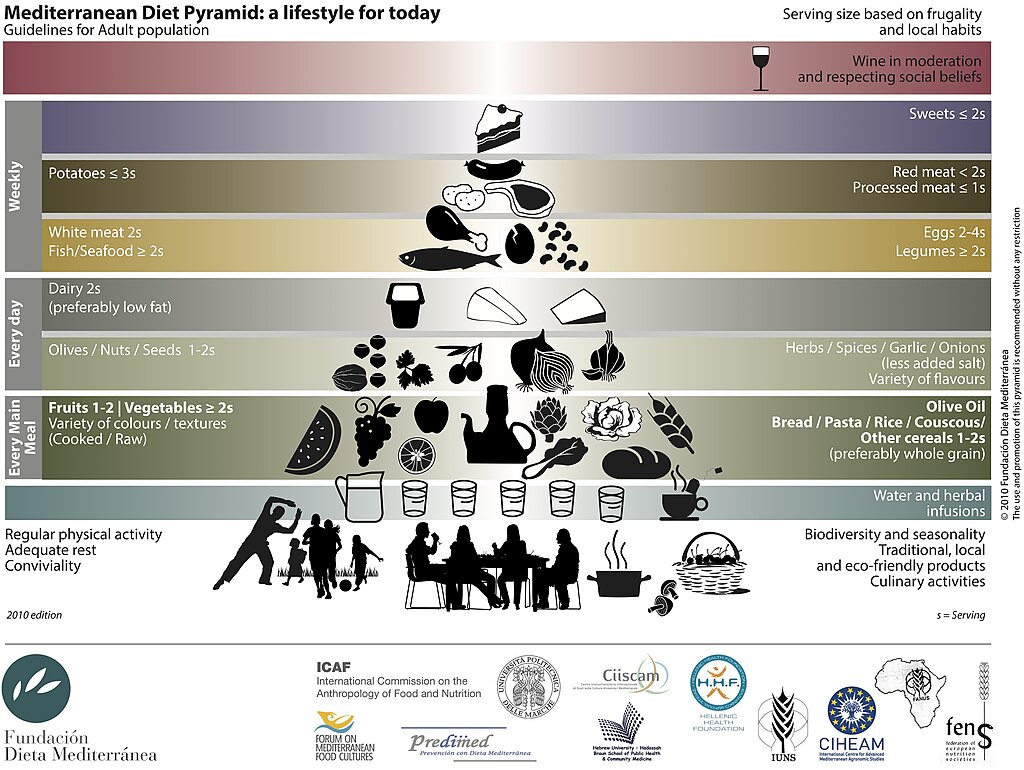
A guide to portions or servings described in the pyramid is as follows:
الخضروات: a cup of raw leafy vegetables or half a cup of other vegetables (at least 6 servings a day).
البطاطس: 100 g.
Legumes: one cup (100 g) of cooked dry beans.
Nuts: 30 g. Eat as a snack or sprinkle on food for added taste.
Fruit: one apple, banana, one orange, 200 g of melon or watermelon, 30 g of grapes.
Meat: 60 g of cooked lean meat or fish.
Grains: half a cup (50-60 g) of cooked pasta or rice; one slice of bread (25 g).
منتجات الألبان: one cup of milk or yoghurt; 30 g of cheese.
البيض: one egg.
Wine: 125 ml glass of average-strength red wine.
In summary
The strict Mediterranean Diet has been assessed and found to contain all the essential nutrients required for normal health. It also avoids excessive consumption of ingredients linked to ill health. Try it for yourself.
اختيارات المرضى لـ النظام الغذائي والتغذية
الحياة الصحية
كم يجب أن يكون لديك من الصوديوم؟
Sodium in the diet primarily comes from eating salt. While some of it comes from directly adding it to food, most of the salt we eat is already present in processed foods.
بقلم الدكتورة هايلي ويلاسي، FRCGP

الحياة الصحية
حاسبة مؤشر الجلوكوز كيتون (GKI)
افتح حاسبة GKI هل تريد تتبع مستوى الكيتوزية لديك؟ استخدم حاسبة مؤشر الجلوكوز والكيتون (GKI) لتقييم حالتك الأيضية. سواء كنت تتبع نظامًا غذائيًا كيتونيًا لفقدان الوزن أو إدارة مرض السكري أو لأسباب علاجية، فإن هذه الأداة تمنحك صورة أوضح لتوازن الجلوكوز والكيتون الحالي لديك.
بواسطة فريق معلومات المرضى
الأسئلة الشائعة
ما هي أنواع الحبوب الموصى بها في النظام الغذائي المتوسطي؟
يجب أن تكون الحبوب في النظام الغذائي المتوسطي بشكل أساسي من الخيارات الكاملة مثل الخبز الكامل، الأرز البني، أو المعكرونة المصنوعة من القمح الكامل. تشمل الأمثلة القمح، الشعير، الشوفان، الدخن، الذرة، والأرز، وتوجد بأشكال متنوعة مثل الرقائق، الخبز، الكسكس، والبسكويت. توفر هذه الحبوب الكربوهيدرات الهامة، البروتين، الألياف، الفيتامينات، والمعادن، ويمكن أن تساعد في تقليل مشاكل الأمعاء وخفض الكوليسترول.
ما هي كمية الألبان المناسبة في النظام الغذائي المتوسطي؟
تُستهلك منتجات الألبان مثل الحليب والزبادي والجبن بكميات أقل في النظام الغذائي المتوسطي مقارنة بالنظام الغذائي الغربي التقليدي. بينما توفر البروتين والفيتامينات A و B12 والكالسيوم، يمكن أن تحتوي بعض منتجات الألبان، خاصة الكريمة والزبدة، على نسبة عالية من الدهون المشبعة. يُوصى باختيار الخيارات الأقل دهونًا مثل الجبن القريش، الموزاريلا، الفيتا، الحليب نصف الدسم أو الخالي من الدسم.
هل تعتبر البطاطس جزءًا صحيًا من النظام الغذائي المتوسطي؟
يمكن أن تكون البطاطس خيارًا صحيًا اعتمادًا على كيفية تحضيرها، حيث توفر الألياف والفيتامينات ب و ج والبوتاسيوم. ومع ذلك، تحتوي على الكثير من النشا الذي يتحول بسرعة إلى جلوكوز، ويمكن أن يرتبط ارتفاع محتوى النشا بزيادة خطر الإصابة بمرض السكري من النوع 2. لا تقدم نفس الفوائد الصحية التي تقدمها الخضروات الأخرى. تشمل طرق الطهي الصحية الغلي أو الخبز أو الهرس بدون زبدة، وتجنب الخيارات مثل الرقائق أو البطاطس المشوية.
ما هو حجم الحصة المعتبرة للفواكه والخضروات في هذا النظام الغذائي؟
تكون الحصة من الفاكهة أو الخضروات عادة 80 جرامًا. على سبيل المثال، تشمل أحجام الحصص المحددة تفاحة واحدة أو موزة أو برتقالة، 200 جرام من البطيخ أو البطيخ، أو 30 جرامًا من العنب للفاكهة. بالنسبة للخضروات، تكون كوبًا من الخضروات الورقية النيئة أو نصف كوب من الخضروات الأخرى. يوصي النظام الغذائي بتناول ست حصص على الأقل من الخضروات يوميًا.
ما هي أنواع الدهون المستخدمة في الطهي في النظام الغذائي المتوسطي؟
يعتمد النظام الغذائي المتوسطي بشكل أساسي على الزيوت الأحادية غير المشبعة، مثل زيت الزيتون وزيت بذور اللفت، في الطهي، بدلاً من الدهون الحيوانية المشبعة مثل الزبدة أو الشحم الموجودة في الأنظمة الغذائية الغربية. هذه الدهون الصحية توجد أيضًا في الزيتون والمكسرات والبذور والأفوكادو. غالبًا ما يُستخدم زيت الزيتون في التتبيلات، لتحميص الخضروات، أو كغموس للخبز.
هل جميع أنواع الأسماك موصى بها بنفس القدر في النظام الغذائي المتوسطي؟
أنواع مختلفة من الأسماك مهمة. توفر الأسماك البيضاء مثل القد والبلطى والحدوق بروتينًا منخفض الدهون. تقدم المحاريات مثل الجمبري وبلح البحر البروتين والمعادن النادرة. توفر الأسماك الدهنية مثل السلمون أيضًا الأحماض الدهنية أوميغا 3 والفيتامينات A و D، والتي قد تقلل من خطر الإصابة بأمراض القلب وبعض أنواع السرطان والخرف. ومع ذلك، يجب على النساء الحوامل واللواتي يحاولن الإنجاب الحد من تناول بعض الأسماك الدهنية مثل التونة وسمك القرش وسمك السيف بسبب المستويات المنخفضة من المعادن الثقيلة السامة.
قراءة إضافية ومراجع
- Cardiovascular disease prevention; NICE Public Health Guideline (June 2010)
- إرشادات أوروبية لعام 2021 حول الوقاية من أمراض القلب والأوعية الدموية في الممارسة السريرية; الجمعية الأوروبية لأمراض القلب (2021)
- تقدير المخاطر والوقاية من أمراض القلب والأوعية الدموية; الشبكة الاسكتلندية للإرشادات المشتركة بين الكليات - SIGN (2017)
- أمراض القلب والأوعية الدموية: تقييم المخاطر والحد منها، بما في ذلك تعديل الدهون; NICE Guidance (July 2014 - last updated February 2023)
- CVD risk assessment and management; NICE CKS، مايو 2023 (الوصول متاح فقط في المملكة المتحدة)
- Lacatusu CM, Grigorescu ED, Floria M, et al; The Mediterranean Diet: From an Environment-Driven Food Culture to an Emerging Medical Prescription. Int J Environ Res Public Health. 2019 Mar 15;16(6). pii: ijerph16060942. doi: 10.3390/ijerph16060942.
عن المؤلفعرض السيرة الذاتية الكاملة
تم التحديث بواسطة

الدكتور كولين تايدي، MRCGP
طبيب عام، مؤلف طبي
MBBS, MRCGP, MRCP (Paediatrics), DCH
الدكتور كولين تايدي هو طبيب في هيئة الخدمات الصحية الوطنية، ويعمل في أوكسفوردشاير.
حول المراجععرض السيرة الذاتية الكاملة

الدكتور دوغ مكيتشني، MRCGP
كاتب طبي
MA, MBBS, MSc, DRCOG, MRCP(UK), MRCGP(2021), FHEA
الدكتور دوغ مكيتشني هو طبيب عام في هيئة الخدمات الصحية الوطنية يعمل في لندن. يعمل بدوام كامل في المجال السريري وهو أيضًا نائب رئيس وحدة الممارسة السريرية والمهنية في كلية الطب بجامعة كوليدج لندن.
تاريخ المقال
المقال متاح أيضًا باللغة الإنجليزية, الألمانية, إسبانية, الفرنسية, إيطالي, البرتغالية, الهندية, العبرية, العربية ,، و السويدية.
Next review due: 7 Jan 2028
8 Jan 2025 | أحدث إصدار
شارك أفكارك أو تجاربك مع الآخرين في مجتمعات المرضى.
وصول بسيط إلى العلاجات والخدمات الصحية الموثوقة عبر الإنترنت.
Common conditions
Get help with common conditions through the NHS, without a GP appointment.
 التهاب الجيوب الأنفية الحاد
 التهاب اللوزتين البكتيري
 القوباء
 لدغات الحشرات
 الحزام الناريعدوى المسالك البولية
اشترك في النشرة الإخبارية للمرضى
جرعتك الأسبوعية من النصائح الصحية الواضحة والموثوقة - مكتوبة لمساعدتك على الشعور بالاطلاع والثقة والتحكم.
من خلال الاشتراك، فإنك تقبل سياسة الخصوصية. يمكنك إلغاء الاشتراك في أي وقت. نحن لا نبيع بياناتك أبدًا.