تشريح الثدي
مراجعة من قبل الدكتورة هايلي ويلاسي، زميلة الكلية الملكية للأطباء العامين آخر تحديث بواسطة الدكتور لورانس نوتآخر تحديث 12 Nov 2018
يتوافق مع الإرشادات التحريرية
- تنزيلتنزيل
- مشاركة
- Language
- نقاش
- نسخة صوتية
- أضف إلى المصادر المفضلة على جوجل
The medical name for breast is mammary gland. Each breast consists of tissue overlying the chest wall muscles (the pectoral muscles). In women, the breasts are composed principally of specialised tissue (glandular tissue) that produces milk. The remaining part is made up of fatty tissue. In humans, breast tissue begins to enlarge at puberty. This is unlike other primates, where breast tissue only enlarges during milk production.
Structure of the breast
Breast cross section
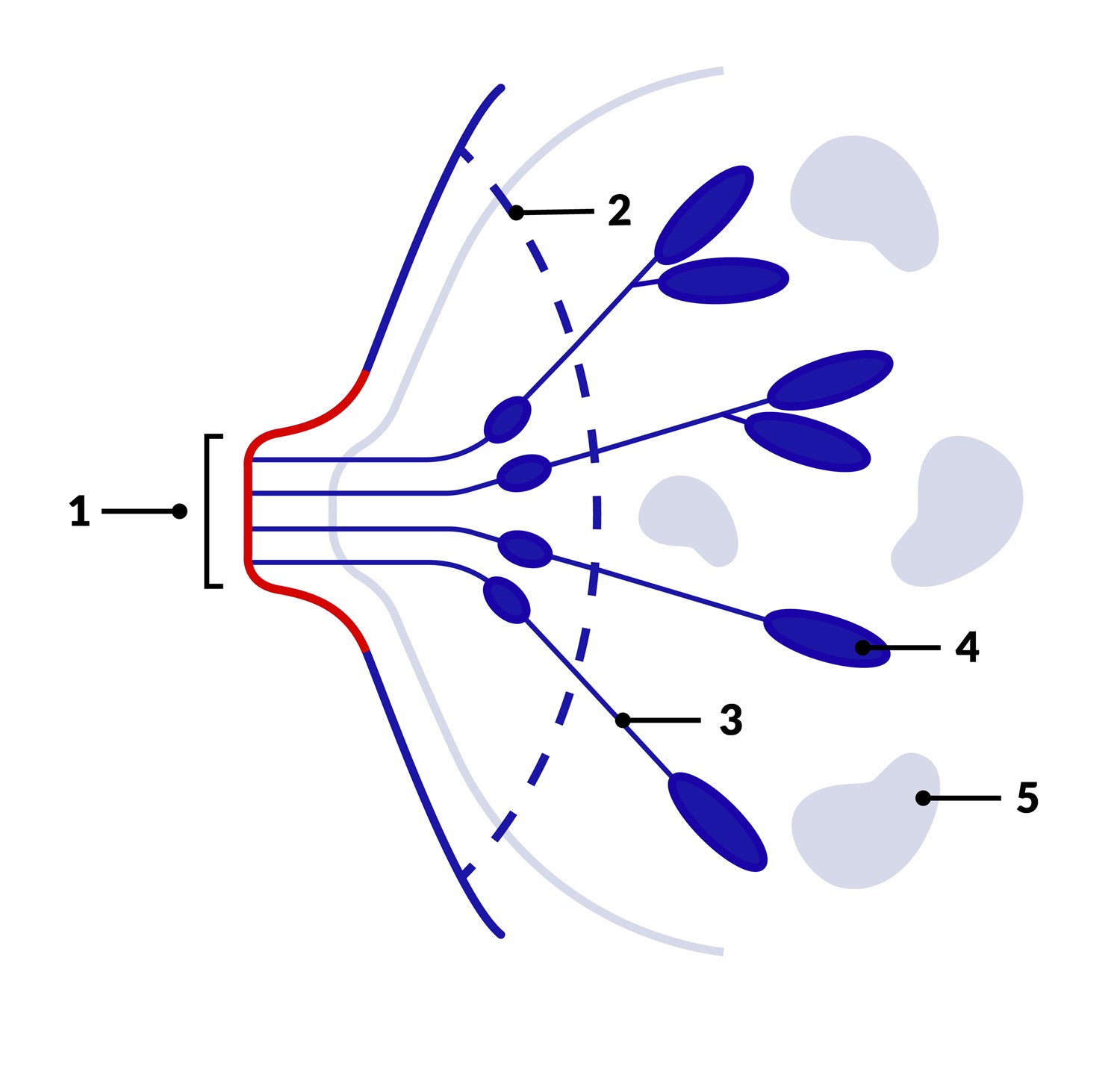
مفتاح |
|---|
1. Nipple |
The breast is composed of glandular structures called lobules. In women, the lobules are composed of specialised tissue which can produce milk during periods of lactation. The lobules themselves are organised into lobes. Each lobe contains 15-20 lobules. The space between the lobules is filled with fat cells and connective tissue (the support tissue of the body). Ligaments support the breasts and give them shape. Nerves running through the breasts provide sensation. Lymph vessels are responsible for the circulation of body fluid and drain into the lymph nodes. The lymph nodes draining the breast are located in the armpits and behind the breastbone. Blood vessels circulate blood through the tissues. The amount of fat in the breast is what determines its size.
The breasts do not contain muscle. They sit on top of the pectoral muscles that are part of the chest wall.
The male breast has a similar composition except the tissue making up the lobules has no capacity to produce milk.
In the fetus (the developing unborn baby) the breasts develop along the 'milk lines', tracts of tissue on either side of the body that run from the armpits to the groins. Extra nipples or even entire breasts can develop anywhere along these lines. Extra nipples are common but the presence of a whole additional breast is unusual.
How does lactation work
The lactating tissue of the lobules produces milk. Milk produced by each lobule travels through little tubes called ducts, which open out on to the nipple. The pigmented area of the nipple is called the areola. The areola also contains modified sweat glands called Montgomery's glands. Their purpose is to lubricate the breast during breastfeeding.
Some disorders of the breast
ألم الثدي
Breast pain is a common symptom that most women experience at least some time in their lives. The medical term for it is mastalgia. Most breast pain is cyclical - that is, it occurs on a monthly basis, usually just before a period. The breasts may feel swollen and lumpy around this time. It is thought that cyclical breast pain is caused by the breast tissue becoming extra sensitive to the normal hormone changes that occur around menstruation. There does not seem to be any disorder of the hormone system itself.
Pain that is not related to periods is called non-cyclical. It can be caused by a breast disorder (eg, infection or breastfeeding) or from a problem with the muscles or ribs beneath the breast. It may be worth keeping a diary to see whether your pain is cyclical or non-cyclical.
Cyclical pain may be helped by a good support bra, painkillers such as الباراسيتامول, non-steroidal anti-inflammatory preparations to apply directly to the surface of the breast - such as الإيبوبروفين أو ديكلوفيناك - and hormone-blocking medicines such as danazol. Evening primrose oil used to be widely used but is no longer available on prescription, as there is little evidence for its use. However, some women have found it helpful and it can still be bought from a chemist.
Several medicines can cause cyclical breast pain, including hormones, antidepressants and treatments for high blood pressure. Check your medication and talk to your doctor if you think this is the problem.
The treatment of non-cyclical breast pain depends on the cause, although sometimes no cause is found. It may disappear without treatment after a few months. It is sometimes helped by non-steroidal anti-inflammatory medicines taken in tablet form or rubbed on to the skin.
Breast pain and breast cancer
سرطان الثدي usually causes a painless lump but this is not a golden rule. If you have any type of breast pain, it's best to get it checked out by your doctor.
اختيارات المرضى لـ Breast health

صحة المرأة
لماذا نحتاج للحديث عن مرض زراعة الثدي
Have you heard of breast implant illness? Although not yet recognised as an official medical condition, understanding that this is a possible side-effect of breast implant surgery can help people make more informed decisions, identify the root of their health issues, and improve their chances of recovery.
بقلم أمبرلي ديفيس
صحة المرأة
هل تقومين بفحص ثدييك؟
بصفتي طبيبًا عامًا، أرى بانتظام نساء يعانين من مشاكل في الثدي - وهن دائمًا تقريبًا قلقات بشأن السرطان. لكن الكتل والنتوءات وغيرها من مشاكل الثدي غالبًا ما لا تكون سرطانية. وإذا كانت كذلك، فإن العلاج المبكر في هذه الأيام يكون عادةً ناجحًا للغاية. الكلمة المفتاحية هي المبكر - إذا كان لديك مشكلة في الثدي، فمن المهم دائمًا فحصها من قبل طبيبك.
بقلم الدكتورة سارة جارفيس
عن المؤلفعرض السيرة الذاتية الكاملة

الدكتور لورانس نوت
طبيب عام، مؤلف طبي
بكالوريوس (مع مرتبة الشرف) في الكيمياء الحيوية، بكالوريوس الطب والجراحة
الدكتور لورانس نوت تأهل في عام 1973 ولديه خبرة واسعة كطبيب عام.
حول المراجععرض السيرة الذاتية الكاملة

الدكتورة هايلي ويلاسي، زميلة الكلية الملكية للأطباء العامين
طبيب عام، مؤلف طبي
MBChB (1992), DRCOG, DFFP, MRCOG (Part 1) MRCGP (2007), DFSRH (2013), MSc - medical education (2020)
كانت الدكتورة هايلي ويلاسي طبيبة عامة في هيئة الخدمات الصحية الوطنية تعمل في شمال غرب إنجلترا، وتقاعدت من الممارسة السريرية في عام 2022 بعد 30 عامًا.
تاريخ المقال
تمت مراجعة المعلومات الموجودة في هذه الصفحة من قبل أطباء مؤهلين.
المقال متاح أيضًا باللغة الإنجليزية, الألمانية, إسبانية, الفرنسية, إيطالي, البرتغالية, الهندية, العبرية, العربية ,، و السويدية.
12 Nov 2018 | أحدث إصدار
آخر تحديث بواسطة
الدكتور لورانس نوتمراجعة من قبل
الدكتورة هايلي ويلاسي، زميلة الكلية الملكية للأطباء العامين

اسأل، شارك، تواصل.
تصفح المناقشات، اطرح الأسئلة، وشارك التجارب عبر مئات المواضيع الصحية.

هل تشعر بتوعك؟
قم بتقييم أعراضك عبر الإنترنت مجانًا
اشترك في النشرة الإخبارية للمرضى
جرعتك الأسبوعية من النصائح الصحية الواضحة والموثوقة - مكتوبة لمساعدتك على الشعور بالاطلاع والثقة والتحكم.
من خلال الاشتراك، فإنك تقبل سياسة الخصوصية. يمكنك إلغاء الاشتراك في أي وقت. نحن لا نبيع بياناتك أبدًا.
المزيد في صحة المرأة
- فيديوهات عن التهاب المهبل البكتيري
- هل يمكنك منع النزيف الاختراقي أثناء تناول الحبوب؟
- البيلاتس العلاجي: دعم للتعافي من سرطان الثدي
- هل تغير حبوب منع الحمل سلوكك؟
- هل يؤثر استخدام وسائل منع الحمل الهرمونية على رغبتك الجنسية؟
- كيفية العناية بصحتك النفسية خلال دورتك الشهرية
- عملية جديدة يمكن أن تؤخر سن اليأس لمدة 20 عامًا
- Period blood loss chart
- Period poverty: a public health crisis
- اختبار: متى سأحصل على دورتي الشهرية الأولى؟
- المتسوقون السريون: هل تحصل النساء على أفضل نصائح لمنع الحمل؟
- جديدالكثير من الحبوب؟ الزيادة المقلقة في تعدد الأدوية لدى النساء في منتصف العمر
- فهم الأكياس المهبلية
- فيديو: كيف يؤثر مرض التهاب الحوض على الخصوبة؟
- ما الذي يسبب الدورة الشهرية الغزيرة والنزيف المهبلي غير الطبيعي؟
- ما الذي فعلته لي العلاج الهرموني
- كيف يكون شعور جراح الثدي المصاب بسرطان الثدي
- ما تحتاج لمعرفته حول التستوستيرون وانقطاع الطمث
- ما العلاقة بين متلازمة تكيس المبايض والسكري؟
- صحة المرأة في الرياضة: الإصابات، الحيض، والأمومة