
ما الفرق بين الإكزيما والصدفية والقوباء الحلقية؟
مراجعة من قبل الدكتور كريشنا فاخاريا، MRCGPكتبه الدكتور كولين تايدي، MRCGPنُشر في الأصل 11 Aug 2023
يتوافق مع الإرشادات التحريرية
- تنزيلتنزيل
- مشاركة
- Language
- نقاش
- نسخة صوتية
- أضف إلى المصادر المفضلة على جوجل
Red skin rashes are very common but it's often difficult to find what causes them because their symptoms are often similar. Three of the most common causes are eczema, psoriasis and ringworm. Getting the diagnosis right is important because the treatment for each of them is very different.
What's the difference between eczema, psoriasis and ringworm?
الأكزيما التأتبية
Atopic eczema - on legs
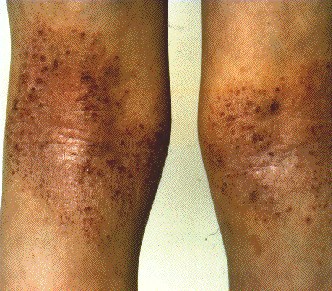
الأكزيما التأتبية - also known as atopic dermatitis - is when your skin is inflamed. It affects people of all ages, but usually starts in early childhood before 5 years of age. People with atopic eczema usually have periods when symptoms are mild, as well as periods when symptoms become more severe (flare-ups)
Eczema is caused by a problem with the immune system and children with eczema are more likely to get asthma or hay fever.
الصدفية
Psoriasis on the hands
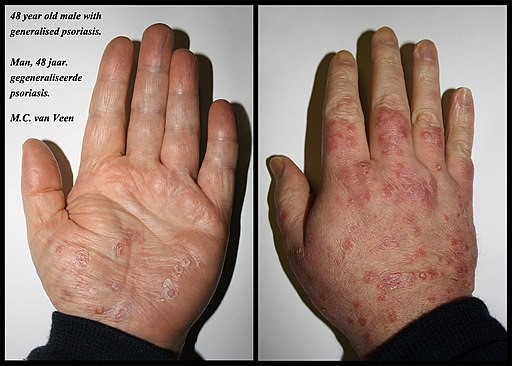
© MCvanVeen, CC BY-SA 4.0 via Wikimedia Commons
الصدفية is an autoimmune disease, which is caused by our immune system attacking healthy skin cells. Psoriasis causes areas of inflammation in the skin, which can get worse and better. It can also affect the finger nails and people with psoriasis may also develop psoriatic arthritis.
The most common type is chronic plaque psoriasis which affects around 9 in 10 people with the condition. Other types include flexural psoriasis, guttate psoriasis and, less commonly, localised pustular psoriasis which affects the the palms of the hands and soles of the feet.
القوباء الحلقية
Ringworm (tinea corporis)
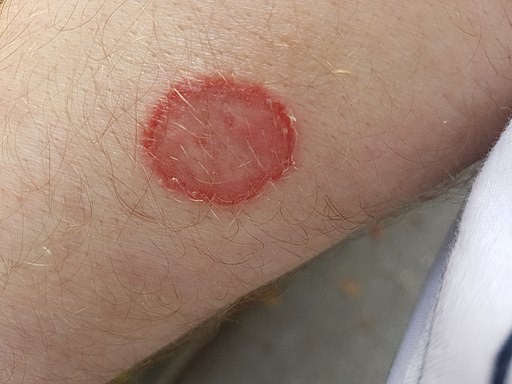
© Asurnipal, CC BY-SA 4.0, via Wikimedia Commons
Ringworm (tinea) is a rash caused by a fungal infection. It may look red, silver or darker than surrounding skin, depending on your skin tone. Ringworm gets its name because the area of skin affected looks like circular worms - but ringworm is not caused by worms. Ringworm affecting the body is called tinea corporis. Fungal skin infections can also affect the foot (athlete's foot or tinea pedis), the groin (tinea cruris) أو الـ scalp (tinea capitis). Ringworm often spreads by direct skin-to-skin contact with an infected person or animal.
What is the difference between eczema and psoriasis?
Atopic eczema causes itchy skin that is also dry, cracked and sore. Some people with eczema only have small patches of dry skin, but others may have widespread red, swollen, sore and cracked (inflamed) skin affecting large areas of the body.
The inflamed skin usually looks red on lighter skin, but can be darker brown, purple or grey on darker skin.
Atopic eczema can affect any part of the body but mostly affects the hands, front of the elbows and back of the knees - and on the face and scalp in children. In Black and Asian children, atopic eczema can affect the front of the legs and back of the arms rather than the knees. Circular shaped patterns, often found around the hair follicles, are more common.
The areas (skin lesions) with psoriasis typically have a very clear boundary, and are red and often scaly - usually silver-white in colour.
Chronic plaque psoriasis typically causes patches (plaques) on the scalp, behind the ears, on the trunk, buttocks, around the belly button, and the back of the arms and front of the legs. The affected skin areas are typically distributed symmetrically and can group together to form larger patches. On white skin, the plaques are pink or red and on darker skin, they usually have a grey colour. Most patches are 1-2cms in diameter, with an oval or irregular shape. There is usually a clear boundary between normal and affected skin. The thickness of the scale varies, but it can be very thick.
Therefore, although eczema and psoriasis may often look similar, there are some important differences, such as:
Appearance:
Eczema is very itchy and the skin may be very sore and dry. Eczema makes your skin red and inflamed. It may be scaly, oozing, or crusty. You may see rough, leathery patches that are sometimes dark. It can also cause swelling.
Psoriasis could also be itchy, but your skin may also sting or burn. Psoriasis can also cause red patches. They may be silvery and scaly and raised. The skin is thicker and more inflamed than with eczema.
Distribution:
Eczema may appear at the front of your elbows or behind your knees, as well as your hands, feet, face and scalp..
Psoriasis often appears at the back of your elbows and front of your knees. Patches may also occur on fingernails and toenails, mouth and lips, eyelids, ears, and skin folds.
Triggers:
Eczema is usually aggravated by things that irritate your skin, like soaps or detergents. Things that cause allergies can also set off eczema, like dust, pets, pollen, mold, dandruff or some foods. Infections, stress, sweating, heat, and humidity can all start up eczema.
Psoriasis shares some of these triggers, like stress and infection. But you can also get flare-ups when your skin is injured, such as with sunburn or scratches.
Age:
Eczema usually starts in babies or children under 5 years old. Often, symptoms improve with time and it's much less common to first get it as an adult.
Psoriasis usually shows up between ages 15 and 35. But you can get it at other ages too. It's rare for a baby to have psoriasis.
Other conditions:
Eczema is more likely to occur if there is a history of الربو أو حمى القش in the family and a child with eczema is also more likely to develop these conditions.
Psoriasis may be linked to other health conditions, such as السكري أو أمراض القلب.
Can eczema turn into psoriasis?
Eczema and psoriasis are different skin conditions and eczema cannot turn into psoriasis. However, it is possible that you can have both eczema and psoriasis at the same time, but this is uncommon.
Can you treat eczema and psoriasis in the same way?
Eczema treatment depends on how severe it is. If the eczema is mild, a moisturiser (emollient) is used all the time to treat dry skin, and a short course of a topical steroid, which is put onto the skin to reduce inflammation when the skin becomes red and inflamed. More severe eczema my need other treatments and you may be referred to a skin specialist (dermatologist). These other treatments may include medicines that are taken by mouth - that are more effective but also have more possible side effects - bandages and wet wraps, or light-therapy (phototherapy) using ultraviolet light.
Mild psoriasis may also be treated with treatments rubbed directly onto the skin, such as emollients and steroid creams - vitamin D analogues (calcipotriol, calcitriol أو tacalcitol), coal tar preparations or dithranol may also be used. If more severe, psoriasis treatment may also need to be provided by a dermatologist and may include phototherapy or medicines that are taken by mouth.
Can ringworm be mistaken for psoriasis?
Ringworm can be mistaken for psoriasis but there are usually differences that help to tell them apart.
Psoriasis is usually a long term condition and the affected skin patches can appear salmon-coloured with silvery white scale, and with a clear boundary between the affected area and normal skin. On darker skin tones, psoriasis may look violet with gray scale. Or it can also appear dark brown and difficult to see. It is often found on the knees, elbows, genitals, and toenails.
Ringworm is a temporary circular rash that appears red or pink on light skin tones and brown or gray on skin of colour. The skin areas affected do not tend to be scaly but the colour tends to fade towards the middle of the patch. You can develop ringworm if your skin comes in contact with the skin of someone who has the fungal infection.
Ringworm typically looks like a ring, so there may be fine scale on the 'ring' but the middle is clear skin. This helps to differentiate between this and eczema or psoriasis as these commonly do not have an area in the middle that is clear.
اختيارات المرضى لـ الصدفية

صحة الجلد والأظافر والشعر
هل يمكن أن يساعد تغيير نظامك الغذائي في علاج الصدفية؟
According to the British Skin Foundation, around 2 in 100 people in the UK live with the skin condition psoriasis. It is not infectious, nor does it lead to cancer. But it may be highly distressing or uncomfortable. This has led people with the condition to try various remedies, including changes to diet or lifestyle. We look for evidence that eating or avoiding certain foods could help.
بقلم الدكتورة كاري روكستون، دكتوراه، تغذية الأطفال
صحة الجلد والأظافر والشعر
ماذا تفعل إذا كانت الصدفية تسبب لك الإحباط
Psoriasis affects approximately 1.8 million people in the UK, around 2% of the population. Red, flaky patches of skin covered in silvery scales are typical of the condition, which comes and goes throughout life. Its frequency and severity can vary greatly from person to person, from causing minor irritation to seriously affecting their quality of life.
بقلم كيري تايلور سميث
عن المؤلفعرض السيرة الذاتية الكاملة

الدكتور كولين تايدي، MRCGP
طبيب عام، مؤلف طبي
MBBS, MRCGP, MRCP (Paediatrics), DCH
الدكتور كولين تايدي هو طبيب في هيئة الخدمات الصحية الوطنية، ويعمل في أوكسفوردشاير.
حول المراجععرض السيرة الذاتية الكاملة

الدكتور كريشنا فاخاريا، MRCGP
كبير المسؤولين الطبيين للصحة، أوبتوم المملكة المتحدة
MBChB, MRCGP(2013), BMedSci (hons), DFSRH, DRCOG, PGDipDerm (Distn)
الدكتورة كريشنا فاخاريا هي طبيبة عامة في هيئة الخدمات الصحية الوطنية. كما أنها ممتحنة منتظمة لدبلوم الدراسات العليا في الأمراض الجلدية العملية في جامعة كارديف، بالإضافة إلى كونها كبيرة المسؤولين الطبيين للصحة في Optum UK.
تاريخ المقال
تمت مراجعة المعلومات الموجودة في هذه الصفحة من قبل أطباء مؤهلين.
المقال متاح أيضًا باللغة الإنجليزية, الألمانية, إسبانية, الفرنسية, إيطالي, البرتغالية, الهندية, العبرية, العربية ,، و السويدية.
11 Aug 2023 | نُشر في الأصل
كتبه:
الدكتور كولين تايدي، MRCGPمراجعة من قبل
الدكتور كريشنا فاخاريا، MRCGP

اسأل، شارك، تواصل.
تصفح المناقشات، اطرح الأسئلة، وشارك التجارب عبر مئات المواضيع الصحية.

هل تشعر بتوعك؟
قم بتقييم أعراضك عبر الإنترنت مجانًا
اشترك في النشرة الإخبارية للمرضى
جرعتك الأسبوعية من النصائح الصحية الواضحة والموثوقة - مكتوبة لمساعدتك على الشعور بالاطلاع والثقة والتحكم.
من خلال الاشتراك، فإنك تقبل سياسة الخصوصية. يمكنك إلغاء الاشتراك في أي وقت. نحن لا نبيع بياناتك أبدًا.
المزيد في صحة الجلد والأظافر والشعر
- دليل لنظارات الحماية من الأشعة فوق البنفسجية
- تحليل البشرة بالذكاء الاصطناعي: ما هو ولماذا يحذر الخبراء منه
- العودة إلى المدرسة: كيفية فحص طفلك للكشف عن القمل والصئبان
- هل يمكن لزراعة الشعر تحسين الصحة النفسية؟
- الأسباب الشائعة لحكة فروة الرأس
- هل يمكن أن تكون لديك حساسية من الشمس؟
- هل تعمل أي علاجات طبيعية حقًا لحب الشباب؟
- كيفية العناية ببشرتك في الشتاء
- حب الشباب أثناء الحمل: لماذا يحدث وكيفية علاجه
- فيديوهات عن حالات الجلد
- تأثيرات التدخين على الجلد: من الشيخوخة إلى المرض
- محدثأفضل الأطعمة والعناصر الغذائية لتناولها من أجل بشرة صحية
- ما هي مخاطر الشرب في الطقس الحار؟
- ما الذي يسبب حكة الجلد؟
- ما الذي يسبب الإكزيما المفاجئة لدى البالغين؟
- ماذا تفعل إذا كان لديك شعر نامٍ مصاب
- ماذا تقول أظافرك عن صحتك
- رسم خرائط الشامات ثلاثي الأبعاد للجسم بالكامل: مستقبل صحة الجلد؟
- لماذا لدينا أظافر؟
- لماذا يتحول الشعر إلى اللون الرمادي - وكيف يمكن أن يلعب نمط الحياة دورًا