تخطيط القلب الكهربائي
ECG
مراجعة من قبل Dr Hayley Willacy, FRCGP آخر تحديث بواسطة الدكتور كولين تايدي، MRCGPLast updated 20 Nov 2023
يتوافق مع الإرشادات التحريرية
- تنزيلتنزيل
- مشاركة
- Language
- نقاش
- نسخة صوتية
- Add to preferred sources on Google
An electrocardiogram (ECG) records the electrical activity of the heart. The heart produces tiny electrical impulses which spread through the heart muscle to make the heart contract.
These impulses can be detected by the ECG machine. An ECG may be used to help find the cause of symptoms such as the feeling of a 'thumping heart' (palpitations) or chest pain. Sometimes it is done as part of routine tests - for example, for high blood pressure, or before an operation.
The ECG test is painless and harmless. (The ECG machine records electrical impulses coming from the body - it does not put any electricity into the body.)
At a glance
An electrocardiogram (ECG) records the heart's electrical activity.
It can detect abnormal heart rhythms, past or present heart attacks, or an enlarged heart.
During an ECG, small electrodes are placed on the chest to record heartbeats.
The test usually takes about five minutes and is generally safe.
A healthcare professional interprets the ECG reading alongside your medical history.
في هذه المقالة:
Video picks for فحوصات القلب
تابع القراءة أدناه
What does an electrocardiogram (ECG) show?
The electrodes placed on the different parts of the body detect electrical impulses coming from different directions within the heart. There are normal patterns for each electrode. Various heart disorders produce abnormal patterns. The heart disorders that can be detected include:
اضطرابات نظم القلب. If the heart rate is very fast, very slow, or irregular. There are various types of irregular heart rhythm with characteristic ECG patterns.
A heart attack (myocardial infarction) and if it was recent or some time ago. Heart attacks cause damage to heart muscle and it heals with scar tissue. These can be detected by abnormal ECG patterns.
An enlarged heart. Basically, this causes bigger impulses than normal.
What does a normal ECG look like?
العودة إلى المحتوياتWhen reviewing an ECG, the healthcare professional will look at several different aspects.
These include the rate (how fast the heart is beating), the rhythm (whether the heartbeat is regular or irregular), the cardiac axis (direction of electrical spread within the heart), and an analysis of the different parts of the electrical wave.
The points of interest may vary depending on the reason for an ECG - for example, a doctor reviewing an ECG done in the emergency department for acute chest pain will be looking for signs of a heart attack. In contrast, for a routine ECG arranged by a GP who has noticed an irregular heartbeat, they may be particularly looking for an irregularity and absent P waves. These are a sign of atrial fibrillation, a common cause of heartbeat irregularities.
In recent years we have become more aware of the importance of the QT interval, the distance between two parts of the electrical wave. Some drugs should not be used if the patient has a prolonged QT interval and therefore this will usually be looked at when interpreting an ECG.
تابع القراءة أدناه
How is an ECG done?
العودة إلى المحتوياتSmall metal electrodes are stuck on to the chest. Wires from the electrodes are connected to the ECG machine. The machine detects and amplifies the electrical impulses that occur at each heartbeat and records them on to a paper or computer. A few heartbeats are recorded from different sets of electrodes.
How long does an ECG take?
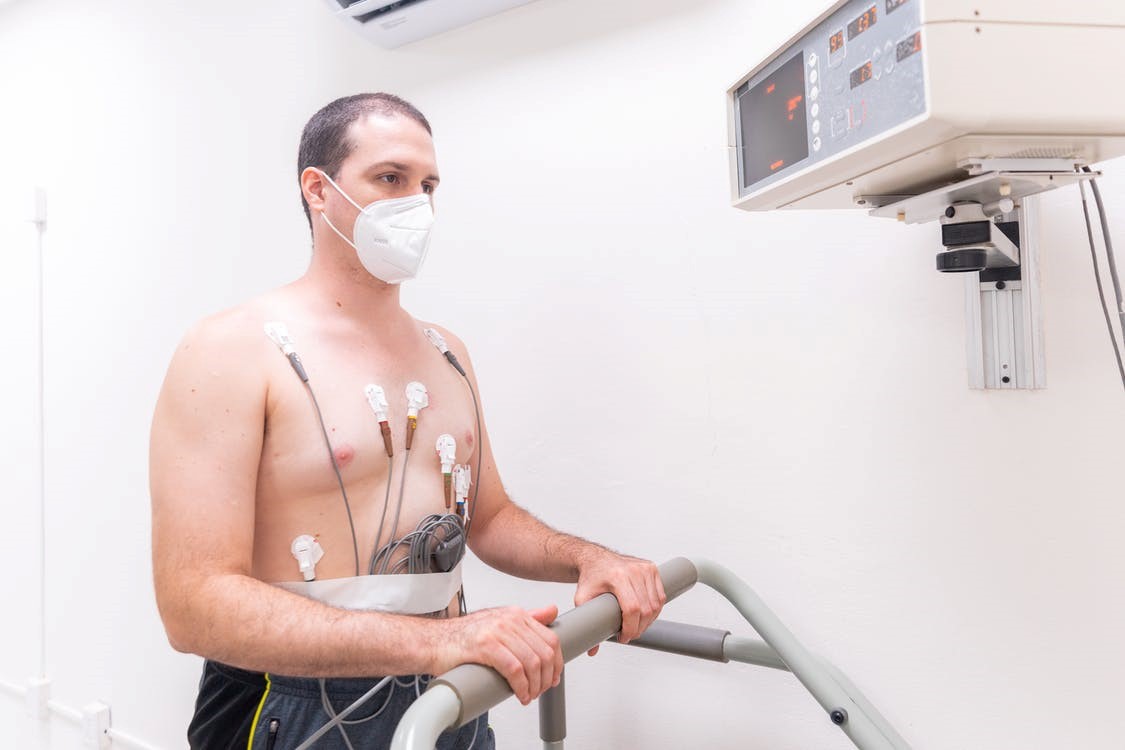
The test takes about five minutes to do. Sometimes a small ECG machine can be worn for prolonged periods to see whether there is an irregular heart rhythm. This is called an ambulatory electrocardiogram.
Are there any risks with an ECG?
There are few, if any, risks related to an ECG. Some people may experience a skin rash where electrodes were placed, but this usually goes away without treatment.
An ECG only monitors the electrical activity of the heart. It does not emit any electricity and is therefore completely safe, even during pregnancy.
Is an ECG result always accurate?
العودة إلى المحتوياتAny test can have a false positive, or false negative result done. It is crucial that an ECG is read by a professional who has the skills to do so, so that they can interpret the trace in conjunction with the clinical history and examination. Some changes will have a significant impact on the need for future tests, or treatment, whereas others will be less important.
Patient picks for فحوصات القلب
الفحوصات والتحقيقات
Ambulatory electrocardiogram
Ambulatory electrocardiogram monitors your heart when you are doing your normal activities. It helps to detect abnormal heart rates and rhythms (arrhythmias). The arrangements, and the way tests are performed, may vary between different hospitals. Always follow the instructions given by your doctor or local hospital.
بقلم الدكتورة توني هازيل، MRCGP
الفحوصات والتحقيقات
Exercise Tolerance Testing
An exercise tolerance test (ETT) records the electrical activity of the heart whilst exercising. It is most useful in patients who experience chest pain on exertion. It is also used to detect whether heart rhythm abnormalities can be brought on by exercise.
بقلم الدكتورة فيليبا فينسنت، MRCGP
قراءة إضافية ومراجع
- ECG Library
- Birnbaum Y, Wilson JM, Fiol M, et al; ECG diagnosis and classification of acute coronary syndromes. Ann Noninvasive Electrocardiol. 2014 Jan;19(1):4-14. doi: 10.1111/anec.12130. Epub 2013 Dec 30.
- Attia ZI, Harmon DM, Behr ER, et al; Application of artificial intelligence to the electrocardiogram. Eur Heart J. 2021 Dec 7;42(46):4717-4730. doi: 10.1093/eurheartj/ehab649.
- Perez-Riera AR, Barbosa-Barros R, Daminello-Raimundo R, et al; Main artifacts in electrocardiography. Ann Noninvasive Electrocardiol. 2018 Mar;23(2):e12494. doi: 10.1111/anec.12494. Epub 2017 Sep 20.
تابع القراءة أدناه
About the authorView full bio

الدكتور كولين تايدي، MRCGP
General Practitioner, Medical Author
MBBS, MRCGP, MRCP (Paediatrics), DCH
Dr Colin Tidy is an NHS Doctor, based in Oxfordshire.
About the reviewerView full bio

الدكتورة هايلي ويلاسي، زميلة الكلية الملكية للأطباء العامين
General Practitioner, Medical Author
MBChB (1992), DRCOG, DFFP, MRCOG (Part 1) MRCGP (2007), DFSRH (2013), MSc - medical education (2020)
Dr Hayley Willacy was an NHS GP working in northwest England, who retired from clinical practice in 2022 after 30 years.
تاريخ المقال
تمت كتابة المعلومات على هذه الصفحة ومراجعتها من قبل أطباء مؤهلين.
Next review due: 18 Nov 2028
20 Nov 2023 | أحدث إصدار
آخر تحديث بواسطة
الدكتور كولين تايدي، MRCGPمراجعة من قبل
الدكتورة هايلي ويلاسي، زميلة الكلية الملكية للأطباء العامين

اسأل، شارك، تواصل.
تصفح المناقشات، اطرح الأسئلة، وشارك التجارب عبر مئات المواضيع الصحية.

هل تشعر بتوعك؟
قم بتقييم أعراضك عبر الإنترنت مجانًا
اشترك في النشرة الإخبارية للمرضى
جرعتك الأسبوعية من النصائح الصحية الواضحة والموثوقة - مكتوبة لمساعدتك على الشعور بالاطلاع والثقة والتحكم.
By subscribing you accept our سياسة الخصوصية. يمكنك إلغاء الاشتراك في أي وقت. نحن لا نبيع بياناتك أبدًا.