تورم الغدد الليمفاوية
مراجعة من قبل Dr Hayley Willacy, FRCGP آخر تحديث بواسطة الدكتور دوغ مكيتشني، MRCGPLast updated 23 Aug 2023
يتوافق مع الإرشادات التحريرية
- تنزيلتنزيل
- مشاركة
- Language
- نقاش
- نسخة صوتية
- Add to preferred sources on Google
في هذه السلسلة:Neck lumps and bumps
Swollen lymph glands (also called lymph nodes) are usually a sign that your body is fighting infection, but they can have other causes. Common areas for swollen glands include the neck, under the chin, in the armpits and in the groin. Swollen lymph glands caused by infection usually get better on their own within two weeks. In this leaflet we discuss what causes swollen glands, how to check if your glands are swollen, and what to do if you think you have swollen glands.
في هذه المقالة:
Video picks for الجهاز المناعي
نقاط رئيسية
Swollen lymph glands are painful, tender lumps that can appear on each side of the neck, in the armpits, under the chin, and around the groin. They are usually a sign that your body is fighting off an infection.
You may have other symptoms, such as a sore throat, a high temperature, or a cough. Sometimes only a gland on one side of the neck may swell.
Swollen lymph glands can get better within 1-2 weeks by resting, drinking plenty if fluids, and taking pain relief. If your glands haven't gone down after 2 weeks, are getting bigger, or you are struggling to breathe, you should seek medical help immediately.
What are swollen glands?
تابع القراءة أدناه
What are lymph glands?
Detail of lymph gland names
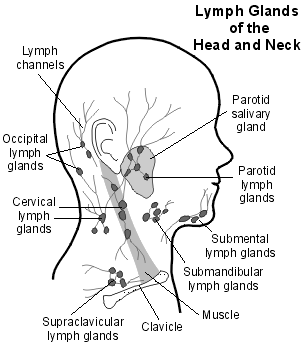
Small lymph glands (also called lymph nodes) are found all throughout the body. Lymph glands that are near each other often form into groups or chains. Examples of where lymph glands group together are the sides of the neck, the armpits and the groins. The diagram shows the main groups of lymph glands in the head and neck. However, lymph glands occur in many other places in the body.
Lymph glands are joined together by a network of lymph channels. Lymph is a fluid that forms between the cells of the body. This watery fluid travels in the lymph channels, through various lymph glands, and eventually drains into the bloodstream.
Lymph and lymph glands are major parts of the immune system. They contain white blood cells (lymphocytes) and antibodies that defend the body against infection.
What do swollen lymph glands feel like?
العودة إلى المحتوياتLymph glands are normally pea-sized. You can sometimes feel them as lumps under the skin. People often feel their lymph glands in the neck. Lymph glands under the skin become more noticeable and easier to feel if they swell. They can swell to the size of marbles or even bigger.
You cannot see or feel lymph glands that are deeper in the chest or tummy (abdomen) but they may be uncomfortable or tender.
تابع القراءة أدناه
What causes swollen lymph glands?
العودة إلى المحتوياتCauses of swollen lymph glands include the following:
Infection - the common cause
The lymph glands near to an infection swell quickly and become tender as the immune system 'fights off' infecting germs (bacteria, viruses, etc). The lymph glands usually go back to their normal pea size when the infection is over. It can take a week or so for them gradually to go back to normal after the infection. Tender, swollen lymph glands are usually a sign that your body is fighting off an infection. Examples of infections include the following:
التهابات الحلق, التهاب اللوزتين, the نزلات البرد (one type of upper respiratory infection) and tooth-related infections may cause lymph glands in the neck to swell.
Scalp skin conditions or even head lice may cause the lymph glands at the back of the head to swell.
Skin infections of the arm may cause lymph glands in the armpit to swell.
Infections of the leg or genitals, or طفح الحفاض, may cause lymph glands in the groin to swell.
Viral infections such as flu (influenza), جدري الماء أو glandular fever (infectious mononucleosis) affect the whole body. You may then develop swollen lymph glands in various parts of the body such as the neck, armpit and groins.
Cancers, lymphomas and leukaemias - the less common causes
Some cells from a cancer can break off and spread (metastasise) to nearby lymph glands via the lymph channels. These cancer cells then grow and multiply in the lymph glands and cause the glands to swell. For example:
سرطان الثدي may spread to the lymph glands in the armpit.
سرطان الحنجرة may spread to lymph glands in the neck.
Lung و stomach cancers may spread to lymph glands that you usually cannot see or feel in the chest and abdomen.
سرطانات الجلد may spread first to the closest lymph glands to the area of skin involved.
Cancer of the lymphatic and blood systems (ليمفوما لاهودجكينية, ليمفوما هودجكين و leukaemias) can cause many lymph glands to swell.
As a rule, swollen lymph glands due to cancers, lymphomas and leukaemias develop more slowly than those due to infections. They also tend to be painless at first.
Other less common causes
Rarely, swollen lymph glands can be due to causes such as:
Reactions to certain medicines.
Operative dental work.
Glycogen storage disorders.
Certain forms of arthritis, such as التهاب المفاصل الروماتويدي.
Less common infections, such as فيروس نقص المناعة البشرية, مرض كاواساكي و السل (TB).
How to treat swollen lymph glands
العودة إلى المحتوياتThe treatment depends on the cause. Swollen lymph glands are like a marker of various conditions, all with different outlooks and treatments. So, for example, the common cause is due to a viral infection. In this case, no treatment is needed: the lymph glands will go back to normal after a week or so. However, swollen lymph glands caused by a cancer, lymphoma or leukaemia may need extensive treatment of the underlying problem.
تابع القراءة أدناه
What should I do if I find swollen lymph glands?
العودة إلى المحتوياتSwollen lymph glands due to viral infections are very common. It's normal to get these with an infection - they're a sign that your body is fighting it off. For example, swelling of neck lymph glands may go up and down if you have frequent throat infections. This is of little concern. However, you should see your doctor if your lymph glands have not gone down after two weeks.
Swollen lymph glands are more of a concern if there is no apparent reason for them to swell. Tell your doctor if:
You find swollen lymph glands and you do not know why they have swollen. For example, you do not have an infection to cause them to swell.
You find swollen lymph glands just above or just below your collar bone (clavicle). Swollen glands in this area are more likely to suggest a cause for concern.
You have swollen lymph glands that have been there for two weeks or longer.
الأسئلة الشائعة
العودة إلى المحتوياتAre swollen glands a symptom of cancer?
Swollen glands can be a sign of cancer, however, they are most likely to be caused by an infection. You should see your doctor if they are hard, painless, and haven't gone away after two weeks.
What drink helps swollen glands?
Drinks including warm teas, honey with lemon water, and normal water can soothe irritation caused by swollen glands and keep you hydrated.
Can stress cause swollen glands?
Stress itself does not cause swollen glands but it can weaken your immune system - making you more prone to infections and developing swollen glands.
Can hay fever cause swollen glands?
Hay fever can sometimes cause swollen glands. Whilst it's not a common symptom of hay fever, it is possible. You should see your doctor to rule out other causes.
Patient picks for الجهاز المناعي

الحساسية، الدم والجهاز المناعي
الجهاز المناعي
This leaflet gives a brief overview of the immune system and how it works. A person with a weak immune system might have difficulty fighting off infections. In autoimmune diseases the body is unable to tell what is its own and what is foreign, so it attacks itself. Autoimmune diseases can attack any part of the body - eg, type 1 diabetes (pancreas), multiple sclerosis (brain and nerves), systemic lupus erythematosus (skin and organs). These diseases are managed by the specialist who knows most about the system affected for that person - eg, multiple sclerosis is managed by a neurologist.
بقلم الدكتورة توني هازيل، MRCGP
الحساسية، الدم والجهاز المناعي
تثبيط المناعة
يصف تثبيط المناعة فقدان وظيفة الجهاز المناعي. يمكن أن يحدث لأسباب عديدة، بما في ذلك المرض، الأدوية، الجراحة، العمر أو العوامل الوراثية.
بقلم الدكتورة فيليبا فينسنت، MRCGP
قراءة إضافية ومراجع
- Richner S, Laifer G; تضخم العقد اللمفاوية المحيطية في البالغين ذوي المناعة السليمة. المجلة الطبية السويسرية. 20 فبراير 2010;140(7-8):98-104.
- Neck lump; NICE CKS, October 2020 (UK access only)
- Pynnonen MA, Gillespie MB, Roman B, et al; Clinical Practice Guideline: Evaluation of the Neck Mass in Adults. Otolaryngol Head Neck Surg. 2017 Sep;157(2_suppl):S1-S30. doi: 10.1177/0194599817722550.
تابع القراءة أدناه
About the author

الدكتور دوغ مكيتشني، MRCGP
Medical Writer
MA, MBBS, MSc, DRCOG, MRCP(UK), MRCGP(2021), FHEA
Dr Doug McKechnie is an NHS GP working in London. He works full-time clinically and is also the Deputy Lead for the Clinical and Professional Practice module at University College London Medical School.
About the reviewerView full bio

الدكتورة هايلي ويلاسي، زميلة الكلية الملكية للأطباء العامين
General Practitioner, Medical Author
MBChB (1992), DRCOG, DFFP, MRCOG (Part 1) MRCGP (2007), DFSRH (2013), MSc - medical education (2020)
Dr Hayley Willacy was an NHS GP working in northwest England, who retired from clinical practice in 2022 after 30 years.
تاريخ المقال
تمت كتابة المعلومات على هذه الصفحة ومراجعتها من قبل أطباء مؤهلين.
Next review due: 21 Aug 2028
23 Aug 2023 | أحدث إصدار
آخر تحديث بواسطة
الدكتور دوغ مكيتشني، MRCGPمراجعة من قبل
الدكتورة هايلي ويلاسي، زميلة الكلية الملكية للأطباء العامين

اسأل، شارك، تواصل.
تصفح المناقشات، اطرح الأسئلة، وشارك التجارب عبر مئات المواضيع الصحية.

هل تشعر بتوعك؟
قم بتقييم أعراضك عبر الإنترنت مجانًا
اشترك في النشرة الإخبارية للمرضى
جرعتك الأسبوعية من النصائح الصحية الواضحة والموثوقة - مكتوبة لمساعدتك على الشعور بالاطلاع والثقة والتحكم.
By subscribing you accept our سياسة الخصوصية. يمكنك إلغاء الاشتراك في أي وقت. نحن لا نبيع بياناتك أبدًا.