تقييم مخاطر صحة القلب والأوعية الدموية
مراجعة من قبل الدكتور كريشنا فاخاريا، MRCGPآخر تحديث بواسطة الدكتور كولين تايدي، MRCGPآخر تحديث 13 Jun 2023
يتوافق مع الإرشادات التحريرية
- تنزيلتنزيل
- مشاركة
- Language
- نقاش
- نسخة صوتية
- أضف إلى المصادر المفضلة على جوجل
في هذه السلسلة:أمراض القلب والأوعية الدمويةنظام غذائي متوسطي
A cardiovascular health risk assessment provides an accurate estimate of your risk of developing cardiovascular disease (eg, angina, heart attack, stroke or peripheral arterial disease) over the following 10 years, and provides an opportunity for you to make any changes that will reduce this risk.
If you already have a cardiovascular disease or diabetes then your risk does not need to be assessed because you are already in the high-risk group.
نظرة سريعة
A cardiovascular risk assessment estimates your chance of developing heart disease or stroke in the next 10 years.
This assessment is usually offered to people aged 40-74 who do not already have cardiovascular disease.
It involves questions about lifestyle, a blood test, and a blood pressure measurement.
The assessment calculates a percentage score, indicating your risk.
Lifestyle changes can help reduce your risk, even if it is low.
في هذه المقالة:
اختيارات الفيديو لـ أمراض القلب
تابع القراءة أدناه
Why is a cardiovascular risk assessment important?
Cardiovascular disease (CVD) accounts for almost a quarter of all deaths in the UK. Risk factors that increase the risk of developing CVD include:
Risk factors that cannot be changed: age, being male, having a family history of CVD, and ethnic background (eg, people of South Asian origin have an increased risk).
Risk factors that can be changed: smoking, high cholesterol, lack of physical activity, unhealthy diet, alcohol intake above recommended levels, being overweight.
Conditions that increase the risk of CVD include ارتفاع ضغط الدم, داء السكري, مرض الكلى المزمن, high lipids, التهاب المفاصل الروماتويدي, الإنفلونزا, serious mental health problems, and periodontitis (gum disease).
By having a cardiovascular risk assessment, you can get an accurate estimate of your risk of developing CVD over the following 10 years and ways that you can reduce this risk.
What is a cardiovascular health risk assessment?
العودة إلى المحتوياتA cardiovascular risk assessment is an assessment of a person's risk of cardiovascular disease (CVD), such as the risk of developing heart disease or a stroke, and provides an assessment of the degree of risk.
The assessment provides an estimate of your risk of developing CVD over the following 10 years.
Within the Health Check Programme in England, everyone aged 40-74 years, not already diagnosed with cardiovascular disease (CVD), السكري, or مرض الكلى المزمن, is invited every five years for a free health check, which includes and assessment of:
CVD risk.
الخرف (in those aged 65-74 years).
The Health Check also includes screening for diabetes mellitus and chronic kidney disease if you are at increased risk.
تابع القراءة أدناه
Who should have a cardiovascular health risk assessment?
العودة إلى المحتوياتAll adults aged 40 or more should have a CVD risk assessment every five years apart from those who people who are already known to be at high risk of CVD, which includes anyone:
Already known to have CVD.
Aged 85 years or over (are assumed to be at high risk because of age alone, if a smoker or with high blood pressure.
Who is a person with familial hypercholesterolaemia, or other inherited disorders of lipid metabolism.
People with type 1 diabetes mellitus أو مرض الكلى المزمن stages 3, 4, or 5 are at high risk, and so a CVD risk assessment is not needed, but an assessment may help to make an informed choice on whether to take a medicine to reduce cholesterol (statin).
What does a cardiovascular health risk assessment involve?
العودة إلى المحتوياتA doctor or nurse will ask if you have any current lifestyle risk factors that increase your risk of developing a cardiovascular disease. These include smoking, السمنة, a poor diet, lack of النشاط البدني and drinking a lot of alcohol.
You will then have a blood test to check your blood cholesterol and sugar (glucose) level. Your blood pressure will be measured.
A score is calculated based on several of these risk factors, your age and sex. An adjustment to the score is made for certain other risk factors such as strong family history and ethnic origin.
There are many different calculators. The QRISK®3 risk assessmentis used in England and Wales. This provides an estimate that is accurate for most people but may underestimate the CVD risk for some people if:
They have received treatment for فيروس نقص المناعة البشرية.
They are taking medicines that can cause high lipids (eg, immunosuppressants).
They have high blood levels of triglycerides (above 4.5 mmol/L).
They are already taking medicines to lower blood pressure or to lower cholesterol.
They have recently given up smoking.
The assessment should be repeated every five years, but may be advised earlier if there are any changes that may affect your CVD risk.
تابع القراءة أدناه
What does the assessment score mean?
العودة إلى المحتوياتYou are given a score as a percentage (%) chance. So, for example, if your score is 30% this means that you have a 30% chance of developing a cardiovascular disease within the following 10 years. This is the same as saying you have a 30 in 100 chance (or a 3 in 10 chance).
So in this example, 3 in 10 people with the same risk factors that you have will develop a cardiovascular disease within the following 10 years.
Who should be treated to reduce their cardiovascular health risk?
العودة إلى المحتوياتEveryone, including those at low risk of CVD, should follow lifestyle advice to help reduce CVD risk and stay healthy. The lifestyle advice includes:
Treatment with a medicine called a statin to reduce cholesterol is usually advised if you have an estimated 10-year CVD risk of 10% or more and if lifestyle interventions have not been effective. See also the leaflets on Statins and other Lipid-lowering Medicines و High Cholesterol.
What if I am at low risk?
العودة إلى المحتوياتIf you are at low risk, it does not mean you have no risk - just a lesser risk. Medication is not usually prescribed. However, you may be able to reduce whatever risk you do have even further by any relevant changes in your lifestyle (as described above).
Some people with a low risk buy a low-dose statin drug from a pharmacy to lower their cholesterol level. Statin medicines are available on prescription but only funded by the NHS if your risk is 10% or more.
If you do buy a statin and take it regularly, it is best to discuss this with a healthcare professional so that you can be advised about the risks and benefits of taking a statin.
اختيارات المرضى لـ أمراض القلب
صحة القلب والأوعية الدموية
Atrial septal defect
Atrial septal defect (ASD) is a hole (defect) in the wall (septum) between the heart's two upper, or collecting, chambers (atria). One chamber is known as an atrium. The septum separates the heart's left and right side. A septal defect is sometime called a 'hole' in the heart. It is the third most common heart problem that babies are born with. Many defects in the atrial septum close themselves and cause no problems. Otherwise, they can be closed by keyhole procedure or surgery. Most babies born with a defect in the septum have normal survival.
بقلم الدكتور كولين تايدي، MRCGP
صحة القلب والأوعية الدموية
عيب الحاجز البطيني
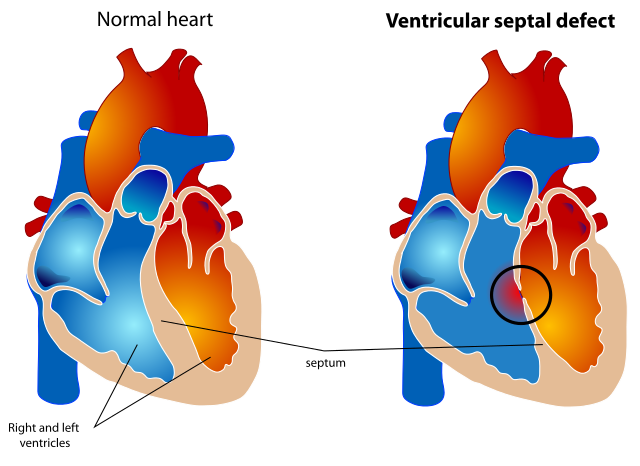
Ventricular septal defect (VSD) is a gap or defect in the septum between the heart's two lower chambers (ventricles). The septum is a wall that separates the heart's right and left side of the heart. Septal defects are sometimes called a 'hole' in the heart. It is the most common heart problem that babies are born with. Many defects in the ventricular septum close themselves and cause no problems. Otherwise, medicines or surgery can help. Most babies born with a defect in the septum have normal survival.
بقلم الدكتورة هايلي ويلاسي، FRCGP
الأسئلة الشائعة
What common conditions are associated with an increased risk of cardiovascular disease?
Conditions such as high blood pressure (hypertension), diabetes mellitus, chronic kidney disease, high levels of lipids (fats) in the blood, rheumatoid arthritis, influenza, serious mental health problems, and gum disease (periodontitis) all increase your risk of developing cardiovascular disease.
If I am already taking medication for high blood pressure or cholesterol, will my assessment still be accurate?
The QRISK®3 risk assessment, commonly used in England and Wales, may underestimate your CVD risk if you are already taking medicines to lower blood pressure or cholesterol. It's important to remember that the assessment should be repeated every five years, or sooner if there are significant changes that might affect your risk.
What kind of lifestyle changes can I make to improve my cardiovascular health, even if my risk is low?
Even if you have a low risk, you can still reduce it further by making lifestyle changes. This includes not smoking, losing weight if you are overweight or obese, eating a healthy diet, keeping your alcohol intake within recommended limits, and being physically active with regular exercise.
What does it mean if my cardiovascular risk score is, for example, 15%?
A score of 15% means that you have a 15% chance of developing a cardiovascular disease within the next 10 years. This is equivalent to saying that 15 out of every 100 people with the same risk factors as you will develop a cardiovascular disease in that timeframe.
Can I buy statin medication from a pharmacy, and should I discuss it with a healthcare professional?
Yes, some people with low risk choose to buy low-dose statin drugs from a pharmacy to lower their cholesterol. While statins are available on prescription and funded by the NHS for those with a 10% or more CVD risk, if you decide to buy and regularly take a statin, it is advisable to discuss this with a healthcare professional to understand the risks and benefits.
قراءة إضافية ومراجع
- Risk estimation and the prevention of cardiovascular disease; Scottish Intercollegiate Guidelines Network - SIGN (2017)
- 2021 European Guidelines on cardiovascular disease prevention in clinical practice; European Society of Cardiology (2021)
- CVD risk assessment and management; NICE CKS, May 2023 (UK access only)
- QRISK®3 calculator.
- NHS Health Checks: applying All Our Health; GOV.UK. Updated March 2022.
- Cardiovascular risk assessment and lipid modification; NICE Quality standard, May 2023
- أمراض القلب والأوعية الدموية: تقييم المخاطر والحد منها، بما في ذلك تعديل الدهون; إرشادات NICE السريرية (يوليو 2014 - آخر تحديث مايو 2023) تم استبدالها بـ NG238
تابع القراءة أدناه
عن المؤلفعرض السيرة الذاتية الكاملة

الدكتور كولين تايدي، MRCGP
طبيب عام، مؤلف طبي
MBBS, MRCGP, MRCP (Paediatrics), DCH
الدكتور كولين تايدي هو طبيب في هيئة الخدمات الصحية الوطنية، ويعمل في أوكسفوردشاير.
حول المراجععرض السيرة الذاتية الكاملة

الدكتور كريشنا فاخاريا، MRCGP
كبير المسؤولين الطبيين للصحة، أوبتوم المملكة المتحدة
MBChB, MRCGP(2013), BMedSci (hons), DFSRH, DRCOG, PGDipDerm (Distn)
الدكتورة كريشنا فاخاريا هي طبيبة عامة في هيئة الخدمات الصحية الوطنية. كما أنها ممتحنة منتظمة لدبلوم الدراسات العليا في الأمراض الجلدية العملية في جامعة كارديف، بالإضافة إلى كونها كبيرة المسؤولين الطبيين للصحة في Optum UK.
تاريخ المقال
تمت كتابة المعلومات على هذه الصفحة ومراجعتها من قبل أطباء مؤهلين.
Next review due: 11 Jun 2028
13 Jun 2023 | أحدث إصدار

اسأل، شارك، تواصل.
تصفح المناقشات، اطرح الأسئلة، وشارك التجارب عبر مئات المواضيع الصحية.

هل تشعر بتوعك؟
قم بتقييم أعراضك عبر الإنترنت مجانًا
اشترك في النشرة الإخبارية للمرضى
جرعتك الأسبوعية من النصائح الصحية الواضحة والموثوقة - مكتوبة لمساعدتك على الشعور بالاطلاع والثقة والتحكم.
من خلال الاشتراك، فإنك تقبل سياسة الخصوصية. يمكنك إلغاء الاشتراك في أي وقت. نحن لا نبيع بياناتك أبدًا.